Today this morning at six in the early hours of wintery morning Hong Kong SAR-Beijing time it’s is the first morning of 2022 January 1st sunrise sunlight warmth radiantly glittering the Imperial Palaces of the primary Beijing Central Axis complex of which is the now Ming – Qing Dynasty 602 Forbidden City years old Beijing – China – People’s Republic of China ..
During the sunrise it was the First China’s – China- People’s Republic of China Flag Raising ceremony of 2022 in Tian’anmen Square.. The Chinese national flag will be raised at Beijing’s Tian’anmen Square on the first day of 2022. The ceremony takes about two minutes but people often arrive the night before to get a good spot.
……the second decade from the turn of the century in Beijing the Capital of China also the People’s Republic of China, marking its six hundred and two years anniversary of the Forbidden city that marks the transitional point of in between the middle of the Ming Dynasty (1368- 1644) transitionally from Nanjing to Beijing towards the Qing Dynasty (1636-1644-1911) …. The Imperial Palace seen so many countless seasonally transitional equinoxes but further its six hundred years is iconic, but it’s five hundred ninety nine years it marks it Autumn Equinox…. In which it only took twelve years to build the same of the Daming Palace of The Tang Dynasty Xian Imperial Capital only it was least twenty times larger……
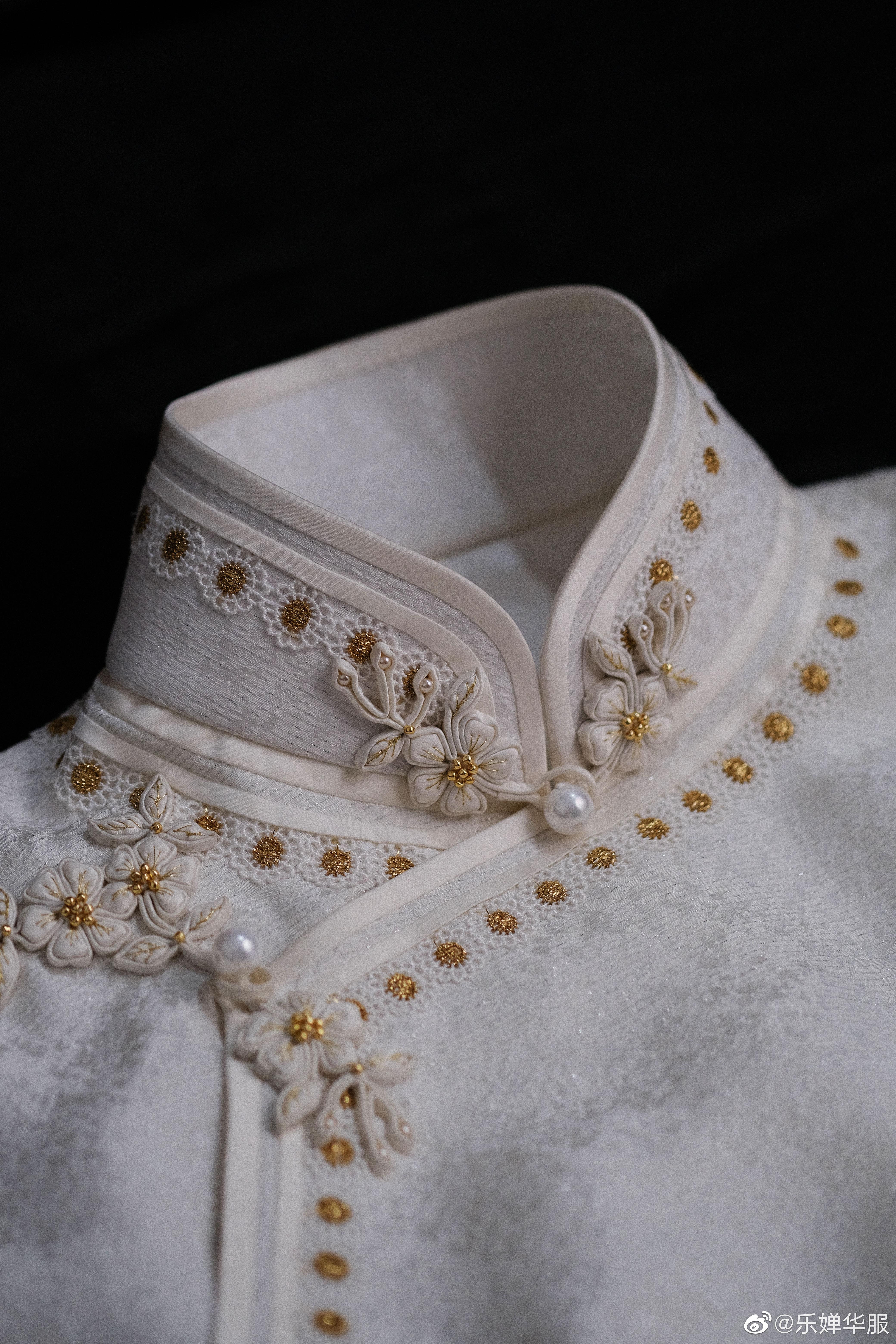
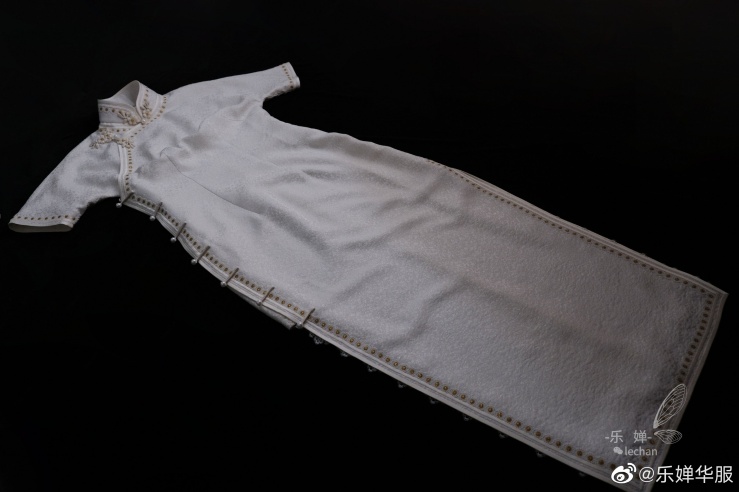
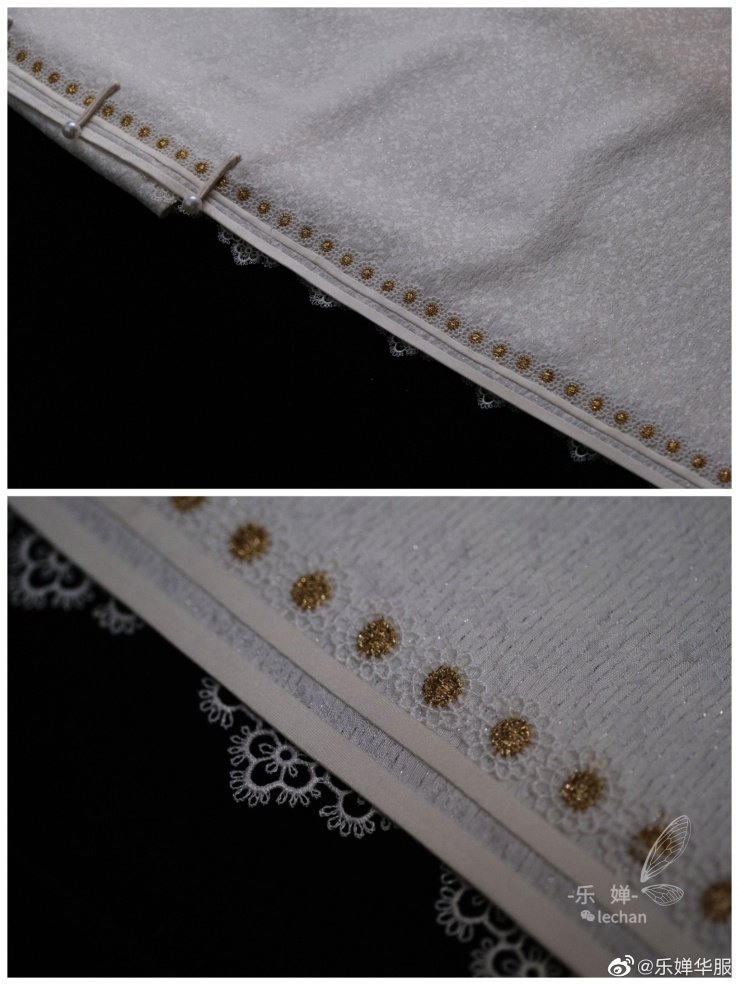
Located in an ancient post-modern Two Thousand four Hundred years old ultra Megatroplis city Chengdu City, Sichuan Province – China – People’s Republic of China, 乐婵华服 Lecha Huafu – Chengdu Shikoudi Cultural Communication Co., Ltd…. Innovatingly Post Modern Qipao- Cheongsam …. in which innovatively bringing a New Chinese style cheongsam-Qipao high-end brand-Embroiderer…….it is committed to the high-end private specialization of Chinese Shanghai style cheongsam… in which each dress is customised towards the wear’s in which tailoring takes least in between 20-60 days depending on the extremely level of detailing of brocade in which using the most finest heavy silks are hand sewn and crafted …..
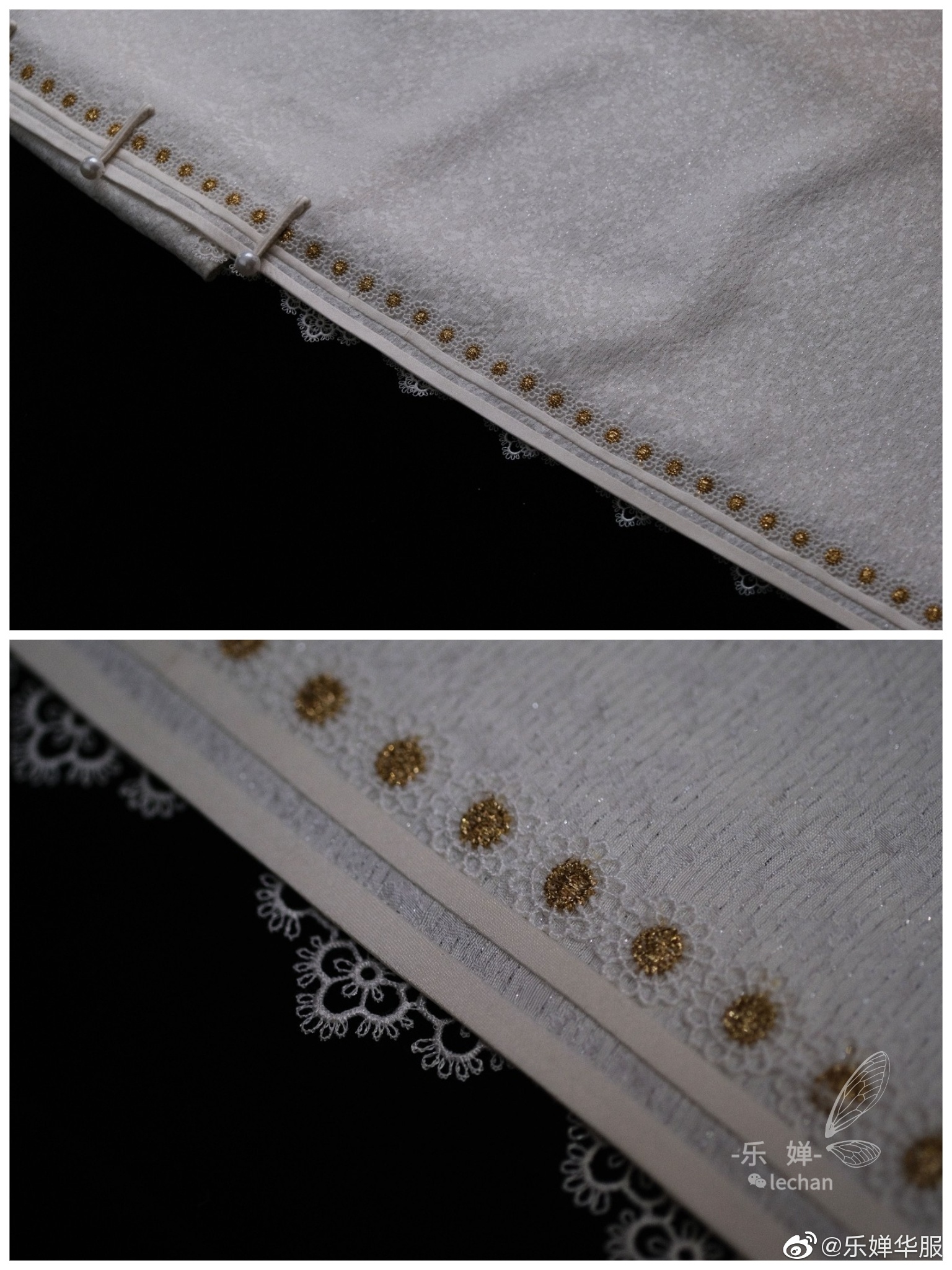
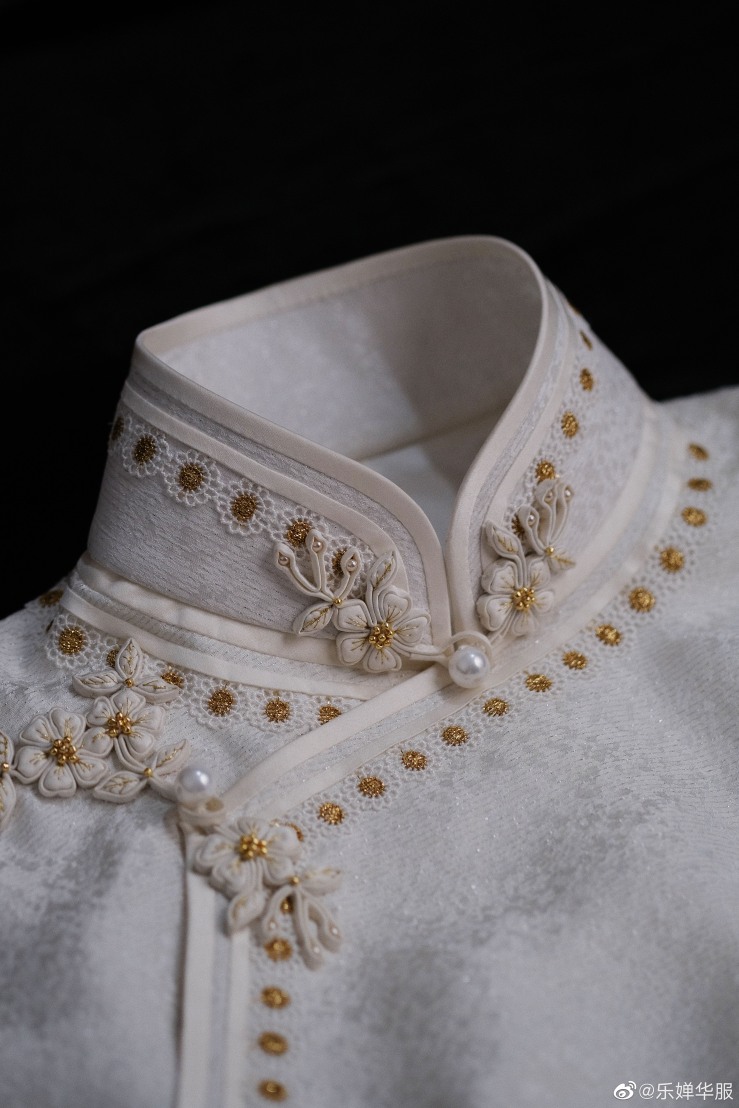
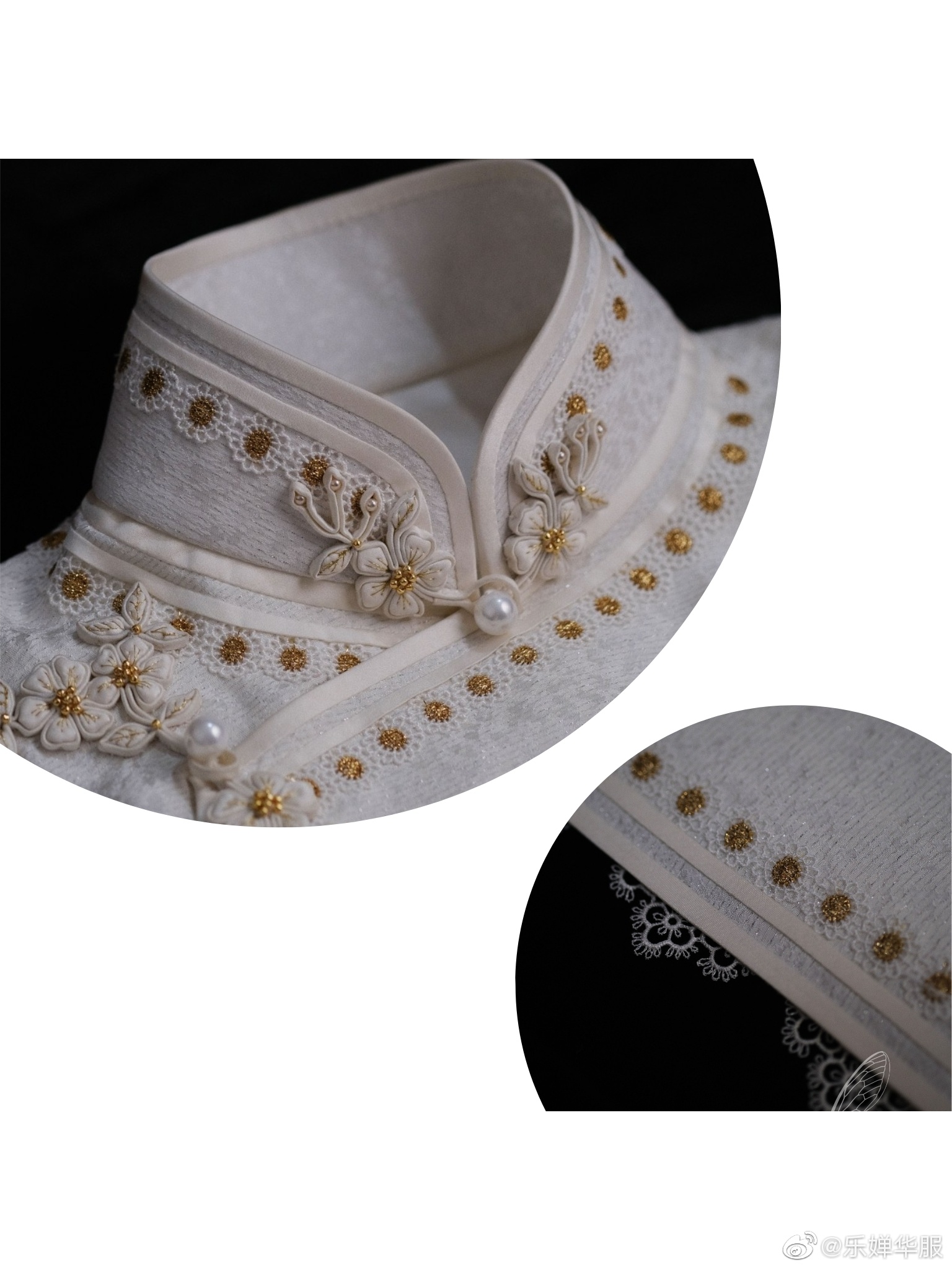
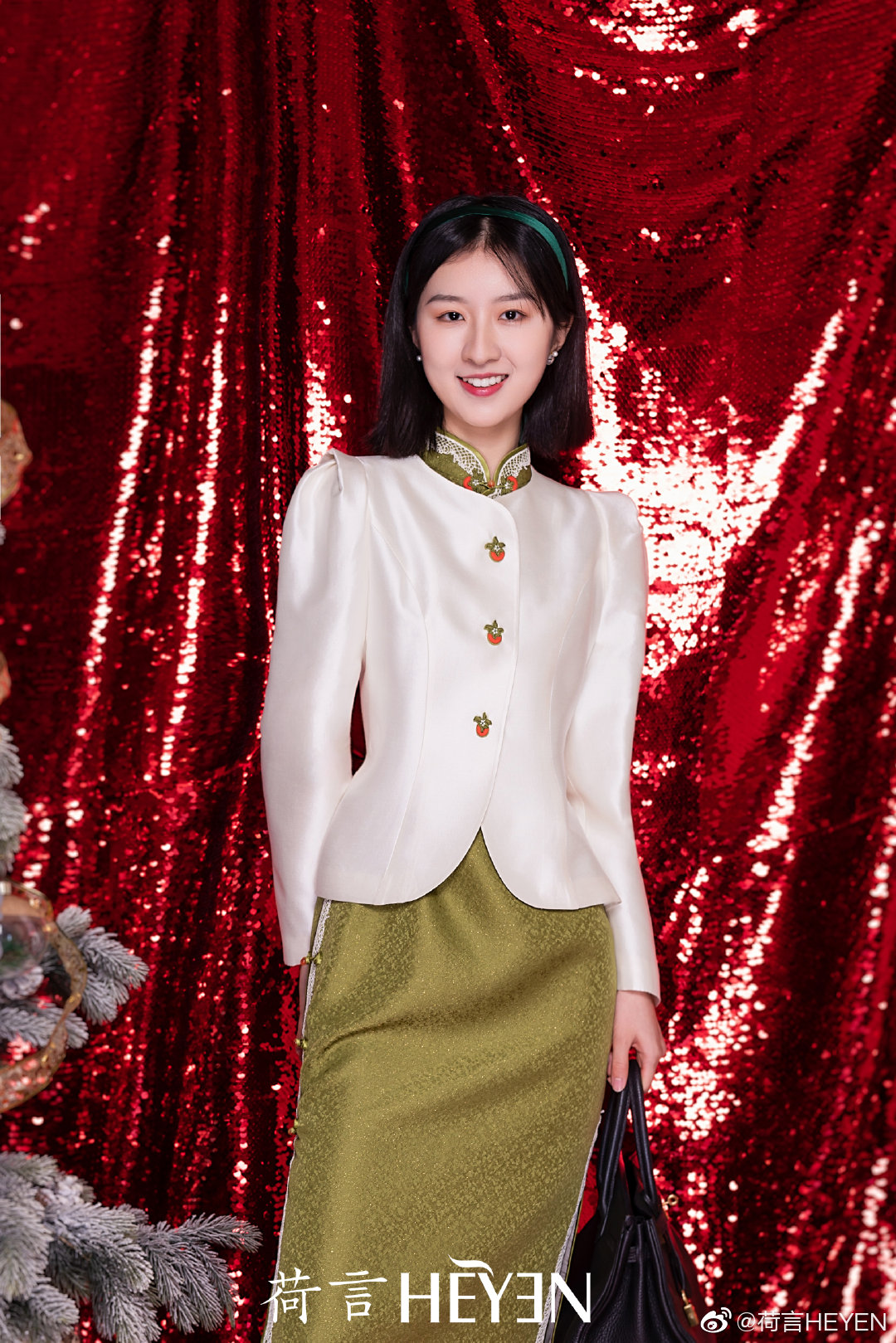
Dressed in warmingly bold white Qipao dress with featuring short shoulder with delicate golden blossom buttoningly trimming sleeves that delicately trims the Mandarin with white lacy trimming with white spring blossom collar with on Chinese hand crafted embroidery youthfully cheongsam Qipao …. With beautifully dressed in Beautiful Chinese Painting embroidery printed with autumn orange amberic flowers petals printed… with white pleated sleeves …..
With retro look of single pearl l buttoning on the neckline giving the inspirational look of a late Qing Dynasty collar in of the expressing Femininity is the ultimate expression of condensed femininity of romantic literature… with romantic flower ribbon buttons assemblage the teal leaves with an intriguing tassel feature . In With a beautiful detailing of slide button fixtures with pearl buttons features in a traditional Qipao- Cheongsam design in replacement of the modern with the back zip opening in which is a non-traditional design of the silk-printed cheongsam is cute and loves…..
To be mature and gentle, to be funny and cute, add something to your girly trendy matching or contempary color jacket from your wardrobe jacket to elegantly classically of a silk jacket…. in accompany with the mid length Qipao –Cheongsam ….
….…… In which timeless gorgeous hand crafted embroidery youthfully cheongsam Qipao Chinese Qipao –Cheongsam makes a most treasured embroidery art center piece on you and after on a mannequin as your fashion art piece memorable…….
QIPAO 旗袍 Cheongsam …. In which from historically Shenyang is the birth place of the Qing Dynasty 1636-1912plus …. In which Qipao is termed for Qing Dynasty Clothing that the Manchu ethnic adoptively wore…… in which the Shenyang Palace Museum was an imperial palace towards two Qing Dynasty emperors. Previously two years ago During the event it which was an eight day forums, with exhibitions also related workshops illustrating the birth place of the Old Capital of Cheongsam where the Qing Dynasty- Qipao was inspired from..
Before that Shanghai 1930’s Qipao-Cheongsam revolution, the Manchurian Cheongsam was the fashion of choice of the Qing Dynasty (1636-1912) throughout as it standardised that style during the dynasty… Replacing the previous clothing standard Han Fu – Han Dynasty clothing style, in which also is form fitting towards the women’s silhouette but with a higher degree of freedom of flare of personal, individual style…
Qipao-Cheongsam is uniquely hand crafted tailored Chinese dress to the customer’s various measurements… in which you can still have them brought of the rack in which is accustomed to the standard measurements… in which you can tell which is western influenced with the back zipped in which the Eastern traditional Chinese Tailors would have the side zipped of the Qipao dress due it interrupts the flow of the pattern work at the back of the dress.. Also it creates a continuous seamless back look… after as the measurements are translated drafted onto the silk or the customer desired accustomed fabric of choice, from the measurements book with the associated look of the design elements with additional accessories the sexiness of Qipao lies subtlety.. Measuring, patterning, cutting, and button making are crucial, in where passion and art comes together in tailoring
In which traditionally Qipao- Cheongsam dresses are worn for from straight forwardly every day towards after work evening wear in without having to change to another set of wardrobe dressing only to accessories for the required occasion… … in which the Qipao dress pattern silhouette is design for the lady’s figure in which accentuating the silhouette without giving away too much of what’s underneath in retaining…. its timeless classic silhouettes in which are designed to be worn every day, from work, evening, casually towards to the weekend… with sleek simple, elegant, sexy intelligent sophistication in which are easy to be accessorised with any pieces of clothing in your current or upcoming wardrobe…
恭王府Prince Gong- Kung Mansion Located in 17 Qianhai W St, Xicheng District, Beijing, China, 100035- China – People’s Republic of China Prince Gong’s Mansion, also known as the Prince Kung Mansion, is a museum and tourist attraction located in Xicheng District, Beijing, just north of the Shichahai Lake. It consists of large siheyuan-style mansions and gardens. In which It consists of large siheyuan-style mansions and gardens. Originally constructed for Heshen, an official highly favoured by the Qianlong Emperor, it was later renamed after Prince Gong, a Manchu prince and influential statesman of the late Qing dynasty, who inhabited the mansion in the late 19th century. covers an area of 6.112 hectares. In the forty-five year of Qianlong (1780), the academician He Shen was ordered to build this mansion. In the first year of Xianfeng (1851), the Qing court awarded this mansion to Prince Gong Aixinjueluo Yixin. Therefore, the name of the mansion was given.
Prince Gong’s Mansion is the largest palace complex in the Qing Dynasty. It has gone through the historical process of the Qing Dynasty from its heyday to its decline. It carries extremely rich historical and cultural information. Therefore, there is “a Prince Gong’s mansion, half of the history of the Qing Dynasty”. Statement.
The historical evolutionally elements of恭王府Prince Gong- Kung Mansion consisting many elements of halls, buildings and great halls. Heshen Mansion In the forty-five year of Qianlong (1780), the academician He Shen was ordered to build the ten princess mansion.
Bestowed to Yonglin In the fourth year of Jiaqing (1799), Emperor Jiaqing gave Heshen’s house to his younger brother (the seventeenth son of Qianlong) Qingjun Wang Yonglin, who was the palace of the Qing Dynasty. In the 25th year of Jiaqing, Wang Yonglin of Qingjun died and was inhabited by his son and descendants…..
Prince Gong Mansion In the 30th year of Daoguang (1850), Emperor Xianfeng bestowed the palace of Qing Dynasty to his sixth brother, Prince Gong Yixin. On April 22 of the second year of Xianfeng, Prince Gong Yixin moved to this mansion and was originally called Prince Gong’s Mansion. In the 20th year of Guangxu (1894), Prince Gong died, and his grandson Puwei attacked Prince Gong…..
Architectural Pattern Summary
The buildings of Prince Gong’s Mansion are clearly divided into East Road buildings, Middle Road buildings and West Road buildings. The buildings of each road run through the entire residence and courtyard from south to north in a rigorously symmetrical manner, with a clear layout.
Mansion Building
Middle Road Building There are mainly two buildings on the middle road, Yin’an Temple and Jiale Hall. Yin’an Temple, commonly known as Yinluan Temple, is the main building in the palace and the main hall of the palace. It is mainly used to hold major ceremonial activities in the palace and is only used for major events or festivals. In 1921, because the owner accidentally burned incense and caught fire, the main hall was burned down together with the east and west halls. However, the grandness of this hall can still make us feel the majestic and majestic style of the palace. Yin’an Temple is five rooms wide, with the top of Xieshan Mountain, and the main hall is made of green glazed tiles. The architectural paintings cannot use the emperor’s exclusive Hexi colored paintings, but the highest grades in the revolver paintings can be used, such as the gold-cut ink stone grinds the jade, the dragon brocade and the heart. Sitting dragon is available.
Jialetang is located behind Yin’an Temple. It is the last entrance of the building on Gongwangfu Middle Road, the front corridor, the five-bay room, and the hard top of the mountain. The “Jia Le Tang” plaque hangs directly above the gate.
East Road Building – The front yard of East Road is Duofuxuan, and the back yard is Ledaotang.
Duofuxuan in the front yard is the living room through the hall. The main function of the second hall is to receive guests, relatives or subordinates who give back and forth to things, and can also store gifts from the emperor. At that time, the hall was surrounded by plaques with the words “Fu Shou”. The decorations in the house were all based on historical photos and were arranged according to the original situation. Many historical photos of Prince Gong’s Mansion were displayed.
The main house in the courtyard behind it is named “Le Dao Tang”, which is the largest one in the building on the East Road. In the time of Prince Gong, this was his daily residence. At this time, Prince Gong, Prince Yixin, Emperor Daoguang once bestowed the “Ledaotang” plaque, so this place may also be named for it.
West Road Building – The buildings and courtyards on West Road are more elegant than those on Middle Road and East Road. The main buildings are Baoguang Room and Xijinzhai.
The Baoguang Room is located on the west road of the mansion. It was used as a living room during the period of Heshen and King Qing. In the period of Prince Gong, it was a secret living room for receiving the prince and relatives. The most exquisite among them is the Baoguang Room. The inner and outer eaves are painted with colorful paintings. The most amazing is the painted paintings of the Chinese and foreign eaves, which were painted by the highest-level color painting technicians in the country at that time. The inner eaves are also beautifully painted. Lun Meihuan, “The golden patterns under the eaves of the mansion are all plated with real gold.” As early as the Qing Dynasty, this place was a resting place for Emperor Daoguang to pay homage to his ancestors. After this rebuilding, it is mainly used to display the ancient relics left by Prince Gong’s Mansion. The plaque in the Baoguang room is the inscription of Prince Gong Yixin when Emperor Xianfeng was visiting Prince Gong’s residence. It is of far-reaching significance.
Xijinzhai is a classic in the architecture of Prince Gong’s Mansion, and the one with the most historical memory is Xijinzhai. Plane convex shape, the east, west and north sides of the hall are two-story fairy buildings, and the upper and lower floors are separated by beautifully carved nanmu partitions. According to historical records, the construction of Xijinzhai with nanmu is the thirteenth crime of Heshen. It is said that the eunuchs under the Heshen faction studied and borrowed the architecture of the Forbidden City, requiring craftsmen to imitate the architectural layout of the Ningshou Palace. , Far beyond the building specifications that ministers can have. In the 6th year of Guangxu, Prince Gong Yixin obtained the earliest surviving calligraphy work of famous masters in my country from Chengxin Wangfu-“Ping Fu Tie” handwritten by the great scholar of the Jin Dynasty, Lu Ji, which he treasured very much. Xijinzhai”.
Back Cover or South – At the junction of the mansion and the garden, there is a second-story back cover building that connects the buildings on the East, Middle, and West Roads. The length of the entire building is about 180 meters, and there are 108 rooms on the facade, commonly known as “ninety-nine and a half rooms”, which means “surplus upon expiration” in Taoism. It is called “Zhanji Tower” in the east and “Baoyue Tower” in the west, which is particularly stylish. There is the only indoor landscape garden in the country to the west of the back cover building, using a “small labyrinth” created by five rooms. The front eaves of the back cover building are out of the gallery, and each opening on the back eaves wall is equipped with a window. There are assorted windows of different forms on the upper floor. In the shape of silver ingots, there are also “fuqingyu” composed of bats, chime and fish. The windows have fine brick carvings, simple and elegant, and are harmoniously unified with the style of the garden on the north side. There is an aisle door on the lower level of the one west of the middle of the building, leading to the garden at the back of the house. It is said that there are countless treasures from the gentry family. In order to remember where the various treasures are, it can be said that he racked his brains. He marked each room, that is, the shape of each window is different.
Travelling Information
Tickets
40 yuan/person.
transportation
subway
Take Beijing Metro Line 6, get off at Beihai North Station, and exit at the northeast exit of B.
Bus
Take Beijing Bus No. 3 , No. 4, No. 13, No. 42, No. 107, 111, No. 118, No. 612 or Sightseeing No. 3 and get off at Beihai Beimen Station.
On the weeks on December 2021 it was the winter 2021 in which during the Beijing – China – People’s Republic of China in which during the two months in Shenzhen in the Greater Bay Area of China across form Hong Kong SAR is the Forbidden City Publishing House exhibition featuring it’s numerous designer creative forbidden city mechanize products inspired by the life designing Historically elements of the Forbidden City from ancient to postmodern times in which are featuring on the Forbidden City store …..
The New Year’s Eve Yingxiang — 悦读旧宫 Cultural and creative exhibition is coming to Shenzhen……. The exhibition runs until February 28th 2022! Friends from Shenzhen don’t forget to check in! The location is at Huabo Art Center, Phase 2 of Galaxy Coco Park, Futian District, Shenzhen……268 Fuhua Rd 3, 中心城 Futian District, Shenzhen, Guangdong Province, China, 518020 – People’s Republic of China..
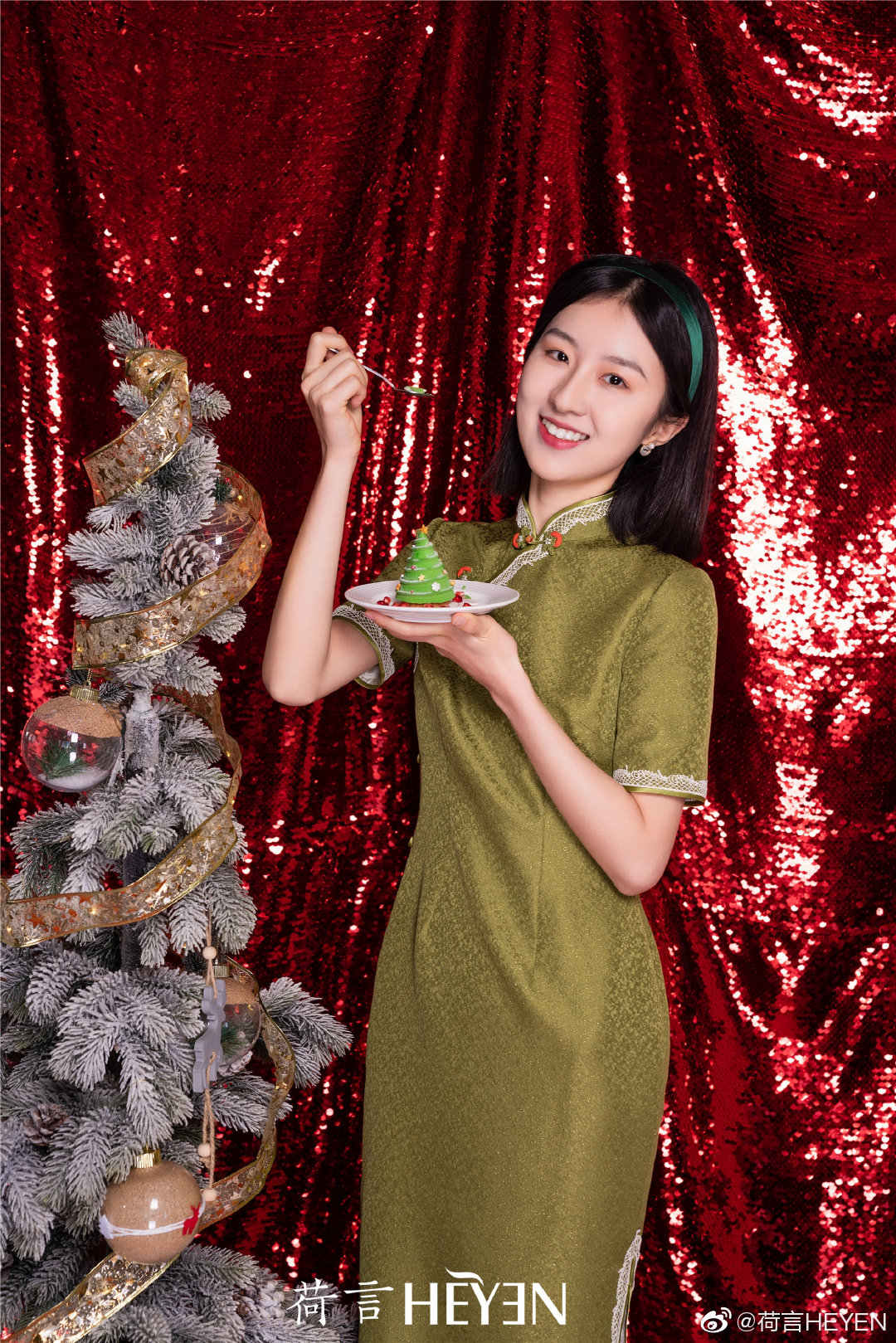
荷言旗袍 #荷言HEYEN…. Suzhou Heyan Culture Communication Co., Ltd. In which Heyan cheongsam– China – People’s Republic of China… is located in Suzhou City in which Heyan cheongsam is the first brand of Chinese Su embroidered cheongsam. Adhere to original design, Suzhou embroidery craftsmanship, and manual customization, with traditional culture as the core, and actively promote the Chinese Suzhou style cheongsam…
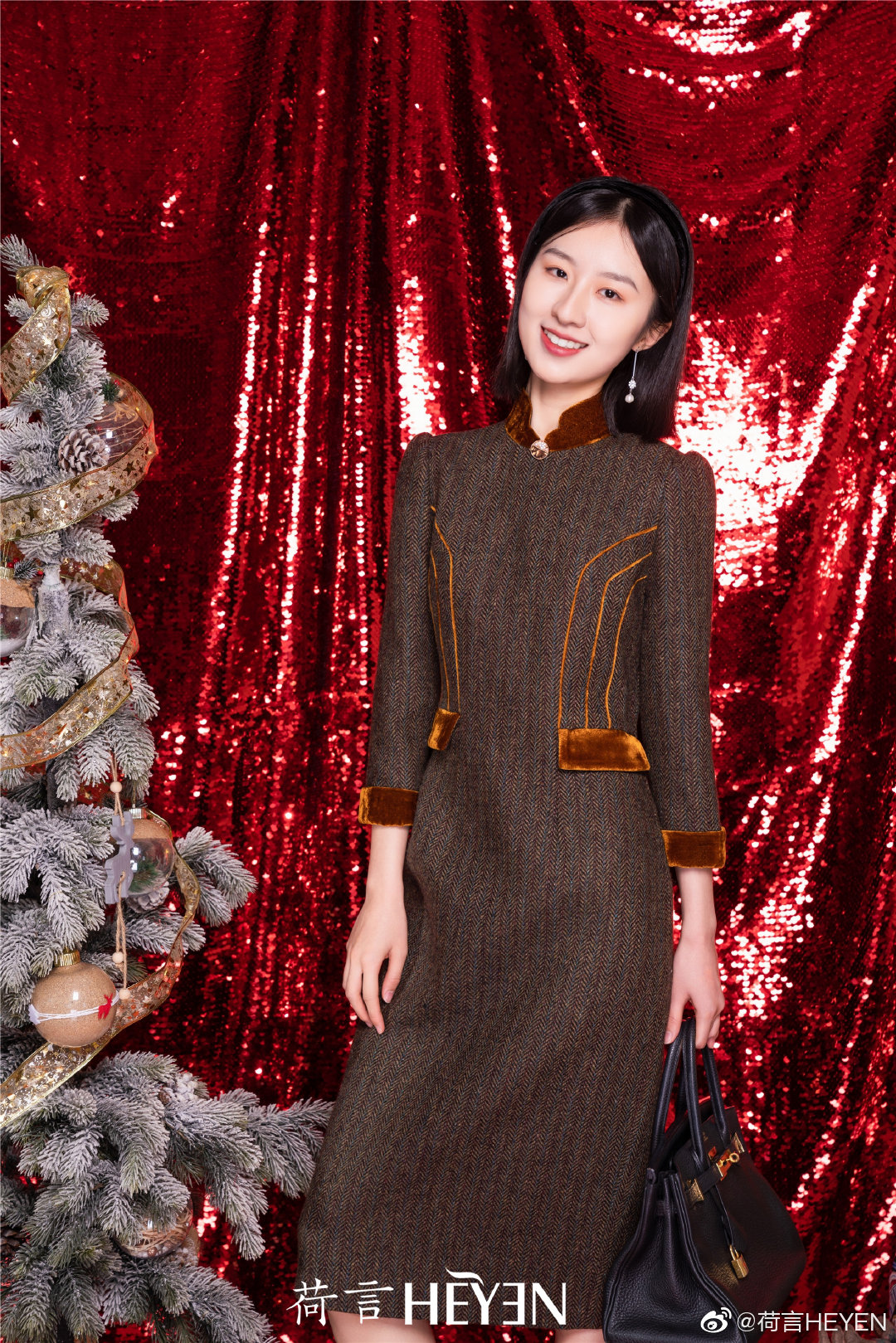
Dressed in on Chinese hand crafted embroidery youthfully cheongsam Qipao …. With beautifully dressed in Beautiful Chinese Painting embroidery of Oriental women’s uniquebeautiful and imperial Femininity is the ultimate expression of condensed femininity…….. Feminine traits are often hidden in the body lines, followed by looks, but they are more important than looks….Inspirationally of autumn and winter classic series… in which with a modern white buttons pearls Qipao front assemblage white trims detailing with modern curves of the Qipao-Cheongsam dress silhouette.. In postmodern tight fitting it brings back the memories of the Shanghai look of the Qipao-Cheongsam slightly retaining its postmodern imperial look high Mandarin collars retaining of the Ming Dynasty look…
Traditionally the Qipao- Cheongsam dress is fasten assemblage with ribbon buttons of pearls or silk the traditionally wearing it has a back zip in which helps to emphasis the embroidery artwork of the Qipao-Cheongsam.
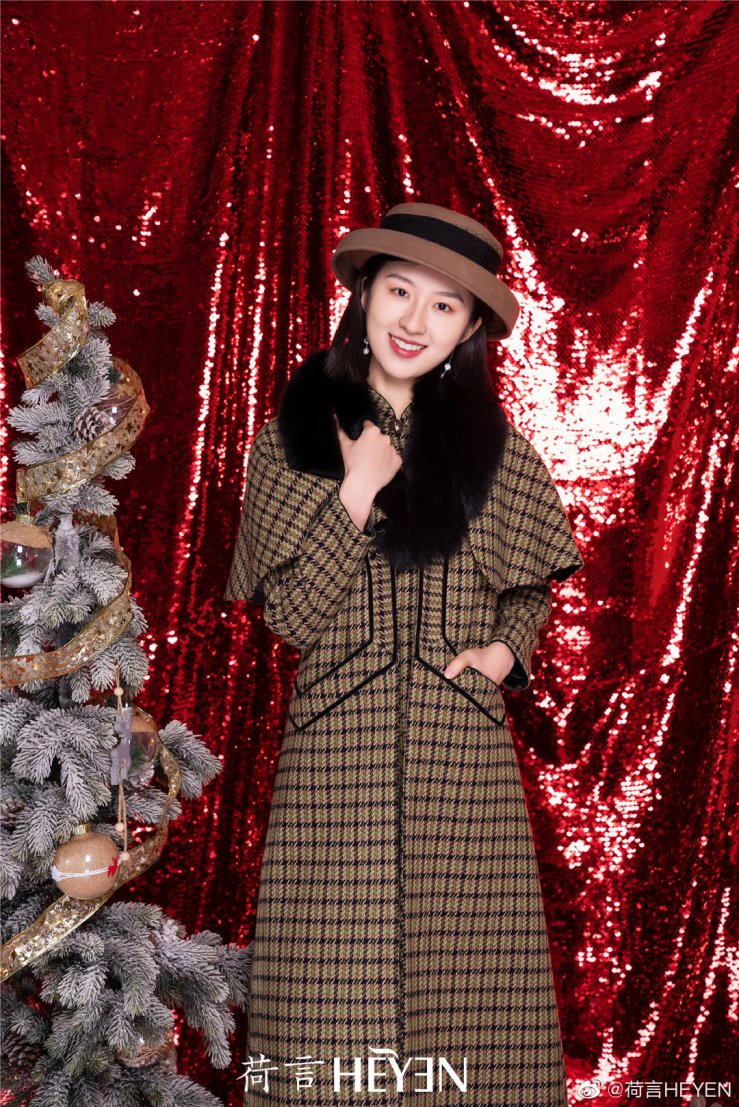
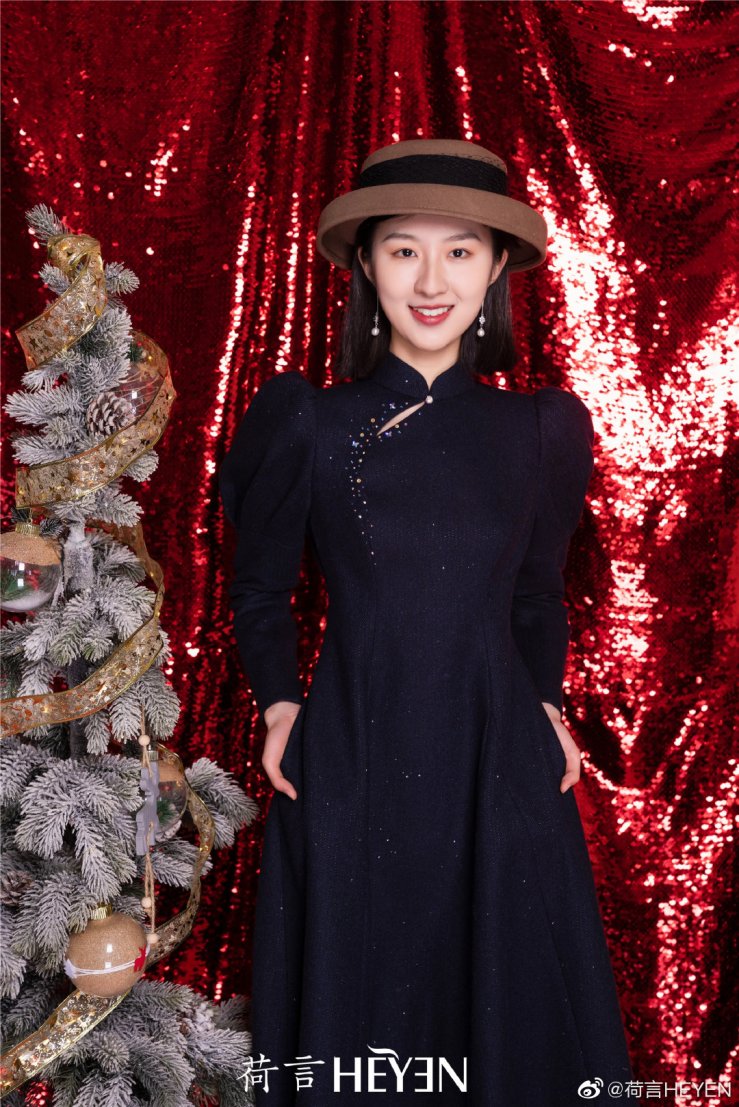
The new season cheongsam has been delivered to the woollen cheongsam suit in advance. The new national style cheongsam dress is beautiful from Christmas to the New Year. Which look is your favourite cheongsam style….?
With silky shoulders, neck and arm lines… the slenderness and extension of the calves and ankles… the rhythm of each step… Based on this, there is really no dress that is more suitable for showing the temperament of the goddess than “cheongsam- Qipao” expression of that is the new荷言旗袍 HEYEN modern Lacy velvet silk with …. With a beautiful detailing of slide button fixtures in a traditional Qipao- Cheongsam design in replacement of the modern with the back zip opening in which is a non-traditional design ..
QIPAO 旗袍 Cheongsam …. In which from historically Shenyang is the birth place of the Qing Dynasty 1636-1912plus …. In which Qipao is termed for Qing Dynasty Clothing that the Manchu ethnic adoptively wore…… in which the Shenyang Palace Museum was an imperial palace towards two Qing Dynasty emperors. Previously two years ago During the event it which was an eight day forums, with exhibitions also related workshops illustrating the birth place of the Old Capital of Cheongsam where the Qing Dynasty- Qipao was inspired from..
Before that Shanghai 1930’s Qipao-Cheongsam revolution, the Manchurian Cheongsam was the fashion of choice of the Qing Dynasty (1636-1912) throughout as it standardised that style during the dynasty… Replacing the previous clothing standard Han Fu – Han Dynasty clothing style, in which also is form fitting towards the women’s silhouette but with a higher degree of freedom of flare of personal, individual style…
Qipao-Cheongsam is uniquely hand crafted tailored Chinese dress to the customer’s various measurements… in which you can still have them brought of the rack in which is accustomed to the standard measurements… in which you can tell which is western influenced with the back zipped in which the Eastern traditional Chinese Tailors would have the side zipped of the Qipao dress due it interrupts the flow of the pattern work at the back of the dress.. Also it creates a continuous seamless back look… after as the measurements are translated drafted onto the silk or the customer desired accustomed fabric of choice, from the measurements book with the associated look of the design elements with additional accessories the sexiness of Qipao lies subtlety.. Measuring, patterning, cutting, and button making are crucial, in where passion and art comes together in tailoring
In which traditionally Qipao- Cheongsam dresses are worn for from straight forwardly every day towards after work evening wear in without having to change to another set of wardrobe dressing only to accessories for the required occasion… … in which the Qipao dress pattern silhouette is design for the lady’s figure in which accentuating the silhouette without giving away too much of what’s underneath in retaining…. its timeless classic silhouettes in which are designed to be worn every day, from work, evening, casually towards to the weekend… with sleek simple, elegant, sexy intelligent sophistication in which are easy to be accessorised with any pieces of clothing in your current or upcoming wardrobe…
Images and visuals are from Weibo also from荷言旗袍 #荷言HEYEN…. Suzhou Heyan Culture Communication Co., Ltd. In which Heyan cheongsam – China – People’s Republic