#北京 #中國 #China #Beijing | #紫禁城 #ForbiddenCity #March2022 | #北京卫视上新了故宫#BeijingSatelliteTV #BeijingTV |#ForbiddenCityMoments of The #SummerPalace blooming full of red, pink will green flowers of #SpringEquiunox #KunmingLake #AGallery —-

In this year’s 2022, the second decade from the turn of the century in Beijing the Capital of China also the People’s Republic of China, in which is also the year of the Tiger, marking its six hundred and two years anniversary of the Forbidden city that marks the transitional point of in between the middle of the Ming Dynasty (1368- 1644) transitionally from Nanjing to Beijing towards the Qing Dynasty (1636-1644-1911) …. The Imperial Palace seen so many countless seasonally transitional equinoxes but further its six hundred years is iconic, but it’s five hundred ninety nine years it marks it Autumn Equinox…. In which it only took twelve years to build the same of the Daming Palace of The Tang Dynasty Xian Imperial Capital only it was least twenty times larger…

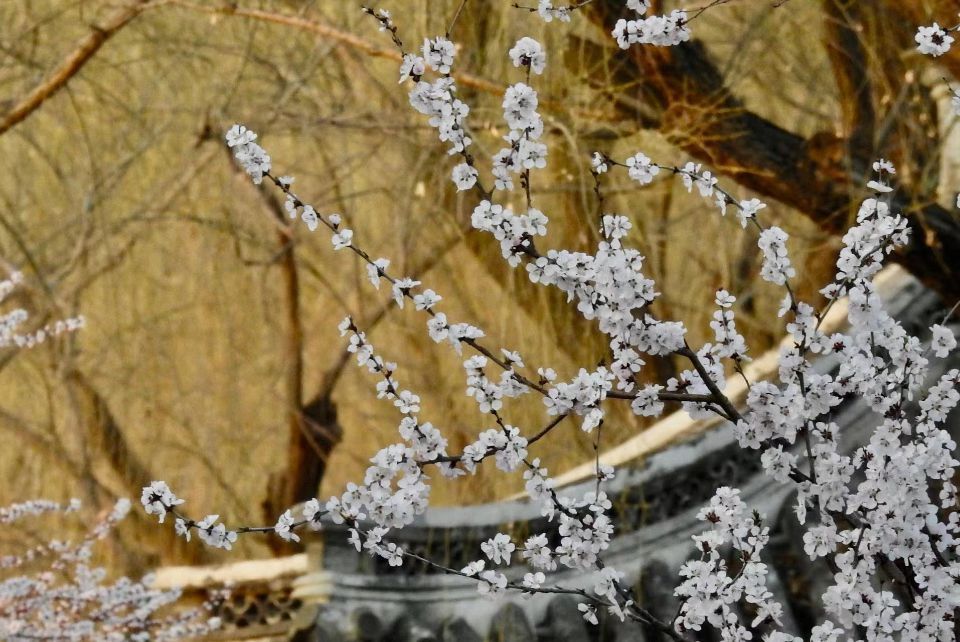
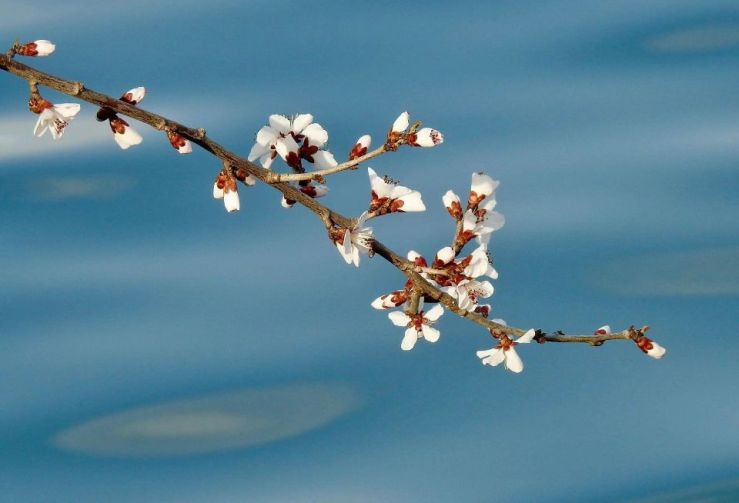
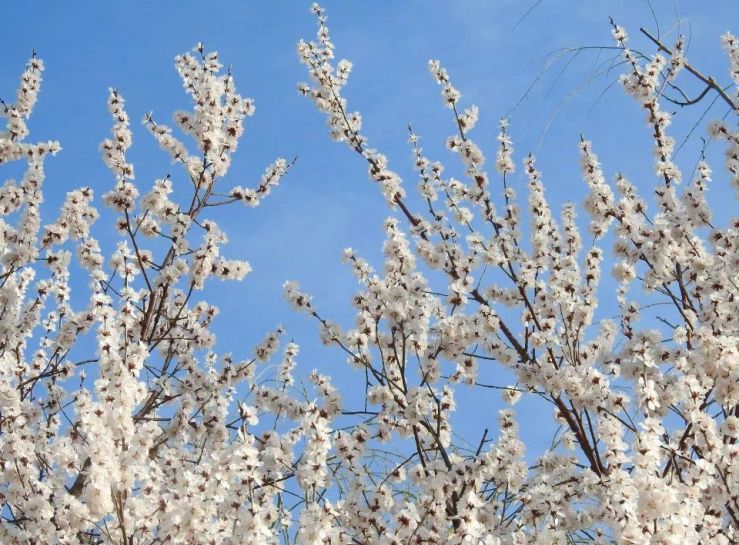
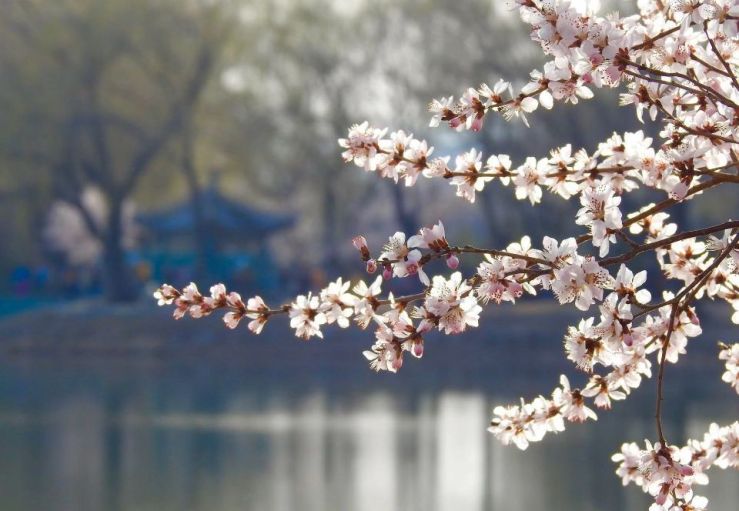
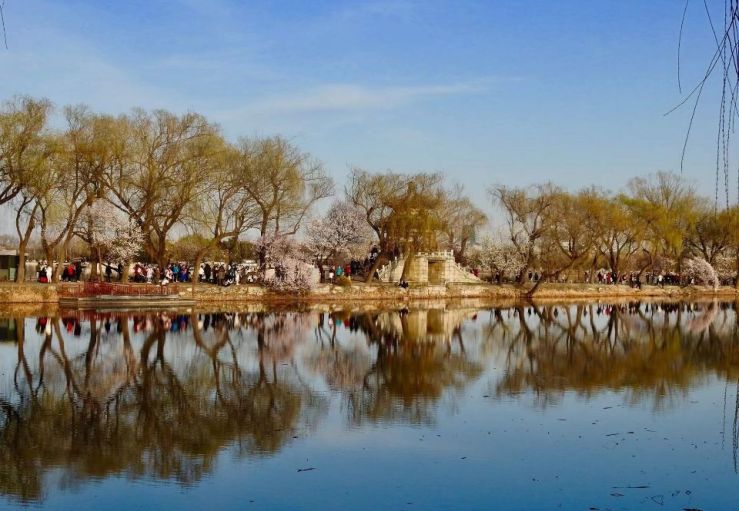
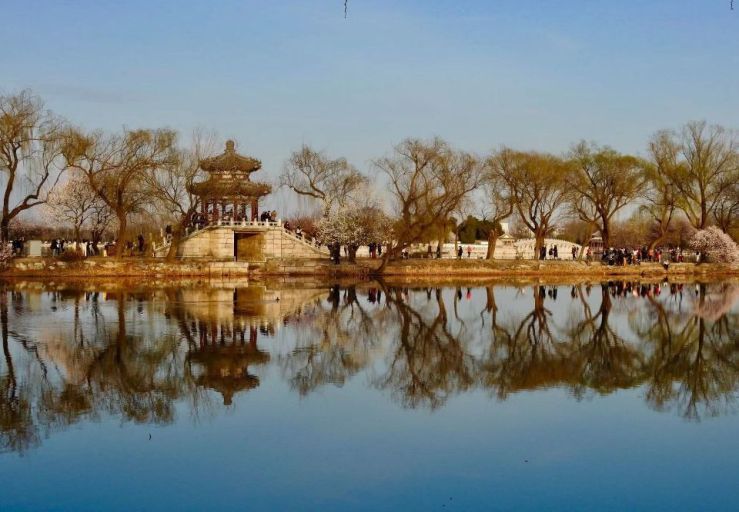
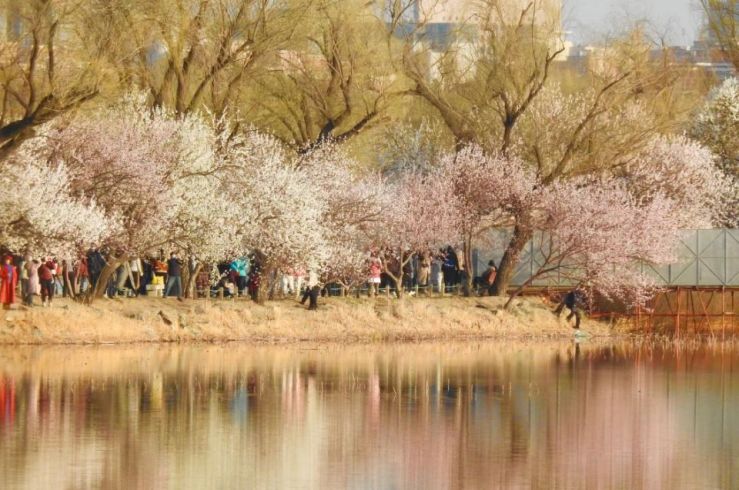
On the week of the 20th March 2022 Sunday it’s the week of the Spring Equinox in which throughout the Country’s Garden from home all walks of life to the National Parks floral gardens are blooming with blossoms of spring in radiances of snowflakes of blooming snow.

In which it can be described as spring is here, the West Embankment of the Summer Palace is full of red and willow green flowers, and the water is glistening Chinese painting in real life as you walking through the Spring season of the Kunming Lake .

Imagines credits are of the Forbidden city –Imperial Palace –Beijing – China- People’s Republic of China also from the Series Weibo北京卫视上新了故宫 Treasures in the Forbidden City…

#北京。 #中國 #China #Beijing | #紫禁城 #ForbiddenCity #September2020|#ForbiddenCityarchitecture built 600 years of rich architectural language briefly explained- #宁寿宫 #ThePalaceOfTranquilLongevity #NingShouPalace……


In this year’s 2020, the second decade from the turn of the century in Beijing the Capital of China also the People’s Republic of China, in which is also the year of the rat, marking its six hundred years anniversary of the Forbidden city that marks the transitional point of in between the middle of the Ming Dynasty (1368- 1644) transitionally from Nanjing to Beijing towards the Qing Dynasty (1636-1644-1911) …. The Imperial Palace seen so many countless seasonally transitional equinoxes but further its six hundred years is iconic, but it’s five hundred ninety nine years it marks it Autumn Equinox…. In which it only took twelve years to build the same of the Daming Palace of The Tang Dynasty Xian Imperial Capital only it was least twenty times larger……

宁寿宫 The Palace Of Tranquil Longevity – Ningshou Palace was built-1776…..The Emperor Qianlong, who has passed his wise senior years, regarded himself as fulfilling his merits and fulfilled his failures. After his grandfather Kangxi reigned in 61 years, he decided to build the palace of the Supreme Emperor in order to survive after his abdication. In Qianlong’s mind, this Taishang Palace should have all the functions of court greetings, sleeping quarters, worshipping the gods, amusement, and watching the drama in terms of architectural configuration, and it should also include the rare treasures and intoxicating beauty seen in the south of the Yangtze River. . As a result, the Ningshou Palace, which was finally completed in the 41st year of Qianlong (1776), showed Emperor Qianlong’s desire for a leisurely life after returning to power, while also hiding his spiritual sustenance as a literati emperor…..

Located in the Forbidden City in the Area Inner Court Outer East Road within of the Palace Museum Imperial City Complex … Emperor Qianlong located Huangji temple, the Qing Emperor Kangxi twenty-eight years (1689). It was originally the apse of Ningshou Palace. From the 37th year of Qianlong (1772) to the 41st year (1776), the front hall was built as Huangji Hall, and the original plaque was moved to the apse. Palace”.

The Ningshou Palace is built on a single-layer stone platform, which is connected to the Huangji Hall, surrounded by low walls of ventilating lanterns surrounded by yellow and green glazed bricks. The palace has 7 rooms wide and 3 rooms deep , with single eaves and Xieshan roof . Between the pillars and pillars of the eaves, there is a hollow Yunlong ring, underneath the Yunlong bird , all decorated with sturdy gold , magnificent and magnificent. The interior and exterior eaves decoration , interior partitions and furnishings are all imitating Kunning Palace . The door is opened in the east room, two light panel doors are placed, the upper is a double cross four bowls of Liangzi , the left and right sides of the door are built with sill walls, and the upper and lower windows are erected . The rest are sill walls and mullioned windows. The upper part of each room has four bowls and three horizontal windows. Ming eaves, between times for the door, each door double cross four bowls Ryoka Ge fan four, between the walls of each I. Indoor ceiling bats round longevity smallpox . There is a small room on the back eaves of the Yingmen, with a built-in cooking pot stove. West side of the three open out, Ann Muta Taikang with shamanism tablets and Dance with musical instruments, Is the place of worship. The two rooms on the east side are connected to form a bedroom, with a fairy building on the back eaves , and a door on the east mountain wall, which can pass through the room. The buildings on both sides of Ningshou Palace and the south corner are connected to the east and west two buildings. The two buildings have 9 each, and both open the doors in the third and sixth buildings in the south. There is a square brick chimney on the left and right of the back of the palace, with a copper roof, which is used for the stove and indoor flue of Ningshou Palace. The reconstructed Ningshou Palace has become another important building in the Forbidden City that reflects Manchu customs besides Kunning Palace .
Emperor Qianlong’s “Ningshou Palace Inscription” added: “The Qingning Palace is called Qingning Palace at the rear of the Shengjing Dazheng Palace, where the ancestors worshipped the gods. The Kunning Palace, the back hall of the Qianqing Palace , has worshipped the gods, just like the Qingning Palace system, and it still follows the old chapter. When Yu returned to power, he moved the gods and poles of the Kunning Palace to the Ningshou Palace. According to the present ceremony of worshipping the gods.” It explained the reason for the transformation of Ningshou Palace.
Ningshou Palace was originally painted by dragon, phoenix and seal . During the reign of Guangxu, the Empress Dowager Cixi once lived in Ningshou Palace, so she changed the outer eaves and enclosing corridor to Su style paintings, losing her solemn style. After being renovated in 1979, the style and features of the Qianlong period were restored.
It is now the cultural relic’s showroom of the Palace Museum.

区域:内廷外东路

  宁寿宫位于皇极殿后,建于清康熙二十八年(1689年)。初为宁寿宫后殿,乾隆三十七年(1772年)至四十一年(1776年)将前殿建为皇极殿,原匾额移至后殿,遂改称后殿为“宁寿宫”。
宁寿宫建于单层石台基之上,台与皇极殿相接,四周以黄绿琉璃砖围砌透风灯笼矮墙。宫面阔7间,进深3间,单檐歇山式顶。檐廊柱枋间为镂空云龙套环,枋下云龙雀替,皆饰浑金,堂皇富丽。内外檐装修及室内间隔、陈设皆仿坤宁宫。东次间开门,置光面板门两扇,上为双交四椀亮子,门左右下砌槛墙,上安直棂吊搭窗。余各间均为槛墙、直棂吊搭窗。每间上部各安双交四椀横披窗3扇。后檐明、次间为门,每道门双交四椀菱花槅扇4扇,余各间砌墙。室内吊顶镞花蝙蝠圆寿字天花。迎门一间后檐设一小室,内置煮肉锅灶。西侧3间敞通,安木榻大炕,设有萨满教神位及跳神用法器,为祭祀之所。东侧两间相连为卧室,后檐设仙楼,东山墙辟门,可通庑房。宁寿宫两侧建庑房及南转角与东西两庑相连,两庑各9间,均于南数第3、6间开门。殿后左右各有一座砖砌的方形烟囱,上安铜顶,为宁寿宫灶房及室内烟道所用。改建后的宁寿宫成为紫禁城内除坤宁宫以外的另一处体现满族风俗的重要建筑。
乾隆皇帝《宁寿宫铭》补记称:“盛京大政殿后曰清宁宫,祖宗时祀神之所,祭毕,召王公大臣进内食祭肉。国初定鼎燕京,则于乾清宫后殿坤宁宫行祀神礼,一如清宁宫之制,至今仍循旧章。余将来归政时,自当移坤宁宫所奉之神位、神竿于宁寿宫,仍依现在祀神之礼。”说明了宁寿宫改造的原因。
宁寿宫原为龙凤和玺彩画。光绪年间,慈禧太后曾一度住在宁寿宫,遂将外檐围廊改为苏式彩画,失去了庄严的风格。1979年重新修缮后,恢复了乾隆时期的风貌。
现为故宫博物院文物陈列室。

紫禁城建成六百年图录——1776年:建成宁寿宫】紫禁城建成600年 悦读故宫# 已过耳顺之年的乾隆帝自视功德圆满,为履行他不超过祖父康熙帝61年在位时间的诺言,决定在宫中建造太上皇宫殿,以期退位后颐养天年。在乾隆帝的心目中,这一太上皇宫在建筑配置方面应当具备朝贺、寝居、敬神、游乐、赏戏等全部功能,并且还要囊括此前下江南所见的奇珍异宝与醉人美景。于是,最终于乾隆四十一年(1776年)落成的宁寿全宫,展现了乾隆帝对归政后闲适生活的企盼,同时也潜藏着他作为一个文人天子的精神寄托。

Imagines credit are of the Forbidden city –Imperial Palace –Beijing – China- People’s Republic of China

#東京。 #中國 #China #Beijing | #紫禁城 #ForbiddenCity | the symmetrically of the Consorts West and East Palaces …..


In this year’s 2020, the second decade from the turn of the century in Beijing the Capital of China also the People’s Republic of China, in which is also the year of the rat, marking its six hundred years anniversary of the Forbidden city that marks the transitional point of in between the middle of the Ming Dynasty (1368- 1644) transitionally from Nanjing to Beijing towards the Qing Dynasty (1636-1644-1911) …. The Imperial Palace seen so many countless seasonally transitional equinoxes but further its six hundred years is iconic, but it’s five hundred ninety nine years it marks it Autumn Equinox…. In which it only took twelve years to build the same of the Daming Palace of The Tang Dynasty Xian Imperial Capital only it was least twenty times larger..

The location of the Forbidden city in which is located symmetrically palace halls arrangements is the East and West palaces are symmetrically distributed on both sides of the Qianging Palaces and Kunning Palaces are the main residences of the  Concubines…

Qianging Palace The Palace of Heavenly Purity, or Qianqing Palace (Chinese: 乾清宫; pinyin: qiánqīng gōng; Manchu:ᡴᡳᠶᠠᠨᠴᡳᠩᡤᡠᠩ; Möllendorff: kiyan cing gung) is a palace in the Forbidden City in Beijing, China. It is the largest of the three halls of the Inner Court (the other two being the Hall of Union and the Palace of Earthly Tranquillity), located at the northern end of the Forbidden City. During the Qing dynasty, the palace often served as the Emperor’s audience hall, where he held council with the Grand Council.

Kunning Palace the Palace of Earthly Tranquillity (simplified Chinese: 坤宁宫; traditional Chinese: 坤寧宮; pinyin: Kūn Níng Gōng) is the northernmost of the three main halls of the Inner Court of the Forbidden City in Beijing, China. The other two halls are the Palace of Heavenly Purity and Hall of Union.

The Palace of Earthly Tranquillity is a double-eaved building, nine bays wide and three bays deep. In the Ming dynasty, it was the residence of the Empress. In the Qing dynasty, large portions of the Palace were converted for Shamanist worship by the Manchu rulers. Thus, the front part of the hall featured shrines, icons, prayer mats, and a large kitchen where sacrificial meat was prepared. From the reign of the Yongzheng Emperor onwards, the Empress moved out of the Palace following the Emperor’s move out of the Palace of Heavenly Purity. However, two rooms in the Palace of Earthly Harmony were retained for use on the Emperor’s wedding night. The wedding ceremony would be held in the main room, and afterwards the Emperor and Empress would retire to one of these rooms

The East Six Places is divided into two groups by the Middle East South Channel East Second Long Street in which  looking at the west side in which East side is another post to tell..

The West side is Jingren Palace, Chengqian Palace and Zhongzu Palace ….. Each Palace has an independent courtyard with two entrances… In which there’s a Linzhmen in the South of the East Second long street

Jingren Palace, originally called Chang’an Palace, was built in 1420 in the Ming Dynasty and got its present name in the Jiajing Period. It was rebuilt in 1655, the 12th year of Shunzhi Emperor of the Qing Dynasty. “Jingren” means great humanity. This two-row courtyard remains the layout of the original construction built at the beginning of the Ming Dynasty. There is a white jade screen wall at the gate of the Jingren Palace. The wall is said to be a relic of the Yuan Dynasty.

In the Ming and Qing dynasties, the Jingren Palace was the residence of concubines. It is worth noticing that Concubine Tunggiya gave birth to Xuanye, the future Kangxi Emperor the Qing Dynasty, in the palace in March, 1654, the 11th year of Shunzhi’s reign. Besides, Senior Concubine Xi of Emperor Yongzheng and the mother of Emperor Qianlong and Concubine Zhen of Emperor Guangxu once lived in the palace.

Chengqian Palace…. Located in the Six Eastern Palaces, the Palace of Celestial Favor (Chengqian gong) is the Bronze Gallery with selected bronze ware datable to the Shang and Zhou (16th century-256 BCE) dynasties. During the Ming and Qing dynasties, it was the residence of imperial consorts and concubines, notable of whom are Lady Donggo, the beloved empress of the Shunzhi Emperor (r. 1644-1661), and Empress Xiaoquan (Lady Niuhuru), the biological mother of the Xianfeng Emperor (r. 1851-1861)…..

Imagines credit are from the Forbidden cityImperial Palace –Beijing – China- People’s Republic of China..