
#北京。 #中國 #China #Beijing | #紫禁城 #ForbiddenCity #August2022 | #故宫书店 #ForbiddenCityBookStore #ForbiddenCityPress #VoiceOfTheForbiddenCity #HearingTheCity #ShanJixiang’s new #Book and interactive #AudioBook …..  

Today its 17th August 2022, During On August 5th 2022, the press conference of Shan Jixiang’s new book “Voice of the Forbidden City”, president of the Chinese Cultural Relics Society and former director of the Palace Museum, was held at the Beijing Dongcheng Cultural Development Research Institute. At the press conference, Shan Jixiang also gave a public reading lecture on the theme of “46 Voices, Hearing the Beauty of the Forbidden City”. He cut from the perspective of sound, showing readers a solemn yet cordial, elegant and interesting Forbidden City. The event was hosted by Zhang Hongwei, president of the Palace Museum Press.

Zhang Hongwei introduced that the book “The Voice of the Forbidden City” is the work of Shan Jixiang, the old director of the Forbidden City. Through the cross-section of “The Voice of the Forbidden City”, using sound as a medium, the history and the present, tradition and innovation of the Forbidden City are integrated. , presented to everyone from a whole new dimension, while telling the interesting story of the Forbidden City. Let the audience who walk into the Forbidden City listen, read and watch, understand the history of the Forbidden City, and understand the stories behind the cultural relics. This is the Forbidden City Publishing House’s promotion of the excellent traditional Chinese culture contained in the Forbidden City from different angles, and it is also the publishing vision of this new book.

One of the major features of “The Voice of the Forbidden City” is that it can be “listened” and is a book that can speak. A QR code is attached to the cover of the book. After scanning the code, you can listen to the audio program “Hearing the City” narrated by Shan Jixiang. The 46 kinds of sounds are all sampled from the Forbidden City. In Shan Jixiang’s contagious narration, the story about the Forbidden City slowly unfolds. Read the text, appreciate the pictures, listen to the book, readers can get a new reading experience. 爱 Reading Forbidden City history pan-knowledge….

In this year’s 2020, the second decade from the turn of the century in Beijing the Capital of China also the People’s Republic of China, in which is also the year of the rat, marking its six hundred years anniversary of the Forbidden city that marks the transitional point of in between the middle of the Ming Dynasty (1368- 1644) transitionally from Nanjing to Beijing towards the Qing Dynasty (1636-1644-1911) …. The Imperial Palace seen so many countless seasonally transitional equinoxes but further its six hundred years is iconic, but it’s five hundred ninety nine years it marks it Autumn Equinox…. In which it only took twelve years to build the same of the Daming Palace of The Tang Dynasty Xian Imperial Capital only it was least twenty times larger..

Images and visuals are from – Forbidden City –Palace Museum Beijing- China –People’s Republic of China…..

#北京。 #中國 #China #Beijing | #紫禁城 #ForbiddenCity #July2022 | #ForbiddenCityMoments #ForbiddenCityArchitecture the Intriguingly interesting rooftops Architecture of  the Forbidden City……

On this week on July 2022 let’s take a look at the interesting rooftops in the Forbidden City this week in its intriguiness… it was hot humid very warmingly  Saturday now it’s the Summery Days of  , the summery  days are gradually approaching, the weather is sultry, everyone must pay attention to heatstroke prevention and cooling by keeping Hydrated cool water..  ~

Let’s go back to the Forbidden City this week and take a look at the interesting roofs in the Forbidden City~

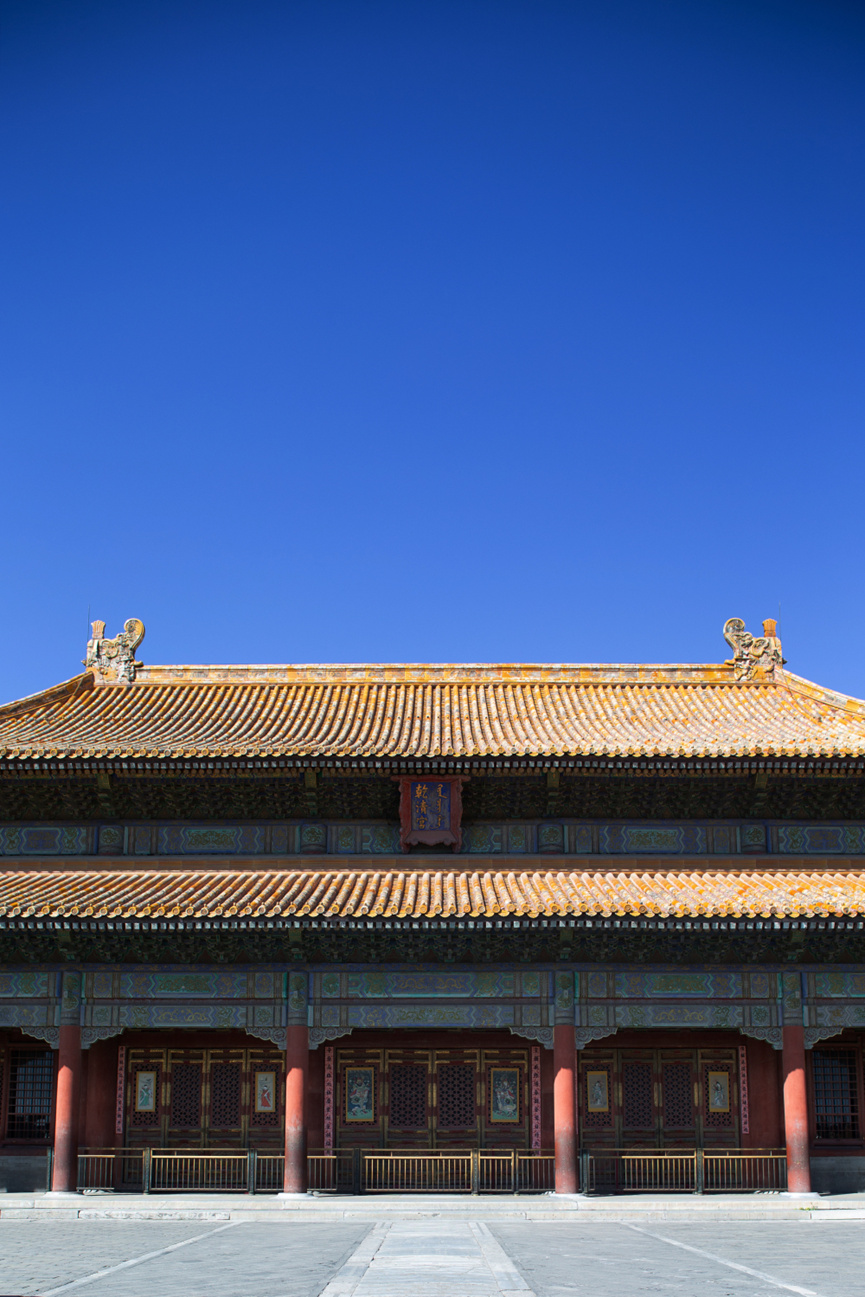
Hall of Supreme Harmony

Speaking of the various palaces, halls and halls, pavilions and corridors in the Forbidden City, from the outside, these roofs look very similar, almost all of them are glazed tiles. But a closer look reveals that these roofs actually come in a variety of different types. For example, the main palace used by the emperor not only has a tall base and a magnificent shape, but also has special decorations on the roof, while other houses are not only small in size, but also not too complicated in roof decoration. The side halls and the bungalows will be different according to the status of the main palace, and the roof style will also be different. So today, let’s take a look at the various roofs in the Forbidden City with you~

South Sansuo
Yuhua Pavilion

The first one is the “Dianding Roof”. Those who are familiar with the architecture of the Forbidden City should be familiar with this roof. It is suitable for rectangular buildings. Since the face width is longer than the depth, the front and rear slopes of the roof become positive ridges. In the Qing Dynasty The “Engineering Practice” called it “big ridge”. The left and right slopes intersect with the front and rear slopes to form four vertical ridges, so the single-ridged temple is also called the “Five-ridged Hall” of the four major slopes. In addition, there are two layers of eaves called “double eaves hall”. The top of the double-eave roof is the most noble form of roof style. The Hall of Supreme Harmony that everyone is most familiar with is the roof of the double-eave roof.

Fengxian Hall

Next is “hard top and hanging top”. The hard top is on the two ends of the base of the house foundation. Build the gable to the top, and build the purlin into the gable to seal it, so that four vertical ridges and two slopes will be formed. roof. Hanging tops (also known as “pick tops”), the roof form is generally the same as the hard tops, but also has a positive ridge, four vertical ridges and two slopes. The difference between the two roofs is that the purlins of the roofs extend beyond the gables, and the wind panels are nailed along the two purlin heads to protect the purlins from decay and also protect the gables. This design is really very delicate, considering the appearance and protection.

Emperor Palace
Yunguang Building

The Yunguang Building is in the shape of a curved ruler, leaning against the palace wall in the west, folded from north to south and then eastward. There are two floors up and down. The north side of the upper roof is the Xieshan Peak, and the east side is the Hard Peak.

Concord Gate The Xiehe Gate is a house-style gate, with yellow glazed tiles and single eaves on the top of the mountain.

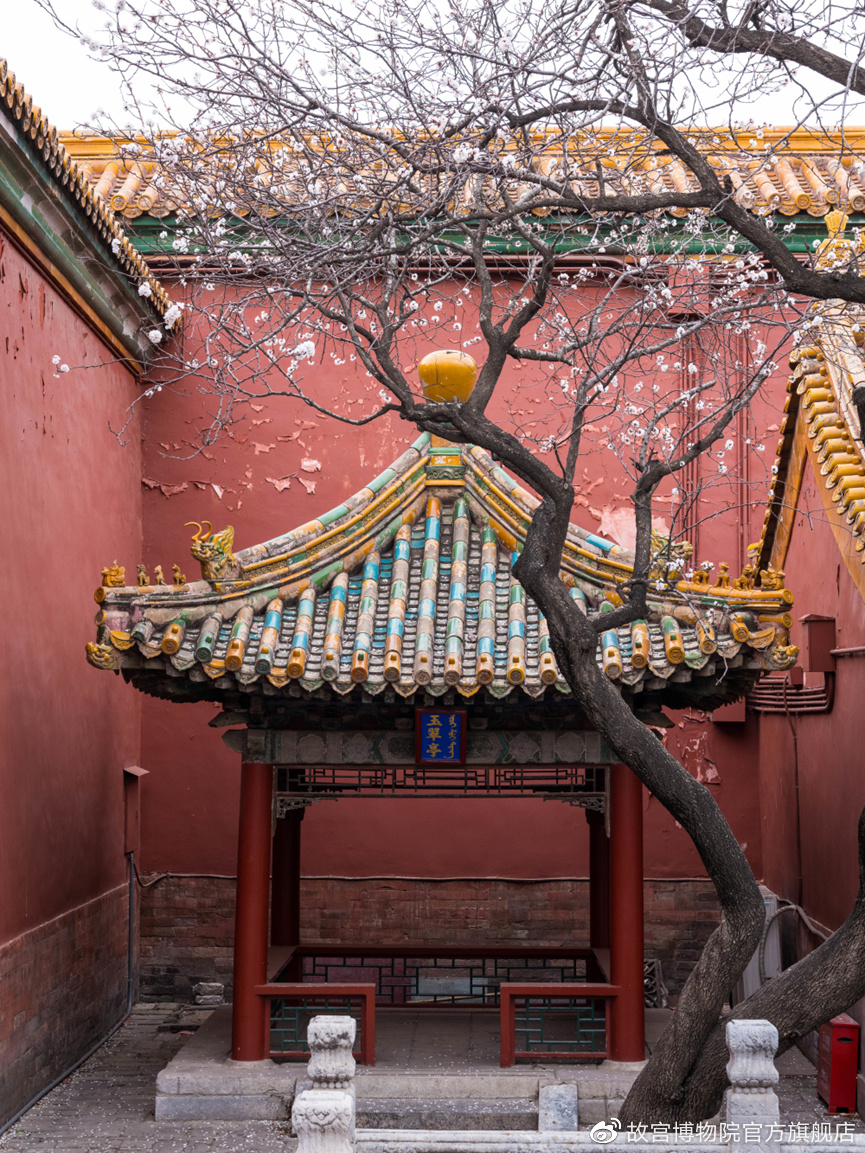
There is also a roof design that combines the top of the temple and the top of the hanging mountain, that is, the “Xieshan Peak”. On the upper part of the roof, the four vertical ridges at both ends of the main ridge are similar to those on the top of the hanging mountain. The lower part of the roof has four ridges plus the main ridge, a total of nine ridges, so it is also called “Nine Ridges Hall”. There are also single eaves and double eaves on Xieshan Peak. In addition to the Xieshan Peak, there is also a “Zanjiao”, which is generally used for square plane buildings, and its form is divided into four-corner Zanjiao and round Zanjiao. The four-cornered pointed roof is divided into four equal parts, with four vertical ridges on top of the Anbaoding. The round and pointed roof has no ridges, and the roof tiles gradually shrink from bottom to top, which is called “bamboo roof”. Seeing this, the editor thinks that the roof really contains a lot of interesting little knowledge. When you come to visit, you might as well take a look at which roofs are in the Forbidden City~ 

Yucuiting, square spires

Imagines credits are of the Forbidden City –Imperial Palace –Beijing – China- People’s Republic of China also from the Series Weibo北京卫视上新了故宫 Treasures in the Forbidden City…

#漢服 #HanFu #HanDynastyClothing |#零青子 #HowToWearHanfu #FashionLookBook #November2021 |#SongDynastyClothing of a gorgeous elegant #EveryDayWear of urban Tan #SwirlSkirt #UrbanWear for #EveryDayWear…

零青子 Hanfu – Han Dynasty Clothing blogger –Vlogger based in historical modern richness of two thousand and four hundred year old ultra megapolis ancient – postmodern Chengdu city Sichuan province of China – People’s Republic of China. She is one of many leading fashion blogger-Vlogger  fashionably trending setting vlogs of how to wear of her collection of sort after Chinese –Han Dynasty Clothing of Hanfu- Han ethnic Traditional clothing in which dressing traditional from various dynasties to its postmodern twentieth first century trending setting ….

Horse-face skirt, also known as “horse-face pleated skirt” is a Swirl Skirt variant, is one of the main skirt styles of ancient Chinese Han women. There are four skirt doors inside and outside, overlapping in two. The outer skirt door is decorated, and the inner skirt door is decorated with little or no decoration. For decoration, the side of the horse-faced skirt is tucked up, and the waist of the skirt is mostly white cloth, which means white head and old age, and it is fixed with rope or button.

The horse-main skirt is the most typical style of Han women’s dress during the Ming and Qing Dynasties. Its style has undergone a series of changes from the freshness and elegance of the Ming Dynasty to the magnificence and wealth of the Qing Dynasty to the beauty and simplicity of the Republic of China, but its “horse-faced” structure has always been deeply ingrained….,

How to wear a Song Dynasty urban wear every day wear clothing on for a every day wear for a summery autumn wear with bold white cool colours with soft  silk  Swirl Skirt in very simple pastel colours fabrics keeping warm and cool throughout the seasons in which helps to match a contempary style within your wardrobe with a Ming Dynasty blouse on. ..  

HanFu- Han Dynasty Clothing is making a massive come back in the Asian Chinese communities as youths reliving In recently decades there’s been very much strong revitalisation of Chinese Customary tailoring clothing in which is HanFu- Han Dynasty (221-206 BC) period inspired clothing in which was worn just before the fall of the Ming Dynasty (23 January 1308 to 25 April1644, until a North East Manchurian fashion that have taken over the traditional Han Dynasty fashion in which we known till today that’s the Qipao in which have been fashionable evolving on the same path also…. Like a Qipao, HanFu can be worn every day, as work wear, till as evening wear… It also it comes in various forms as to the nature of activity of the day or night…

Images visuals are from Weibo and their respectives of 零青子.