#北京。 #中國 #China #Beijing | #紫禁城 #ForbiddenCity #May2023 | #ForbiddenCityDairies -“Xiangkai Vientiane–The Forbidden City and Tibetan Cultural Relics Joint Exhibition” reflecting the history of ethnic relations in the Yuan, Ming and Qing dynasties….

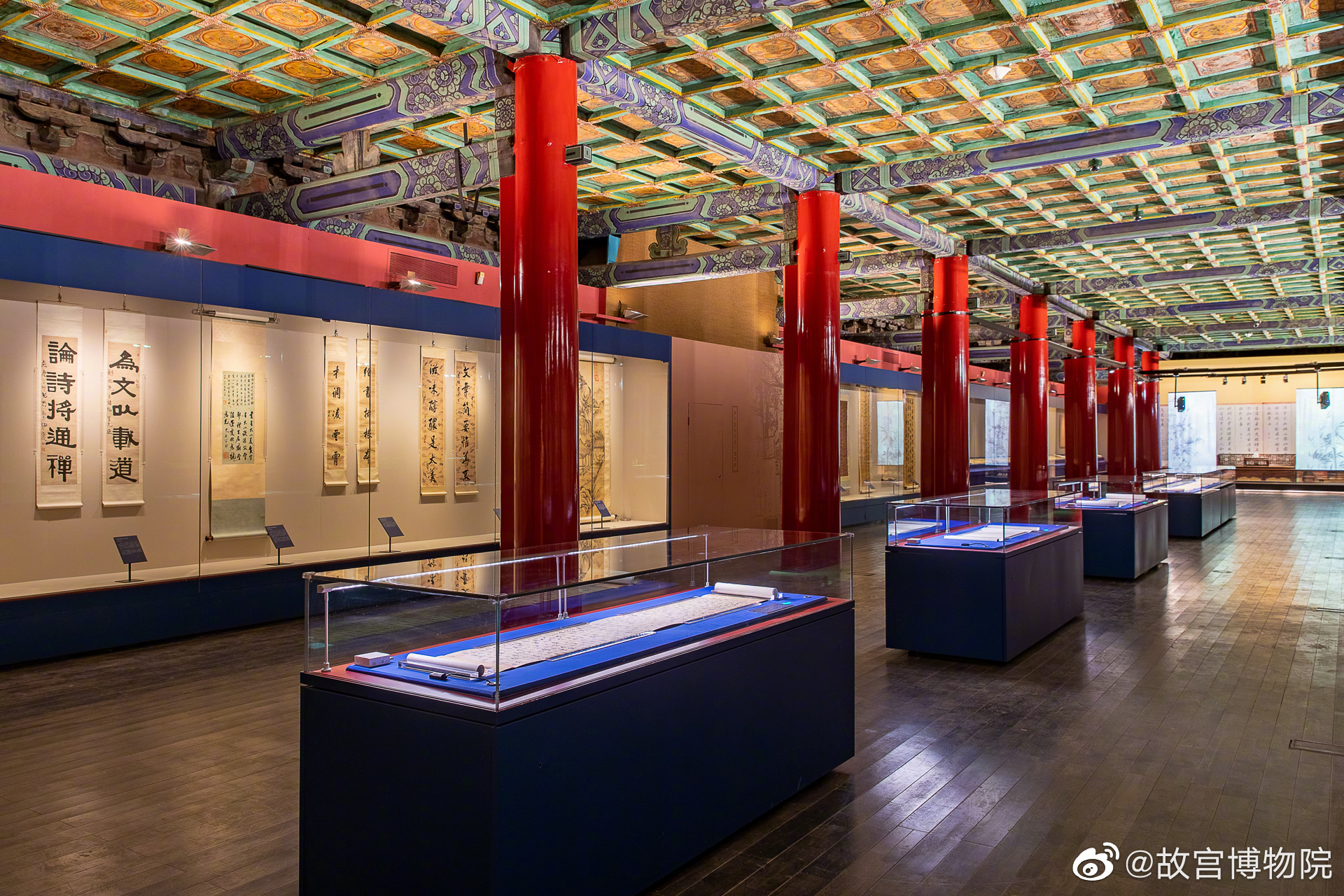
The Forbidden City Palace Museum Beijing, China, People’s Republic of China holds a large-scale exhibition reflecting the history of ethnic relations in the Yuan, Ming and Qing dynasties, “Xiangkai Vientiane–The Forbidden City and Tibetan Cultural Relics Joint Exhibition” will be on display at the Meridian Gate on April 29th 2023 towards 30th of September 2023.

On April 28, 2023, the opening ceremony of “Auspicious Opening of Vientiane—Joint Exhibition of the Forbidden City and Tibetan Cultural Relics” was held at the Palace Museum. Wang Xudong, member of the Party Leadership Group of the Ministry of Culture and Tourism and director of the Palace Museum, Zhong Tingxiong, deputy director of the Propaganda Department of the State Ethnic Affairs Commission, Zhang Xuxia, deputy director of the General Office of the Ministry of Culture and Tourism, Lian Xiangmin, deputy director-general of the China Tibetology Research Center, protection of historical sites in China Song Xinchao, chairman of the association and former deputy director of the State Administration of Cultural Heritage, Qu Zhen, deputy secretary of the party group and director of the Tibet Autonomous Region Cultural Relics Bureau, Yang Fan, secretary of the Party Committee of the National Museum of China, Fayan, deputy director of the National Cultural Palace, Zha Xia, director of the Tibetan Culture Museum, Chinese Buddhist Master Yanjue, the president of the association, relevant departments and bureaus of the Central Propaganda Department and the Central United Front Work Department, relevant comrades in charge of cultural museums in Beijing, relevant associations, team members of the Palace Museum, and leaders of retirement homes attended the opening ceremony. Du Haijiang, Secretary of the Party Committee and Vice President of the Palace Museum, Deji Zhuoga, Deputy Secretary of the Party Group and Director of the Department of Culture of the Tibet Autonomous Region, and Yang Xun, the representative of the Xuri Charity Foundation and the vice chairman and general manager of Xuri Group Co., Ltd. Speech at the ceremony. Ren Wanping, vice president of the Palace Museum, presided over the opening ceremony of the exhibition.

“Xiangkai Vientiane-The Forbidden City and Tibetan Cultural Relics Joint Exhibition” is jointly organized by the Palace Museum and the Cultural Relics Bureau of the Tibet Autonomous Region, with special support from the Rising Sun Charity Foundation. The exhibition hall of Yanchi Building is open to the audience. Guided by General Secretary Xi Jinping’s thought that “cultural identity is the deepest level of identity, the root of national unity and the soul of national harmony”, combined with the construction of the “Four Forbidden City” system of the Palace Museum, it is a cultural and The display of the results of the Ministry of Tourism’s Tibet-aid project “Research on the Chinese Nation Community Based on the Forbidden City and Tibetan Cultural Relics” is also a large-scale comprehensive exhibition reflecting the history of ethnic relations in the Yuan, Ming, and Qing dynasties. The exhibition reflects the latest relevant scientific research achievements of the Palace Museum in the past five years, explores the cultural connotations behind the cultural relics, shows the exchanges, exchanges and integration between Tibet and the mainland and the court embodied in the cultural relics, and composes a splendid chapter of national unity and progress.

  Du Haijiang, Secretary of the Party Committee and Vice President of the Palace Museum, said in his speech that the exhibition takes forging the consciousness of the Chinese nation’s community as its starting point and foothold. The emotional bond and spiritual belonging of the nation prove the necessity and forward-lookingness of forging a sense of community of the Chinese nation. For thousands of years, people of various ethnic groups in Tibet and inland have been in frequent contact with each other, helping each other, and being brothers and sisters. The Forbidden City, where the Palace Museum is located, is a witness to the exchanges, exchanges, and integration between Tibet and the mainland of the motherland, and a historical witness to the continuous formation of the consciousness of the Chinese nation community. Based on the close historical relationship between cultural relics and the interaction between cultural relics and the design of the exhibition hall, the exhibition reproduces the historical facts of exchanges, exchanges and integration between Tibet and the mainland, and restores the great process of the Chinese nation’s community consciousness from formation to consolidation in history.

Deji Zhuoga, director of the Cultural Department of the Tibet Autonomous Region, said in his speech that this exhibition is an in-depth implementation of the spirit of the 20th National Congress of the Communist Party of China and the spirit of General Secretary Xi Jinping’s important exposition on cultural relics work by the Tibet Autonomous Region and the Palace Museum. It is an important exhibition held to firmly grasp the consciousness of the community of the Chinese nation and build a common spiritual home for the Chinese nation. The exhibition showcases the long history and splendid culture of the Forbidden City and Tibet, demonstrates the extensive exchanges and in-depth integration between Tibet and other parts of the motherland, and witnesses the diverse and colorful Chinese culture. As a large area of ​​cultural relics resources, Tibet has made all-round progress and historic achievements in promoting the protection and utilization of cultural relics in recent years. Cultural relics have played an important role in forging the consciousness of the Chinese nation community and promoting Tibet’s long-term stability and high-quality development.

Yang Xun, the representative of the Xuri Charity Foundation and the vice chairman and general manager of Xuri Group Co., Ltd., who specially supported the exhibition, said that Chinese culture is a synthesis of the cultures of all ethnic groups and a common spiritual home for people of all ethnic groups. “Prosperity in Vientiane—Joint Exhibition of Cultural Relics from the Forbidden City and Tibet” tells the moving story of exchanges, exchanges, and integration between Tibet and various ethnic groups in the mainland through cultural relics research. Glorious Sun Group has strengthened its cultural self-confidence for many years and helped the inheritance and protection of Chinese culture. This support for the exhibition is what Glorious Sun Group should and must do for the inheritance and protection of Chinese culture.

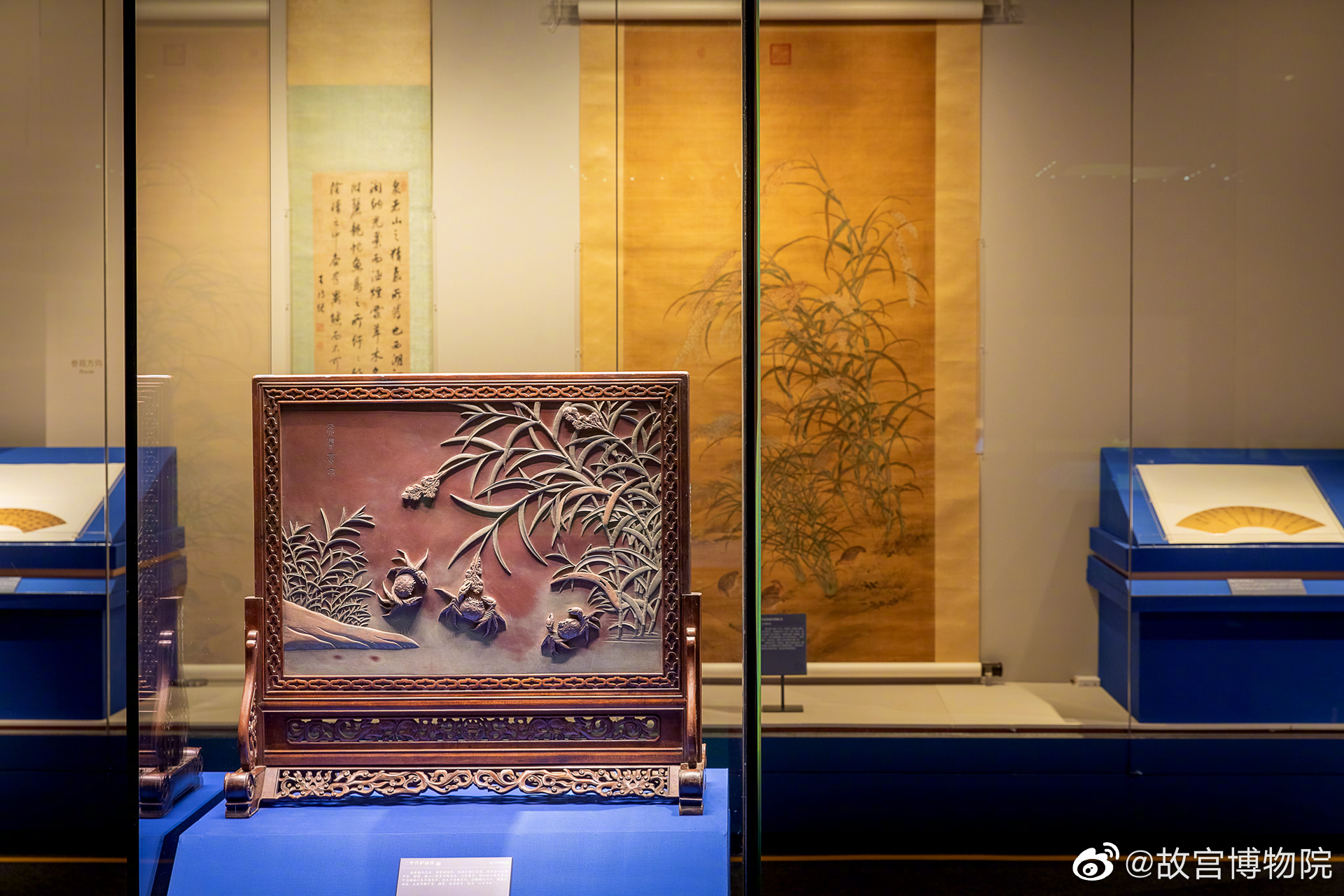
“Auspicious Blossoms – The Forbidden City and Tibetan Cultural Relics Joint Exhibition” is divided into three parts: “Flowers Blooming All Over the Road – Communication between Tibet and the Mainland”, “Flowers and Leafs – Identity and Destination” and “Spring Blossoms and Autumn Fruits – Fruitful Cultural Achievements”. The theme unit uses “flowers” to symbolize the process of integration between Tibet and various ethnic groups in the interior. The exhibition exhibited 108 pieces (sets) of cultural relics, including 13 pieces (sets) of cultural relics from various units under the Tibet Autonomous Region Cultural Relics Bureau and the Sakya Monastery Management Committee, and 95 pieces (sets) of cultural relics from the Palace Museum. In addition to the well-known calligraphy and painting exhibits such as Yan Liben of the Tang Dynasty “Bucharian Picture” and Zhao Mengfu’s “Emperor’s Danba Stele Scroll” of the Yuan Dynasty, there are also a large number of cultural relics that meet the audience for the first time, such as the “Manchu Collection” collected by the Palace Museum. The Sutra, the statue of Emperor Yongle in the Potala Palace, and the thangkas of Kublai Khan first seen in the Sakya Temple, etc., fully demonstrate the diversity of styles and artistic charm of Tibetan-themed cultural relics.

According to the protection requirements of cultural relics and reference practices, the calligraphy and painting works of the Song and Yuan Dynasties and before in the exhibition will be replaced with replicas after one month of exhibition.

Images and visuals are from – Forbidden City –Palace Museum Beijing- China –People’s Republic of China…..

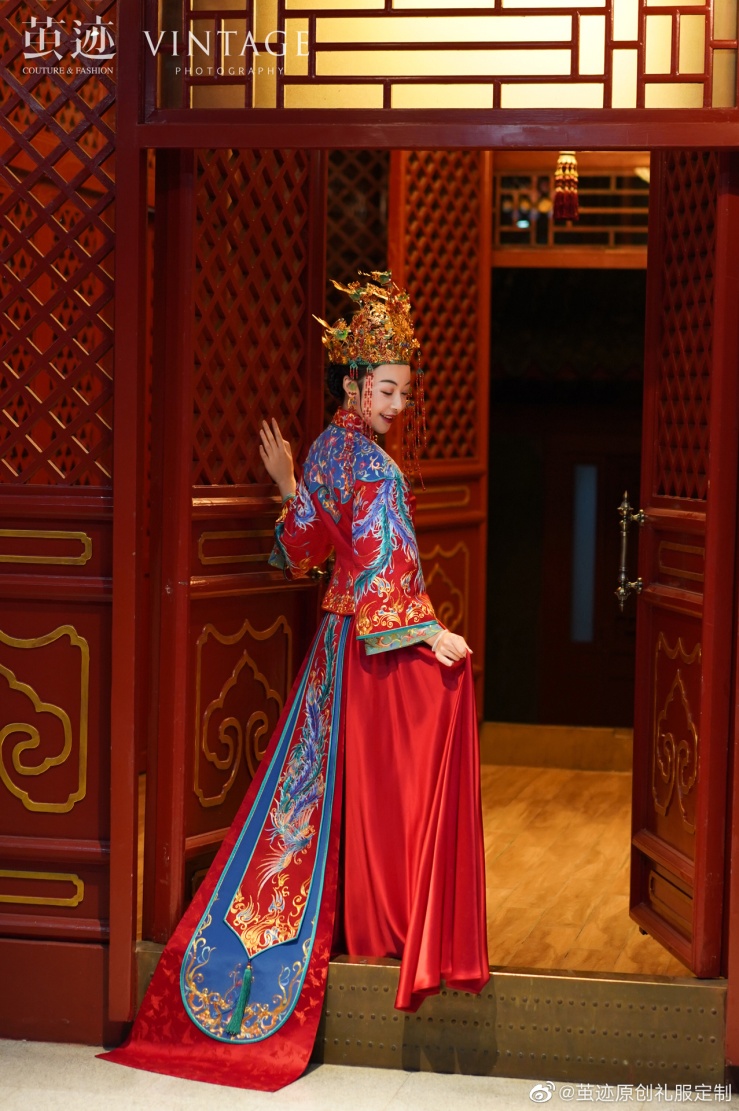
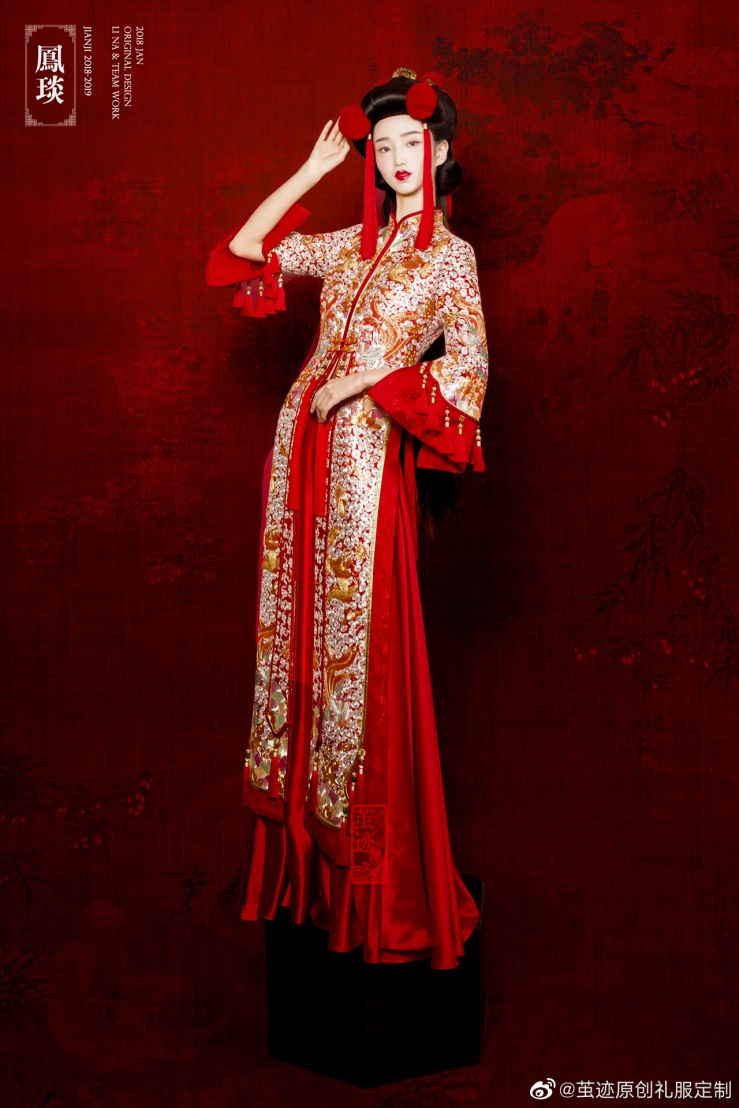
#QIPAO #旗袍 #Cheongsam |#茧迹原创礼服定制 #Cocoon #BeijingYujiFashionDesignCo. #May2023| #FashionLookBook #武汉时装周 Gorgeous Chinese painting embroidery of #ArtHauteCouture #TraditionalChineseQipao #ModernQipao #ChineseWeddingDress #ModernQipao #postmodern dress with phoenix Chinese pavilion gardens 2022 -2023 Collection.

Located in an ancient post-modern Three thousand years old ultra Megatroplis city Beijing City, Capital of  China – People’s Republic of China, 茧迹原创礼服定制 Cocoon – Beijing Yuji Fashion Design Co in which Cocoon trace original dress customization: No. D05, Zhongyi Street, 798 Art District, Jiuxianqiao, Chaoyang District, Beijing …. Innovatingly Post Modern Qipao- Cheongsam …. in which innovatively bringing a New Chinese style cheongsam-Qipao high-end brand-Embroidery Embroiderer seamstressing   …….it is committed to the high-end private specialization of Chinese Shanghai style cheongsam innovatively… in which each dress is customised towards the wear’s in which tailoring takes least in between 20-60 days depending on the extremely level of detailing of brocade in which using the most finest heavy silks are hand sewn and crafted …..

Introducing Cocoon Trace Original Dress Customization Chinese innovative in between Ming and Qing Dynasty fusion traditional wedding dresses  in some in modern fusion of its  2023 Art Haute Couture series in which their inspirationally Continuation from the   Chinese Painting of spring flowers Cocoon Trace 2022’s original and improved cheongsam … Fengdai” has chosen a design that is very suitable for summer in both fabric and color matching…

The happy ceremony will come as promised. I
hope you will become the third stunning color under the moonlight
The collision is even more colourful, supplemented by the tangle of branches and curly grass patterns to add a sense of luxury…

小年 “Welcome to the new year and receive blessings”
Southern folks believe that after the small year, the gods go to heaven and
there is no taboo for marriage. There is no need to choose a date, and there is a custom of “chaotic marriage”.
Therefore, at the end of each year, a large number of new couples will hold weddings, but no matter what Is it the gentle and friendly Xiuhe cheongsam,
or the dragon and phoenix gown that can make the bride look slim and compact?
The warm love is the main theme.

The first happiness of the New Year
​ is the “happy brows” from the bride ❤️

Chunjing|Beautiful spring Cocoon trace 2022 original Chinese wedding dress “Chunjing”
improved from the old empress’ auspicious clothes in the Forbidden City.
The fragrance of flowers is lingering, the butterflies are dancing lightly, and spring is expected….  

Spring dyeing garden See Begonia again Cocoon trace 2019 wedding advanced customization series “Begonia Ji” learns from the god of tradition but not its shape . If weaving pavilions and pavilions with countless threads, embroidering famous mountains and rivers can be painted…

Today’s red rope is tied to the pearls and the perfect combination
to predict the year of the year, the white head, the guifulanxin🌺

Come and experience the highest-level “gown emperor”
cocoon on the market 2021 original Chinese gown “futu”

After nearly 9,000 man-hours of exquisite hand embroidery, the whole
body is decorated with original pure handmade accessories.
The light blue gradient plate gold is more elegant than the traditional red gold

because Embroidery thread is expensive and fragile, so the embroiderer can only rely on hand-made needles to complete the embroidery, but because of this, the texture of the clothes made by gold embroidery is more delicate and luxurious, which cannot be compared with ordinary gold thread embroidery….

When architecture and clothing collide, what flows is not only the three-dimensional aesthetic feeling
between the curved corridors, but also
dragons, phoenixes, surmounting birds, clouds and flowers under the golden purlins
, like beams, squares, and ridges. , Such as the beams
to build a majestic and soft visual art
with time as the axis, embroidered with Luohua clothes, looking at the millennium floating world…….

QIPAO 旗袍 Cheongsam …. In which from historically Shenyang is the birth place of the Qing Dynasty 1636-1912plus ….  In which Qipao is termed for Qing Dynasty Clothing that the Manchu ethnic adoptively wore…… in which the Shenyang Palace Museum was an imperial palace towards two Qing Dynasty emperors. Previously two years ago During the event it which was an eight day forums, with exhibitions also related workshops illustrating the birth place of the Old Capital of Cheongsam where the Qing Dynasty- Qipao was inspired from..  

Before that Shanghai 1930’s Qipao-Cheongsam revolution, the Manchurian Cheongsam was the fashion of choice of the Qing Dynasty (1636-1912)   throughout as it standardised that style during the dynasty… Replacing the previous clothing standard Han Fu – Han Dynasty clothing style, in which also is form fitting towards the women’s silhouette but with a higher degree of freedom of flare of personal, individual style… 

Qipao-Cheongsam is uniquely hand crafted tailored Chinese dress to the customer’s various measurements… in which you can still have them brought of the rack in which is accustomed to the standard measurements… in which you can tell which is western influenced with the back zipped in which the Eastern traditional Chinese Tailors would have the side zipped of the Qipao dress due it interrupts the flow of the pattern work at the back of the dress..  Also it creates a continuous seamless back look…  after as the measurements are translated drafted onto the silk or the customer desired accustomed fabric of choice, from the measurements book with the associated look of the design elements with additional accessories the sexiness of Qipao lies subtlety.. Measuring, patterning, cutting, and button making are crucial, in where passion and art comes together in tailoring

 In which traditionally Qipao- Cheongsam dresses are worn for from straight forwardly every day towards after work evening wear in without having to change to another set of wardrobe dressing only to accessories for the required occasion… … in which the Qipao dress pattern silhouette is design for the lady’s figure in which accentuating the silhouette without giving away too much of what’s underneath in retaining…. its timeless classic silhouettes in which are designed to be worn every day, from work, evening,  casually  towards to the weekend… with sleek simple, elegant, sexy intelligent sophistication in which are easy to be accessorised with any pieces of clothing in your current or upcoming wardrobe…

Images and visuals are from Weibo also from茧迹原创礼服定制Cocoontrace original dress customization: No. D05, Zhongyi Street, 798 Art District, Jiuxianqiao, Chaoyang District, Beijing 010-59789809 – China –People’s Republic of China ..

#北京。 #中國 #China #Beijing | #紫禁城 #ForbiddenCity #February2023 | #ForbiddenCityDairies #中國元宵節 #元宵節 #ChineseLanternFestival #YearOftheRabbit with a distance smaller first #FullMoon illuminating the Forbidden City like an ancient Chinese lantern..   

元宵喜乐 During the Lantern Festival on February 5th 2023 at the Forbidden City, Beijing, China, People’s Republic of China , a full moon passes through the turrets of the Forbidden City, and it is in the same frame as the ridge beast, which is too beautiful to behold. According to astronomy science experts, the Lantern Festival of the Year of the Rabbit in Guimao is “15 moons and 16 rounds”, and the full moon will appear in the early morning of the 6th. This round of the roundest Lantern Festival moon is not only the first full moon this year, but also the smallest full moon in 2023. 

On this day on the 5th February 2023 on the fifteenth day of Chinese lunar new year festival is the lantern festival or known as Chinese Valentine’s Day…. in which this painting is inspired by the Hangzhou West lake storytelling of the legend of the white snake…..

The early days, young people were chaperoned in the streets in hopes of finding love. Matchmakers acted busily in hopes of pairing couples. The brightest lanterns were symbolic of good luck and hope…… Lantern Festival is one of the events they can go out and join in the celebration. And that’s when other young guys can get to meet the ladies. Therefore, the Lantern Festival is sometimes referred to as Chinese Valentine’s Day. There will also be big displays of lanterns in some major parks or open space.

Love inscribed in poems

The other evidence of the Lantern Festival being Chinese Valentine’s Day is recorded in Chinese literature. In the thousands of ancient poems passed on from the Tang and Song dynasties, many depicted ardent love for their partners.

Not only was love engraved in ancient poems, but also sceneries and the boisterous carnivals of the Lantern Festival, when the nights were as bright as the daytime with hundreds of lanterns burning.

The festive atmosphere, the performances, and the moonlight jointly created the best time for a date.

The history of the festival could be traced back to the Han Dynasty (202 B.C.-220 A.D.), and the celebrations were gradually enriched, expanded and settled in succeeding dynasties. But from the very beginning, lanterns have been an indispensable part of the day.

元宵喜乐 During the Lantern Festival on February 5, a full moon passes through the turrets of the Forbidden City, and it is in the same frame as the ridge beast, which is too beautiful to behold. According to astronomy science experts, the Lantern Festival of the Year of the Rabbit in Guimao is “15 moons and 16 rounds”, and the full moon will appear in the early morning of the 6th. This round of the roundest Lantern Festival moon is not only the first full moon this year, but also the smallest full moon in 2023. 

Images and visuals are from – Forbidden City –Palace Museum Beijing- China –People’s Republic of China…..

#北京。 #中國 #China #Beijing | #紫禁城 #ForbiddenCity #February2023 | #ForbiddenCityDairies #rainbowically #Sunhalo Stunning rings appear over the Beijing City landscape.

On the 2nd February 2023 at the Forbidden City Beijing, China, People’s Republic of China, on a wintery day of Beijing, China, People’s Republic of China, in which beautifully astronomical phenomena in which is total rare to see a massive combination of solar halos, double-sided parasols, circumzenithal arcs, and anti-solar arcs in the capital today in which a amazing Astronomical phenomena ….

Sun halos a halo is a ring or light that forms around the sun or moon as the sun or moon light refracts off ice crystals present in a thin veil of cirrus clouds. The halo is usually seen as a bright, white ring although sometimes it can have color.

Circumzenithal arcs are A circumzenithal arc (sometimes known as Bravais’ arc) is a type of Halo. They are formed when sunlight refracts through horizontal ice crystals at such an angle that the light enters the crystal through its flat top face and exits through a side prism face causing the distinctive upside-down rainbow effect. Circumzenithal arcs are relatively common, though a special set of circumstances are required. The sun needs to be more than five, and less than 32 degrees above the horizon, in order that the sunlight can refract in the correct way through the ice crystals to form the smiling, rather than frowning, halo

Via Weir Beijing Photographer  blogger…… It is rare to see a combination of solar halos, double-sided parasols, circumzenithal arcs, and anti-solar arcs in the capital today….

Images and visuals are from – Forbidden City –Palace Museum Beijing- China –People’s Republic of China…..

#北京。 #中國 #China #Beijing | #紫禁城 #ForbiddenCity #January2023 | #ForbiddenCityDairies #国子文物The Culture of the Kingdom——A joint exhibition of Jinshi culture and art in the past dynasties….

The Culture of the Kingdom——A joint exhibition of Jinshi culture and art in the past dynasties is exhibited in the Meridian Gate Exhibition Hall of the Palace Museum, the Confucian Temple and the Guozijian Museum…

On January 16, 2023 at the Forbidden City Beijing, China, People’s Republic of China,国子文物 —Joint Exhibition of Jinshi Culture and Art of Past Dynasties” opened in the Meridian Gate Exhibition Hall of the Palace Museum. The exhibition selects 179 important works of Jinshi groups since the Tang Dynasty. Through the theme units of “Jinshi Road”, “Bo Xue Hong Confucianism” and “Art Garden Heroes”, it shows the extraordinary achievements of outstanding figures in philosophy, classics, history, literature, art, etc.

Located in exhibiting “Confucian Culture – Joint Exhibition of Jinshi Culture and Art of Past Dynasties” will be exhibited simultaneously in the main hall of the Meridian Gate and the East Yanchi Building of the Palace Museum, the Confucian Temple and the Art Hall of the Guozijian Museum. The exhibition period will be from January 17 to April 2, 2023.

Its immortal contribution to the prosperity and development of Chinese civilization. The exhibition is sponsored by the Palace Museum, Beijing Cultural Relics Exchange Center, Confucius Temple and Guozijian Museum, jointly promoted by China Construction Bank Corporation, and co-sponsored by CCTV.com. The exhibition will be exhibited simultaneously in the main hall of the Meridian Gate of the Palace Museum and the exhibition hall of the East Yanchi Building, the Confucian Temple and the Art Hall of the Imperial College Museum. Reserve

With the theme of inheriting the excellent traditional Chinese culture and promoting the traditional Chinese virtues, “Guozi Culture – Jinshi Culture and Art Exhibition of Past Dynasties” selected 179 important works of Jinshi groups since the Tang Dynasty. The “Heroes” theme unit showcases the extraordinary achievements of outstanding figures in the past dynasties in philosophy, classics, history, literature, art, etc., as well as their immortal contributions to the prosperity and development of Chinese civilization.

Images and visuals are from – Forbidden City –Palace Museum Beijing- China –People’s Republic of China…..