#北京。 #中國 #China #Beijing | #紫禁城 #ForbiddenCity #May2023 | #ForbiddenCityDairies -“Xiangkai Vientiane–The Forbidden City and Tibetan Cultural Relics Joint Exhibition” reflecting the history of ethnic relations in the Yuan, Ming and Qing dynasties….

The Forbidden City Palace Museum Beijing, China, People’s Republic of China holds a large-scale exhibition reflecting the history of ethnic relations in the Yuan, Ming and Qing dynasties, “Xiangkai Vientiane–The Forbidden City and Tibetan Cultural Relics Joint Exhibition” will be on display at the Meridian Gate on April 29th 2023 towards 30th of September 2023.

On April 28, 2023, the opening ceremony of “Auspicious Opening of Vientiane—Joint Exhibition of the Forbidden City and Tibetan Cultural Relics” was held at the Palace Museum. Wang Xudong, member of the Party Leadership Group of the Ministry of Culture and Tourism and director of the Palace Museum, Zhong Tingxiong, deputy director of the Propaganda Department of the State Ethnic Affairs Commission, Zhang Xuxia, deputy director of the General Office of the Ministry of Culture and Tourism, Lian Xiangmin, deputy director-general of the China Tibetology Research Center, protection of historical sites in China Song Xinchao, chairman of the association and former deputy director of the State Administration of Cultural Heritage, Qu Zhen, deputy secretary of the party group and director of the Tibet Autonomous Region Cultural Relics Bureau, Yang Fan, secretary of the Party Committee of the National Museum of China, Fayan, deputy director of the National Cultural Palace, Zha Xia, director of the Tibetan Culture Museum, Chinese Buddhist Master Yanjue, the president of the association, relevant departments and bureaus of the Central Propaganda Department and the Central United Front Work Department, relevant comrades in charge of cultural museums in Beijing, relevant associations, team members of the Palace Museum, and leaders of retirement homes attended the opening ceremony. Du Haijiang, Secretary of the Party Committee and Vice President of the Palace Museum, Deji Zhuoga, Deputy Secretary of the Party Group and Director of the Department of Culture of the Tibet Autonomous Region, and Yang Xun, the representative of the Xuri Charity Foundation and the vice chairman and general manager of Xuri Group Co., Ltd. Speech at the ceremony. Ren Wanping, vice president of the Palace Museum, presided over the opening ceremony of the exhibition.

“Xiangkai Vientiane-The Forbidden City and Tibetan Cultural Relics Joint Exhibition” is jointly organized by the Palace Museum and the Cultural Relics Bureau of the Tibet Autonomous Region, with special support from the Rising Sun Charity Foundation. The exhibition hall of Yanchi Building is open to the audience. Guided by General Secretary Xi Jinping’s thought that “cultural identity is the deepest level of identity, the root of national unity and the soul of national harmony”, combined with the construction of the “Four Forbidden City” system of the Palace Museum, it is a cultural and The display of the results of the Ministry of Tourism’s Tibet-aid project “Research on the Chinese Nation Community Based on the Forbidden City and Tibetan Cultural Relics” is also a large-scale comprehensive exhibition reflecting the history of ethnic relations in the Yuan, Ming, and Qing dynasties. The exhibition reflects the latest relevant scientific research achievements of the Palace Museum in the past five years, explores the cultural connotations behind the cultural relics, shows the exchanges, exchanges and integration between Tibet and the mainland and the court embodied in the cultural relics, and composes a splendid chapter of national unity and progress.

  Du Haijiang, Secretary of the Party Committee and Vice President of the Palace Museum, said in his speech that the exhibition takes forging the consciousness of the Chinese nation’s community as its starting point and foothold. The emotional bond and spiritual belonging of the nation prove the necessity and forward-lookingness of forging a sense of community of the Chinese nation. For thousands of years, people of various ethnic groups in Tibet and inland have been in frequent contact with each other, helping each other, and being brothers and sisters. The Forbidden City, where the Palace Museum is located, is a witness to the exchanges, exchanges, and integration between Tibet and the mainland of the motherland, and a historical witness to the continuous formation of the consciousness of the Chinese nation community. Based on the close historical relationship between cultural relics and the interaction between cultural relics and the design of the exhibition hall, the exhibition reproduces the historical facts of exchanges, exchanges and integration between Tibet and the mainland, and restores the great process of the Chinese nation’s community consciousness from formation to consolidation in history.

Deji Zhuoga, director of the Cultural Department of the Tibet Autonomous Region, said in his speech that this exhibition is an in-depth implementation of the spirit of the 20th National Congress of the Communist Party of China and the spirit of General Secretary Xi Jinping’s important exposition on cultural relics work by the Tibet Autonomous Region and the Palace Museum. It is an important exhibition held to firmly grasp the consciousness of the community of the Chinese nation and build a common spiritual home for the Chinese nation. The exhibition showcases the long history and splendid culture of the Forbidden City and Tibet, demonstrates the extensive exchanges and in-depth integration between Tibet and other parts of the motherland, and witnesses the diverse and colorful Chinese culture. As a large area of ​​cultural relics resources, Tibet has made all-round progress and historic achievements in promoting the protection and utilization of cultural relics in recent years. Cultural relics have played an important role in forging the consciousness of the Chinese nation community and promoting Tibet’s long-term stability and high-quality development.

Yang Xun, the representative of the Xuri Charity Foundation and the vice chairman and general manager of Xuri Group Co., Ltd., who specially supported the exhibition, said that Chinese culture is a synthesis of the cultures of all ethnic groups and a common spiritual home for people of all ethnic groups. “Prosperity in Vientiane—Joint Exhibition of Cultural Relics from the Forbidden City and Tibet” tells the moving story of exchanges, exchanges, and integration between Tibet and various ethnic groups in the mainland through cultural relics research. Glorious Sun Group has strengthened its cultural self-confidence for many years and helped the inheritance and protection of Chinese culture. This support for the exhibition is what Glorious Sun Group should and must do for the inheritance and protection of Chinese culture.

“Auspicious Blossoms – The Forbidden City and Tibetan Cultural Relics Joint Exhibition” is divided into three parts: “Flowers Blooming All Over the Road – Communication between Tibet and the Mainland”, “Flowers and Leafs – Identity and Destination” and “Spring Blossoms and Autumn Fruits – Fruitful Cultural Achievements”. The theme unit uses “flowers” to symbolize the process of integration between Tibet and various ethnic groups in the interior. The exhibition exhibited 108 pieces (sets) of cultural relics, including 13 pieces (sets) of cultural relics from various units under the Tibet Autonomous Region Cultural Relics Bureau and the Sakya Monastery Management Committee, and 95 pieces (sets) of cultural relics from the Palace Museum. In addition to the well-known calligraphy and painting exhibits such as Yan Liben of the Tang Dynasty “Bucharian Picture” and Zhao Mengfu’s “Emperor’s Danba Stele Scroll” of the Yuan Dynasty, there are also a large number of cultural relics that meet the audience for the first time, such as the “Manchu Collection” collected by the Palace Museum. The Sutra, the statue of Emperor Yongle in the Potala Palace, and the thangkas of Kublai Khan first seen in the Sakya Temple, etc., fully demonstrate the diversity of styles and artistic charm of Tibetan-themed cultural relics.

According to the protection requirements of cultural relics and reference practices, the calligraphy and painting works of the Song and Yuan Dynasties and before in the exhibition will be replaced with replicas after one month of exhibition.

Images and visuals are from – Forbidden City –Palace Museum Beijing- China –People’s Republic of China…..

#北京。 #中國 #China #Beijing | #紫禁城 #ForbiddenCity #May2022 | #ForbiddenCityMoments #ForbiddenCityPress #ForbiddenCityBookStore #ForbiddenCityBooks The Forbidden City 100 #ForbiddenCityArchitecture ancient Chinese architecture….

The Forbidden City Book Store which in the grounds of the Forbidden City Complex Forbidden City Hundred Excellent Books Public welfare reading activities! ” Forbidden City Hundred Excellent Books  “故宫出版社 紫禁城100 Forbidden City 100 Excellent “The Forbidden City 100” is a work carefully created by Mr. Zhao Guangchao, his design, cultural team and the Forbidden City cultural research and development team for many years. This book can firstly understand the six hundred years of history of the Forbidden City. During the Ming and Qing dynasties, a total of 24 emperors lived, lived and exercised the highest state power here. In 1911, the Qing emperor abdicated. In 1913, the Antiquities Exhibition Center was established in the outer court of the Forbidden City. In 1924, Puyi left the palace. In 1925, the Palace Museum was established ….

The Forbidden City 100 Excellent Books  is one  is “The Forbidden City 100″ is a work carefully created by Mr. Zhao Guangchao, his design, cultural team and the cultural research and development team of the Forbidden City for many years. This book can firstly understand the six hundred years more of history of the Forbidden City. During the Ming and Qing dynasties, a total of 24 emperors lived, lived and exercised the highest state power here. In 1911, the Qing emperor abdicated. In 1913, the Antiquities Exhibition was built in the Forbidden City. In 1924, Puyi left the palace. In 1925, the Palace Museum was established.

One Hundred Excellent Books in the Forbidden City The Ming Empire initially chose Fengyang as the capital, and then settled in Nanjing (1368). When Zhu Di, the third emperor of the Ming Dynasty, had just ascended the throne (1406 in the fourth year of Shui Le), he dispatched the imperial court to China. The officers collected building materials from all over the country, distributed 100,000 craftsmen, more than one million people, and built the Forbidden City in Beijing on a larger scale on the former site of the palace in the Yuan Dynasty, based on the Nanjing Palace City. In the eighteenth year of Yongle’s reign (1420), the palace city was completed, and Zhu Di immediately moved the capital from Nanjing to his own land of Longxing, and Peiping became the largest city in the country (and the world at that time) from the beginning.

The newly built Miyagi moved about 1,000 meters eastward from the ruins of the Forbidden City in the Yuan Dynasty, and moving away from today’s Beihai Park means to some extent from the Yuan people’s customs of “living by water and grass”, back to the stable farming in the Han culture. on the pattern. The new palace pushes the fate of the Yuan people’s annihilation to the position of the white tiger killed by the main Tibetan in the five elements in the west, and then uses the building materials left over from the construction of the palace, together with the soil for excavating the moat, to build a hill behind the palace (Jingshan Mountain). ), creating a barrier against the cold north wind for the originally flat Miyagi, becoming the commanding height of the Forbidden City and even the city of Beijing at that time, and also the backing of Wanshi Foundation.

“Forbidden City 100” entered the Forbidden City. Jingren Palace is one of the six east palaces that everyone is familiar with, and it retains a relatively complete appearance of the Ming Dynasty. In the early Ming Dynasty, it was called Chang’an Palace and was renamed Jingren Palace in Jiajing. The Qing Dynasty followed the old name of the Ming Dynasty. The most special feature of Jingren Palace is that there is a stone screen in the front yard that was passed down from the Yuan Dynasty (the symmetrical Yongshou Palace also has the same stone screen). Although the center of the screen is only about 2 cm thick, the patterns on both sides are different. In addition, the shape of the seated beast on Shiping is very rare in the palace, and it is exquisite and vivid. “Animal style” has existed in China since ancient times. The beauty of masonry in the Yuan and Ming dynasties and the concise style of the Qing Dynasty are placed in the same space. All of a sudden, this palace seems to have become a history of modern Chinese sculpture, and it even evokes the legendary antecedents of the masters who once lived here. Here, it was originally the birthplace of Emperor Kangxi in the early Qing Dynasty, and the palace of the legendary concubine Zhen in the late Qing Dynasty… The

owner of the Ming Dynasty: Empress Hu (Hu Shanxiang) of Xuanzong of the Ming Dynasty. Emperor Xuande favored concubine Sun Gui and Cricket, and ordered Empress Hu to resign on the grounds of “no children and many illnesses”, and placed them in Chang’an Palace (Jingren Palace) to practice Taoism, and was given the title “Jingci Immortal Master”. The owner of the Qing Dynasty: In the eleventh year of Shunzhi (1654), the 15-year-old Shunzhi Concubine Tong gave birth to the future Kangxi here. Concubine Xi (Qianlong’s biological mother, Niuhulu), who ascended the throne under Yongzheng, moved from Lama Temple to Jingren Palace. Concubine Zhen of Guangxu entered the palace with her elder sister Concubine Jin at the age of 14, and lived in the east and west side halls of Jingren Palace, and was finally drowned by order of the Empress Dowager Cixi…

Among the six east palaces, the history of Yanxi Palace can be described as troubled. When it was completed in the early Ming Dynasty, it was renamed Yanqi Palace after its initial name Changshou Palace, and was renamed Yanxi Palace in Qing Dynasty. Since its completion, the Yanxi Palace has suffered repeated fires: it was rebuilt in the 25th year of Kangxi (1686) and the 7th year of Jiaqing (1802). In the twelfth year of Daoguang (1832), a fire broke out, which burned down the entire Yanxi Palace and rebuilt it again. In the 25th year of Daoguang (1845), a fire broke out in the Yanxi Palace, leaving only the palace gate. Xianfeng five years (1855) fire, rebuilt again. In the first year of Xuantong’s reign (1909), Empress Dowager Longyu spent 4 million to build a Western-style building “Water Palace” Lingzhao Xuan (commonly known as Crystal Palace). Lay the glass, and when you’re done it’ll be a walk-in super aquarium. This move has the meaning of suppressing the anger and revival of the Qing Dynasty, but until Xuantong abdicated, the project was not completed. When Zhang Xun was restored in 1917, the northern part of Yanxi Palace was unfortunately destroyed by plane bombs. In the entire palace, only the wellhead is in line with the original location of the well pavilion, leaving the only remaining remains. In 1931, the Palace Museum built a new cultural relic warehouse, which eventually became the first reinforced concrete building in the palace. In recent years, the story of the palace has been exaggerated by the media, and the little-known Yanxi Palace has once again aroused everyone’s curiosity. In fact, the concubines living in this secluded palace are living in hardship and poverty, and it is said that they do not even have enough food, even clothes, shoes and socks. The owner of Yanxi Palace in the Ming Dynasty is unknown, and the owners of the Qing Dynasty include Kangxi Chang in Xu and two people whose emblems are unknown and promised to live here.

The biggest difference between the West Six Palaces and the East Six Palaces in “100 Forbidden City” is that Taiji Palace and Changchun Palace, Yikun Guan and Chuxiu Palace are all connected into one. It makes the whole palace area have a strong color of life, and also makes the remaining Yongshou Palace and Xianfu Palace appear dull. Today, we look at Yikun Palace and Chuxiu Palace through “Forbidden City 100”. The Yikun Palace was originally called Wan’an Palace, and was renamed Yikun Palace in the Jiajing Period of the Ming Dynasty .

Imagines credits are of the Forbidden City –Imperial Palace –Beijing – China- People’s Republic of China also from the Series Weibo北京卫视上新了故宫 Treasures in the Forbidden City…

#北京。 #中國 #China #Beijing | #紫禁城 #ForbiddenCity #December 2021 | #北京卫视上新了故宫 The Forbidden City on Beijing Satellite TV| December gorgeous sunset #YuanDynasty   #后门桥#WannignBrigde of the #GrandCanal on the Winter Solstice   ….

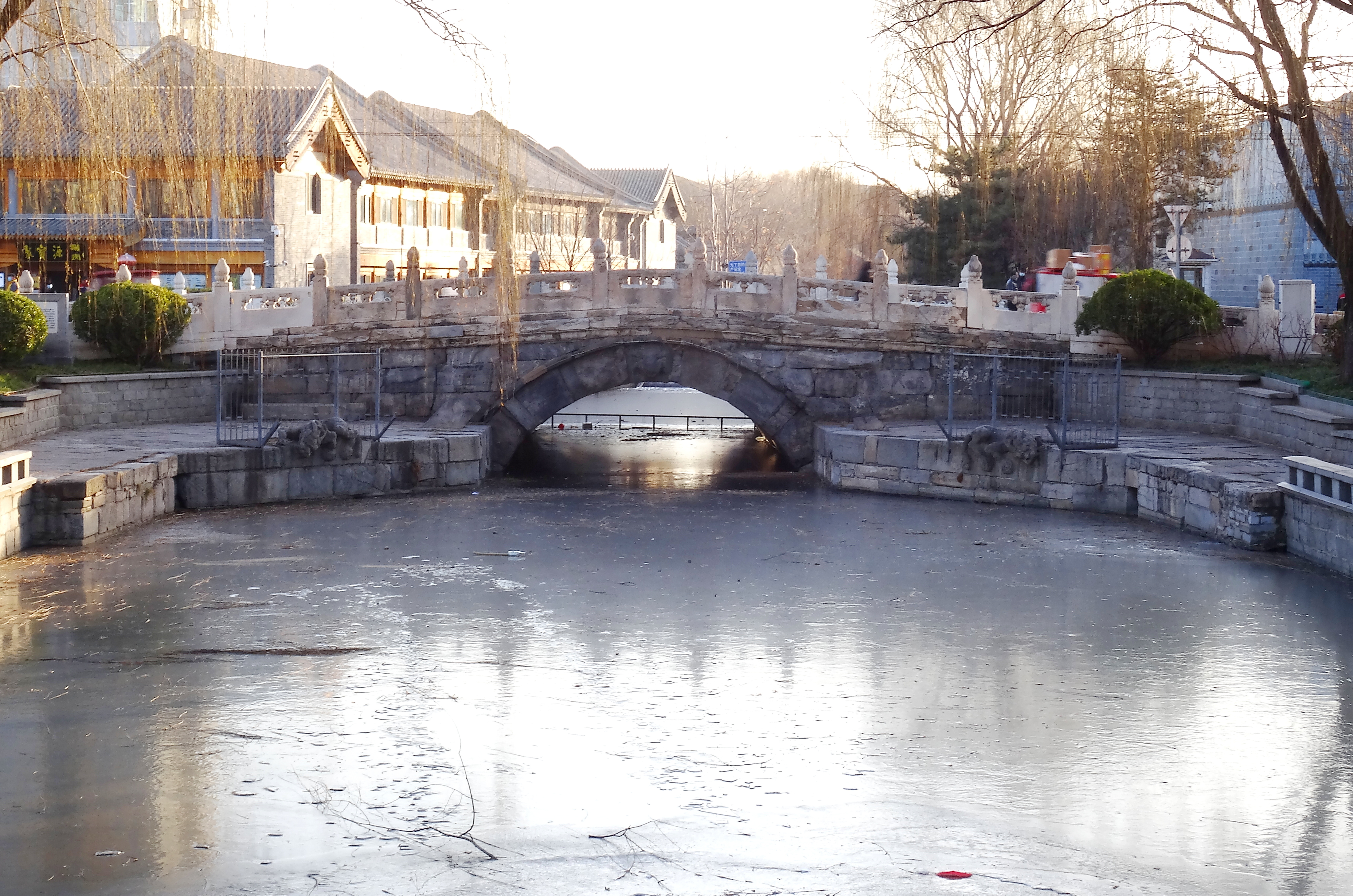
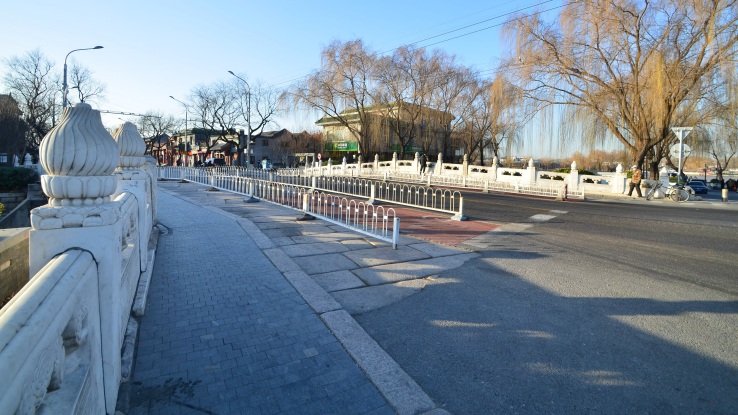
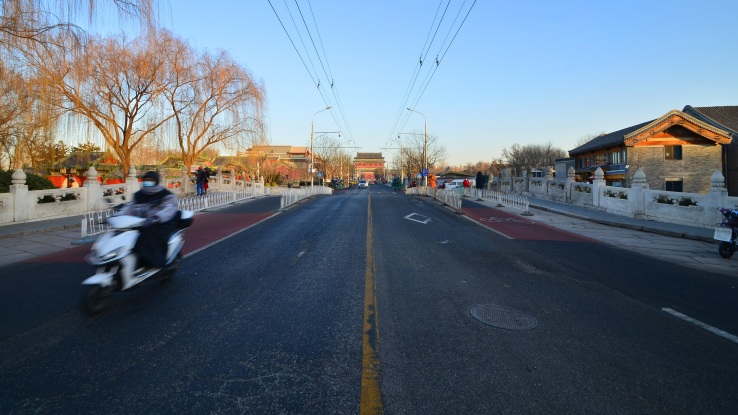
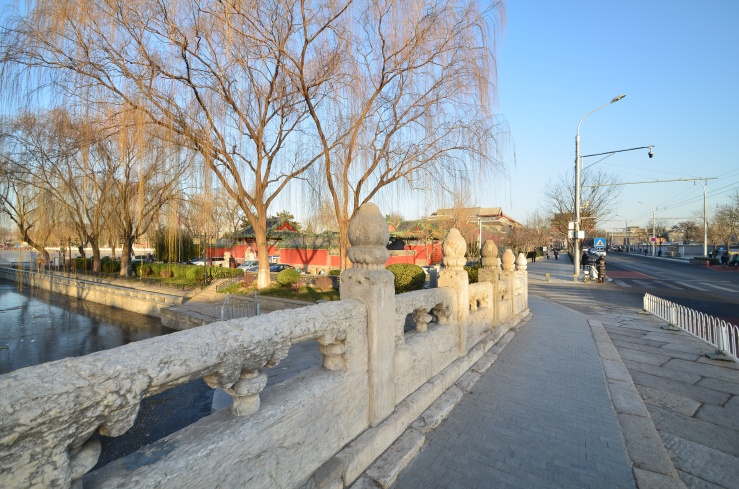
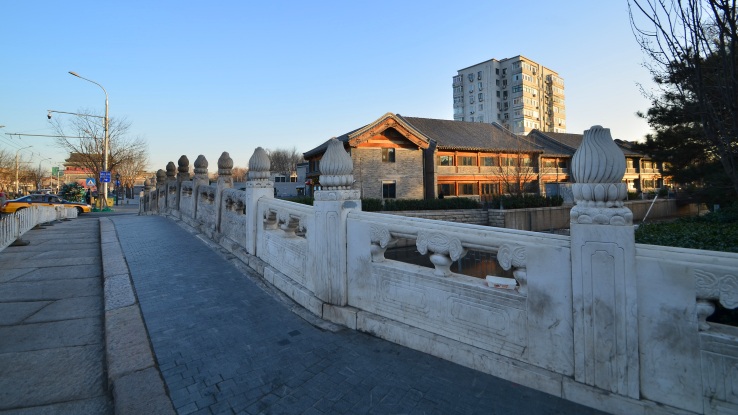
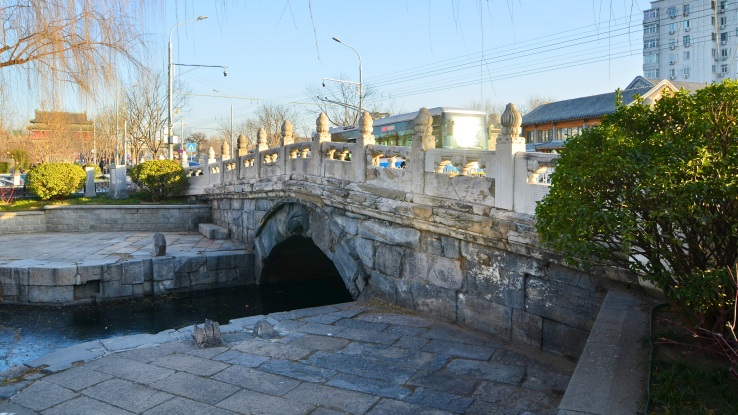
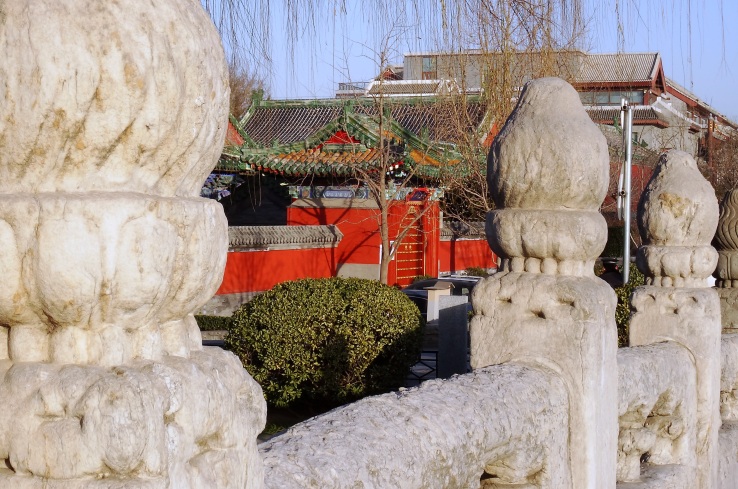
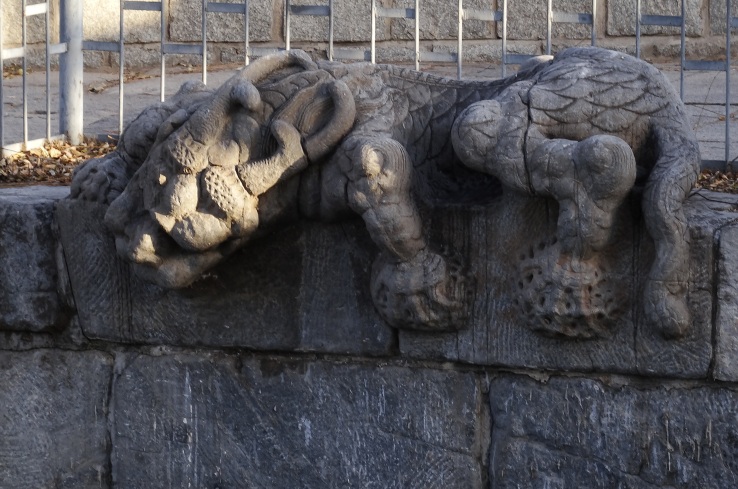
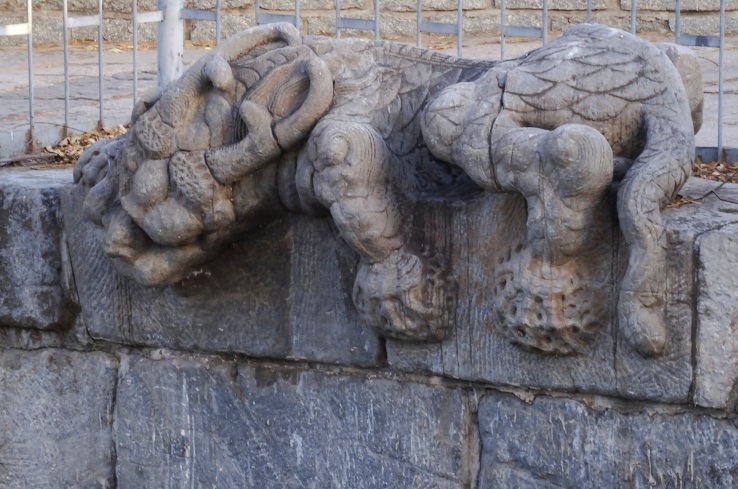
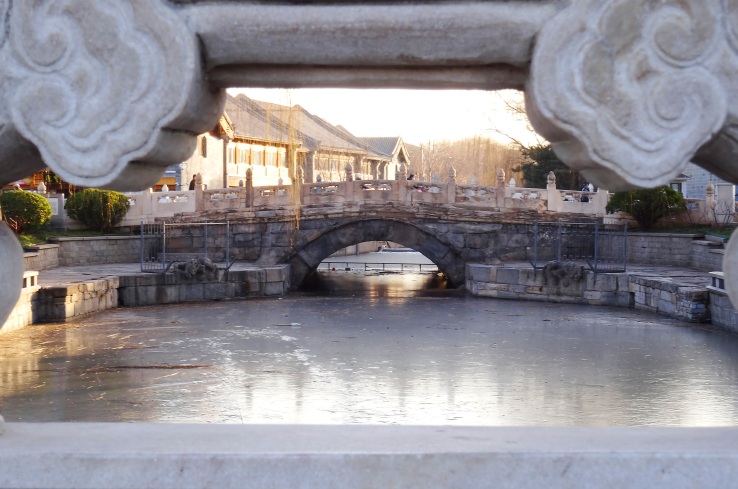
On  the 21st December 2021  it was the Winter Solstice 2021 in which during the Beijing – China – People’s Republic of China  was a clear blue skies with  Located in Di’anmenwai Ave, 什刹海 Xicheng District, Beijing, China, 100009 the 736 year old Yuan Dynasty Bridge named the后门桥 Wanning Bridge or known as the Houmen Bridge .. located near Shichahai, was built in 1285. A sluice is installed under the bridge, and the sluice is lifted and released to stop the water from passing the boat. This “high-tech” stone bridge was the starting point for grain transportation on the Grand Canal in the Yuan Dynasty, and all grain ships entering the imperial city of Beijing would pass here. There are dragon-shaped water-separating beasts on all four sides of the bridge, which have the meaning of blessing the safety of water transport. This century-old bridge is still in use today!

后门桥 Wanning Bridge, also known as the Bridge , the Bridge , is located in Beijing Tiananmen Square , the Shichahai near, a bridge located in Beijing’s central axis. It was built in the 22nd year of Yuan Shizu to Yuan Dynasty (1285), originally named Wanning Bridge. Because the bridge is to the north of Di’anmen, Di’anmen is the back gate of the imperial city, so it is called the Houmen Bridge. Municipal cultural relics protection unit.

Located in Di’anmenwai Street, Xicheng District. It was built in the twenty-second year of Yuan Zhi Yuan (1285). Originally a wooden bridge, it was changed to a stone arch bridge in the Yuan Dynasty, named Wanning Bridge. Also known as Haizi Bridge and Houmen Bridge…….. was built from the Yuan Dynasty to the 22nd of the Yuan Dynasty. It was called Wanning Bridge at that time. It was the most prosperous period of the Yuan Dynasty under Kublai Khan’s rule. The Wanning Bridge at that time was a wooden bridge. At that time, its “little name” was not called “Houmen Bridge”. Historical materials record Wanning Bridge in Yuan Dynasty, also known as “Sky Bridge”. In the Yuan Dynasty, Kublai Khan repaired the end of the Beijing-Hangzhou Grand Canal to today’s Jishuitan, and this Wanning Bridge is the northernmost gate of the Beijing-Hangzhou Grand Canal . The water transport ships entering the Imperial City of Beijing must pass here. The “Tonghui River” in the Beijing section was not only built by Kublai Khan’s decree, but the Tonghui River was also named by Kublai Khan on the Wanning Bridge, and it is also a bridge that Kublai Khan must walk in and out of Beijing. That’s why its nickname is qualified to be called “Tianqiao”.

Wanning Bridge is a “bridge gate” with dual functions: it can be used as a bridge to pass through, and it can also be used as a gate to control water. Guo Shoujing dug a canal, used Jishuitan as a reservoir, and set up ten locks and dams along the Tonghui River for control. There are boats to release the water from the Fangti locks, but they are usually closed. It seems to be energy efficient. Set up under the Wanning Bridge is the Qingcheng sluice, also known as the Haizi sluice. It is the first checkpoint for the water flow in Jishuitan (formerly known as Haizi). At the same time, it serves as the terminal of the Grand Canal. The sail passes through the tunnel of the Wanning Bridge and enters a safe haven for anchoring and unloading.

Imagines credits are of the Forbidden City –Imperial Palace –Beijing – China- People’s Republic of China also from the Series Weibo北京卫视上新了故宫 Treasures in the Forbidden City…

#北京。 #中國 #China #Beijing | #紫禁城 #ForbiddenCity #北京服装学院 #November2021 | #后海#Houbai #RearLake ushering the #小雪 #Xiaoxue #LightSnow for the wintery season..

On the 22 November 2021 10:34 today, we welcome 小雪  in which as wintery season settle in for China –People’s Republic of China as cold air descends for the twentieth solar term Xiaoxue in which begins today in which during this time the North-western winds usually frequents the Ancient Post Modern civilisation Continent that is China- People’s Republic of China in which that season of小雪 ends on seventh of December 2021….. Astronomically The traditional Chinese calendars divide a year into 24 solar terms. Xiǎoxuě, Shōsetsu, Soseol, or Tiểu tuyết is the 20th solar term. It begins when the Sun reaches the celestial longitude of 240° and ends when it reaches the longitude of 255°. It more often refers in particular to the day when the Sun is exactly at the celestial longitude of 240°. In the Gregorian calendar, it usually begins around 22 November and ends around 7 December.

During the “light snow” period, the north ushered in cold days. As the cold air descends south, the temperature of the Jiangnan Water Village is cooling in a large area. …….小雪节气 does not mean that there will be a small amount of snow…….. In some years, the first snow in winter will be ushered in “Lidong”. …….. It is recommended to go outdoors and get more sunshine; eat a balanced diet and add clothes in time. The cold winter is coming, are you ready? 

Houhai is a lake and its surrounding neighbourhood in Xicheng District of central Beijing, China. Houhai is the largest of the three lakes, along with Qianhai ‘Front Lake’ and Xihai ‘Western Lake’, that comprise Shichahai, the collective name for the three northernmost lakes in central Beijing Houhai is the largest of the three lakes, along with Qianhai ‘Front Lake’ and Xihai ‘Western Lake’, that comprise Shichahai, the collective name for the three northernmost lakes in central Beijing. Since the early 2000s, the hutong neighbourhood around Houhai has become known for its nightlife as many residences along the lake shore have been converted into restaurants, bars, and cafes. The area is especially popular with foreign tourists visiting Beijing and is also often visited by the expatriate community and the younger generations of locals.

Historically The artificial lake of Houhai was built during the Yuan dynasty, and formed part of the ancient waters of the dynasty. The area was gentrified by the Yuan, and was exclusively reserved to the royal family. Built in the Yuan winter capital of Dadu, today it is located in the center of Beijing. It faces the Forbidden City, and today is renowned as a place of relaxation for Beijingers, and for its nightlife

Also the street network of Houhai was created during the Yuan dynasty. The Yuan’s 787-meter long Nanluogu Lane is considered one of the oldest hutongs in Beijing, located in one of its oldest neighbourhoods. Many buildings are very old, and exhibit the traditional Beijing architectural features… for the November in the early winter; there is no trace of the hustle and bustle of the alleys in the narrow alleys of Houhai. Being in it, it seems as if your thoughts are flying to the horizon with the birds in the sky….

Imagines credits are of the Forbidden city –Imperial Palace –Beijing – China- People’s Republic of China also from the Series Weibo北京卫视上新了故宫 Treasures in the Forbidden City…