#北京。 #中國 #China #Beijing | #紫禁城 #ForbiddenCity #February2023 | #ForbiddenCityDairies #中國元宵節 #元宵節 #ChineseLanternFestival #YearOftheRabbit with a distance smaller first #FullMoon illuminating the Forbidden City like an ancient Chinese lantern..   

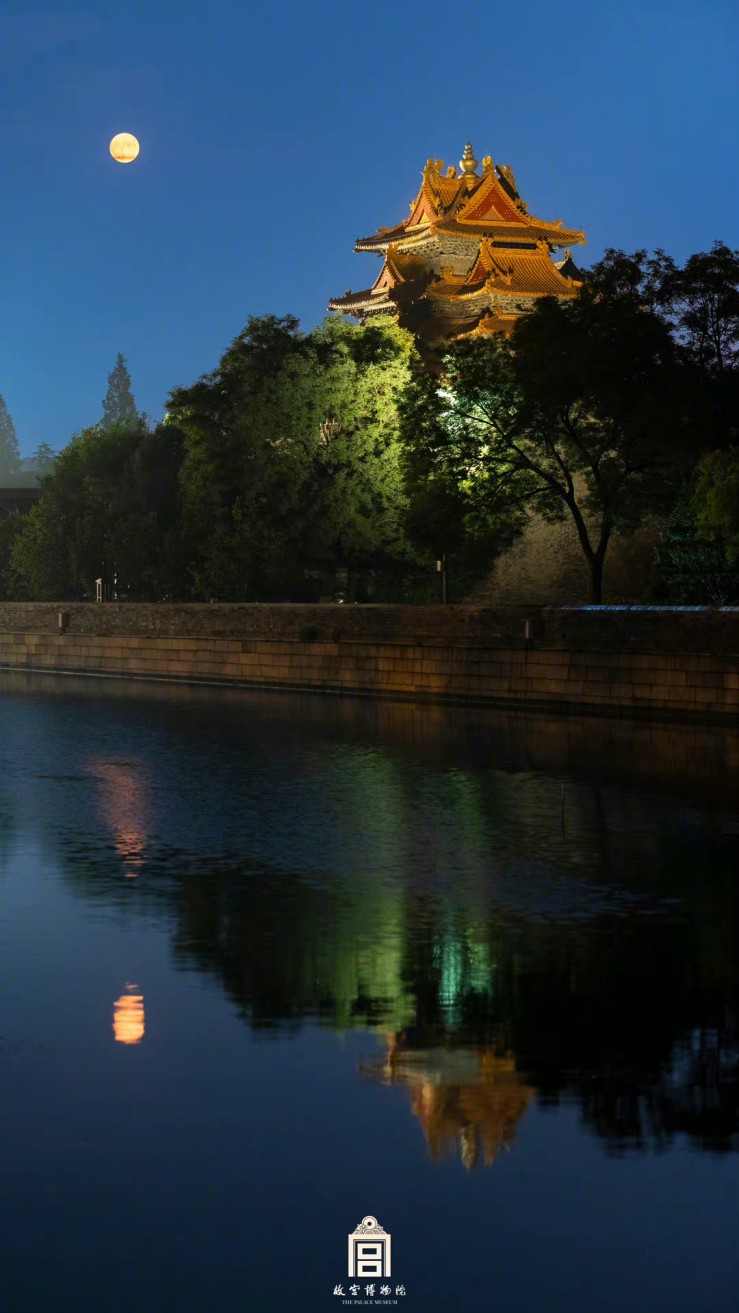
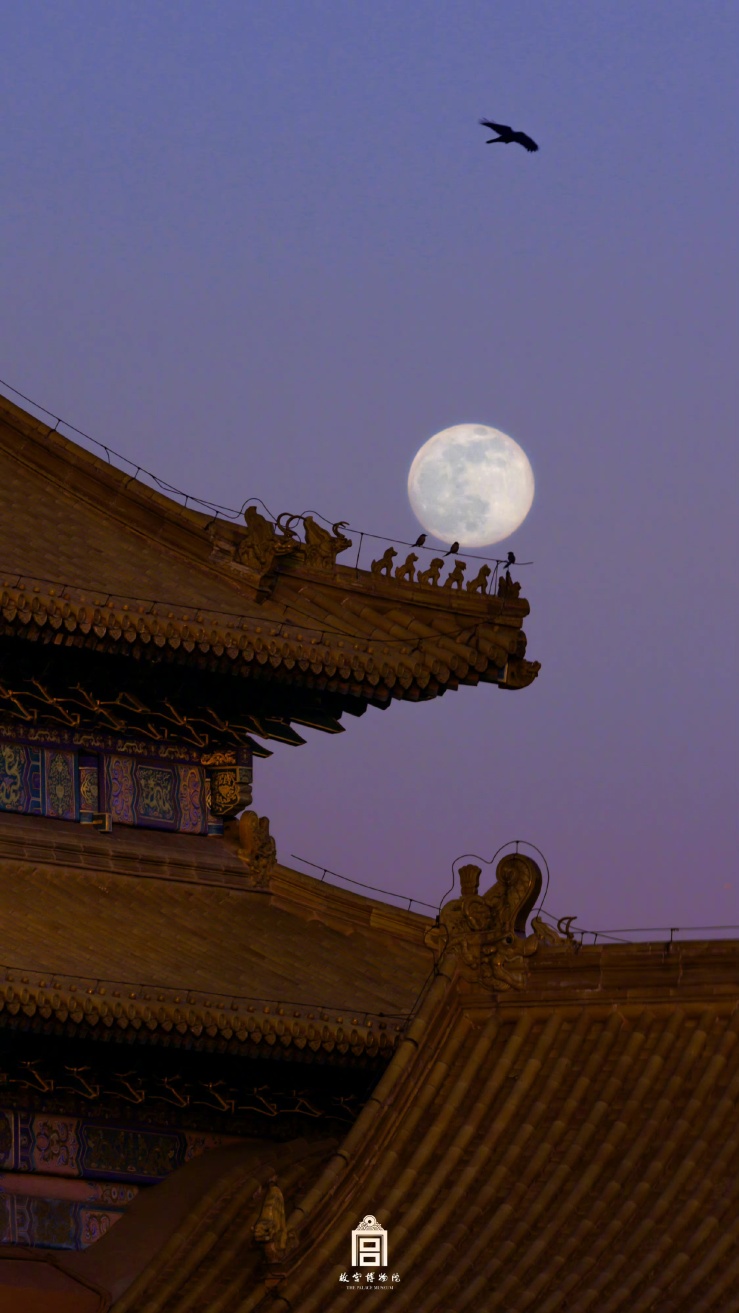
元宵喜乐 During the Lantern Festival on February 5th 2023 at the Forbidden City, Beijing, China, People’s Republic of China , a full moon passes through the turrets of the Forbidden City, and it is in the same frame as the ridge beast, which is too beautiful to behold. According to astronomy science experts, the Lantern Festival of the Year of the Rabbit in Guimao is “15 moons and 16 rounds”, and the full moon will appear in the early morning of the 6th. This round of the roundest Lantern Festival moon is not only the first full moon this year, but also the smallest full moon in 2023. 

On this day on the 5th February 2023 on the fifteenth day of Chinese lunar new year festival is the lantern festival or known as Chinese Valentine’s Day…. in which this painting is inspired by the Hangzhou West lake storytelling of the legend of the white snake…..

The early days, young people were chaperoned in the streets in hopes of finding love. Matchmakers acted busily in hopes of pairing couples. The brightest lanterns were symbolic of good luck and hope…… Lantern Festival is one of the events they can go out and join in the celebration. And that’s when other young guys can get to meet the ladies. Therefore, the Lantern Festival is sometimes referred to as Chinese Valentine’s Day. There will also be big displays of lanterns in some major parks or open space.

Love inscribed in poems

The other evidence of the Lantern Festival being Chinese Valentine’s Day is recorded in Chinese literature. In the thousands of ancient poems passed on from the Tang and Song dynasties, many depicted ardent love for their partners.

Not only was love engraved in ancient poems, but also sceneries and the boisterous carnivals of the Lantern Festival, when the nights were as bright as the daytime with hundreds of lanterns burning.

The festive atmosphere, the performances, and the moonlight jointly created the best time for a date.

The history of the festival could be traced back to the Han Dynasty (202 B.C.-220 A.D.), and the celebrations were gradually enriched, expanded and settled in succeeding dynasties. But from the very beginning, lanterns have been an indispensable part of the day.

元宵喜乐 During the Lantern Festival on February 5, a full moon passes through the turrets of the Forbidden City, and it is in the same frame as the ridge beast, which is too beautiful to behold. According to astronomy science experts, the Lantern Festival of the Year of the Rabbit in Guimao is “15 moons and 16 rounds”, and the full moon will appear in the early morning of the 6th. This round of the roundest Lantern Festival moon is not only the first full moon this year, but also the smallest full moon in 2023. 

Images and visuals are from – Forbidden City –Palace Museum Beijing- China –People’s Republic of China…..

#北京 #中國 #China #Beijing | #紫禁城 #ForbiddenCity #September2022 | #中秋節 #MidAutumnFestival gorgeous stunning #LunarPhotography of the #FullMoon rising over the Forbidden City #神武门 #NorthernGate #TheGateOfDivineMight 

In this year’s 2022, the second decade from the turn of the century in Beijing the Capital of China also the People’s Republic of China, in which is also the year of the Tiger, marking its six hundred and two years anniversary of the Forbidden city that marks the transitional point of in between the middle of the Ming Dynasty (1368- 1644) transitionally from Nanjing to Beijing towards the Qing Dynasty (1636-1644-1911) …. The Imperial Palace seen so many countless seasonally transitional equinoxes but further its six hundred years is iconic, but it’s five hundred ninety nine years it marks it Autumn Equinox…. In which it only took twelve years to build the same of the Daming Palace of The Tang Dynasty Xian Imperial Capital only it was least twenty times larger…

On the 10th September 2022 it was height of the full moon also the中秋節mid-Autumn Festival is an important traditional festival in the cultural circle of Chinese characters. It originated in China and falls on the fifteenth day of the eighth lunar month every year , from the beginning of September to the beginning of October in the Gregorian calendar (between September 7 and October 7). Influenced by the cultural circle of Chinese characters, the Mid-Autumn Festival is also a traditional festival in some countries in East and Southeast Asia, especially the local Chinese and overseas Chinese. According to the lunar calendar, August is the second month of autumn. 

One of the four traditional festivals in China

The Mid-Autumn Festival, also known as the Moon Festival, Moonlight Birthday, Moon Night, Autumn Festival, Mid-Autumn Festival, Moon Worship Festival, Moon Festival, Moon Festival, Reunion Festival, etc., is a traditional Chinese folk festival. The Mid-Autumn Festival originated from the worship of celestial phenomena, and evolved from the Qiu Xi festival in ancient times. Since ancient times, the Mid-Autumn Festival has folk customs such as offering sacrifices to the moon, admiring the moon, eating moon cakes, watching lanterns, appreciating osmanthus flowers, and drinking osmanthus wine. 

The Mid-Autumn Festival originated in ancient times, popularized in the Han Dynasty, shaped in the early years of the Tang Dynasty, and prevailed after the Song Dynasty. The Mid-Autumn Festival is a synthesis of autumn seasonal customs, and most of the festival and customs elements it contains have ancient origins. The Mid-Autumn Festival uses the full moon to signify the reunion of people, as sustenance to miss the hometown, miss the love of relatives, pray for a good harvest and happiness, and become a colourful and precious cultural heritage. 

At first, the festival of “Sacrificial Moon Festival” was on the 24th solar term ” Autumn Equinox ” in the Ganzhi Calendar, and it was later adjusted to the 15th day of the eighth lunar month in the Xia Calendar The Mid-Autumn Festival, the Spring Festival, the Qingming Festival and the Dragon Boat Festival are also known as the four traditional festivals in China. Influenced by Chinese culture, the Mid-Autumn Festival is also a traditional festival for some countries in East and Southeast Asia, especially the local Chinese and overseas Chinese….

Imagines credits are of the Forbidden city –Imperial Palace –Beijing – China- People’s Republic of China

#北京。 #中國 #China #Beijing | #紫禁城 #ForbiddenCity #September2021|#ForbiddenCityMoments #中秋節 #MidAutumnFestival Stunning #FullMoon Photography celebrating the #嫦娥#Change #玉兔 #JadeRabbit illuminating  the Ancient Post Modern Megatroplis City #Beijing  ….

On the Evening Night Day of 21st September 2021 Tuesday, it was the One of the many Festive holidays in the Asian Chinese Communities throughout the world in which dates back to the Shang Dynasty 1600-1046 BC also Western Zhou Dynasty 1046- 771 BC..  on that previously day in which on the Mid-Autumn Festival : 中秋節, also known as Moon Festival or Mooncake Festival, is a traditional Chinese festival celebrated by many East and Southeast Asian countries and regions. It is the second-most important holiday after Chinese New Year with a history dating back over 3,000 years, when the Emperor of China worshipped the moon for bountiful harvests….

 On the that21st September 2021 Tuesday Evening Night there was massive crowds of people whom gathered around the moat areas of the Forbidden City- Beijing- China- People’s Republic of China..  in which people gathering in witness the full moon that over hanging over Forbidden City fortress walls in which with picturesque moments as the moon illuminated as an ancient golden  amberically Chinese Lantern illuminating the Beijing Ancient Post Modern Ultra Megatroplis city landscape ..  previously to the day it was the launch of the Chang Zheng – Long March seven Carrier Rocket daytime launching of Tianzhou three cargo module towards CNSA BRI CMS CSS –China National Space Administration- China Manned Space China Space Station  in for the Shenzhou 13  preparations in the October Month from Wenchang Spacecraft launch centre – Hainan province…..

The festival is held on the 15th day of the 8th month of the Chinese lunisolar calendar with a full moon at night, corresponding to mid-September to early October of the Gregorian calendar. On this day, the Chinese believe that the moon is at its brightest and fullest size, coinciding with harvest time in the middle of autumn….

In the ancient past, there was a hero named Hou Yi who was excellent at archery. His wife was Chang’e. One year, the ten suns rose in the sky together, causing great disaster to the people. Yi shot down nine of the suns and left only one to provide light. An immortal admired Yi and sent him the elixir of immortality. Yi did not want to leave Chang’e and be immortal without her, so he let Chang’e keep the elixir. However, Peng Meng, one of his apprentices, knew this secret. So, on the fifteenth of August in the Chinese lunisolar calendar, when Yi went hunting, Peng Meng broke into Yi’s house and forced Chang’e to give the elixir to him. Chang’e refused to do so. Instead, she swallowed it and flew into the sky. Since she loved her husband and hoped to live nearby, she chose the moon for her residence. When Yi came back and learned what had happened, he felt so sad that he displayed the fruits and cakes Chang’e liked in the yard and gave sacrifices to his wife. People soon learned about these activities, and since they also were sympathetic to Chang’e they participated in these sacrifices with Yi.

After the hero Houyi shot down nine of the ten suns, he was pronounced king by the thankful people. However, he soon became a conceited and tyrannical ruler. In order to live long without death, he asked for the elixir from Xiwangmu. But his wife, Chang’e, stole it on the fifteenth of August because she did not want the cruel king to live long and hurt more people. She took the magic potion to prevent her husband from becoming immortal. Houyi was so angry when discovered that Chang’e took the elixir, he shot at his wife as she flew toward the moon, though he missed. Chang’e fled to the moon and became the spirit of the moon. Houyi died soon because he was overcome with great anger. Thereafter, people offer a sacrifice to Chang’e on every fifteenth day of eighth month to commemorate Chang’e’s action.

Imagines visuals credit are from the Forbidden city –Imperial Palace –Beijing – China- People’s Republic of China…  also from their respectives