On the day of January 2023 … Shenzhen Ultra Mega Metropolis City is located right next to the Hong Kong SAR in the Greater Bay Area, Guangdong Province of China, and People’s Republic of China. Shenzhen is One is the world’s Advanced City Shenzhen is ranked as an Alpha- (global first-tier) city by the Globalization and World Cities Research Network. Its nominal GDP has surpassed neighbouring cities of Guangzhou and Hong Kong and is now among the top ten cities with the largest economies in the world….. Shenzhen is growing rapid at warp speeds that year, it was declared a special economic zone, which opened the city to foreign investment, technology, and managerial expertise through the establishment of foreign-owned, joint-venture, and other business enterprises. From 1980 the city grew at a phenomenal rate, a rate known in China as “Shenzhen speed.” Shenzhen is known as one of the top 20 High-Tech cities in the world, and definitely one of the more modern in China. Despite its incredible development, it’s not a very polluted city.
Shenzhen is Special through many ways Shenzhen is now the hi-tech home of leading Chinese tech firms such as the internet giant Tencent, telco Huawei, and the drone maker DJI. Shenzhen is also home to the Shenzhen Stock Exchange and is one of the busiest financial centers in the world. Shenzhen is ranking globally In the Global Urban Competitiveness Report 2021, Shenzhen’s economic competitiveness ranked 7th in the world. Shenzhen has 169 national-level “Little Giant” enterprises, ranking 4th among Chinese cities….. In which the city is a great place to live Shenzhen has fantastic transport links and is one of the best connected cities in the east. It has the world’s fourth busiest port, which is a major part of its economic success, while expats living in Shenzhen can fly to most domestic cities from Shenzhen Bao’an International Airport.
Attractions to Shenzhen Modern architecture at its boldest With sleek skyscrapers stretching to the sky, bold museums, and a monumental library and exhibition center, the city is a space for visionaries to experiment. It’s no surprise then that Shenzhen earned the status of UNESCO City of Design. Shenzhen, which borders Hong Kong, is often referred to as China’s ‘Instant City’. Municipal leaders from around the world come to see the glossy urban environment of high rise offices and apartment buildings, chaotic yet ordered traffic, automated payments, data management built on environmental sensors, and other innovations built in one unified ecosystem. Shenzhen is a city of astounding growth and smart technologies. Through careful planning, inclusion of innovative technologies like artificial intelligence, the internet of things and the attraction of new partners to the growing technological environment, the city has doubled its population in the last 20 years. The founders of Tencent and Alibaba – Ma Huateng and Jack Ma – graduated from Shenzhen University. But that doesn’t mean only top-to-bottom strategic planning is key to a successful smart city. All players in the social and economic ecosystem must work together, developing and investing in new technologies, improving internet infrastructure as Huawei and Tencent do by sharing the hardware and software market, watching for shifting preferences of city dwellers and using big data to respond to these changes. Shenzhen’s application of new technologies in urban infrastructure and operations is more advanced than its neighbouring city of Hong Kong. The city that was built in close proximity has overtaken it as a leading example of a smart city.
Walk East | Max Channel is about his walking, driving, riding running around views of China – People’s Republic of China sharing his immersive experiences in his video hope you could have a pure view about China today, sharing some 4K UHD videos to show pure China daily scenes for you…. BEST VIEWED ON 2160px60 with the volume up for immersive immersion..
On the weeks on December 2021 it was the winter 2021 in which during the Beijing – China – People’s Republic of China in which during the two months in Shenzhen in the Greater Bay Area of China across form Hong Kong SAR is the Forbidden City Publishing House exhibition featuring it’s numerous designer creative forbidden city mechanize products inspired by the life designing Historically elements of the Forbidden City from ancient to postmodern times in which are featuring on the Forbidden City store …..
The New Year’s Eve Yingxiang — 悦读旧宫 Cultural and creative exhibition is coming to Shenzhen……. The exhibition runs until February 28th 2022! Friends from Shenzhen don’t forget to check in! The location is at Huabo Art Center, Phase 2 of Galaxy Coco Park, Futian District, Shenzhen……268 Fuhua Rd 3, 中心城 Futian District, Shenzhen, Guangdong Province, China, 518020 – People’s Republic of China..
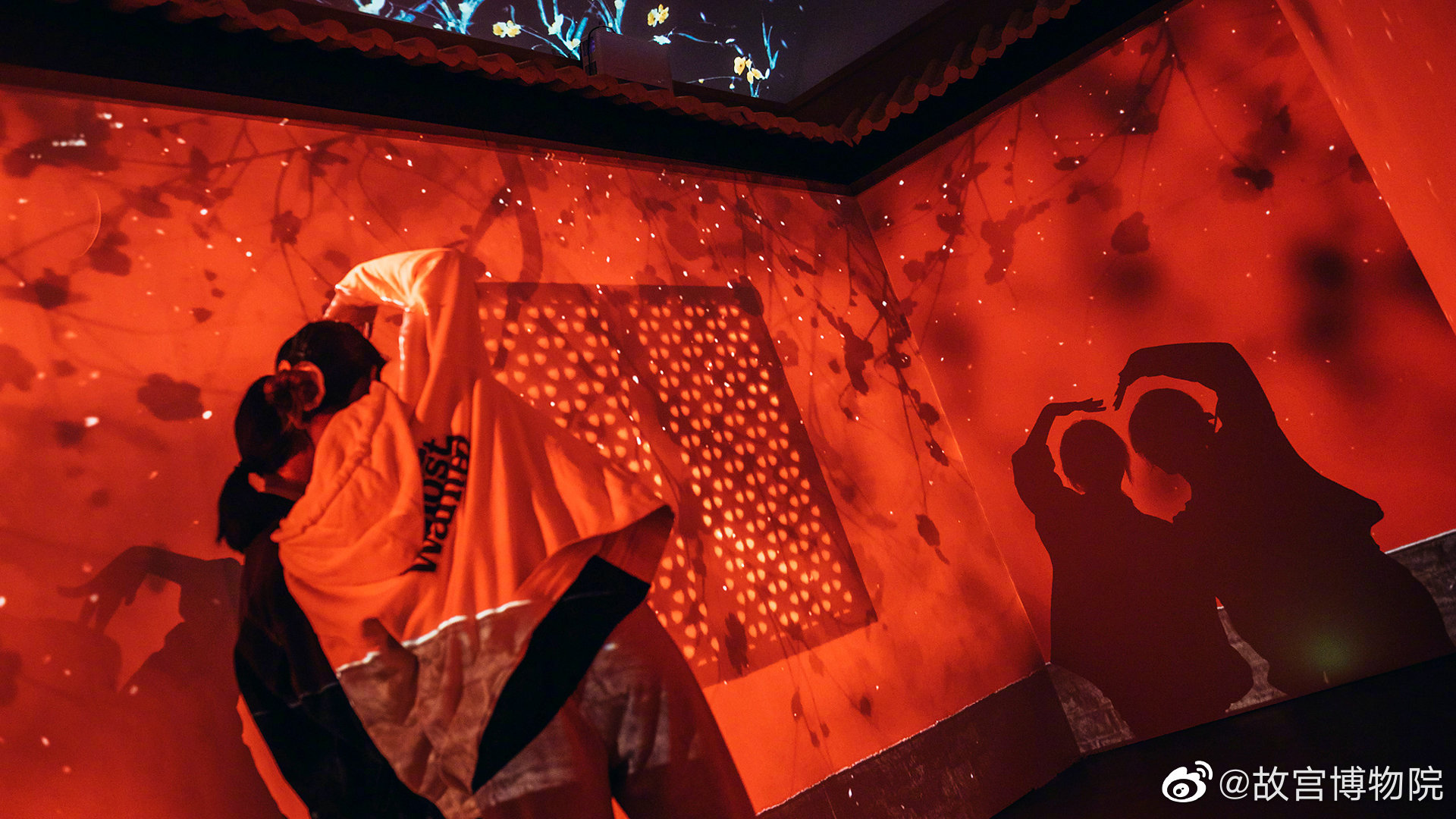
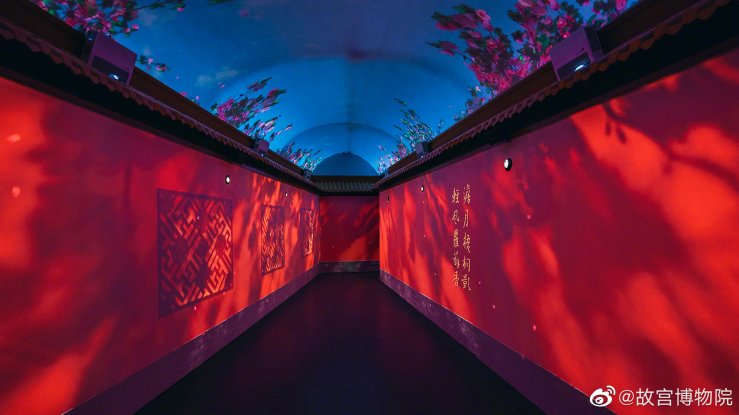
On December 15, 2021, with the opening of the “Culture + Technology” International Forum, the opening ceremony of “Tencent Immersive Digital Experience Exhibition of Forbidden City” was held at Shenzhen Sea World Culture and Art Center. The exhibition reproduces the traditional patterns of the Forbidden City through digital technology, and provides a subtle insight into the spiritual world of the Forbidden City’s architecture and decorations. This exhibition is 古宫超高高高實寫物深圳首見. The audience can enjoy the 5.3-meter-high naked-eye 3D cultural relics and 22 times the high-definition magnified cultural relics. Through VR and AR, they can experience the “Jiangnan Dream” in Tienqinzhai, and even more “Check in” the red wall and window pattern of the Forbidden City, leaving an exclusive streamer image. The exhibition will be open to the public free of charge from December 18, 2021 to February 12, 2022, and you can make an appointment to visit through the “Digital Forbidden City” applet.
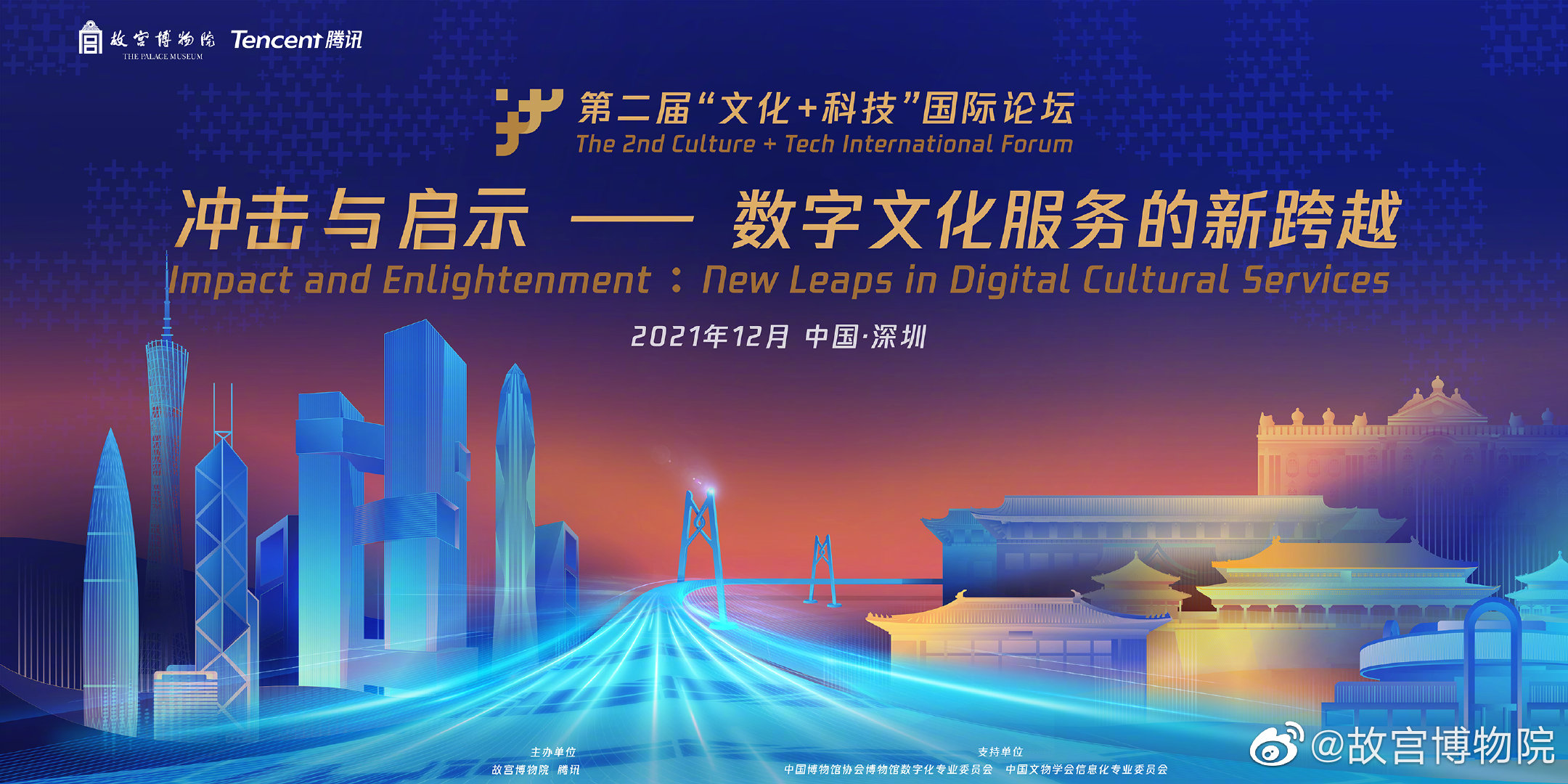
Providing also On December 15, 2021, the second “Culture + Technology” International Forum, co-sponsored by the Palace Museum and Tencent, supported by the Museum Digitalization Professional Committee of the Chinese Museum Association, and the Informationization Professional Committee of the Chinese Cultural Heritage Society, opened in Shenzhen Tencent Binhai Building. The forum invited more than 50 experts and scholars from many well-known cultural and cultural institutions, universities and technology companies at home and abroad to gather to discuss the future of museums in the digital age
In November 2017, the Palace Museum and Tencent successfully held the first “Culture + Science and Technology” International Forum in Beijing. After 4 years of development and precipitation, especially since the COVID-19 pandemic, what kind of impact will science and technology have on the cultural and expedition field? And change? On December 15, 2021, the second “Culture + Technology” International Forum, co-sponsored by the Palace Museum and Tencent, supported by the Museum Digitalization Professional Committee of the Chinese Museum Association and the Informationization Professional Committee of the Chinese Cultural Heritage Society, opened in Shenzhen Tencent Binhai Building.
The theme of this forum is “Impact and Enlightenment-A New Leap in Digital Cultural Services”, which aims to further promote the digital concept of museums, promote the application and innovation of new technologies, and jointly explore the development direction of culture and technology. More than 50 experts and scholars from many well-known cultural and cultural institutions, universities and technology companies at home and abroad gathered to discuss the future of museums in the digital age.
Guests from the Shenzhen Municipal Government, UNESCO and the Chinese Museum Association (in the order of their speeches) came to Shenzhen or participated in the conference via video and delivered speeches. At the opening ceremony, Wang Xudong, Dean of the Palace Museum, mentioned: “The’Culture + Technology’ International Forum aims to integrate the superior resources of culture and technology and build a cutting-edge academic exchange platform for all parties in the world. In the digital age and the epidemic, we should With a more long-term perspective, re-examine the positioning and mission of the museum, deeply explore and interpret the diverse values of cultural heritage, give cultural heritage new vitality, and answer the propositions of the times of creative transformation and innovative development.”
Cheng Wu, Vice President of Tencent Group, said in his speech: “In 2016, the Palace Museum and Tencent explored the digitalization of cultural museums. On the one hand, through the’new cultural creation’, they created screen-level works such as ancient paintings and singing, making traditional culture a trend for the younger generation. Culture; At the same time, “new technology” is used to help digital infrastructure such as the digital collection of cultural relics, and to create WeChat applets such as the digital Forbidden City, so that cultural relics are within reach in the cloud. Helping China’s cultural museums to plug in a pair of new technology and new cultural and creative wings , Stepping out of an innovative model with Chinese characteristics, and contributing Chinese solutions to the development of global cultural museums. This is also an important practice for Tencent to fulfill its mission of “Technology for Good”.”
The vice chairman of the International Association of Museums and the directors of several well-known museums at home and abroad delivered keynote speeches.
This forum lasts for two days and consists of three sub-forums. Forum 1 “Resonance•New Development of Digital Culture from a Global Perspective” focuses on the development of digital cultural services under the impact of the epidemic, while Forum 2 focuses on the deep integration of traditional culture and digital technology. , Forum 3 “Burst • Convergence and Improvement of Digital Cultural Services” combined with specific cases to explore practical methods for the further integration of culture and technology, and conduct multi-dimensional professional seminars on the overall development, efficiency enhancement and ecological construction of digital cultural services.
This forum specially set up the Greater Bay Area Salon session. Five guests from the Cultural Affairs Bureau of the Macao Special Administrative Region Government, the Palace Museum, the Guangdong Provincial Museum, the Hong Kong Museum of History, and Tencent focused on the cultural policy and construction of the Greater Bay Area and the cultural resources of the Greater Bay Area. , The exchange and training of talents between Hong Kong, Macau and the Mainland (including the traditional cultural exchanges of youth in the Greater Bay Area, and the training of cultural talents between Hong Kong, Macau and the Mainland) and other specific directions were discussed.
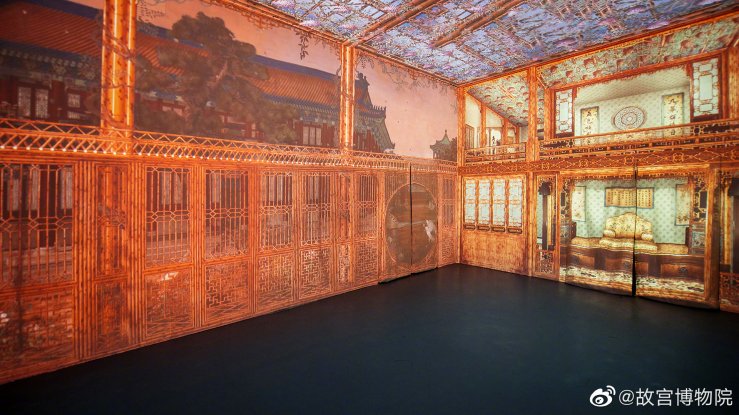
The “Tencent Immersive Digital Experience Exhibition” co-sponsored by the Palace Museum and Tencent will also be unveiled during the forum. This is the first time that the Forbidden City’s ultra-high-precision “digital cultural relics” have been exhibited in Shenzhen, and part of the scenes of Juanqinzhai have been restored with the help of VR and AR technologies. After showing the beauty of the patterns contained in the cultural relics of the Palace Museum through the “Changyou Duobao Pavilion” mini program in 2020, the Palace Museum and Tencent once again joined forces to lead the audience in an immersive experience with Tencent’s immersive rendering, image search and panoramic sound technologies. Appreciate the beauty and wisdom in the world of patterns in ancient buildings and collections.
There are 7 exhibition areas in the exhibition. Visitors can enjoy naked-eye 3D “digital cultural relics” with a height of 5.3 meters and 22x high-definition magnified cultural relics, experience the experience of transcending physical cultural relics exhibition, and may discover hidden mysterious three-dimensional space “Eggs”. The exhibition also meticulously created 10 annual check-in points, allowing the audience to experience the four seasons of the Forbidden City, leaving an exclusive streamer image.
The exhibition will be held at the Shenzhen Sea World Culture and Art Center. It will be open to the public free of charge from December 18, 2021 to February 12, 2022. Visits can be reserved through the “Digital Forbidden City” applet.
Attachment: Participants of the 2nd “Culture + Technology” International Forum (47 companies in total, sorted by the first letter of Pinyin)
Museum units (19 companies)
Sackler Archaeology at Peking University And Art Museum
Dunhuang Academy
Hermitage, Russia National Museum
The Palace Museum
Guangdong Provincial Museum
National Library
Henan Museum
National Museum of the Netherlands
Hubei Provincial Museum
Nanjing Museum
Emperor Qin Shi Huang’s Mausoleum Museum
Tokyo National Museum, Japan
Xias Historical Meseum
ShangHai museum
Shanghai History Museum
capital Museum
Suzhou Museum
Hong Kong Palace Museum
British V&A Museum
Cultural relic institutions and industry organizations (13 companies)
Cultural Affairs Bureau of Macao Special Administrative Region Government
Federation of French Museums
International Museum Association
International Association of Museums Audiovisual, New Technology and Social Media Committee
Unesco Representative Office in China
British Scottish Historical Environmental Management Agency
Chinese Museum Association
Museum Digitalization Professional Committee of Chinese Museum Association
Chinese Cultural Heritage Research Institute
China Cultural Relics Conservation Foundation
China Cultural Relic Exchange Center
China Cultural Relics Information Consultation Center
Informatization Professional Committee of Chinese Society of Cultural Relics
University units (7 companies)
Beijing University
Beijing Institute of Technology
Fudan University
Oxford university
Ryukoku University
Wuhan University
Ningbo Institute of Technology, Zhejiang University
Enterprise units (8 companies)
Beijing SuperMap Software Co., Ltd.
DJI Innovation Technology Co., Ltd.
Huachuan Cultural Communication Group
Toppan Printing Co., Ltd.
Tencent
Artron Culture Group
China Mobile Communications Group Beijing Co., Ltd.