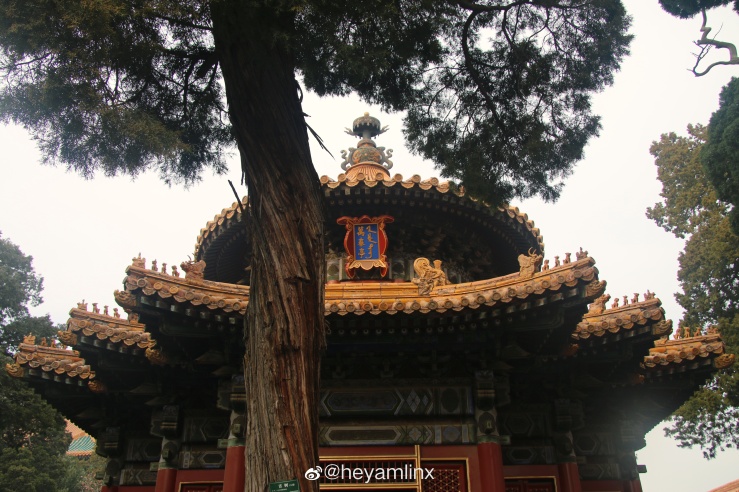
午門 紫禁城 Locating of the Meridian Gate Wu Men palace in the Forbidden city- Beijing –China People’s Republic of China On 17th September 18th November 2021, “Beyond the Bounds of History: A Collaborative Exhibition Between the Palace Museum and Dunhuang Academy” opened atop the Meridian Gate in the Forbidden City. Hu Heping, secretary of the leading Party group and minister of the Ministry of Culture and Tourism; Li Qun, vice-minister of the Ministry of Culture and Tourism and director of the National Cultural Heritage Administration; He Wei, member of the leading Party group and vice-governor of the People’s Government of Gansu Province; Wang Xudong, member of the leading Party group of the Ministry of Culture and Tourism and the director of the Palace Museum; Zhao Shengliang, secretary of the Party committee at the Dunhuang Research Academy; Su Bomin, director of the Dunhuang Research Academy; and others were present at the opening ceremony. Representing the exhibition’s organizers, Wang Xudong and Su Bomin spoke during the event, which was hosted by Du Haijiang, secretary of the Party committee and deputy-director of the Palace Museum.
The exhibition is sponsored by the Ministry of Culture and Tourism and the People’s Government of Gansu Province and organized by the Palace Museum and Dunhuang Research Academy as an important measure of implementation by the Ministry of Culture and Tourism and the People’s Government of Gansu Province of the spirit of President Xi Jinping’s important talk at the Dunhuang Research Academy.
During the 1950s, Dunhuang Research Academy mounted an exhibition in the gallery atop the Meridian Gate (Wu men) in the Forbidden City. Seventy years later, the Palace Museum and Dunhuang once again gather as a duo of cultural pillars to transcend time and space and combine unique ancient and contemporary charisma to offer visitors with an opportunity to deeply understand the great fusion, creativity, and vitality of the Chinese people. The exhibition is divided into three sections—“Splendors of the Silk Road”, “Myriad Phenomena in the Mortal Realm”, and “Protection of the Legacy”—with displays of 188 pieces of cultural relics from the Gansu Province and collection of the Palace Museum as well as hand-painted reproductions of Dunhuang murals, high-fidelity digital reproductions of murals, and reproductions of caves 285, 220, and 320, etc. These offerings afford visitors with a close-up experience of a millennium of two of the greatest representatives of Chinese civilization while presenting the best of the two sites’ research on cultural heritage protection.
As important guardians of culture, the Palace Museum and Dunhuang Research Academy have witnessed the extraordinary development of China’s cultural heritage industries. The exhibition’s third section, “Protection of the Legacy”, presents archives, media, documents, and cultural artifacts as a demonstration of the Party and Nation’s leadership and concern for the issue. As two great institutions of preserving world cultural heritage, the Palace Museum and Dunhuang Research Academy have made important contributions to cultural heritage research and the promotion of cultural legacies since before the establishment of New China.
Additional support for the exhibition is provided by the Gansu Provincial Musuem, Gansu Bamboo Slips Museum, Gansu Provincial Institute of Cultural Relics and Archaeology, Chinese Academy of Cultural Heritage, Tianshui Museum, Wuwei Museum, Jiayuguan Great Wall Museum, Dunhuang Museum, Sandan County Rewi Alley Memorial Hall, Lingtai Museum, and Jingchuan Museum. Further support is provided by special sponsor China Silk Corporation; joint support from China Dunhuang Grottoes Conservation Research Foundation and Hongqi; and construction support from Crown Homes of Suzhou.
HanFu- Han Dynasty Clothing is making a massive come back in the Asian Chinese communities as youths reliving In recently decades there’s been very much strong revitalisation of Chinese Customary tailoring clothing in which is HanFu- Han Dynasty (221-206 BC) period inspired clothing in which was worn just before the fall of the Ming Dynasty (23 January 1308 to 25 April1644, until a North East Manchurian fashion that have taken over the traditional Han Dynasty fashion in which we known till today that’s the Qipao in which have been fashionable evolving on the same path also…. Like a Qipao, HanFu can be worn every day, as work wear, till as evening wear… It also it comes in various forms as to the nature of activity of the day or night…
Featuring汉服资讯 Tang Dynasty every day wear gown white blossom pattern and pleated skirt original…with this feminine intrepid urban outdooring summery transitionally towards Summery Autumn urban elegant sleek with a warm summery non collar look in which is suited for a contempary Tang Dynasty Summery Spring wear with bold pastel autumn soft sheerness chiffon soft pastels blue Pink with warm colours in which gathering summery warm during the in which helps during the evening for keeping warmth … Featuring an ancient Chinese fan for ventilation of a summery breeze…
Inspirations of Gui Dian Wei Cen is opposite Yu Lou, Jiao Fang is slim and slender with golden house.Sanjo Jiumo Belvedere Kuma, thousands of households open peacefully. ” In a country with thousands of miles of mountains and rivers, Chang’an in the nine-storied city of Quebec has no idea how many people’s dreams have been decorated. What is your impression of that dream? The gurgling water, the lively painting boats, and the girl with light clothes……… The quiet pearly blue is like sparkling water, colliding with the gentle beige and warm red, tender and bright. The restored design is full of ancient charm, and there is no lack of agility and elegance.
HanFu- Han Dynasty Clothing is making a massive come back in the Asian Chinese communities as youths reliving In recently decades there’s been very much strong revitalisation of Chinese Customary tailoring clothing in which is HanFu- Han Dynasty (221-206 BC) period inspired clothing in which was worn just before the fall of the Ming Dynasty (23 January 1308 to 25 April1644, until a North East Manchurian fashion that have taken over the traditional Han Dynasty fashion in which we known till today that’s the Qipao in which have been fashionable evolving on the same path also…. Like a Qipao, HanFu can be worn every day, as work wear, till as evening wear… It also it comes in various forms as to the nature of activity of the day or night…
Featuring汉服资讯 Tang Dynasty every day wear gown bronzing and pleated skirt original…with this feminine intrepid urban outdooring summery transitionally towards Summery Autumn urban elegant sleek with a warm summery non collar look in which is suited for a contempary Tang Dynasty Summery Spring wear with bold pastel autumn soft sheerness chiffon soft pastels blue Pink with warm colours in which gathering summery warm during the in which helps during the evening for keeping warmth … Featuring an ancient Chinese fan for ventilation of a summery breeze…
Inspirationally of a Hua Qing Light and gorgeous, fairy spirit fluttering “Xia Sanqi, the moon sinks into the hook. The curtain rolls in the Weiyang Tower…..The Yeliang River is stuck in the stream. Palace gate locks Qingqiu……Yao order Shu. Jinpanlu. Phoenix scent and smoke…..Three thousand pearls and emerald embrace the village tour. The water hall is in Liangzhou. ” Elegant and gentle restoration chest set Huaqing not only has the prosperous and gorgeous feeling of the prosperous Tang Dynasty It also has the playful romance of a girl, and the group flowers are full of ancient charm The stacking of half-sleeved shorts and long-sleeved shorts adds to the overall sense of hierarchy Paired with Phi and silk, the original blue-pink line with lotus root and purple embellishment Light and thin texture layered decoration, more fairy-like
Currently running an exhibition is the Temple Ritual-Special Exhibition of Figure Paintings of Past Dynasties Collected in the Palace Museum (Phase1 )” opening on May 1st, Wenhua Hall opening for two months till 30th 2021 in which is situated exhibiting at on display at the Wenhua Hall Painting and Calligraphy Gallery….. The exhibition involves in with its collection of 55 pieces/sets of figure paintings with both artistic and historical value will meet you in Wenhua Hall. There are an emperor who founded a nation and administers a benevolent government, as well as civil servants and military generals who have made great achievements and awe-inspiring achievements, and there are also great women who have made contributions to the country. In the Forbidden City ..
Figure Painting: One of the traditional Chinese painting department
Figure painting is one of the traditional Chinese painting subjects that describe figures and activities. It is subdivided into various subjects such as historical figures, religious figures, customs, ladies and so on. According to techniques, there is a distinction between fine brushwork and freehand brushwork. Since ancient times, figure painting has been valued by people because of its social function of admonishing and enlightening and its representation of real life. Its emergence and maturity were not only earlier than landscape painting and flower-and-bird painting, but also figure painters such as Gu Kaizhi in the Eastern Jin Dynasty, Lu Tanwei in the Southern Dynasty, Yan Liben and Wu Daozi in the Tang Dynasty.
The development of figure painting reached its peak in the Five Dynasties and the Song Dynasty, and a number of masterpieces with a high degree of artistic expression appeared, such as the famous Northern Song Dynasty Zhang Zeduan’s “Surfing the River on Qingming Festival”. The figure paintings of this period were not only rich in subject matter and diverse techniques, but also paid more attention to the expression of inner spiritual emotion and the setting atmosphere of the character in the portrayal of the characters, reflecting the highest level of vividness in ancient Chinese figure portraits. Since the Yuan Dynasty, although most literati painters seldom participated in the creation of figure paintings, the documentary and educational functions of figure paintings continued to develop vigorously in the Ming and Qing court painting academies, and excellent works appeared one after another. At the same time, a large number of works that express the life of literati and elegant, and records the production and life of ordinary people are even more beautiful and wonderful, such as Baihuizhengyan, which is not inferior to the previous generations in the number of works and artistic standards, and has become our understanding and exploration. The vivid and vivid historical data of the thoughts, interest, and living conditions of the ancients.
Exploring historical and cultural values and enhancing national cohesion . The creation of figure paintings has received special attention in the past, and a large number of excellent works have been passed down to this day. In order to carry forward the excellent traditional Chinese culture and promote the research of figure painting, the Palace Museum specially organized the “Temple Ceremony-Special Exhibition of Figure Paintings of Past Dynasties Collected in the Palace Museum (Phase 1)”. From the figure paintings in the courtyard collection, 55 pieces/sets of precious paintings with both artistic and historical value are selected and displayed in accordance with the identity of the characters on the screen and the order of the times. Among them, there are not only the emperors who founded the country and established a state and exercised benevolent governance, including Yao, Shunyu in ancient times to Kangxi and Qianlong in the Qing Dynasty; there are also literati and generals with great achievements and great festivals, such as Su Wu, Zhuge Liang, Yue Fei, Wen Tianxiang, etc.; also There are women who have contributed to their homeland, including Wang Zhaojun, Cai Wenji, Mulan and other great women who are familiar with them. These characters and their deeds shine through the annals of history and are in the hearts of the people. To evaluate a figure painting, we must not only pay attention to its artistic level, but also explore the historical and cultural value behind it. Exhibiting his image and publicizing his deeds will not only play the role of “adult education and help others”, but will also help strengthen national cohesion. The Palace Museum insists on continuous innovation while maintaining integrity, deeply explores the connotation of the times, humanistic spirit and aesthetic value contained in cultural relics, uses cultural relics as media to tell Chinese s
Publication: “Patterns of the Past-A Special Exhibition of Figure Paintings of Past Dynasties Collected in the Palace Museum”
The published “Patterns of the Past-Special Exhibition of Figure Paintings of Past Dynasties” in the Palace Museum contains nearly a hundred pieces of figure paintings of the past dynasties collected in the Palace Museum, including the earliest handed down book of “Lie Nu Tu” and “Lie Nu Zhi Ren Tu” “Volume”, representing the superb artistic level of the paintings of the Northern Song Dynasty painting academy’s “Ting Qin Tu” axis, one of the “Four Great Masters of the Southern Song Dynasty” Li Tang’s figure painting masterpiece “Picking Wei Tu” volume and other famous paintings in history, including ” The first high-definition paintings are published in the book “Character Story Atlas”, “Sun Deng Changxiao Tu” axis, and “Yang Fei’s Bathing Picture” axis. There are many types of figure paintings selected in this book and each has its own characteristics, so that readers can not only further understand the development context of Chinese figure paintings, be familiar with the characteristics of various types of figure paintings, but also see the costumes, furnishings and lifestyles of various periods in ancient my country. . In the next stage, as the “Special Exhibition of Figure Paintings of Past Dynasties Collected in the Palace Museum” will be exhibited in different periods and themes, the Palace Publishing House will continue to release corresponding catalogs with the exhibition.
Tips for booking visits to the Palace of Wenhua Temple Etiquette-Special Exhibition of Figure Paintings Collected in the Palace Museum (Phase 1) will be held from May 1, 2021 to June 30, 2021 in Wenhua Hall of the Palace Museum. Tickets are not sold separately. According to the current situation of epidemic prevention and control, and in accordance with the principle of appointment, current limitation, and peak shifting, the exhibition will be admitted by appointment, and appointments will be started 10 days in advance. The whole day will be divided into morning and afternoon sessions (2000 in the morning and 1000 in the afternoon). .
Visitors can use the online ticketing website of the Palace Museum and Wechat Palace Museum audience service number, and use the second-generation ID card or passport information to make real-name reservations. For admission to the hospital, you need to check your health code, measure your body temperature, and swipe your reserved ID card (you must have an ID card that matches the ID number reserved at the time of booking).
Promotion of key exhibits (9 pieces): 1. Yuan Chenji’s “Bianqiaohui League Map” volume, ink on paper , Tang Taizong Li Shimin (598-649), the second emperor of the Tang Dynasty. During his reign, he made great efforts to govern and his national strength was strong. This volume depicts the story of the Turkic invaders in the 9th year of Wude (626), and Li Shimin turned danger into an alliance with Anqi. The characters’ clothing patterns are drawn with “iron lines”, fine and accurate, and belong to the Li Gonglin school of the Northern Song Dynasty. The trees and stones are similar to Guo Xi’s painting methods, with the charm of Yuan people’s brushwork. Chen Jizhi, Zhupo, Yuan Dynasty painter.
2. Ming Liu Jun’s “Snowy Night Interview with Putu” axis , ink and color on silk. Song Taizu Zhao Kuangyin (927-976), the founding emperor of the Northern Song Dynasty. He ended the long-term separatism and advocated the rule of culture. Zhao Kuangyin suddenly visited Prime Minister Zhao Pu, discussing important conquests together, praising the emperor’s knowledge and good use. The clothes patterns of the characters are drawn with “blue leaves”, the square is rounded, and the characters are vividly portrayed, and each person’s identity and expression are appropriate. Liu Jun, dedicated to the inner court in the early fifteenth century.
3. Ming Qiuying’s “Lin Xiao Zhao Zhongxing Ruiying Picture” volume, ink and color on silk Song Gaozong Zhao Gou (1107-1187), the founding emperor of the Southern Song Dynasty. Xiao Zhao’s “Zhongxing Ruiying Picture” depicts the legendary deeds of Zhao Gou from his birth to his appointment as the emperor. This is a copy of Qiu Ying, and it has four sections: shooting the rabbit, Ji Meng, crossing the river, and divination. The pen is meticulous and meticulous, the color is calm and bright, and the characters have a stylized tendency to open their faces. Qiu Ying (approximately 1502-1552), a native of Suzhou, Jiangsu, one of the “Four Ming schools”.
4. Ming Wu Wei’s “Wing Jin Tu” volume. Ink and ink on paper Kongqiu (551-479), the pioneer of Confucianism. The story comes from “The Analects”, which shows Confucius’ attitude towards life that does not evade reality. The clothing patterns of the characters in the scroll are drawn with “blue leaves”, soft and strong, and the characters are simple and elegant. It is one of Wu Wei’s masterpieces of figure paintings. Wu Wei (1459-1508), a native of Jiangxia (now Wuchang, Hubei), a master of the “Zhe School” in the Ming Dynasty, was good at landscape and line drawing. 5. Ming Zhu Zhanji’s “Wu Hou Gao Lying Picture” volume Zhuge Liang (181-234) in ink and brush on paper ,
written by Kong Ming, the prime minister of the Shu Han Dynasty during the Three Kingdoms period, an outstanding politician and military strategist, was named “Marquis of Wuxiang” during his lifetime After death, the posthumous call him “Wuhou” In the volume, Kong Ming is lying in the bamboo forest, with a chic attitude. The clothes pattern is drawn by Ma Yuan, and the pen is simple and expressive, with literary interest. Zhu Zhanji (1399-1435), namely Xuanzong of the Ming Dynasty, likes literature and art, especially painting. This is a reward for the hero Ping Jiangbo Chen Xuan.
6. The axis of “The Statue of Yue Fei” by Ming Dynasty. Colored on silk, Yue Fei (1103-1142), a famous anti-jin general in the early Southern Song Dynasty, has been admired for his loyalty and service to the country. The picture shows Yue Fei wearing a four-banded scarf on his head, wearing a woven golden python robe, with a Yunlong jade belt around his waist, and sitting on the top chair with books in his hand. The portrayal of characters is less restrained and slightly freehand. Ministers wearing python robes were a phenomenon unique to the Ming Dynasty. It can be seen that this image was created by the painter based on the Ming Dynasty system.
7. Gu Kaizhi (Biography) of the Eastern Jin Dynasty, “Lie Nutu ” volume, ink and color on silk The Western Han Dynasty minister Liu Xiang took the famous women from the past dynasties and compiled them into seven “Biography of Women”. The famous painter Gu Kaizhi (about 348-409) of the Eastern Jin Dynasty drew and circulated the pictures accordingly. This volume is a copy of Song Dynasty. The characters are drawn with “iron lines”, and the clothes patterns are “compounded brushwork” to express folds and dancing, which is very characteristic. Yufu artifacts retain the system of the Han Dynasty and have precious historical value. 8. Gu Kaizhi (Biography) of the Eastern Jin Dynasty “Nu Shi Zhen Tu” volume The book “Nu Shi Zhen” by Zhang Hua, the minister of the Western Jin Dynasty in ink and brush , lists the models of court women in history and expresses the worries about the harem’s political intervention at that time. Gu Kaizhi interprets it into twelve stories. This volume is a white tracing copy of the Song Dynasty, with the beginning and the end intact. The proportions of the figures and the scenery retain the characteristics of the figure paintings of the Middle Ages. The clothes patterns are drawn with “high ancient hair silk”, and the brushwork is smooth. The copy is from Li Gonglin’s school.
9. The Book of Female Filial Piety, a volume of Song Dynasty People’s “Sutra of Female Filial Piety”, with color on silk . This volume describes the contents of the first nine chapters of the “Book of Filial Piety”. After each chapter, there is a regular script recorded text. The clothes patterns of the characters are drawn with “iron lines”, which are meticulously portrayed and the colors are quaint. The figures are beautiful, graceful, and exquisite. They are the masterpieces of figure paintings in the Southern Song Dynasty.
HanFu- Han Dynasty Clothing is making a massive come back in the Asian Chinese communities as youths reliving In recently decades there’s been very much strong revitalisation of Chinese Customary tailoring clothing in which is HanFu- Han Dynasty (221-206 BC) period inspired clothing in which was worn just before the fall of the Ming Dynasty (23 January 1308 to 25 April1644, until a North East Manchurian fashion that have taken over the traditional Han Dynasty fashion in which we known till today that’s the Qipao in which have been fashionable evolving on the same path also…. Like a Qipao, HanFu can be worn every day, as work wear, till as evening wear… It also it comes in various forms as to the nature of activity of the day or night… among it comes with many accessories with associated customs and traditionalism..
The sweet heart Purse – The purse, also known as “matching bag”, is hung on the left and right sides of the clothing belt and used in pairs. The styles include round waist, sweetheart and ingots. The patterns on the purse are rich in content and varied. Among them, there is a kind of ornamentation that usually contains millet, bees and lamps, which means “five grains” and is often worn during the Shangyuan Festival. Today is 第40个世界美食日 , we might as well borrow the “colour tou” of the first Yuan season, and wish the world good harvests and peace on earth…. Shangyuan Festival is also known as in the early days, the Lantern Festival was also called Shang Yuan (上元). It was dedicated to the heavenly palace (天宫 / tiān gōng). People would gather in their yards and give offerings to the gods. The lit lantern near the setup represented a god’s seat.
Throughout history, countless variations of lanterns have been created. They can be small globes that fit in your palm, or as large as a parade float. People make lanterns in symbolic designs as well.
Among with the many Han Dynasty Chinese clothing accessories with associated customs and traditionalism.. In ancient times, when a woman had a sweetheart, she always gave a purse to show her affection, but the purse was originally used by men to hold fragrances herbs spices perfume scent leaves or intentional Chinese romantic aromatic written notes that helps in ever so constant reminding of her or him…….. In which they beautifully hand embroidery fashioned with specifics charms that represent good luck, romantic aromatic messages that represents from the attendant towards the indent love… in which are occasionally worn on the belt waist belt side of the woman’s or men’s attire in which comes on Chinese Valentine’s Day is just around the corner …………. Also known as the Qixi Festival or the Qiqiao Festival, this holiday is based on a romantic legend about a weaver girl and an ox herd. Each year, it falls on the seventh day of the seventh month of the lunar calendar; this year it’s celebrated on August 25. ..