

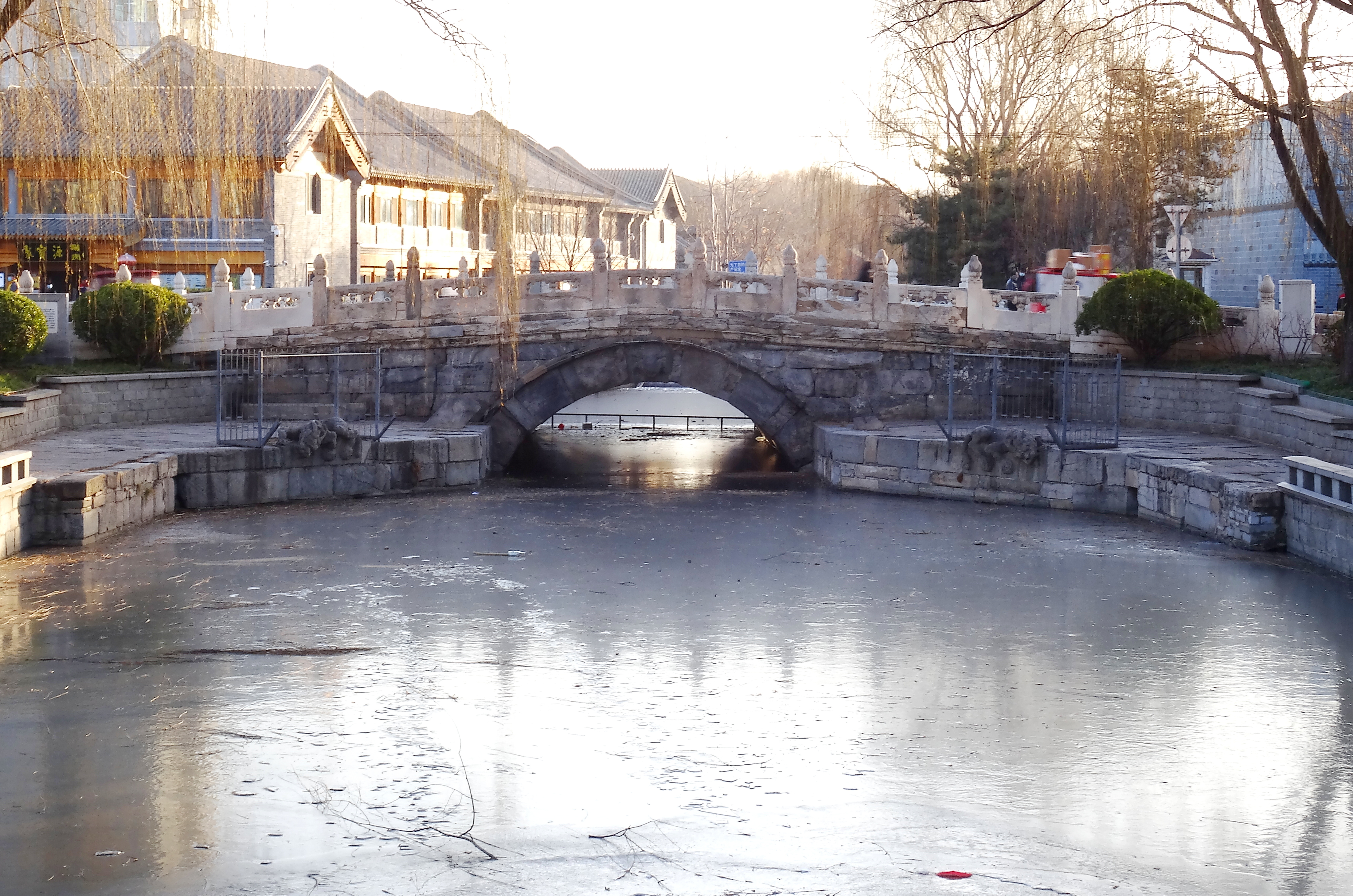
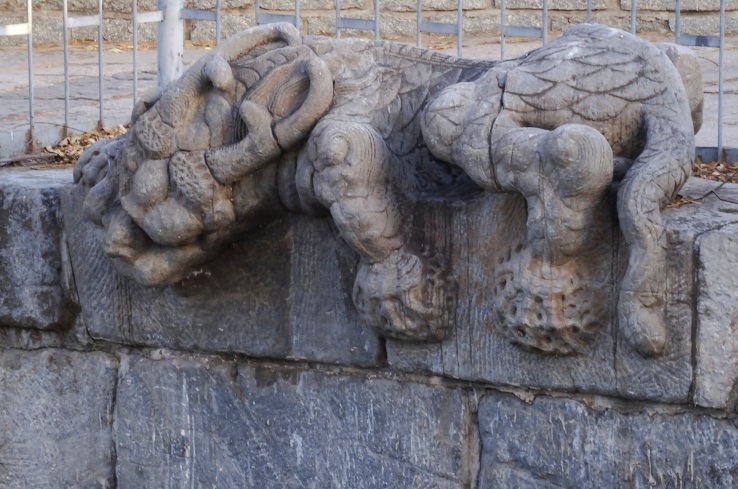
On the 21st December 2021 it was the Winter Solstice 2021 in which during the Beijing – China – People’s Republic of China was a clear blue skies with Located in Di’anmenwai Ave, 什刹海 Xicheng District, Beijing, China, 100009 the 736 year old Yuan Dynasty Bridge named the后门桥 Wanning Bridge or known as the Houmen Bridge .. located near Shichahai, was built in 1285. A sluice is installed under the bridge, and the sluice is lifted and released to stop the water from passing the boat. This “high-tech” stone bridge was the starting point for grain transportation on the Grand Canal in the Yuan Dynasty, and all grain ships entering the imperial city of Beijing would pass here. There are dragon-shaped water-separating beasts on all four sides of the bridge, which have the meaning of blessing the safety of water transport. This century-old bridge is still in use today!

后门桥 Wanning Bridge, also known as the Bridge , the Bridge , is located in Beijing Tiananmen Square , the Shichahai near, a bridge located in Beijing’s central axis. It was built in the 22nd year of Yuan Shizu to Yuan Dynasty (1285), originally named Wanning Bridge. Because the bridge is to the north of Di’anmen, Di’anmen is the back gate of the imperial city, so it is called the Houmen Bridge. Municipal cultural relics protection unit.

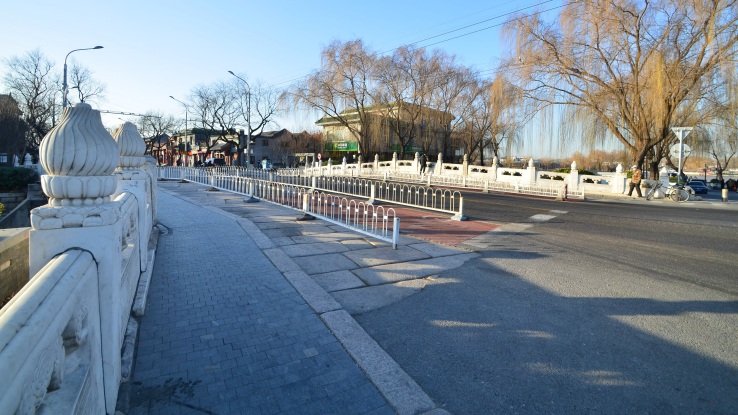
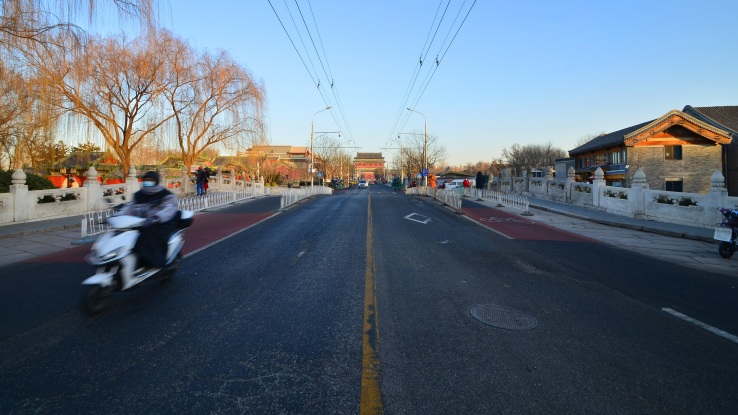

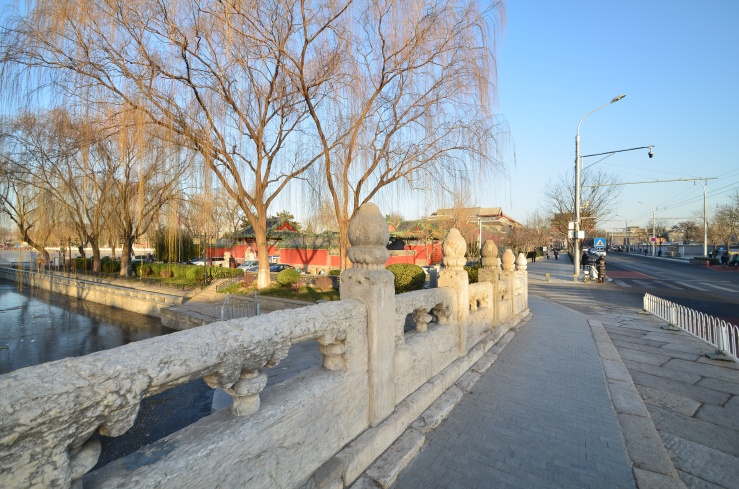
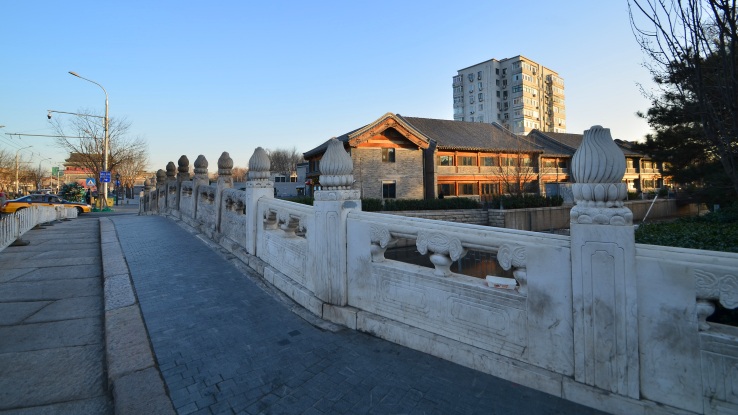
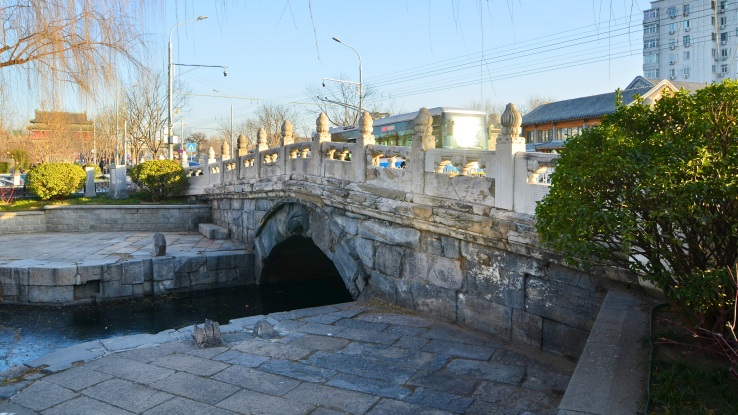
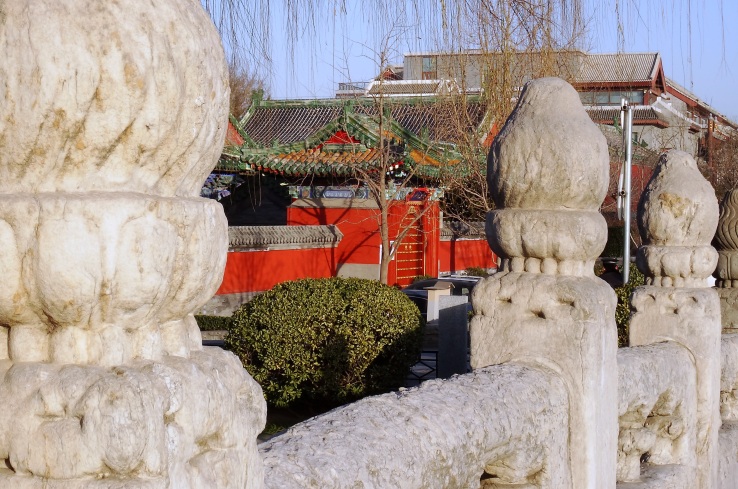
Located in Di’anmenwai Street, Xicheng District. It was built in the twenty-second year of Yuan Zhi Yuan (1285). Originally a wooden bridge, it was changed to a stone arch bridge in the Yuan Dynasty, named Wanning Bridge. Also known as Haizi Bridge and Houmen Bridge…….. was built from the Yuan Dynasty to the 22nd of the Yuan Dynasty. It was called Wanning Bridge at that time. It was the most prosperous period of the Yuan Dynasty under Kublai Khan’s rule. The Wanning Bridge at that time was a wooden bridge. At that time, its “little name” was not called “Houmen Bridge”. Historical materials record Wanning Bridge in Yuan Dynasty, also known as “Sky Bridge”. In the Yuan Dynasty, Kublai Khan repaired the end of the Beijing-Hangzhou Grand Canal to today’s Jishuitan, and this Wanning Bridge is the northernmost gate of the Beijing-Hangzhou Grand Canal . The water transport ships entering the Imperial City of Beijing must pass here. The “Tonghui River” in the Beijing section was not only built by Kublai Khan’s decree, but the Tonghui River was also named by Kublai Khan on the Wanning Bridge, and it is also a bridge that Kublai Khan must walk in and out of Beijing. That’s why its nickname is qualified to be called “Tianqiao”.
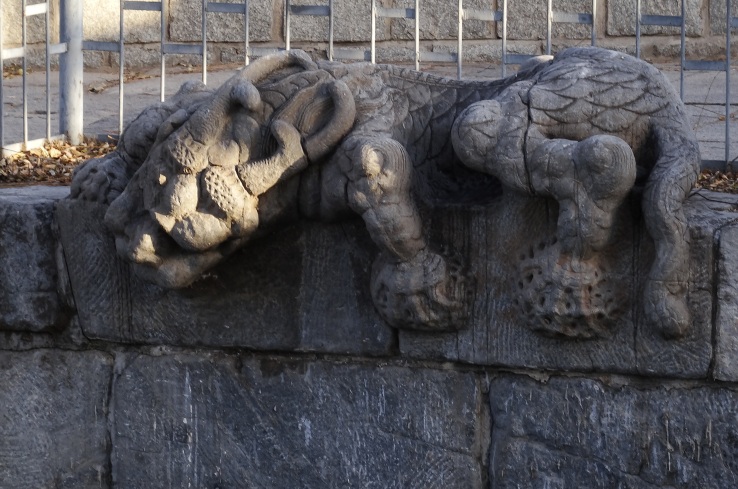

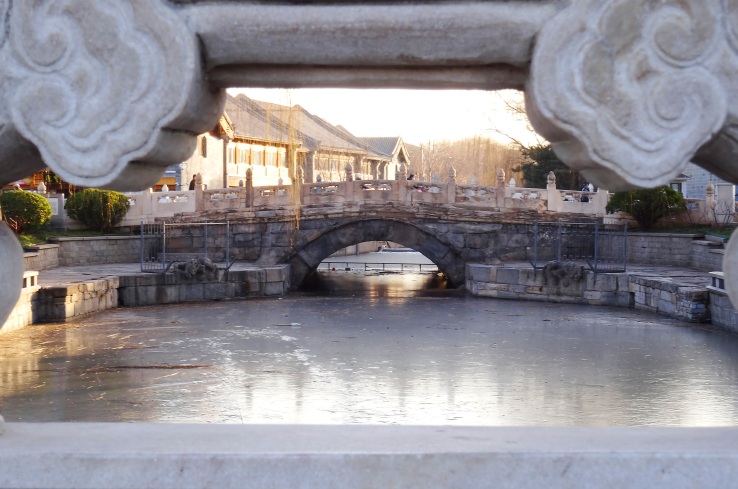
Wanning Bridge is a “bridge gate” with dual functions: it can be used as a bridge to pass through, and it can also be used as a gate to control water. Guo Shoujing dug a canal, used Jishuitan as a reservoir, and set up ten locks and dams along the Tonghui River for control. There are boats to release the water from the Fangti locks, but they are usually closed. It seems to be energy efficient. Set up under the Wanning Bridge is the Qingcheng sluice, also known as the Haizi sluice. It is the first checkpoint for the water flow in Jishuitan (formerly known as Haizi). At the same time, it serves as the terminal of the Grand Canal. The sail passes through the tunnel of the Wanning Bridge and enters a safe haven for anchoring and unloading.

Imagines credits are of the Forbidden City –Imperial Palace –Beijing – China- People’s Republic of China also from the Series Weibo北京卫视上新了故宫 Treasures in the Forbidden City…
