零青子Hanfu – Han Dynasty Clothing blogger –Vlogger based in historical modern richness of two thousand and four hundred year old ultra megapolis ancient – postmodern Chengdu city Sichuan province of China – People’s Republic of China. She is one of many leading fashion blogger-Vlogger fashionably trending setting vlogs of how to wear of her collection of sort after Chinese –Han Dynasty Clothing of Hanfu- Han ethnic Traditional clothing in which dressing traditional from various dynasties to its postmodern twentieth first century trending setting ….
零青子 shows how to wear a Han Traditional Ming Dynasty era Wedding Dress without the crown in which is similar to the an female Ming Dynasty official or towards the Empress wears most luxurious wedding dress is called Dashan Xiapei (大衫霞帔) in which when a Commoner Woman gets married she can enjoy the honour of wearing the phoenix crown and Xiapei
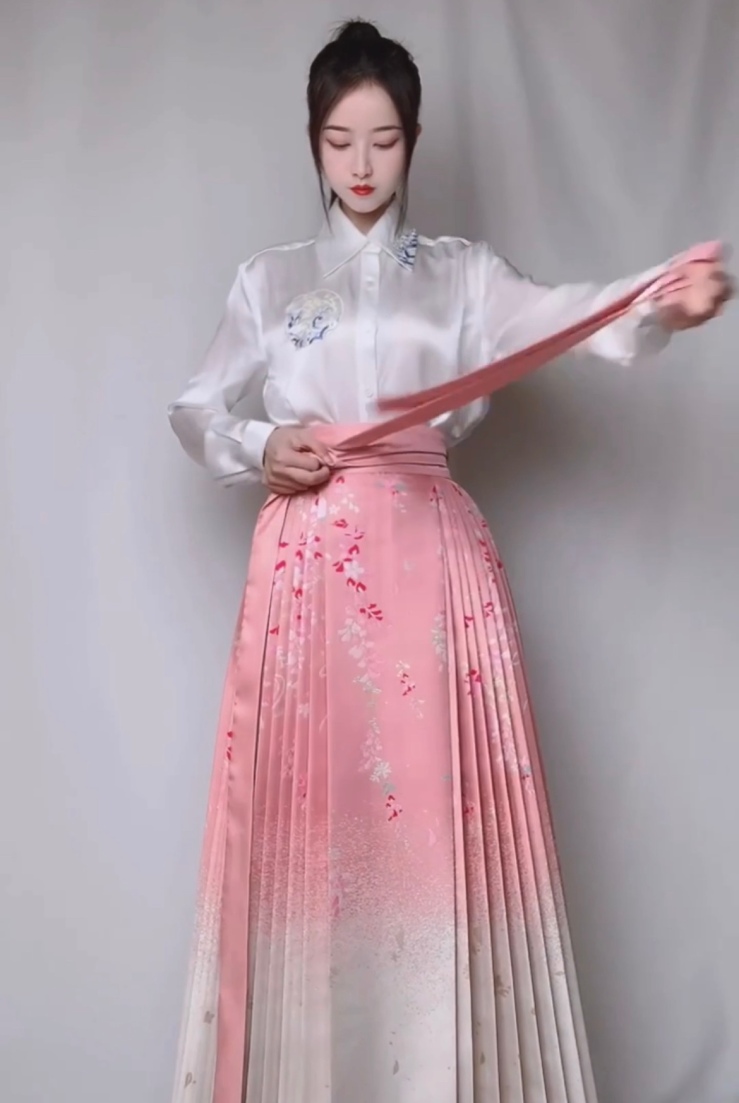
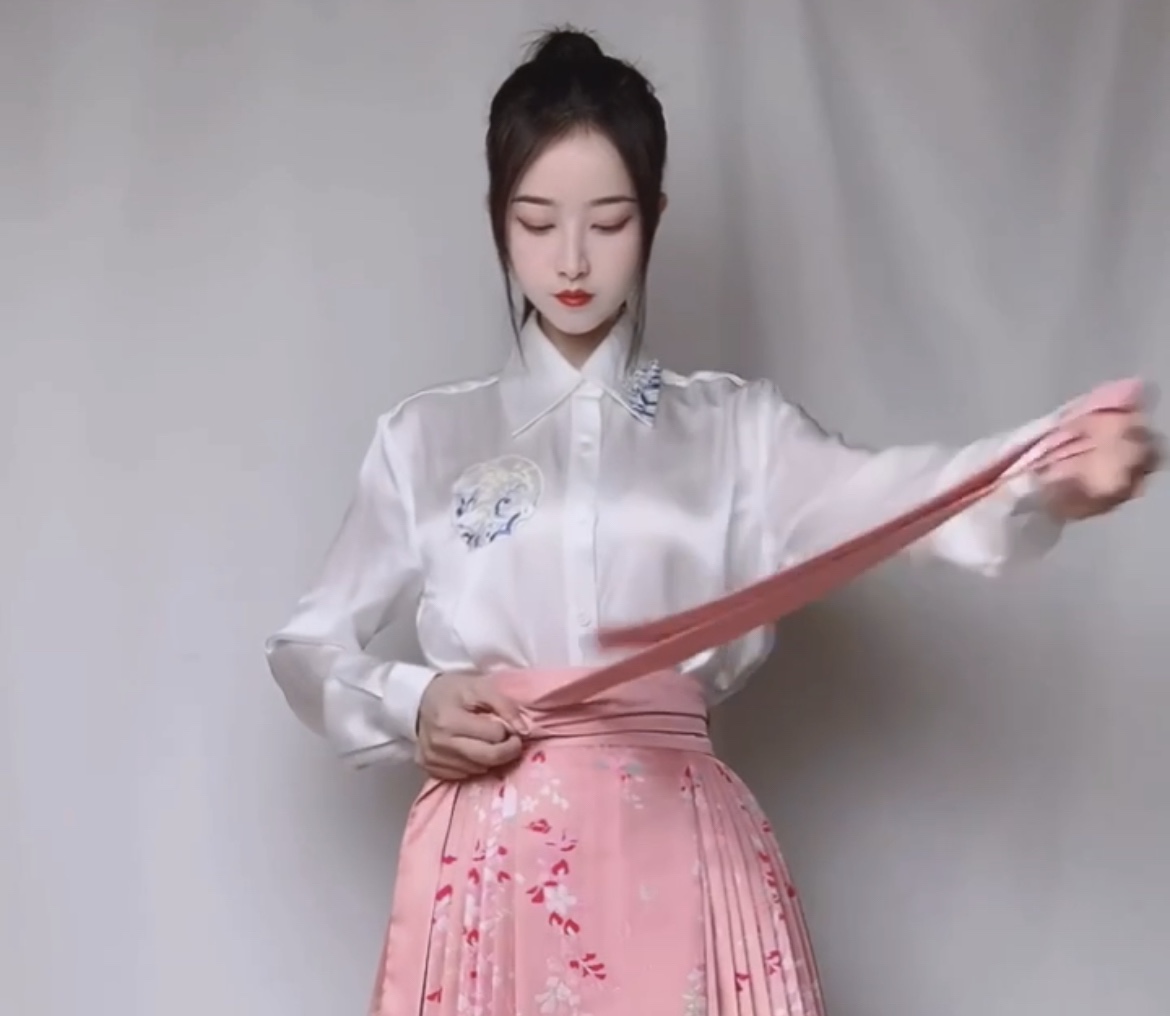
First is how to wear the Horse-face skirt, also known as “horse-face pleated skirt” is a Swirl Skirt variant, is one of the main skirt styles of ancient Chinese Han women. There are four skirt doors inside and outside, overlapping in two. The outer skirt door is decorated, and the inner skirt door is decorated with little or no decoration. For decoration, the side of the horse-faced skirt is tucked up, and the waist of the skirt is mostly white cloth, which means white head and old age, and it is fixed with rope or button…..
The horse-main skirt is the most typical style of Han women’s dress during the Ming and Qing Dynasties. Its style has undergone a series of changes from the freshness and elegance of the Ming Dynasty to the magnificence and wealth of the Qing Dynasty to the beauty and simplicity of the People’s Republic of China, but its “horse-faced” structure has always been deeply ingrained….,
During the Ming Dynasty Most women wore three collars with narrow sleeves during this dynasty. This is what made up their upper clothing most of the time. Pleated skirts were also popularized in this period and made clothing more graceful for women. Light colours became very popular during the start of the Ming Dynasty. Embroidered capes also became part of the ensemble for women’s clothing. It was worn over the shoulders which were called “Rosy Cloud Cape” due to its rosy and cloud-like shape.
How to wear a Ming Dynasty urban wear every day wear clothing on for a every day wear first apply the undergarment in which is the Short front Button Cami with the undergarment skirt/ long bloomers with soft silk Swirl Skirt in very simple pastel colours fabrics with fun Printed playfully keeping warm and cool throughout the seasons then apply wearing the Sheer Fabric Shirt 竖领对襟纱衫in which it has a Standing Collar with opening shirt with Sheerness Standing collar . 披風 Pi Feng The sheerness is general worn at private areas at Home in which the sheerness is informal wear.. However there’s a heavier moderate for formal wear for urban wear.
HanFu- Han Dynasty Clothing – Han Traditional Clothing is making a massive come back in the Asian Chinese communities as youths reliving In recently decades there’s been very much strong revitalisation of Chinese Customary tailoring clothing in which is HanFu- Han Dynasty (221-206 BC) period inspired clothing in which was worn just before the fall of the Ming Dynasty (23 January 1308 to 25 April1644, until a North East Manchurian fashion that have taken over the traditional Han Dynasty fashion in which we known till today that’s the Qipao in which have been fashionable evolving on the same path also…. Like a Qipao, HanFu can be worn every day, as work wear, till as evening wear… It also it comes in various forms as to the nature of activity of the day or night…
Images visuals are from Weibo and their respectives of 零青子.
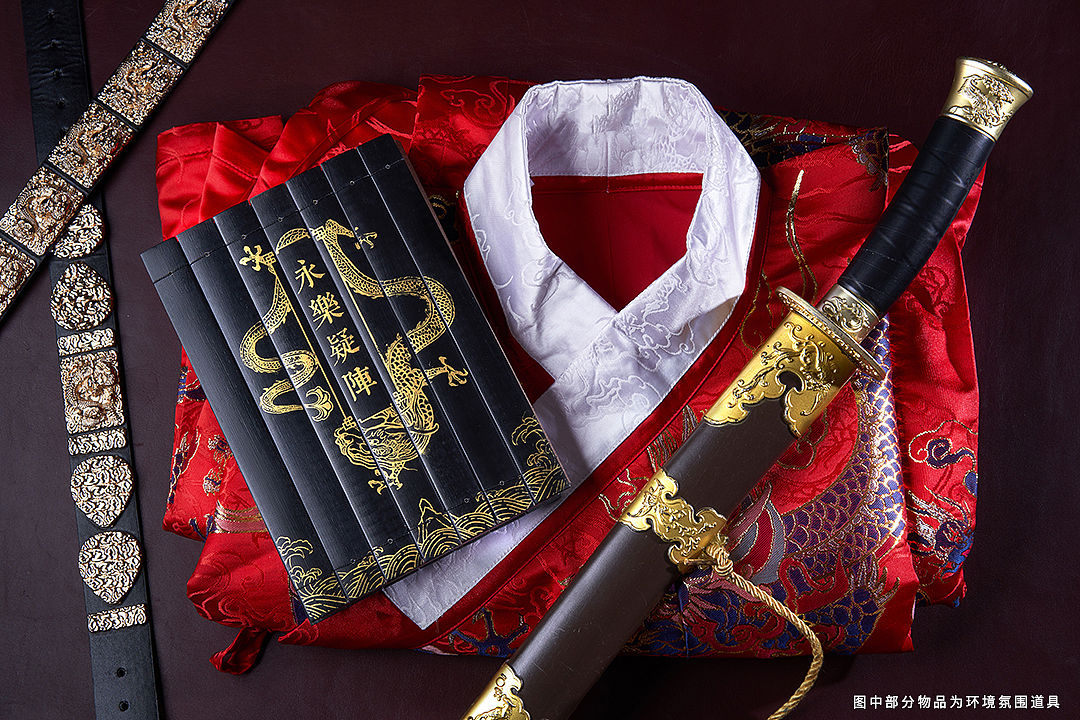
Set to be release on November 2022 is the most awaited Forbidden City is the new interactive puzzle book “Mystery Palace Emperor Yongle Mystery” in the Forbidden City’s……. The “Mystery Palace” series will be available to readers within this year …… Following the “Mystery Palace·Ruyi Linlang Picture Book” and “Mystery Palace·Gold List Title”, Mystery Palace·Yongle Mystery Focusing on the history of the Ming Dynasty, bringing a new puzzle-solving experience with creative handwritten notes. The book contains more than 40 kinds of accessories and hands-on mechanisms, such as theme maps, Jinyiwei props, underground palace models, palace car cursors, rotary chucks, and auspicious beasts, as well as hundreds of Ming Dynasty knowledge points and hearty puzzle solving. The premise is designed to take you as a Ming Dynasty spy, to solve the historical mystery when the Forbidden City was built during the half way of the Ming Dynasty as the Capital is relocated from Nanjing to Beijing during Ming Dynasty Emperor Yongle era.
The Forbidden City Publishing House and the Mystery House interactive puzzle game book “Mystery Palace”. The last time we met was in 2020, so everyone has been waiting for a long time.
Over the past two years, the Forbidden City Publishing House have overcome many difficulties in design and production, insisted on polishing the third work of Mystery Palace, and finally brought you a new work in the “Mystery Palace” series in 2022 – “Mystery Palace Yongle Doubt”.
From the word “Yongle”, it can be seen that the plot of this work has been traced back to the early Ming Dynasty from the Qing Dynasty of the first two works. The Forbidden City has experienced more than 600 years of trials and hardships since Zhu Di, the founder of the Ming Dynasty, built the Imperial Palace in Beijing in the eighteenth year of Yongle (1420). During the 491 years, 24 emperors dealt with government affairs and daily life here, 14 in the Ming Dynasty and 10 in the Qing Dynasty.
What did this large-scale palace complex look like at first? What thrilling stories happened during the construction process? What kind of palaces can we still have a glimpse of the spirit of the Ming Dynasty palaces? The Ming Dynasty was full of mystery to the Forbidden City. Therefore, we choose to focus the story of the new mystery palace to the early years of the Ming Dynasty, and unfold a historical picture of the Forbidden City when it was built.
Continuing the tradition of the Mystery Palace, we have spared no effort to pursue the historical truth in the grand narrative with the help of the buildings, cultural relics and historical materials preserved in the Palace Museum, and to create and restore the moving details that have been buried in the world, and strive to bring readers a different reading and experience. gaming experience.
In the spring of the nineteenth year of Yongle, the first month of Jiazishuo.
After Jingnan, Ming Chengzu Zhu Di finally completed the construction of the Forbidden City in the nineteenth year of his ascension to the throne. On this day, the sound of “Long Live” sounded from the square of Fengtian Temple, and the rolling sound crashed into the towering crimson palace wall, turned into a mountain and tsunami, and floated to the sky with the palace’s elegant music. The three-storey white marble Sumeru Tower holds up the three halls of Fengtian, Huagai, and Jinshen, making them look like palace towers in the sky above the clouds, overlooking all living beings in the world. The clear glazed tiles shone with ten thousand points of golden light, like dragon scales.
In the Fengtian Hall, Zhu Di was receiving congratulations from civil and military officials and foreign envoys. After more than ten years of construction, Beijing has finally officially become the new capital of the Ming Dynasty.
However, just behind this solemn Dingdu Chaohe, there is a hidden force that makes the current situation turbulent. Emperor Yongle’s move to move the capital has long been criticized in the court. The corvée and the consumption of money and grain for the construction of the new capital have aroused opposition again and again. Determining the cabinet, setting up the East Factory, and guarding the guards in the Forbidden City… All of this shows that this palace is not infallible.
One day, Dr. Qin Tianjian’s bronze figurine deduction caused a huge wave with one stone. High officials in the DPRK, wealthy businessmen, and even the embassies of Fanbang were entangled in it. An unspeakable force pointed directly to the Forbidden City at the beginning of its construction.
Are they going to attack the palace?
Did Emperor Yongle know the truth of the incident?
What bloody memories did the original red wall and yellow tiles imprint?
How did justice and evil compete on the top of the Forbidden City?
And you, as a thousand households of Jinyiwei, will use your wisdom and courage to solve the original mystery of the Forbidden City!
“Mystery Palace Yongle Mystery” is the third work in the “Mystery Palace” series of interactive puzzle game books jointly developed by Forbidden City Publishing House and Mystery House. We hope that the new works can bring you a refreshing look and feel. Therefore, different from the four-hole wire-bound book of the previous two works, the new work adopts a brand-new physical book design, presenting the content in the form of a detective handbook.
When you open this book, you can see a dazzling array of props, exquisite illustrations, ingenious structures, and imaginative designs. For example, more than 40 kinds of accessories such as various maps, Jinyiwei props, underground palace models, palace car cursors, rotary chucks, and auspicious beasts are stored in it, which is like a historical treasure book in hand.
In this work, as a Jin Yiwei, you need to conduct reasoning and exploration through the only clues in your hand. Your field of vision will gradually enlarge from the Forbidden City when it was first built, and you can go over the palace walls to observe Beijing City in the early Ming Dynasty. Compared to today, the Forbidden City and Beijing City at that time brought a fresh puzzle-solving experience. Maps of maps, pages of institutions, continuous plot triggers, exciting choices and judgments… These will guide you to approach the truth step by step. Remember, you are only approaching. If you want to decipher the truth, you must gain wisdom and courage ‘s blessing.
The Chi kiss fragments at the crime scene were manually restored to find out the truth.
Simulate the trajectory of various transport vehicles in the palace and find the most suspicious one!
Can it be too late? Then light up the stars in the sky, and it will point you in your direction.
There are more mechanisms in the physical book waiting for you to experience.
“Mystery Palace Yongle Suspicion” continues the characteristic gameplay of the “Mystery Palace” series of physical books + APP, such as the classic game features such as controlling the protagonist’s story direction, hiding branch lines, and unlocking different endings. At the same time, we have upgraded and innovated the online gameplay. The reasoning system that was well received in the previous work will be further developed in the new work, and this time, as Jinyiwei, you will face even more exciting challenges!
If you travel back to the Ming Dynasty and become a thousand households of Jinyiwei, can you find the real murderer?Restoring the interior furnishings of the scene with the only clues in hand.
Can the bustling Canal Wharf in the early Ming Dynasty be able to identify the real culprit at a glance among the three religions, nine streams, various people, etc.?
Do you think it’s just that? There are more game eggs and hidden plots waiting for you to crack. The knowledge entries of each mystery series are a must-have highlight of the game!
Friends who can’t come to the Forbidden City in the short term don’t have to worry. When you have the opportunity to visit the Forbidden City later, bring this book to start a real-life game that only belongs to you, and solve the puzzles while visiting the Forbidden City.
Offline exploration gameplay is also an important part of the Mystery Palace series of works. There is a hidden treasure map hidden somewhere in the book. Once found and cracked, it will open a hidden chapter independent of the main story. In this chapter, you can come to the Forbidden City with a treasure map to solve the puzzles on the spot. You will work with a character in the story to find a treasure hidden in the Forbidden City that traverses ancient and modern times. After completing the hidden quest, you can affix an exclusive stamp through a fun ritual! Another major feature of the Mystery series is the creative principle of faithfulness to history.
How to restore the architectural layout of the Forbidden City in the early Ming Dynasty and show its beauty when it was first built is the most challenging part of our creation of “Mystery Palace·Yongle Doubt”. We tried our best to look for clues from historical materials, including official documents such as “Shilu” and “Huidian”. Relevant works, and even the archaeological results of the Forbidden City in recent years, have been fully utilized, and the interpretation of dual evidence has been applied to the creation of games.
The above is to try to present to the readers the appearance of the Forbidden City 600 years ago to the greatest extent. The historical background in the grand narrative is real, the historical labels of specific characters are real, and the historical details of the death are reasonable.
The costumes of the Ming Dynasty are also the content that “Mystery Palace Yongle Suspicion” wants to focus on. There are many kinds of costumes of the characters in the story, such as Jinyiwei Feiyu suits, imperial uniforms of the internal official supervision system, and exotic costumes of the Fanbang embassy. In addition to referring to official fanbooks such as “Exit and Enter the Police”, “Ming Xuanzong Xingle”, “Ming Xianzong’s Lantern Festival”, “Xu Xianqing’s Traces”, “Job Tribute” and other official fanbooks, we also compared and studied a large number of scattered Ming people. Portraits strive to give readers a sense of history in character design and character portraits.
In addition, considering that readers need to “walk through the streets” during the investigation process and deal with the personnel of major institutions, we have conducted in-depth research on many places and institutions during the Yongle period, such as caves and workshops full of kilns. The Liulichang, the big wood factory where the wood is piled up, the Jinyiweizhao prison where the prisoners are tried, and the Huitong Pavilion that manages the affairs of Fanbang, etc., add real details to the story as much as possible, so that readers can be immersed in the scene and increase the fun of the experience.
The majestic Forbidden City has a history of more than 600 years, from the imperial palaces of the Ming and Qing dynasties to the open museums. During this long period of time, the Forbidden City is not static, and its beautiful image that has been passed down to this day is the result of a series of reconstructions, expansions, burning and reconstruction. Its changes are the embodiment of the extraordinary wisdom and perseverance of countless skilled craftsmen. Here, we cite more than 150 historical facts about the architectural changes of the Forbidden City extracted by predecessors to show inheritance and immortality.
As the imperial palace of the Ming and Qing dynasties, the Forbidden City has been undergoing changes in the long history. The “Forbidden City Architectural Chronology” in the book can be traced back to the construction of the Beijing Palace by Emperor Zhu Di of the Ming Dynasty in 1406, down to the abdication of Emperor Xuantong in 1912. Edited and written by the older generation of Forbidden City experts, it contains more than 150 historical facts, ranging from the completion of the Fengtian Temple to the lightning strike on the northwest corner pillar of Xihuamen.
In this year’s 2022, the second decade from the turn of the century in Beijing the Capital of China also the People’s Republic of China, in which is also the year of the Tiger, marking its six hundred and two years anniversary of the Forbidden city that marks the transitional point of in between the middle of the Ming Dynasty (1368- 1644) transitionally from Nanjing to Beijing towards the Qing Dynasty (1636-1644-1911) …. The Imperial Palaceseen so many countless seasonally transitional equinoxes but further its six hundred years is iconic, but it’s five hundred ninety nine years it marks it Autumn Equinox…. In which it only took twelve years to build the same of the Daming Palace of The Tang Dynasty Xian Imperial Capital only it was least twenty times larger…
On the 17th March 2022 it was the love of the first snowfall of the spring in which the view of Beijing with snowflakes… painting a Chinese painting through seasonally time
Heavy snowfall has blanketed China’s capital in white. China’s meteorological authorities on Friday issued a blue alert for heavy snow in some regions of the country of China – People’s Republic of china. In which was Snowfall was least than Zero Degrees Celsius
零青子Hanfu – Han Dynasty Clothing blogger –Vlogger based in historical modern richness of two thousand and four hundred year old ultra megapolis ancient – postmodern Chengdu city Sichuan province of China – People’s Republic of China. She is one of many leading fashion blogger-Vlogger fashionably trending setting vlogs of how to wear of her collection of sort after Chinese –Han Dynasty Clothing of Hanfu- Han ethnic Traditional clothing in which dressing traditional from various dynasties to its postmodern twentieth first century trending setting ….
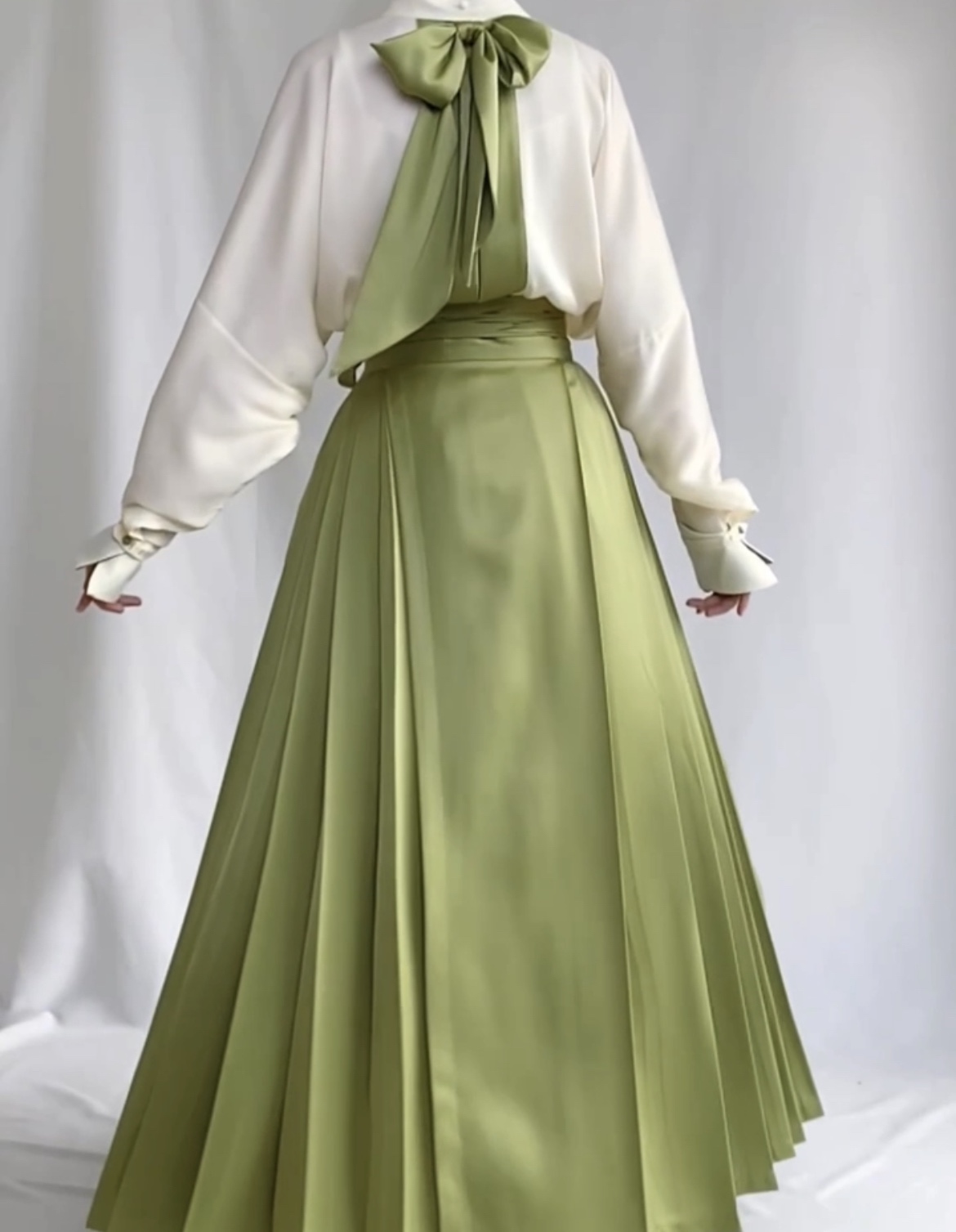
The pastel sheerness Hanfu that is gentle like Chinese pastel mint bamboo leaves pavilion painting, this is probably the gentleness of this softness…. This color scheme is too fresh and elegant. It feels like spring …. First it’ how to wear the Horse-face skirt, also known as “horse-face pleated skirt” is a Swirl Skirt variant, is one of the main skirt styles of ancient Chinese Han women. There are four skirt doors inside and outside, overlapping in two. The outer skirt door is decorated, and the inner skirt door is decorated with little or no decoration. For decoration, the side of the horse-faced skirt is tucked up, and the waist of the skirt is mostly white cloth, which means white head and old age, and it is fixed with rope or button…..
The horse-main skirt is the most typical style of Han women’s dress during the Ming and Qing Dynasties. Its style has undergone a series of changes from the freshness and elegance of the Ming Dynasty to the magnificence and wealth of the Qing Dynasty to the beauty and simplicity of the People’s Republic of China, but its “horse-faced” structure has always been deeply ingrained….,
During the Ming Dynasty Most women wore three collars with narrow sleeves during this dynasty. This is what made up their upper clothing most of the time. Pleated skirts were also popularized in this period and made clothing more graceful for women. Light colours became very popular during the start of the Ming Dynasty. Embroidered capes also became part of the ensemble for women’s clothing. It was worn over the shoulders which were called “Rosy Cloud Cape” due to its rosy and cloud-like shape.
How to wear a Ming Dynasty urban wear every day wear clothing on for a every day wear first apply the undergarment in which is the Short front Button Cami with the undergarment skirt/ long bloomers with soft silk Swirl Skirt in very simple pastel colours fabrics with fun Printed playfully keeping warm and cool throughout the seasons then apply wearing the Sheer Fabric Shirt 竖领对襟纱衫in which it has a Standing Collar with opening shirt with Sheerness Standing collar . 披風 Pi Feng The sheerness is general worn at private areas at Home in which the sheerness is informal wear.. However there’s a heavier moderate for formal wear for urban wear.
HanFu- Han Dynasty Clothing – Han Traditional Clothing is making a massive come back in the Asian Chinese communities as youths reliving In recently decades there’s been very much strong revitalisation of Chinese Customary tailoring clothing in which is HanFu- Han Dynasty (221-206 BC) period inspired clothing in which was worn just before the fall of the Ming Dynasty (23 January 1308 to 25 April1644, until a North East Manchurian fashion that have taken over the traditional Han Dynasty fashion in which we known till today that’s the Qipao in which have been fashionable evolving on the same path also…. Like a Qipao, HanFu can be worn every day, as work wear, till as evening wear… It also it comes in various forms as to the nature of activity of the day or night…
Images visuals are from Weibo and their respectives of 零青子.
零青子Hanfu – Han Dynasty Clothing blogger –Vlogger based in historical modern richness of two thousand and four hundred year old ultra megapolis ancient – postmodern Chengdu city Sichuan province of China – People’s Republic of China. She is one of many leading fashion blogger-Vlogger fashionably trending setting vlogs of how to wear of her collection of sort after Chinese –Han Dynasty Clothing of Hanfu- Han ethnic Traditional clothing in which dressing traditional from various dynasties to its postmodern twentieth first century trending setting ….
The pastel sheerness Hanfu that is gentle like Chinese pastel cherry blossom pavilion painting, this is probably the gentleness of this softness…. This color scheme is too fresh and elegant. It feels like spring …. First it’ how to wear the Horse-face skirt, also known as “horse-face pleated skirt” is a Swirl Skirt variant, is one of the main skirt styles of ancient Chinese Han women. There are four skirt doors inside and outside, overlapping in two. The outer skirt door is decorated, and the inner skirt door is decorated with little or no decoration. For decoration, the side of the horse-faced skirt is tucked up, and the waist of the skirt is mostly white cloth, which means white head and old age, and it is fixed with rope or button…..
The horse-main skirt is the most typical style of Han women’s dress during the Ming and Qing Dynasties. Its style has undergone a series of changes from the freshness and elegance of the Ming Dynasty to the magnificence and wealth of the Qing Dynasty to the beauty and simplicity of the People’s Republic of China, but its “horse-faced” structure has always been deeply ingrained….,
During the Ming Dynasty Most women wore three collars with narrow sleeves during this dynasty. This is what made up their upper clothing most of the time. Pleated skirts were also popularized in this period and made clothing more graceful for women. Light colours became very popular during the start of the Ming Dynasty. Embroidered capes also became part of the ensemble for women’s clothing. It was worn over the shoulders which were called “Rosy Cloud Cape” due to its rosy and cloud-like shape.
How to wear a Ming Dynasty urban wear every day wear clothing on for a every day wear first apply the undergarment in which is the Short front Button Cami with the undergarment skirt/ long bloomers with soft silk Swirl Skirt in very simple pastel colours fabrics with fun Printed playfully keeping warm and cool throughout the seasons then apply wearing the Sheer Fabric Shirt 竖领对襟纱衫in which it has a Standing Collar with opening shirt with Sheerness Standing collar . 披風 Pi Feng The sheerness is general worn at private areas at Home in which the sheerness is informal wear.. However there’s a heavier moderate for formal wear for urban wear.
HanFu- Han Dynasty Clothing – Han Traditional Clothing is making a massive come back in the Asian Chinese communities as youths reliving In recently decades there’s been very much strong revitalisation of Chinese Customary tailoring clothing in which is HanFu- Han Dynasty (221-206 BC) period inspired clothing in which was worn just before the fall of the Ming Dynasty (23 January 1308 to 25 April1644, until a North East Manchurian fashion that have taken over the traditional Han Dynasty fashion in which we known till today that’s the Qipao in which have been fashionable evolving on the same path also…. Like a Qipao, HanFu can be worn every day, as work wear, till as evening wear… It also it comes in various forms as to the nature of activity of the day or night…
Images visuals are from Weibo and their respectives of 零青子.