#北京。 #中國 #China #Beijing | #紫禁城 #ForbiddenCity #June2021|#ForbiddenCityMoments #ForbiddenCityPaintings #ChineseArtworks #QingDynastyEmperor #EmperorQianlong imperially weaving picture poem porcelain plate book of shows #Louhuang #SouthernSongDynasty painting for Prosperous hardworking rewardingly life of a farming life. …

One of the priceless exhibits of the 601年 year old Forbidden City that’s located in the heart of Beijing also its Central Axis of three thousands year old  Ancient Modern Ultra megapolis city….让我们与来读校园 The imperial soaking page of the imperial farming and weaving picture poem porcelain plate book during the Qianlong period of the Qing Dynasty. There are 23 farming pictures, 12 in the first volume and eleven in the second volume让我们与来读历Qianlong, Qing Dynasty, family rose and weaving figure porcelain plate. This painting shows the four links of closing the slogan, debuting, holding the ear, and pounding, all inscribed in the five-character rhyme poem by Louhuang in Southern Song Dynasty. On the basis of respecting Jiao’s original work, in order to ensure the integrity and continuity of the picture, the layout of the porcelain plates was adjusted flexibly. For example, in the holding scene, the house is moved from the right side to the left side in the original work, probably because there are buildings on the right side in the upper and lower scenes, so the composition is more balanced. 

Imagines visuals credit are from the Forbidden city –Imperial Palace –Beijing – China- People’s Republic of China…

#北京。 #中國 #China #Beijing | #紫禁城 #ForbiddenCity #June2021|#ForbiddenCityMoments #ForbiddenCityPaintings #ChineseArtworks #QingDynastyEmperor #EmperorQianlong imperially weaving picture poem porcelain plate book of shows painting distant mountains and rivers, fields and Ploughing and Weaving Picture”. For Prosperous hardworking rewardingly life of a farming life. …

One of the priceless exhibits of the 601年 year old Forbidden City that’s located in the heart of Beijing also its Central Axis of three thousands year old  Ancient Modern Ultra megapolis city….让我们与来读校园 The imperial soaking page of the imperial farming and weaving picture poem porcelain plate book during the Qianlong period of the Qing Dynasty. There are 23 farming pictures, 12 in the first volume and eleven in the second volume让我们与来读历Qianlong Qing Dynasty, family rose woven pattern porcelain plate. The whole set of porcelain plates are based on Jiao Bingzhen’s “Ploughing and Weaving Picture”. This painting expresses the five links of planting rice seedlings, one cultivating, two cultivating, three cultivating and irrigating. They are all inscribed in a five-character poem by Lou Jing in the Southern Song Dynasty. Each of Jiao’s original paintings is an independent picture, while the porcelain slab displays multiple work scenes one after another in one picture at the same time, and the picture is naturally divided into several relatively independent spaces with ridges. 

Imagines visuals credit are from the Forbidden city –Imperial Palace –Beijing – China- People’s Republic of China…

#北京。 #中國 #China #Beijing | #紫禁城 #ForbiddenCity #September2020 |#中秋节#MidAutumnFestival #ForbiddenCityPaintings celebrating #ChinesePaintings #ChineseCalligraphy of #蘇軾 #SuShi on prominent #SongDynasty #Calligrapher #painter ….


In this year’s 2020, the second decade from the turn of the century in Beijing the Capital of China also the People’s Republic of China, in which is also the year of the rat, marking its six hundred years anniversary of the Forbidden city that marks the transitional point of in between the middle of the Ming Dynasty (1368- 1644) transitionally from Nanjing to Beijing towards the Qing Dynasty (1636-1644-1911) …. The Imperial Palace seen so many countless seasonally transitional equinoxes but further its six hundred years is iconic, but it’s five hundred ninety nine years it marks it Autumn Equinox…. In which it only took twelve years to build the same of the Daming Palace of The Tang Dynasty Xian Imperial Capital only it was least twenty times larger……

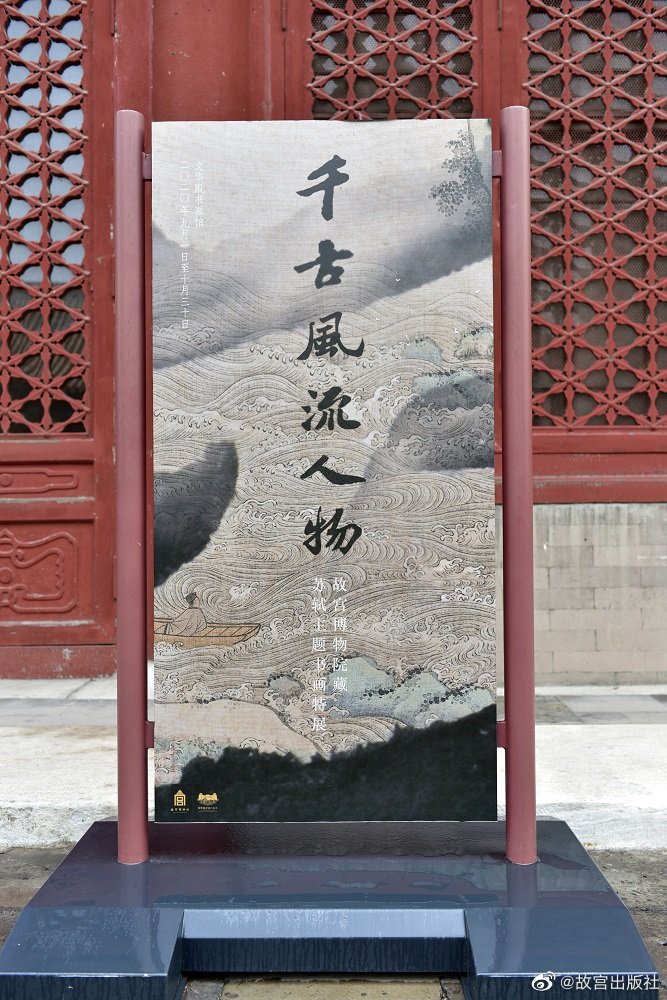
From September 1st to October 30th 2020, 千古风流人物#-A special exhibition of paintings and calligraphy on the theme of Su Shi from the Palace Museum is on display in Wenhua Hall. ……This time the Palace Museum held an exhibition with cultural relics as a carrier to show Su Shi’s artistic attainments and personality style. This is the first time that Su Shi is a well-known writer and artist in ancient my country. Because of its elegant life taste and open-minded attitude towards life, it exudes a unique personality charm. His art, thoughts and even the taste of life have had a profound impact on later generations, and he himself has become a highly admired model of literati.

Su Shi 蘇軾 / 苏轼;8 January 1037 – 24 August 1101), courtesy name Zizhan (子瞻), art name Dongpo 東坡was a Chinese calligrapher, gastronome, painter, pharmacologist, poet, politician, and writer of the Song dynasty. A major personality of the Song era, Su was an important figure in Song Dynasty politics, aligning himself with Sima Guang and others, against the New Policy party led by Wang Anshi.

Su Shi is widely regarded as one of the most accomplished figures in classical Chinese literature, having produced some of the most well-known poems, lyrics, prose, and essays. Su Shi was famed as an essayist, and his prose writings lucidly contribute to the understanding of topics such as 11th-century Chinese travel literature or detailed information on the contemporary Chinese iron industry. His poetry has a long history of popularity and influence in China, Japan, and other areas in the near vicinity……

Su Shi’s pursuit of life aesthetics has had a profound impact on later generations of literati. His elegant life style and open-minded attitude towards life have made Su Shi a model respected and admired by scholars in the past. His life was ups and downs, legendary, and left a lot of anecdotes. Due to the admiration of Su Shi by later generations, many anecdotes have also been attached to Su Shi. Scholars and doctors in the Northern Song Dynasty were popular in tasting antiques, and Su Shi and his friends Wang Xu, Li Gonglin, Mi Fu and company…. was all famous for their appreciation of ancient times. When the wind of antique appreciation resumed in the late Ming Dynasty, there appeared a kind of paintings with the theme of “Dongpo Pingu”. Qiu Ying’s “Dongpo Pingutu” opened one of his “Character Story Atlas”. The picture depicts a scene of three scribes tasting antique calligraphy and painting together in the courtyard. One of them has a dress similar to that of Su Shi. The title of the painting may be “Dongpo Pingu”

What happens when I meet the Forbidden City on Mid-Autumn Festival …? …The “three autumn and nine months, mid-autumn and eight months”. The fifteenth day of the eighth lunar month is exactly the midpoint of the seven, eight, and nine months of autumn. At this time, the sky is high and the clouds are light, the water plants are lush, the fruits are ripe, and the bright moon in the night reflects the Chinese people’s interest in the Mid-autumn Festival With special feelings and sentiments, the moon has naturally become the eternal theme of the Mid-Autumn Festival.

苏轼对于生活美学的追求,对后世的文人产生了极为深远的影响。其高雅的生活品味与豁达的人生态度,使苏轼成为了历代文人雅士所崇敬和追慕的典范。他的一生跌宕起伏,富有传奇色彩,也留下了大量的逸闻趣事。由于后人对苏轼的仰慕,很多逸事也被附会在苏轼身上。北宋时期的文人士大夫盛行品鉴古玩,苏轼及其友人王诜、李公麟、米芾等都以鉴古知名。当古玩鉴赏之风在晚明复炽之时,便出现了一种以“东坡品古”为题材的绘画作品。仇英《东坡品古图》为其《人物故事图》册之一开,画面描绘了三位文士在庭院中一同品鉴古玩字画的场景,其中一人的衣冠状貌与苏轼相近,据此推测其画题或为“东坡品古”

【当中秋节遇见紫禁城会怎样?】所谓“三秋九月,中秋八月之中”。农历八月十五恰是秋季七、八、九三个月的中点,此时天高云淡,水草丰美,瓜果成熟,夜色中的一轮明月更是映出了中国人对中秋节特殊的感情和情思,月亮自然成为是中秋永恒的主题。

Imagines credit are of the Forbidden city –Imperial Palace –Beijing – China- People’s Republic of China

#東京。 #中國 #China #Beijing | #紫禁城 #ForbiddenCity #September2020 |#ForbiddenCityPaintings celebrating #ChinesePaintings #ChineseCalligraphy of #蘇軾 #SuShi on prominent #SongDynasty #Calligrapher #painter ….


In this year’s 2020, the second decade from the turn of the century in Beijing the Capital of China also the People’s Republic of China, in which is also the year of the rat, marking its six hundred years anniversary of the Forbidden city that marks the transitional point of in between the middle of the Ming Dynasty (1368- 1644) transitionally from Nanjing to Beijing towards the Qing Dynasty (1636-1644-1911) …. The Imperial Palace seen so many countless seasonally transitional equinoxes but further its six hundred years is iconic, but it’s five hundred ninety nine years it marks it Autumn Equinox…. In which it only took twelve years to build the same of the Daming Palace of The Tang Dynasty Xian Imperial Capital only it was least twenty times larger……

From September 1st to October 30th 2020 , 千古风流人物 ……A special exhibition of paintings and calligraphy on the theme of Su Shi from the Palace Museum is on display in Wenhua Hall. ……This time the Palace Museum held an exhibition with cultural relics as a carrier to show Su Shi’s artistic attainments and personality style. This is the first time that Su Shi is a well-known writer and artist in ancient my country. Because of its elegant life taste and open-minded attitude towards life, it exudes a unique personality charm. His art, thoughts and even the taste of life have had a profound impact on later generations, and he himself has become a highly admired model of literati.

When Su Dongpo was alive, he used countless poems, writings and paintings. However, it has been passed down for thousands of years, and it can be said to be as rare as a star and phoenix. It is treasured by the past. In later generations, the past generations have continued to perform deductive creations with Dongpo poems, calligraphy, and deeds, leaving behind many paintings and calligraphy works. The Palace Museum has a collection of Su Shi’s masterpieces of calligraphy, as well as some important works of Su Shi’s mentors and friends, as well as a large number of related art treasures that are influenced by Su Shi and reflect his artistic ideas. The collections span from the Northern Song Dynasty to modern times, and the categories cover calligraphy and painting, rubbings, artifacts, and rare books of ancient books. It is one of the museums with the most concentrated collection of paintings and calligraphy related to Su Shi. The exhibits in this exhibition are mainly from the collections of the Palace Museum, with a total of 78 sets of cultural relics on display, so that we can also see the eternal romance of Dongpo in future generations…

Su Shi 蘇軾 / 苏轼;8 January 1037 – 24 August 1101), courtesy name Zizhan (子瞻), art name Dongpo 東坡was a Chinese calligrapher, gastronome, painter, pharmacologist, poet, politician, and writer of the Song dynasty. A major personality of the Song era, Su was an important figure in Song Dynasty politics, aligning himself with Sima Guang and others, against the New Policy party led by Wang Anshi.

Su Shi is widely regarded as one of the most accomplished figures in classical Chinese literature, having produced some of the most well-known poems, lyrics, prose, and essays. Su Shi was famed as an essayist, and his prose writings lucidly contribute to the understanding of topics such as 11th-century Chinese travel literature or detailed information on the contemporary Chinese iron industry. His poetry has a long history of popularity and influence in China, Japan, and other areas in the near vicinity……

The special exhibition of Su Shi’s painting and calligraphy in the Palace Museum is divided into four units. The first unit “Legend of Victory, Kuaiyoupeng”, through the works of Su Shi and his teachers and friends, shows Su Shi’s circle of friends and the era he lives in. The second unit “Su Zi’s Poems Are like Paintings” shows Su Shi’s literary accomplishments through Su Shi’s poems and essays written by Su Shi and later calligraphers, and paintings created by later painters based on Su Shi’s poetry and essays. The third unit “I can’t make the calligraphy” shows Su Shi’s calligraphy art and its influence through Su Shi’s predecessor’s works, Su Shi’s own calligraphy creation, and later works imitating Su Shu’s calligraphy. The fourth unit, “The Taste of the World is Qinghuan”, shows Su Shi’s life interest and attitude through paintings and calligraphy works showing Su Shi’s life and anecdotes, as well as Su Shi’s essays expressing spirit. The four parts show Su Shi’s spiritual world from different angles, and outline a vivid and three-dimensional image of Su Shi for everyone.

This special exhibition of Su Shi’s theme hopes that through the guidance of space and colour, the audience can be immersed in it and have a conversation that spans a thousand years with the ancients.

【9月1日至10月30日, 千古风流人物#——故宫博物院藏苏轼主题书画特展在文华殿展出。】此次故宫博物院举办以文物为载体,以展现苏轼艺术造诣与其人格风范的展览,尚属首次苏轼是我国古代著名的文学家、艺术家,不但在诗文、书画等方面具有深厚的造诣,还因其高雅的生活品味与豁达的人生态度,散发独特的人格魅力。其艺术与思想乃至生活情趣都对后世产生了十分深远的影响,他本人也成为备受景仰的文人典范。

苏东坡在世时诗文书画挥洒无数。然而倏忽千年,流传至今可谓稀如星凤,为历代珍赏;至后世,历代又以东坡诗文、书画、事迹不断进行演绎创作,留下了众多的书画作品。故宫博物院收藏有苏轼的传世书法佳作,还藏有部分重要的苏轼师友作品,以及大量受到苏轼影响和能够反映其艺术思想的相关艺术珍品。藏品的时代跨度从北宋至近现代,类别涵盖书画、碑帖、器物、古籍善本等,是收藏与苏轼相关书画文物最为集中的博物馆之一。本次展览的展品以故宫博物院藏品为主,共展出78件套文物精品,让我们亦能于后世一睹东坡的千古风流……

——故宫博物院藏苏轼主题书画特展共分四个单元。第一单元“胜事传说夸友朋”通过苏轼及其师友的作品,展现苏轼的交游圈与他所身处的时代。第二单元“苏子作诗如见画”通过苏轼和后世书法家所书写的苏轼诗文作品,以及后世画家根据苏轼诗文作品所创作的绘画作品,展现苏轼的文学造诣。第三单元“我书意造本无法”通过苏轼师法的前人作品、苏轼本人的书法创作以及后世临仿苏书的作品,展现苏轼的书法艺术及其影响。第四单元“人间有味是清欢”通过表现苏轼生平逸事的书画作品,以及苏轼抒发性灵的小品文,展现苏轼的生活情趣与人生态度。四个部分从不同角度展现苏轼的精神世界,为大家勾勒出一个生动而立体的苏轼形象。

本次苏轼主题特展希望通过空间和色彩的引导,使观众能够沉浸其中,与古人展开一场跨越千年的对话。

Imagines credit are of the  Forbidden city –Imperial Palace –Beijing – China- People’s Republic of China