On July 19th 2023 , the multilingual website of the Forbidden City Palace Museum- Beijing, China, People’s Republic of China was officially released at the Digital Cultural Tourism Development Forum of the 2023 China Internet Civilization Conference! The website covers five languages: English, French, Russian, Japanese, and Spanish, and will meet the needs of audiences with different languages.
[On April 30, the “ All Things Harmoniously Born “ The Palace Museum’s new exhibition invites you to visit the Zoo in the Forbidden City – Palace Museum ]
—Special Exhibition of Animal-Themed Paintings from the Palace Museum” was launched at the Wenhua Hall Painting and Calligraphy Gallery of the Palace Museum. The exhibition is fully supported by the Hong Kong Jockey Club and exclusively donated by the Public Welfare and Charity Research Institute. This exhibition is the first time that the Palace Museum has concentrated on displaying its rich collection of animal-themed paintings. It carefully selected 63 sets of 117 precious works from the Tang Dynasty to the Qing Dynasty, covering multiple categories such as birds, livestock, grass insects, and scales. Famous artists gathered, many schools, and diverse techniques. “All things are born in harmony, and all are nurtured to grow.”
This exhibition is not only a response to the artistic pursuit of “observing the world and all things and making life” by painters of all dynasties, but also a profound revelation for the current construction of ecological civilization. Welcome everyone to enter the exhibition hall of the Wenhua Hall Painting and Calligraphy Gallery to appreciate the living creatures of all creatures under the brush and ink of famous artists of all dynasties, and experience the beauty of harmonious coexistence between humans and animals!
#Palace Zoo# From April 30 to June 29 2025 , come to the Forbidden City- Palace Museum to see the #All Things in Harmony exhibition! Huang Quan’s “Rare Birds Sketches” scroll, Zhao Mengfu’s “Bamboo and Hoopoe” scroll, Lang Shining’s “Wan Jixi” scroll and other heavyweight exhibits are on display in the Wenhua Hall exhibition hall. Let’s appreciate the various styles of brushwork and feel the beauty of harmonious coexistence between humans and animals
On July 19th 2023 , the multilingual website of the Forbidden City Palace Museum- Beijing, China, People’s Republic of Chinawas officially released at the Digital Cultural Tourism Development Forum of the 2023 China Internet Civilization Conference! The website covers five languages: English, French, Russian, Japanese, and Spanish, and will meet the needs of audiences with different languages.
Announcement of the Exhibition Change of “Le Lin Quan – Chinese and Foreign Garden Culture Exhibition”
The “Le Lin Quan – Chinese and Foreign Garden Culture Exhibition” opened in the Wumen Exhibition Hall on April 1, 2025, is based on Chinese classical gardens and looks at the world’s gardens. The exhibition is interspersed with six garden events: “Gathering”…………………
In the mountains and forests, by the winding waterside, the Lanting Gathering more than 1,600 years ago cast an eternal ripple in the hearts of Chinese literati. The place for drinking and chanting is integrated into the garden, and elegant and famous works are everywhere. While we appreciate the poems and essays left by the noble scholars in the elegant gatherings such as Lanting, Xiyuan, and Yushan, the chapters of Persian poets such as Saadi and Hafez also echoed on the westward journey of the Silk Road. In the garden symbolizing heaven, they discussed love, nature and life through fine wine, flowers and birds, mountains and rivers and quiet nights. Scholars from different civilizations and different times gathered here, and the garden became a place for nurturing beauty and philosophy. The elegance in civilization has been sustainable since then.
乐林泉The first unit of the exhibition, “Elegant Gathering”, takes you into the Chinese and foreign gardens where scholars gather….
The “Enjoy the Forest and Springs – Chinese and Foreign Garden Culture Exhibition” opened at the Wumen Exhibition Hall on April 1, 2025. It is based on Chinese classical gardens and looks at the world’s gardens. The exhibition is interspersed with six garden events: “gatherings”, “collections”, “mountain tours”, “quiet cultivation”, “flower viewing” and “music”. It is hoped that through people’s activities in the gardens and the garden landscapes, we can explore the ideals and pursuits of people in different cultures and regions about living.
In order to protect the cultural relics and provide relevant exhibits to enrich the visitors, according to the exhibition plan, the following exhibits will be on display until April 30, 2025, and will be replaced the next day and will be on display until the end of the exhibition :
Wen Zhengming’s “Yilan Room” scroll replaces the Song Dynasty’s “Deep Hall Qin Qu Tu” page
The following exhibits will be on display until May 18, and will be moved to a new location the next day and will remain on display until the end of the exhibition :
The ivory carvings of the “Flower Viewing” unit, “Yueman Qingyou” in May and August, replaced the ivory carvings of the “Yueman Qingyou” in April and October.
Meanwhile, the following exhibits will be on display until April 30, and will be replaced with replicas the next day :
“Elegant Gathering” Unit
Yuan Dynasty “Junzilintu” scroll
Cao Zhibai (attributed) “Eighteen Gentlemen” scroll
“Mountain Tour” Unit
Zhao Ji’s “Auspicious Dragon Stone Picture” Scroll
Zhao Bosu’s “Ten Thousand Pines and Golden Palace” scroll
Page from the Song Dynasty painting “Pengying Fairy House”
“Retreat” Unit
Page from the Song Dynasty painting “The Fairy Ferry in Lotus Boat”
On July 19th 2023 , the multilingual website of the Forbidden City Palace Museum- Beijing, China, People’s Republic of Chinawas officially released at the Digital Cultural Tourism Development Forum of the 2023 China Internet Civilization Conference! The website covers five languages: English, French, Russian, Japanese, and Spanish, and will meet the needs of audiences with different languages.
On August 30th 2024 at the Wenhua Hall, Forbidden City Beijing , China, People’s Republic of China, the 千秋佳人 ——Special Exhibition of Figure Paintings from Past Dynasties in the Collection of the Palace Museum (Fourth Phase)” opened in the Wenhua Hall of the Palace Museum which 30the August to 31st October 2024. Paintings of ladies are a classic genre in traditional Chinese painting with a long history and important influence, including the graceful and elegant figures of the Six Dynasties, the gorgeous and plump figures of the prosperous Tang Dynasty, the dignified and beautiful figures of the Song and Yuan Dynasties, the slender and delicate figures of the Ming and Qing Dynasties… The faces of the people in the paintings have significant characteristics of the times, reflecting the changes in the social status and living conditions of women in different eras as politics, customs, and fashions changed. Through the 83 precious paintings in the museum collection exhibited in this exhibition, one can not only appreciate the peerless grace of women painted by painters of all ages, but also understand the spiritual strength and daily life interest of ancient women from the moving stories that have been passed down through the ages and are related to the country .
文华殿 Wenhua Hall The Hall of Literary Brilliance , or the Hall of Literary Glory or Wenhua Hall, is a hall in the outer court of the Forbidden City, located far east of the Hall of Supreme Harmony. In the early Ming Dynasty, the hall was originally used as the residence of the heir apparent. However, starting in 1536, Ming emperors began to use the building as a secondary hall. During both the Ming and Qing Dynasty, the hall hosted grand imperial lectures on Confucian classics and served as a place for the emperor to meet his scholars and officials. The hall was also where palace examinations papers would be reviewed and marked by nine readers who would be sequestered in the hall for two days. The hall gave its name to one of the seven different titles of grand secretary in late-imperial China. Becoming Grand Secretary of Wenhua Hall was considered to be an especially prestigious honour for high-ranking Officials ….
In this year’s 2022, the second decade from the turn of the century in Beijing the Capital of China also the People’s Republic of China, in which is also the year of the Tiger, marking its six hundred and two years anniversary of the Forbidden city that marks the transitional point of in between the middle of the Ming Dynasty (1368- 1644) transitionally from Nanjing to Beijing towards the Qing Dynasty (1636-1644-1911) …. The Imperial Palaceseen so many countless seasonally transitional equinoxes but further its six hundred years is iconic, but it’s five hundred ninety nine years it marks it Autumn Equinox…. In which it only took twelve years to build the same of the Daming Palace of The Tang Dynasty Xian Imperial Capital only it was least twenty times larger…
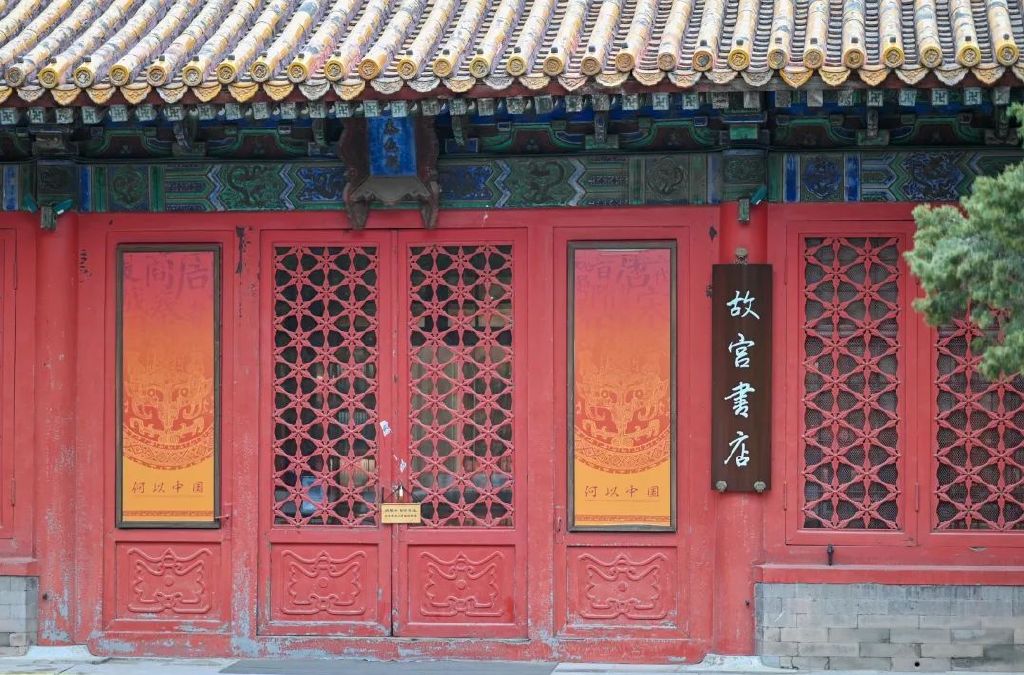
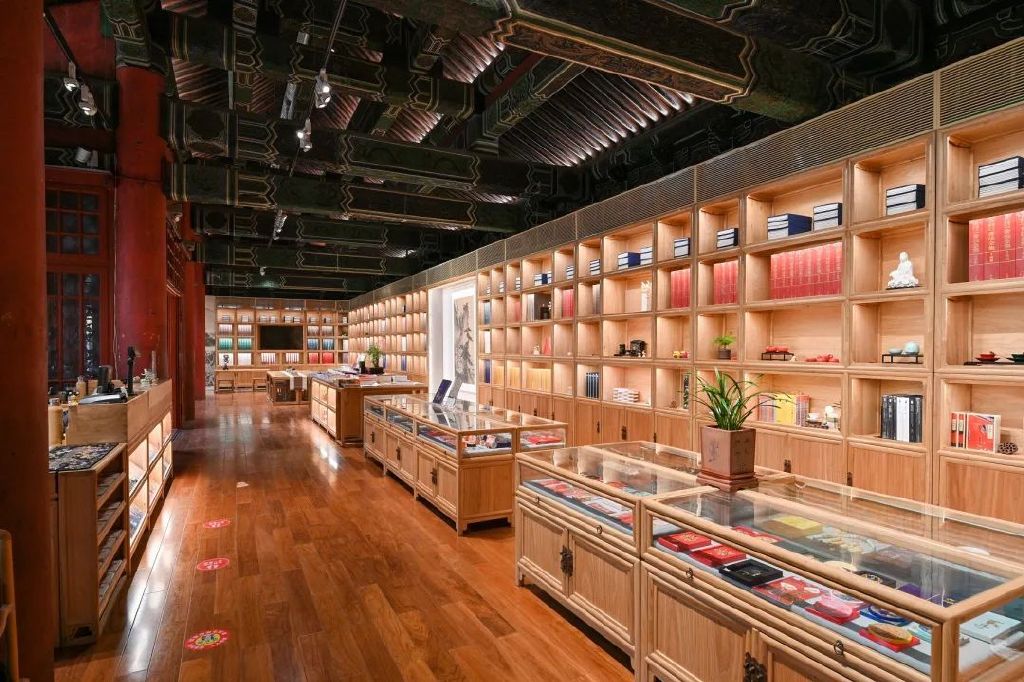
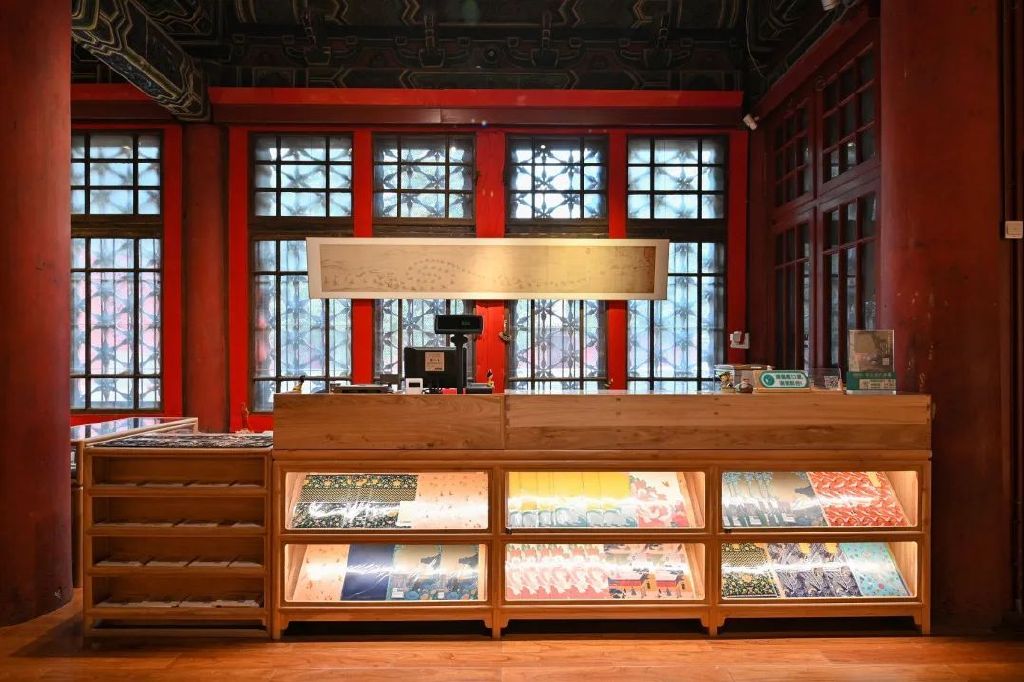
Wenhuadian Palace Museum Bookstore
“The Most Beautiful Bookstore” Hidden in the “Palace”
Spring is beautiful in books: a trip to appreciate spring in parks, museums and bookstores… Beijing has not only the Palace Museum, a place for enjoying spring, which condenses the cultural context of a hundred years, but also has beautiful scenery, and the old Beijing Siheyuan, which is full of Beijing flavor and pleasant, and has a large area like the Canal Forest Park. , A place for outings, where natural scenery and cultural scenery are unique, what kind of leisurely and pleasant experience should I walk into a bookstore, sit down to watch the scenery, enjoy the spring, and read? Try it yourself.
Known as “the most beautiful bookstore in the Forbidden City”, Wenhuadian Bookstore is located in the first district of Wenhuadian in the Forbidden City. The temple was built in the early Ming Dynasty and is located to the east of the Xiehe Gate of the Outer Dynasty.
Wenhua Hall is an important building in the Forbidden City, both in terms of architectural function and cultural symbol. In the Ming and Qing dynasties, every year in the spring, autumn and mid-month, the emperor held a banquet in the Wenhua Hall to teach the “Four Books and Five Classics”. The famous Wenyuan Pavilion is located behind the Wenhua Hall, and the largest series of books in Chinese history, the “Siku Quanshu” in Wenyuan Pavilion, was once collected here.
It can be said that the history of Wenhua Palace for hundreds of years is the history of the fragrance of calligraphy and ink. Opening a bookstore here brings together the essence and aura of Wenhua Palace. Walking into the bookstore, the fragrance of history condensed seems to be gently blowing towards the face, so exquisite and elegant, which makes readers feel particularly cherished.
Outside the bookstore, hundreds of Xifu Begonias are blooming in spring, and readers can read, enjoy flowers, browse the scenery, and chat. And they themselves will become an unforgettable scenery in the Forbidden City.
Currently running an exhibition is the Temple Ritual-Special Exhibition of Figure Paintings of Past Dynasties Collected in the Palace Museum (Phase1 )” opening on May 1st, Wenhua Hall opening for two months till 30th 2021 in which is situated exhibiting at on display at the Wenhua Hall Painting and Calligraphy Gallery….. The exhibition involves in with its collection of 55 pieces/sets of figure paintings with both artistic and historical value will meet you in Wenhua Hall. There are an emperor who founded a nation and administers a benevolent government, as well as civil servants and military generals who have made great achievements and awe-inspiring achievements, and there are also great women who have made contributions to the country. In the Forbidden City ..
Figure Painting: One of the traditional Chinese painting department
Figure painting is one of the traditional Chinese painting subjects that describe figures and activities. It is subdivided into various subjects such as historical figures, religious figures, customs, ladies and so on. According to techniques, there is a distinction between fine brushwork and freehand brushwork. Since ancient times, figure painting has been valued by people because of its social function of admonishing and enlightening and its representation of real life. Its emergence and maturity were not only earlier than landscape painting and flower-and-bird painting, but also figure painters such as Gu Kaizhi in the Eastern Jin Dynasty, Lu Tanwei in the Southern Dynasty, Yan Liben and Wu Daozi in the Tang Dynasty.
The development of figure painting reached its peak in the Five Dynasties and the Song Dynasty, and a number of masterpieces with a high degree of artistic expression appeared, such as the famous Northern Song Dynasty Zhang Zeduan’s “Surfing the River on Qingming Festival”. The figure paintings of this period were not only rich in subject matter and diverse techniques, but also paid more attention to the expression of inner spiritual emotion and the setting atmosphere of the character in the portrayal of the characters, reflecting the highest level of vividness in ancient Chinese figure portraits. Since the Yuan Dynasty, although most literati painters seldom participated in the creation of figure paintings, the documentary and educational functions of figure paintings continued to develop vigorously in the Ming and Qing court painting academies, and excellent works appeared one after another. At the same time, a large number of works that express the life of literati and elegant, and records the production and life of ordinary people are even more beautiful and wonderful, such as Baihuizhengyan, which is not inferior to the previous generations in the number of works and artistic standards, and has become our understanding and exploration. The vivid and vivid historical data of the thoughts, interest, and living conditions of the ancients.
Exploring historical and cultural values and enhancing national cohesion . The creation of figure paintings has received special attention in the past, and a large number of excellent works have been passed down to this day. In order to carry forward the excellent traditional Chinese culture and promote the research of figure painting, the Palace Museum specially organized the “Temple Ceremony-Special Exhibition of Figure Paintings of Past Dynasties Collected in the Palace Museum (Phase 1)”. From the figure paintings in the courtyard collection, 55 pieces/sets of precious paintings with both artistic and historical value are selected and displayed in accordance with the identity of the characters on the screen and the order of the times. Among them, there are not only the emperors who founded the country and established a state and exercised benevolent governance, including Yao, Shunyu in ancient times to Kangxi and Qianlong in the Qing Dynasty; there are also literati and generals with great achievements and great festivals, such as Su Wu, Zhuge Liang, Yue Fei, Wen Tianxiang, etc.; also There are women who have contributed to their homeland, including Wang Zhaojun, Cai Wenji, Mulan and other great women who are familiar with them. These characters and their deeds shine through the annals of history and are in the hearts of the people. To evaluate a figure painting, we must not only pay attention to its artistic level, but also explore the historical and cultural value behind it. Exhibiting his image and publicizing his deeds will not only play the role of “adult education and help others”, but will also help strengthen national cohesion. The Palace Museum insists on continuous innovation while maintaining integrity, deeply explores the connotation of the times, humanistic spirit and aesthetic value contained in cultural relics, uses cultural relics as media to tell Chinese s
Publication: “Patterns of the Past-A Special Exhibition of Figure Paintings of Past Dynasties Collected in the Palace Museum”
The published “Patterns of the Past-Special Exhibition of Figure Paintings of Past Dynasties” in the Palace Museum contains nearly a hundred pieces of figure paintings of the past dynasties collected in the Palace Museum, including the earliest handed down book of “Lie Nu Tu” and “Lie Nu Zhi Ren Tu” “Volume”, representing the superb artistic level of the paintings of the Northern Song Dynasty painting academy’s “Ting Qin Tu” axis, one of the “Four Great Masters of the Southern Song Dynasty” Li Tang’s figure painting masterpiece “Picking Wei Tu” volume and other famous paintings in history, including ” The first high-definition paintings are published in the book “Character Story Atlas”, “Sun Deng Changxiao Tu” axis, and “Yang Fei’s Bathing Picture” axis. There are many types of figure paintings selected in this book and each has its own characteristics, so that readers can not only further understand the development context of Chinese figure paintings, be familiar with the characteristics of various types of figure paintings, but also see the costumes, furnishings and lifestyles of various periods in ancient my country. . In the next stage, as the “Special Exhibition of Figure Paintings of Past Dynasties Collected in the Palace Museum” will be exhibited in different periods and themes, the Palace Publishing House will continue to release corresponding catalogs with the exhibition.
Tips for booking visits to the Palace of Wenhua Temple Etiquette-Special Exhibition of Figure Paintings Collected in the Palace Museum (Phase 1) will be held from May 1, 2021 to June 30, 2021 in Wenhua Hall of the Palace Museum. Tickets are not sold separately. According to the current situation of epidemic prevention and control, and in accordance with the principle of appointment, current limitation, and peak shifting, the exhibition will be admitted by appointment, and appointments will be started 10 days in advance. The whole day will be divided into morning and afternoon sessions (2000 in the morning and 1000 in the afternoon). .
Visitors can use the online ticketing website of the Palace Museum and Wechat Palace Museum audience service number, and use the second-generation ID card or passport information to make real-name reservations. For admission to the hospital, you need to check your health code, measure your body temperature, and swipe your reserved ID card (you must have an ID card that matches the ID number reserved at the time of booking).
Promotion of key exhibits (9 pieces): 1. Yuan Chenji’s “Bianqiaohui League Map” volume, ink on paper , Tang Taizong Li Shimin (598-649), the second emperor of the Tang Dynasty. During his reign, he made great efforts to govern and his national strength was strong. This volume depicts the story of the Turkic invaders in the 9th year of Wude (626), and Li Shimin turned danger into an alliance with Anqi. The characters’ clothing patterns are drawn with “iron lines”, fine and accurate, and belong to the Li Gonglin school of the Northern Song Dynasty. The trees and stones are similar to Guo Xi’s painting methods, with the charm of Yuan people’s brushwork. Chen Jizhi, Zhupo, Yuan Dynasty painter.
2. Ming Liu Jun’s “Snowy Night Interview with Putu” axis , ink and color on silk. Song Taizu Zhao Kuangyin (927-976), the founding emperor of the Northern Song Dynasty. He ended the long-term separatism and advocated the rule of culture. Zhao Kuangyin suddenly visited Prime Minister Zhao Pu, discussing important conquests together, praising the emperor’s knowledge and good use. The clothes patterns of the characters are drawn with “blue leaves”, the square is rounded, and the characters are vividly portrayed, and each person’s identity and expression are appropriate. Liu Jun, dedicated to the inner court in the early fifteenth century.
3. Ming Qiuying’s “Lin Xiao Zhao Zhongxing Ruiying Picture” volume, ink and color on silk Song Gaozong Zhao Gou (1107-1187), the founding emperor of the Southern Song Dynasty. Xiao Zhao’s “Zhongxing Ruiying Picture” depicts the legendary deeds of Zhao Gou from his birth to his appointment as the emperor. This is a copy of Qiu Ying, and it has four sections: shooting the rabbit, Ji Meng, crossing the river, and divination. The pen is meticulous and meticulous, the color is calm and bright, and the characters have a stylized tendency to open their faces. Qiu Ying (approximately 1502-1552), a native of Suzhou, Jiangsu, one of the “Four Ming schools”.
4. Ming Wu Wei’s “Wing Jin Tu” volume. Ink and ink on paper Kongqiu (551-479), the pioneer of Confucianism. The story comes from “The Analects”, which shows Confucius’ attitude towards life that does not evade reality. The clothing patterns of the characters in the scroll are drawn with “blue leaves”, soft and strong, and the characters are simple and elegant. It is one of Wu Wei’s masterpieces of figure paintings. Wu Wei (1459-1508), a native of Jiangxia (now Wuchang, Hubei), a master of the “Zhe School” in the Ming Dynasty, was good at landscape and line drawing. 5. Ming Zhu Zhanji’s “Wu Hou Gao Lying Picture” volume Zhuge Liang (181-234) in ink and brush on paper ,
written by Kong Ming, the prime minister of the Shu Han Dynasty during the Three Kingdoms period, an outstanding politician and military strategist, was named “Marquis of Wuxiang” during his lifetime After death, the posthumous call him “Wuhou” In the volume, Kong Ming is lying in the bamboo forest, with a chic attitude. The clothes pattern is drawn by Ma Yuan, and the pen is simple and expressive, with literary interest. Zhu Zhanji (1399-1435), namely Xuanzong of the Ming Dynasty, likes literature and art, especially painting. This is a reward for the hero Ping Jiangbo Chen Xuan.
6. The axis of “The Statue of Yue Fei” by Ming Dynasty. Colored on silk, Yue Fei (1103-1142), a famous anti-jin general in the early Southern Song Dynasty, has been admired for his loyalty and service to the country. The picture shows Yue Fei wearing a four-banded scarf on his head, wearing a woven golden python robe, with a Yunlong jade belt around his waist, and sitting on the top chair with books in his hand. The portrayal of characters is less restrained and slightly freehand. Ministers wearing python robes were a phenomenon unique to the Ming Dynasty. It can be seen that this image was created by the painter based on the Ming Dynasty system.
7. Gu Kaizhi (Biography) of the Eastern Jin Dynasty, “Lie Nutu ” volume, ink and color on silk The Western Han Dynasty minister Liu Xiang took the famous women from the past dynasties and compiled them into seven “Biography of Women”. The famous painter Gu Kaizhi (about 348-409) of the Eastern Jin Dynasty drew and circulated the pictures accordingly. This volume is a copy of Song Dynasty. The characters are drawn with “iron lines”, and the clothes patterns are “compounded brushwork” to express folds and dancing, which is very characteristic. Yufu artifacts retain the system of the Han Dynasty and have precious historical value. 8. Gu Kaizhi (Biography) of the Eastern Jin Dynasty “Nu Shi Zhen Tu” volume The book “Nu Shi Zhen” by Zhang Hua, the minister of the Western Jin Dynasty in ink and brush , lists the models of court women in history and expresses the worries about the harem’s political intervention at that time. Gu Kaizhi interprets it into twelve stories. This volume is a white tracing copy of the Song Dynasty, with the beginning and the end intact. The proportions of the figures and the scenery retain the characteristics of the figure paintings of the Middle Ages. The clothes patterns are drawn with “high ancient hair silk”, and the brushwork is smooth. The copy is from Li Gonglin’s school.
9. The Book of Female Filial Piety, a volume of Song Dynasty People’s “Sutra of Female Filial Piety”, with color on silk . This volume describes the contents of the first nine chapters of the “Book of Filial Piety”. After each chapter, there is a regular script recorded text. The clothes patterns of the characters are drawn with “iron lines”, which are meticulously portrayed and the colors are quaint. The figures are beautiful, graceful, and exquisite. They are the masterpieces of figure paintings in the Southern Song Dynasty.