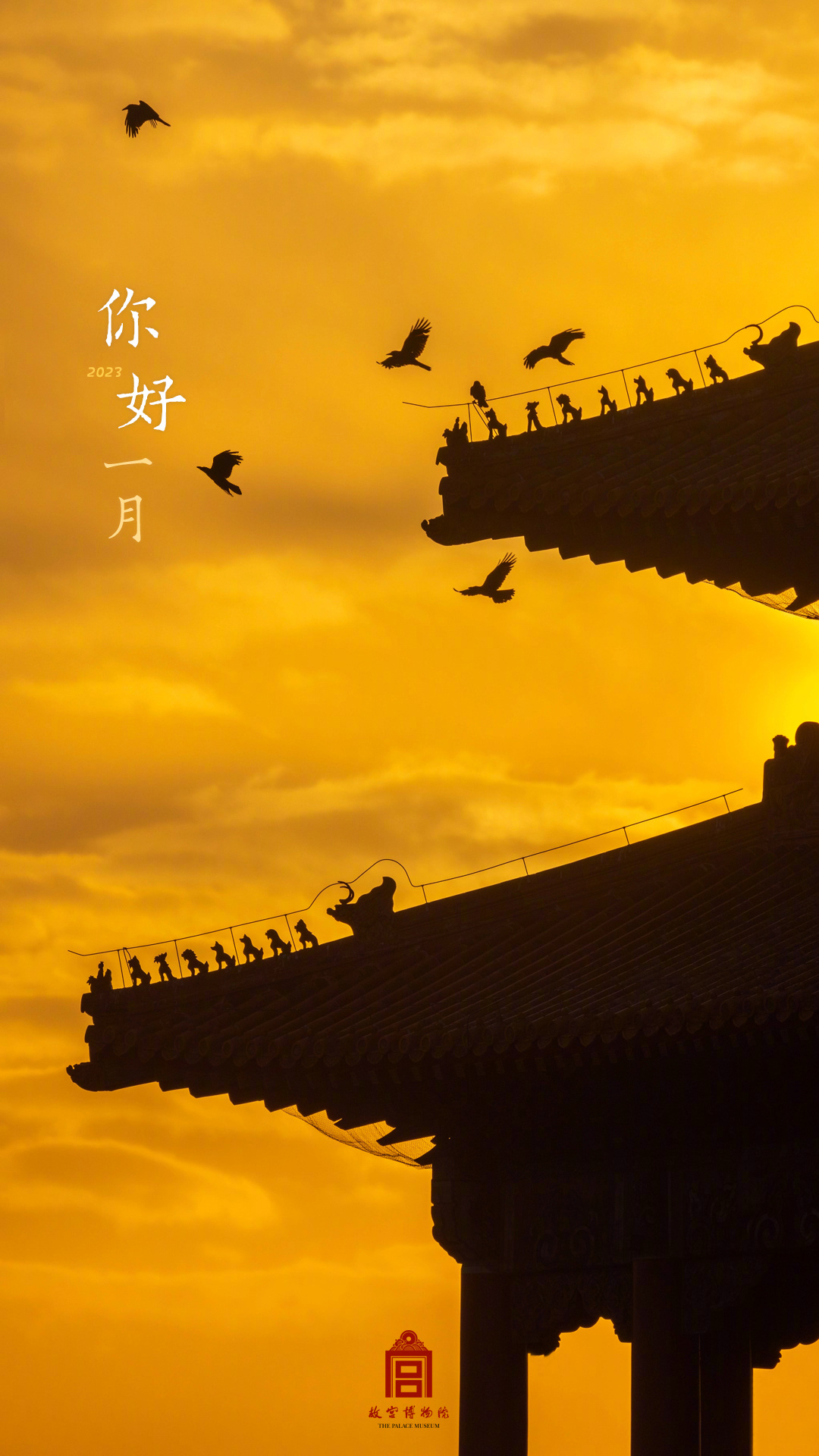
#北京。 #中國 #China #Beijing | #紫禁城 #ForbiddenCity #September2023 | #ForbiddenCityDairies -The Palace Museum #ForbiddenCity Collections of Chinese intangible cultural heritage.  Collection  15th-22nd  September 2023..

On July 19th 2023 , the multilingual website of the Forbidden City Palace Museum- Beijing, China, People’s Republic of Chinawas officially released at the Digital Cultural Tourism Development Forum of the 2023 China Internet Civilization Conference! The website covers five languages: English, French, Russian, Japanese, and Spanish, and will meet the needs of audiences with different languages.

 The multilingual website of the Palace Museum is committed to establishing an international website that is concise, clear, easy to use for overseas audiences, and fits the construction of the modern civilization of the Chinese nation, including tour guides, information, panoramic tours, online exhibitions, collection appreciation, cultural topics, etc. Rich immersive content describing of the most detail collection that housed within the Forbidden city collection… . 

From September 16th to November 5th, 2023, the ” 松图Charm – Special Exhibition of Rare Inscriptions and Inscriptions” jointly launched by the Palace Museum and the Chinese University of Hong Kong will be on display in the Wenhua Hall of the Palace Museum. There are a total of 65 exhibits (sets) from the Palace Museum and the Art Museum of the Chinese University of Hong Kong. Among them, both parties each selected 20 Song rubbings and presented them to the audience. The famous Song rubbings collected by the Palace Museum include the Huayin version of the Huashan Temple Stele of the Eastern Han Dynasty, the Li Qi version of the Jiucheng Palace Liquan Inscription of the Tang Dynasty, the Induction Stele of the Duobao Pagoda of Qianfu Temple in Xijing of the Tang Dynasty, and the Maoqin Palace version of Chunhua Pavilion in the Song Dynasty. “Ten Treasures of Beishan” collected by the Art Museum of the Chinese University of Hong Kong and ten “Prefaces to Orchid Pavilion” collected by Prime Minister Yousi of the Southern Song Dynasty will all be displayed in this exhibition. The exhibition is supported by the Beishantang Foundation, Longfor Group, and the Beijing Palace Museum Cultural Relics Protection Foundation. This exhibition is free to visit with Palace Museum tickets, and visitors can make real-name reservations through the “Forbidden City Museum” WeChat applet.

Qianlong of the Qing Dynasty, Jiang Pu, and the laurel rabbit in the moon scroll. This is a painting that is cleverly conceived and combines work and writing. The painter Jiang Pu, who was a poet during the Qianlong Dynasty, used the round shape of the moon as the outer frame of the painting to depict the quiet scenery of the Moon Palace. In the picture, the Jade Rabbit turns its head obediently and stares at the osmanthus tree. The osmanthus tree has a unique shape, with its branches naturally curved along with the round frame. The stamens of the sweet-scented osmanthus are dyed with yellow, and the bright colors not only enrich the picture, but also add warmth to the lonely moon palace.

Qing Dynasty, Li Shizhuo, with Osmanthus and Moon Rabbit. Li Shizhuo, the nephew of the painter Gao Qipei. He successively served as magistrate of the state, deputy censor of the capital, minister of Taichang Temple, etc., and was known as “Li Taichang”. His paintings of landscapes, figures, and flowers are all exquisite, with elegant brushwork and elegant colors. He once learned finger painting from Gao Qipei and was very good at using his fingers as well as his brushwork. This picture depicts a white rabbit lying among the grass, looking up at the fragrant osmanthus tree and the bright moon. Through subtle and aesthetic artistic techniques, he hinted at the beautiful and romantic legend between the Jade Rabbit, the Osmanthus Tree and the Moon Palace.

Qing, Lu Han, and Gong’e play with the moon. “Wanyue” means “watching the moon”, “appreciating the moon” and “appreciating the moon”. The moon is constantly changing in people’s eyes. As Xu Zhao of the Song Dynasty pointed out in the poem “Wan Yue”, it “is like a golden hook at first, and will be like a jade plate when it is full.” Therefore, watching the waxing and waning of the moon at night is a romantic thing, and it is also something that men, women, and children enjoy. This painting of a lady has a simple composition, depicting a young woman holding a fan in hand, leaning on a stone in the courtyard to admire the moon. The brushwork is meticulous, the colors are elegant, and the style is graceful.

On the 20 September 2023 a beautiful Beijing sunset No one is allowed to miss today’s sunset.  fall in love with the Forbidden City …..

Qing, Anonymous, Mid-Autumn Festival Jiarui Picture Scroll. This is a painting created by a Qing court painter, showing a boy and a concubine spending the Mid-Autumn Festival together. There are many characters in the whole volume, but the author combines art with life, and cleverly uses the plot and the childishness in it to condense the scattered small entertainment groups into a lively whole. At the same time, the author focused on expressing the lively and joyful emotions of children when they were playing, and combined their forms and spirits together, thus enhancing the appreciation of the painting and expressing the festive theme of the Mid-Autumn Festival.

Qing, Anonymous, Mid-Autumn Festival Jiarui Picture Scroll (Part). This part shows the author’s ingenuity in creation. He painted the back screen behind the statue into an oval, and painted on it the rabbits, Guanghan Palace, osmanthus trees, etc. that people imagined the moon palace should have, thus using the oval as both the frame of the back screen and the symbol of the moon. The outline adds extra interest to the painting.

The acceptance and demand for tea drinking has enhanced the exchanges between various regions, ethnic groups, and classes in China throughout history; tea drinking utensils and tea preparation methods are becoming increasingly similar, which is a manifestation of the deepening degree of exchanges. In “One is Two”, Emperor Qianlong is dressed in Han Chinese clothing and is sitting on a couch admiring various tea sets and utensils of different dynasties and national styles; the title in the blank space is “One is two, neither is nor separation. Confucianism and Mohism But, why worry, why think?” This shows Emperor Qianlong’s profound view on the inseparable relationship between Confucianism and Mohism.

From the gathering of treasures from past dynasties to the exchange and integration of ideas and theories, the cultural essence of different time and space is presented in the paintings, which reflects the eclectic nature of Chinese civilization and is the epitome of the evolution of the pluralistic unity of the Chinese nation….

Qing, Anonymous, Mid-Autumn Festival Jiarui Picture Scroll (Part). There are various images of rabbits in this scroll, including not only rabbit statues and paintings as works of art, but also real rabbits interacting with children. In the moon palace, docile rabbits are the gods used to make longevity medicine; in real life, they are the happy playmates of children. ​​​

Images and visuals are from – Forbidden City –Palace Museum Beijing- China –People’s Republic of China…..

#北京。 #中國 #China #Beijing | #紫禁城 #ForbiddenCity #February2023 | #ForbiddenCityDairies #Spring First Snowfall of the Forbidden City of the #YearOftheRabbit #AGallery …

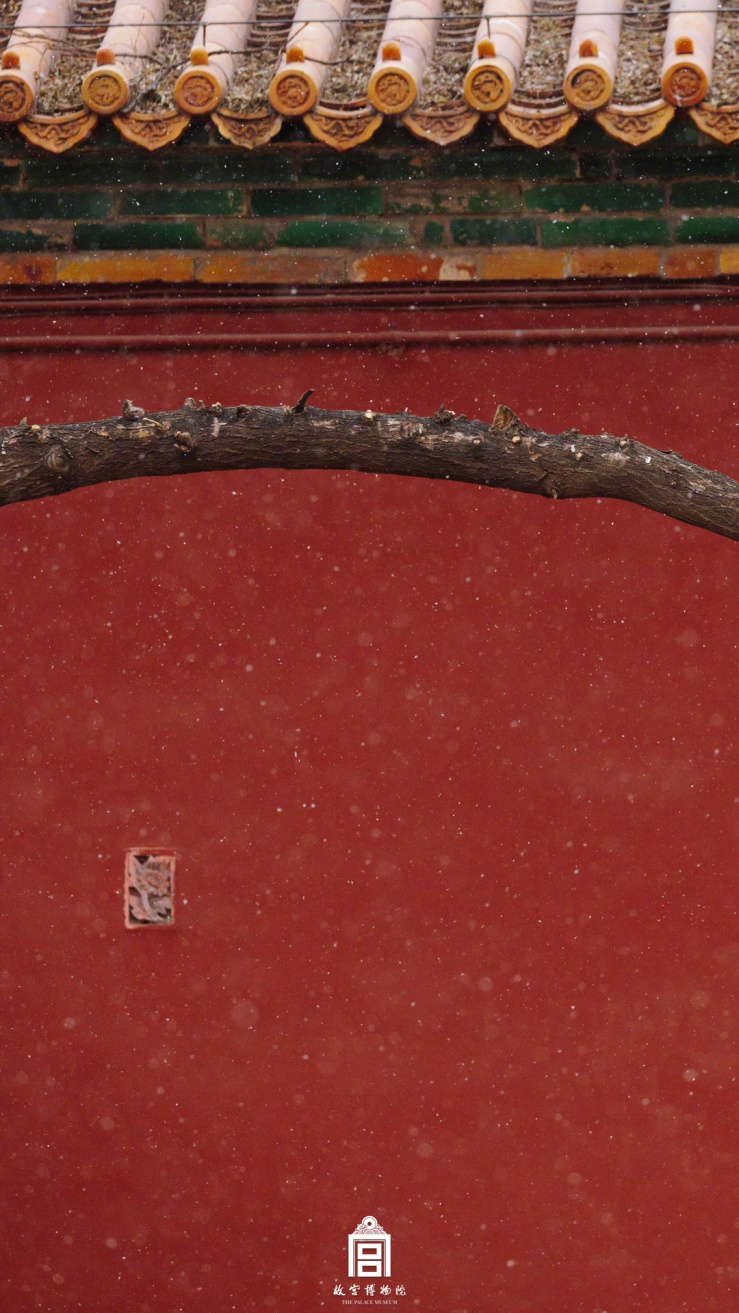
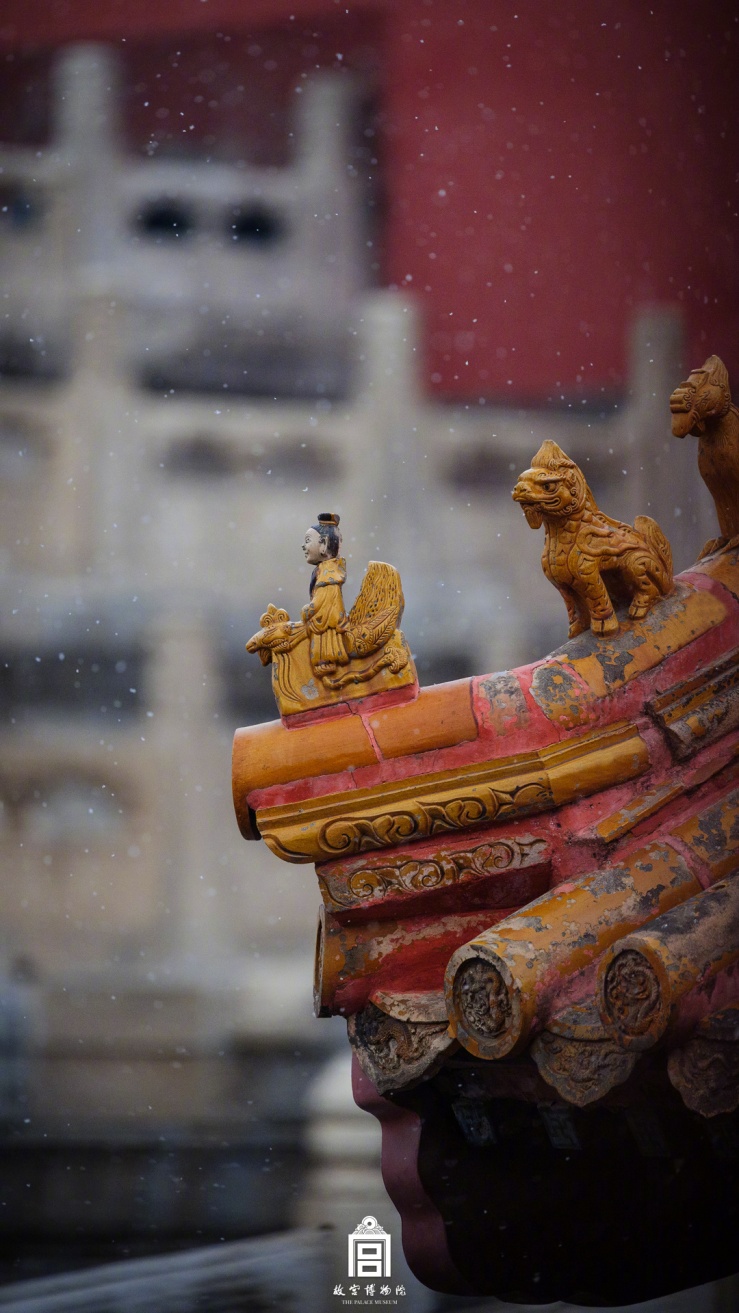
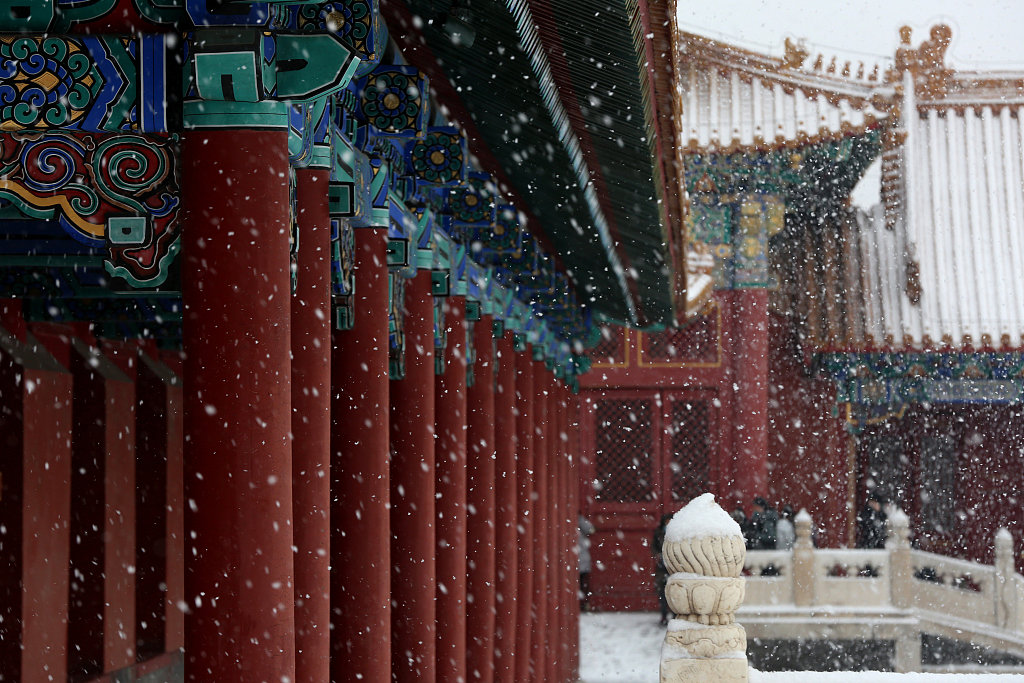
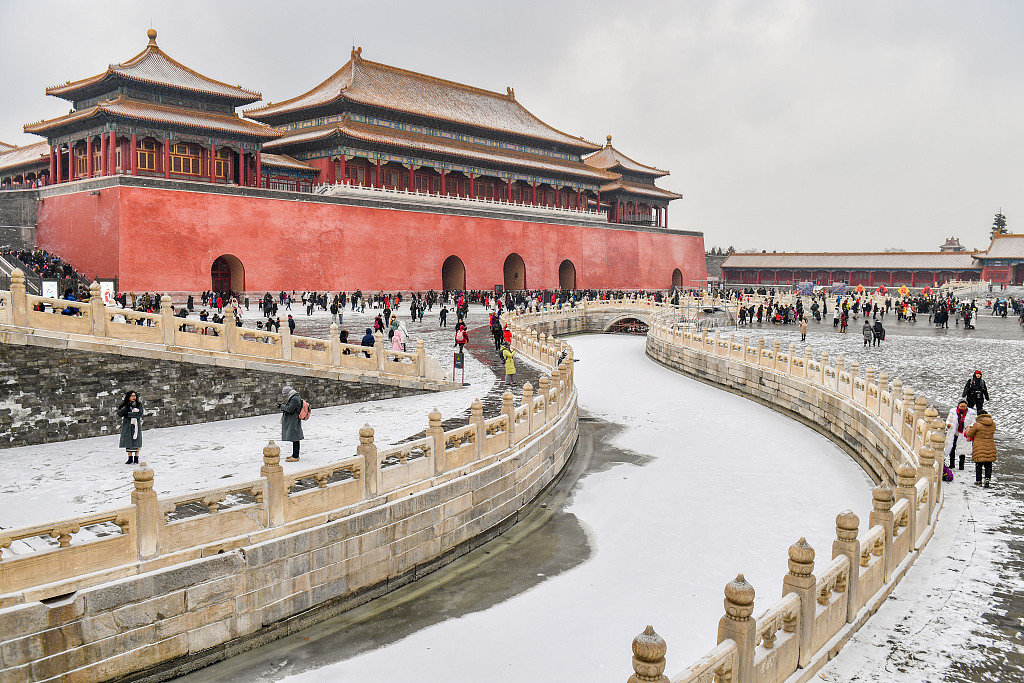
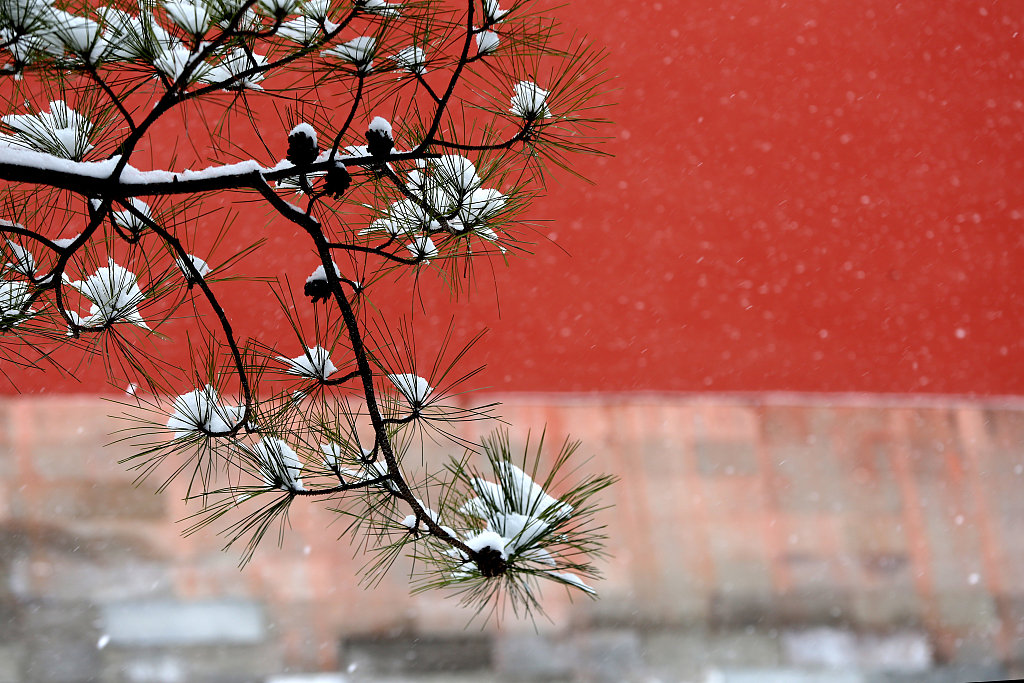
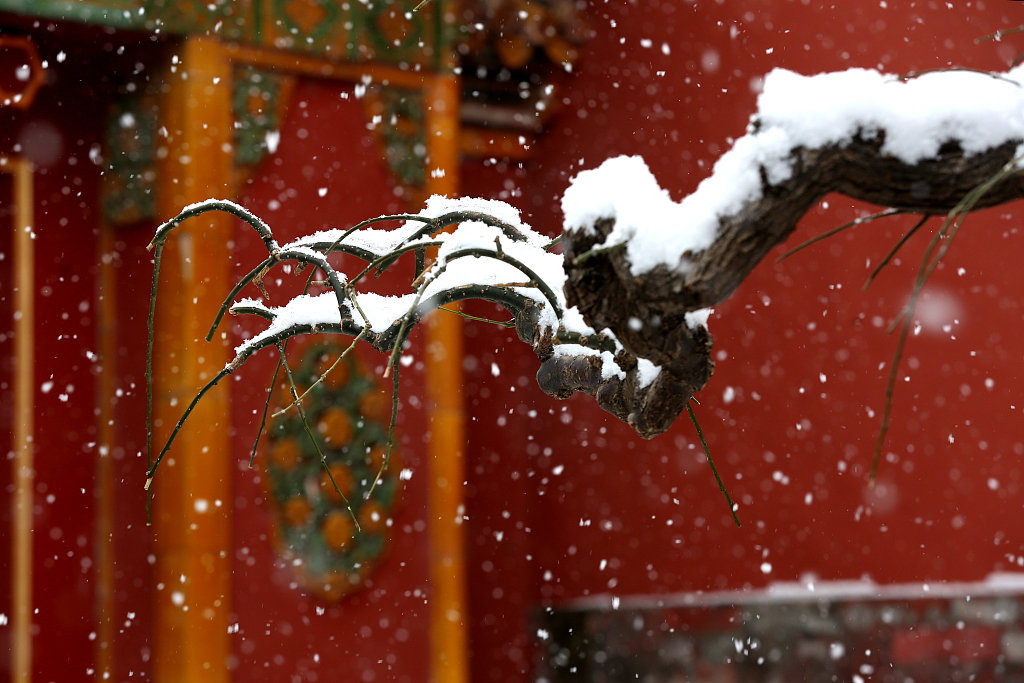
元宵喜乐 During the Lantern Festival on February 5th 2023 at the Forbidden City, Beijing, China, People’s Republic of China on the 10th February 2023 it is the first Beijing Snowfall of Spring also the Year of the Rabbit in which Beijing, China, People’s Republic of China ushered in snowy weather in forbidden city was exceptional quiet.  . Among the red walls and green tiles, green pines and ancient cypresses, falling snowflakes are dancing in the air, which is as beautiful as poetry and painting… also ushering the Snowfall on summer palace.

The Forbidden City in Beijing is the royal Imperial palace of the Ming and Qing dynasties in China. It used to be called the Forbidden City and is located in the center of the central axis of Beijing. The Forbidden City in Beijing is centered on three main halls, covering an area of ​​about 720,000 square meters, with a construction area of ​​about 150,000 square meters. There are more than 70 palaces of different sizes and more than 9,000 houses.

The Forbidden City in Beijing began construction in the fourth year of Yongle (1406), Emperor Chengzu of the Ming Dynasty. It was built on the basis of the Nanjing Forbidden City. It was completed in the eighteenth year of Yongle (1420) and became the palace of 24 emperors in the Ming and Qing dynasties. On the National Day of the 14th year of the Republic of China (October 10, 1925), the Palace Museum was officially established and opened. The Forbidden City in Beijing is 961 meters long from north to south and 753 meters wide from east to west. It is surrounded by 10-meter-high walls and a 52-meter-wide moat outside the city. There are four gates in the Forbidden City, the Meridian Gate in the south , the Shenwu Gate in the north , the Donghua Gate in the east and the Xihua Gate in the west . Each of the four corners of the city wall has a graceful turret . There is a folk saying that there are nine beams, eighteen pillars and seventy-two ridges, which describe the complexity of its structure. 

The buildings in the Forbidden City in Beijing are divided into two parts: the outer court and the inner court . The center of the Outer Dynasty is the Hall of Supreme Harmony , the Hall of Central Harmony , and the Hall of Preserving Harmony , collectively referred to as the Three Great Halls , where the state holds grand ceremonies. The left and right wings of the three halls are supplemented by two groups of buildings, the Wenhua Hall and the Wuying Hall . The center of the inner court is Qianqing Palace , Jiaotai Palace , and Kunning Palace , collectively referred to as the Housan Palace, which is the main palace where the emperor and empress live. Then there is the Royal Garden . On both sides of the Housan Palace are the East and West Sixth Palaces, which are the places where the concubines live and rest. On the east side of the East Sixth Palace is the Tianqiong Palace and other Buddhist temple buildings, and on the west side of the West Sixth Palace is the Zhongzheng Hall and other Buddhist temple buildings. In addition to the Outer Dynasty and the Inner Court, there are two parts of the Outer East Road and the Outer West Road.

Images and visuals are from – Forbidden City –Palace Museum Beijing- China –People’s Republic of China…..

#北京。 #中國 #China #Beijing | #紫禁城 #ForbiddenCity #January2023 | #ForbiddenCityDairies #CCTV #ChinaCentralTelevision celebrating the first snowfall on the Forbidden City Complex like living a real life ancient Snowy #ChinesePainting #AGallery on the 12th January 2023 ..

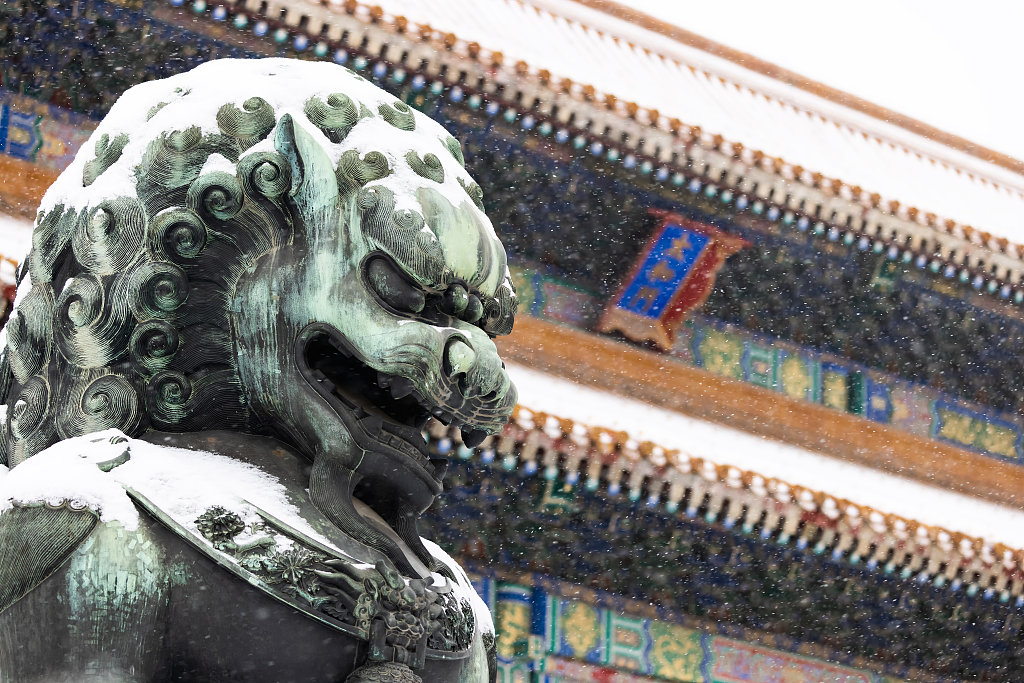
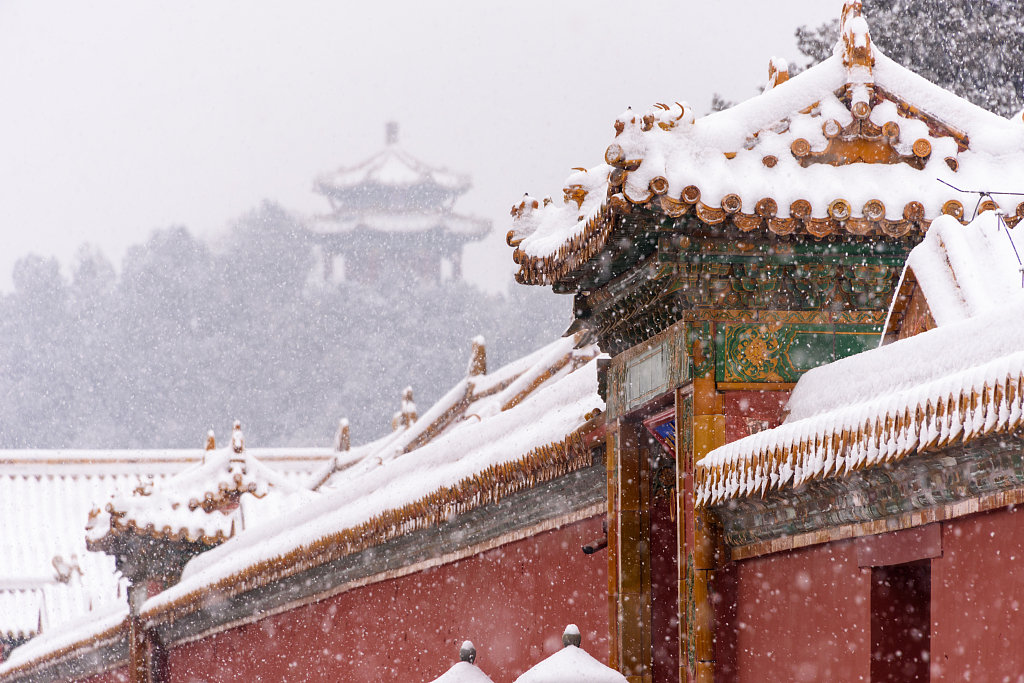
On the 12th January 2023 marks the first Snow Fall on the more than 603 year old Forbidden City, in which during the Beijing, China, People’s Republic of China in which Brushfully a Chinese Painting anciently of snow view on the bold imperial red walls, snow landings on white snow, on golden yellow jade glazed tiles in which the Forbidden City snowingly has a intriguingly unique view..

Today 12th January 2023, Beijing ushered in snowy weather, and the Forbidden City has once again become a popular spot for snow viewing. Red walls, white snow, glazed tiles… The Forbidden City in the snow has a unique view

From the perspective of aerial photography to see the beautiful Forbidden City in the snow …. Whenever it snows, the Forbidden City will become a popular attraction for enjoying the snow scenery. The layers of snow and the shades of red complement each other, creating a unique scene

The Chinese capital saw its first snow of the year 2023 on Thursday. Join our live broadcast to appreciate the spectacle at Beijing’s one of the most iconic landmarks, the Forbidden City…

……the second decade three from the turn of the century in Beijing the Capital of China also the People’s Republic of China, in which is also the year of the rabbit, marking its six hundred years anniversary of the Forbidden city that marks the transitional point of in between the middle of the Ming Dynasty (1368- 1644) transitionally from Nanjing to Beijing towards the Qing Dynasty (1636-1644-1911) …. The Imperial Palace seen so many countless seasonally transitional equinoxes but further its six hundred years is iconic, but it’s five hundred ninety nine years it marks it Autumn Equinox…. In which it only took twelve years to build the same of the Daming Palace of The Tang Dynasty Xian Imperial Capital only it was least twenty times larger……  

Images and visuals are from – Forbidden City –Palace Museum Beijing- China –People’s Republic of China…..
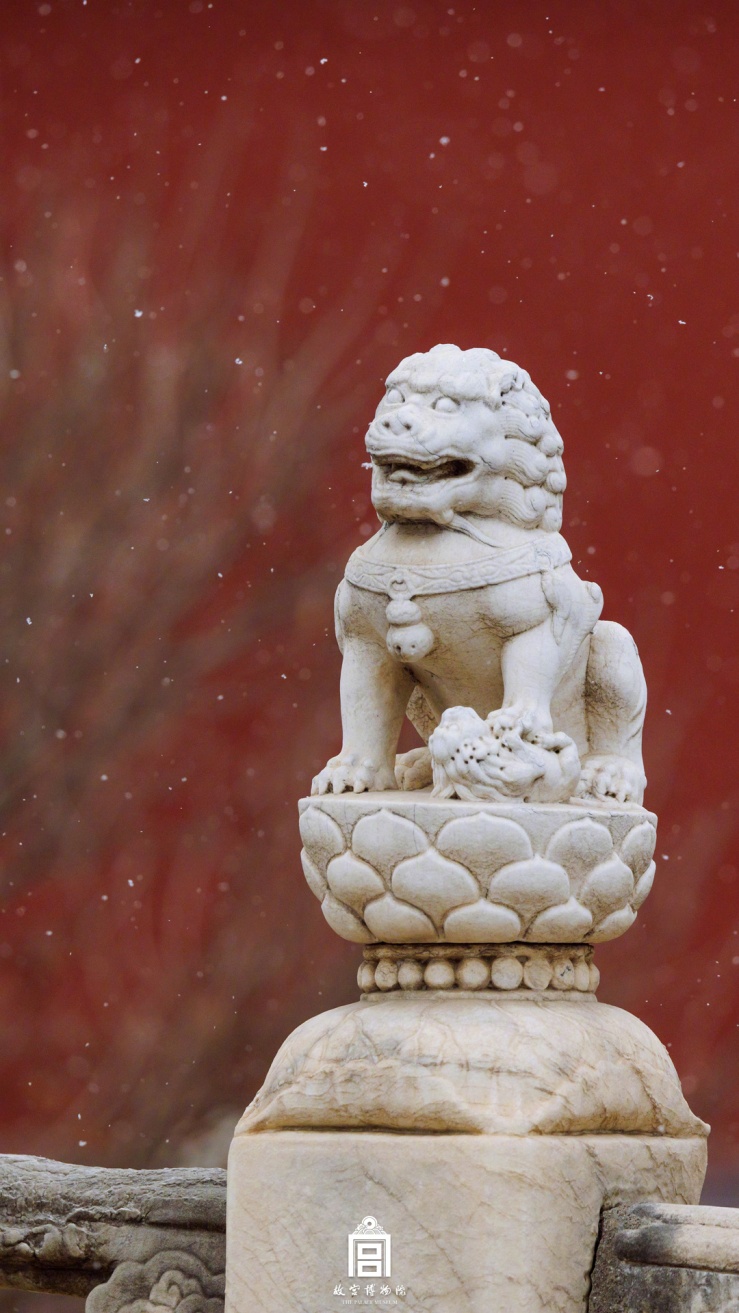
#北京。 #中國 #China #Beijing | #紫禁城 #ForbiddenCity #October2022 | #ForbiddenCityDairies celebrating the New Year 2023 with a Forbidden city sunrise on 1st January 2023 #AGallery..

On the 1st January 2023 marks the New Year of the year 2023, in which during the sunrise in Beijing, China, People’s Republic of China.. Marks also during the Sunrise with a China’s Flag raising ceremony that’s held every morning performed by the Forbidden City PLA – People’s Liberation Army Garrison with a massive assortment of crowds from all walks of life. Gathering around to witness the New year of 2023…..  

Among the first sunrise of clear morning early, it golden amberically sunlight the imperial red walls glimmering the golden yellow bamboo ceramic roof tiles of the palace halls of Forbidden City with local residents in action awaken workingly of the staff preparing welcoming the Audience visitation…

The four seasons reincarnate, the new year begins, the stars and frost fly by, and everyone lives endlessly. The bell of the new year has sounded, open a new calendar, start a new journey, hello, 2023!

爱上帝宁城# ​​The first dawn of the morning sun, thousands of miles of sunshine, new year and new atmosphere. Hello, 2023! Hello January! Hello, Forbidden City!

On the first day of 2023, the Palace Museum opened its doors to welcome the audience. The leaders of the hospital presented the brand new 2023 “Forbidden City Calendar” to the first 23 spectators admitted to the hospital in front of the Meridian Gate, and wished everyone a happy new year. The Palace Museum will continue to accompany you in the New Year, move forward hand in hand, and look forward to opening a new chapter in 2023 together!

On the first day of the New Year, start a hopeful 2023 with dazzling vermilion and vitality! Love in Forbidden City

……the second decade three from the turn of the century in Beijing the Capital of China also the People’s Republic of China, in which is also the year of the rabbit, marking its six hundred years anniversary of the Forbidden city that marks the transitional point of in between the middle of the Ming Dynasty (1368- 1644) transitionally from Nanjing to Beijing towards the Qing Dynasty (1636-1644-1911) …. The Imperial Palace seen so many countless seasonally transitional equinoxes but further its six hundred years is iconic, but it’s five hundred ninety nine years it marks it Autumn Equinox…. In which it only took twelve years to build the same of the Daming Palace of The Tang Dynasty Xian Imperial Capital only it was least twenty times larger……  

Images and visuals are from – Forbidden City –Palace Museum Beijing- China –People’s Republic of China…..
#中國 #中華人民共和國 #China #PeoplesRepublicOfChina #4KHDR #CitywalkingTour | #RecShanghai #November2022 #December2022 #上海 [4K HDR] 上海圣诞灯饰 徐家汇Shanghai Christmas Lights 2022 – Xujiahui

It’s Sunday late November 2022 1950 Hours Beijing time during of the designated month week of on the Shanghai walking on This year’s Christmas tree at Grand Gateway 66 in Xujiahui is by Pixar. Last year, the Christmas tree was by Louis Vuitton…. Walking alongside the Metro City 美罗城, Grand Gateway 66 港汇恒隆广场, Xujiahui ITC 徐家汇ITC商场, “Megaliths in the Garden” by team Lab….

Metro City 美罗城-A massive mega mall in Shanghai.. in which Metro City is jointly designed by Singapore BJ Architects and Shanghai East China Architectural Design Institute. Shanghai Metro City Culture and Entertainment Co., Ltd. and Shanghai Huimei Real Estate Co., Ltd. are jointly designed by Shanghai Xujiahui Mall (Group) Co., Ltd. The holding company was established in April 1993 through a joint venture and cooperation.

Metro City is located at No. 1111, Zhaojiabang Road, Shanghai, with eight floors and a giant glass sphere as its unique symbol. It is known as the “Landmark” of Xujiahui. With its iconic landmark With the unique symbol of a giant glass sphere, Metro Building is like a bright pearl inlaid in Xujiahui Square. It is known as the “landmark” of Xujiahui; In the complex of square buildings, it highlights its vigorous vitality. Settling in Metro will undoubtedly become a wise choice for merchants……

Grand Gateway 66 港汇恒隆广场 is a High End top business district Grand Gateway Plaza [1]  (Grand Gateway 66) is located at the junction of Huashan Road and Hongqiao Road, on top of Xujiahui Station of Shanghai Rail Transit Line 1 , overlooking Shanghai Xujiahui commercial center area, with a total area of ​​more than 400,000 square meters….. Commercial trade, modern office building, business suite and residential three functions.

Grand Gateway 66 is a large shopping center, Grand Gateway 66 is a twin-tower Grade A office building, and Grand Gateway 66 Serviced Apartments is a high-end foreign-related serviced apartment.

With 11 years of rich experience, Grand Gateway 66 has become a landmark building in Shanghai in the 21st century with its unique shape.

Rec Shanghai is about his walking, driving, riding running around views of China – People’s Republic of China sharing his immersive experiences in his video hope you could have a pure view about China today, sharing some 4K UHD videos to show pure China daily scenes for you I shoot in Shanghai and other locations in China. Let’s walk around China together… BEST VIEWED ON 2160px60 with the Volume turned on way up for immersiveness immersion…