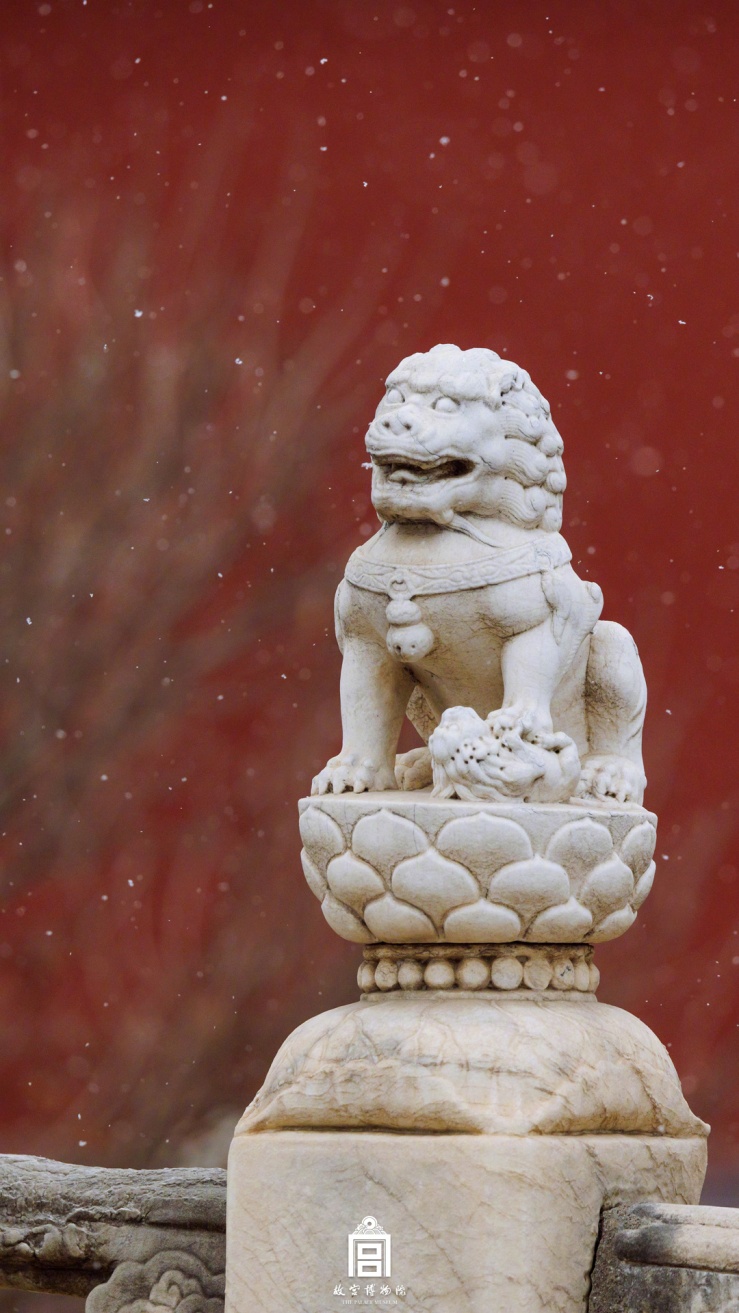
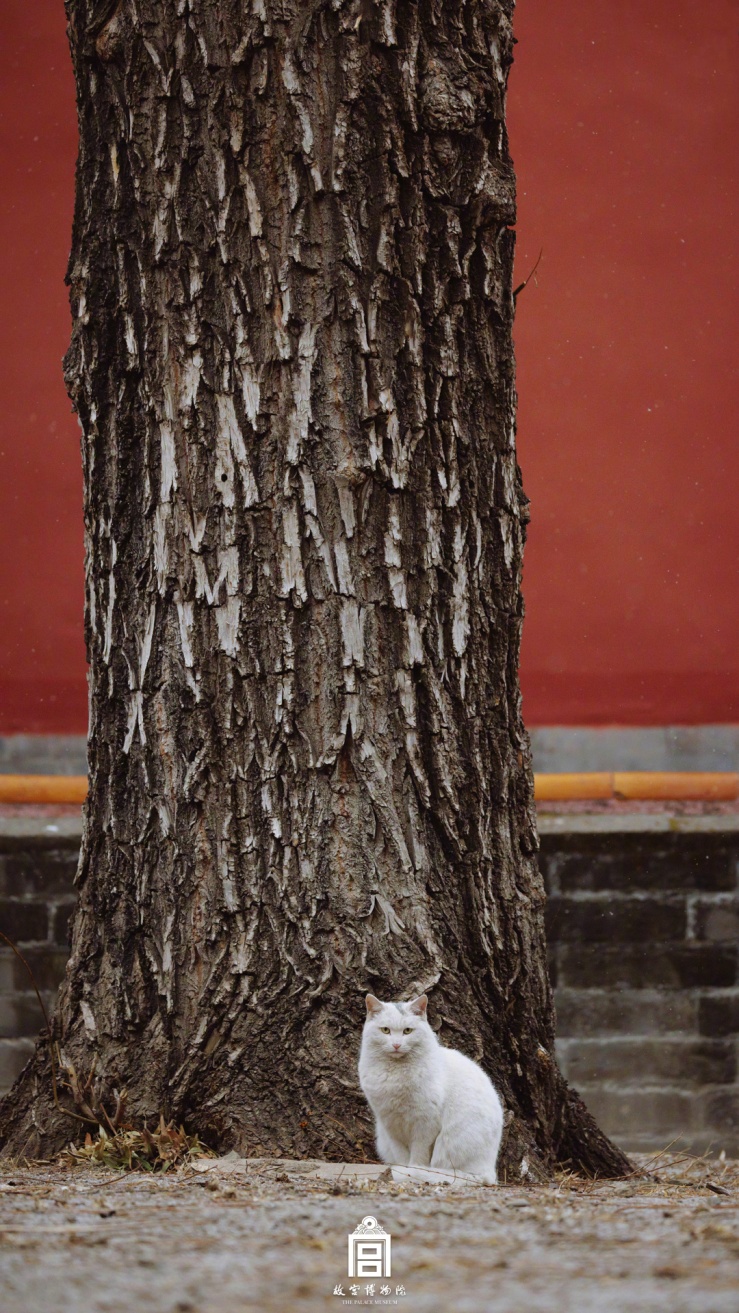
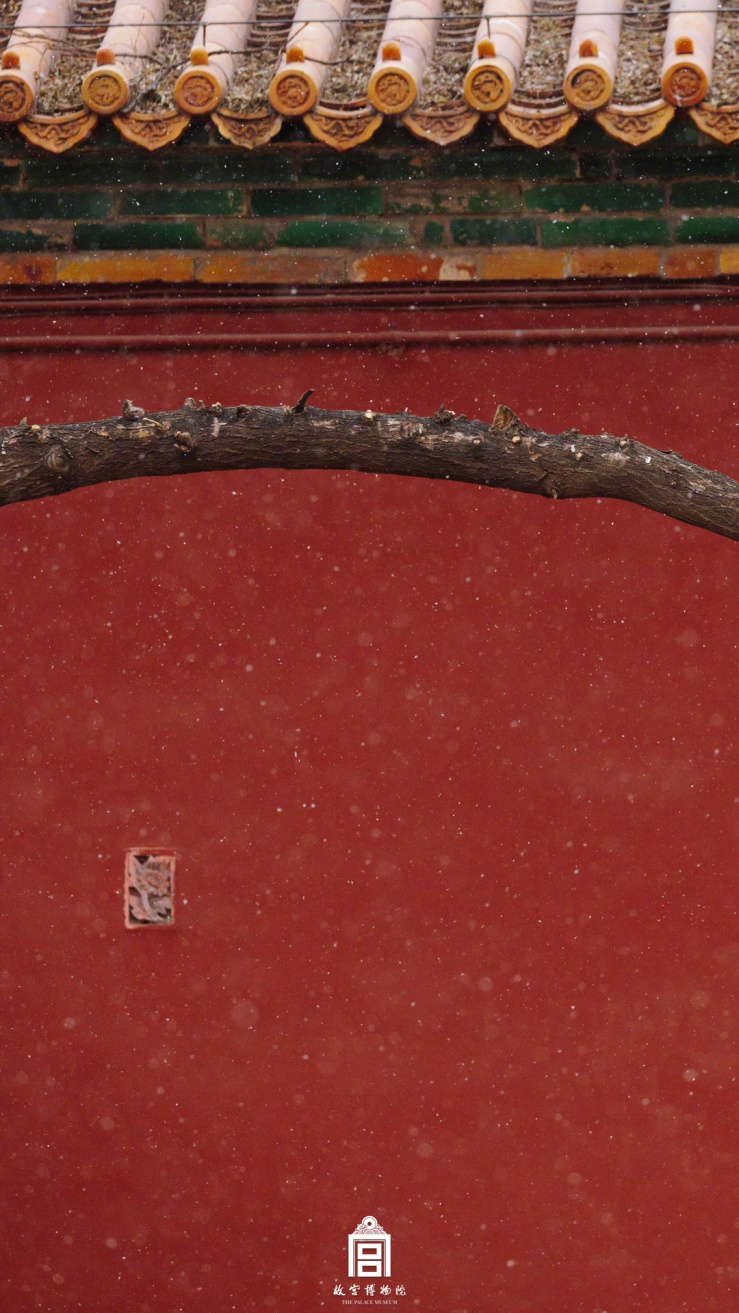
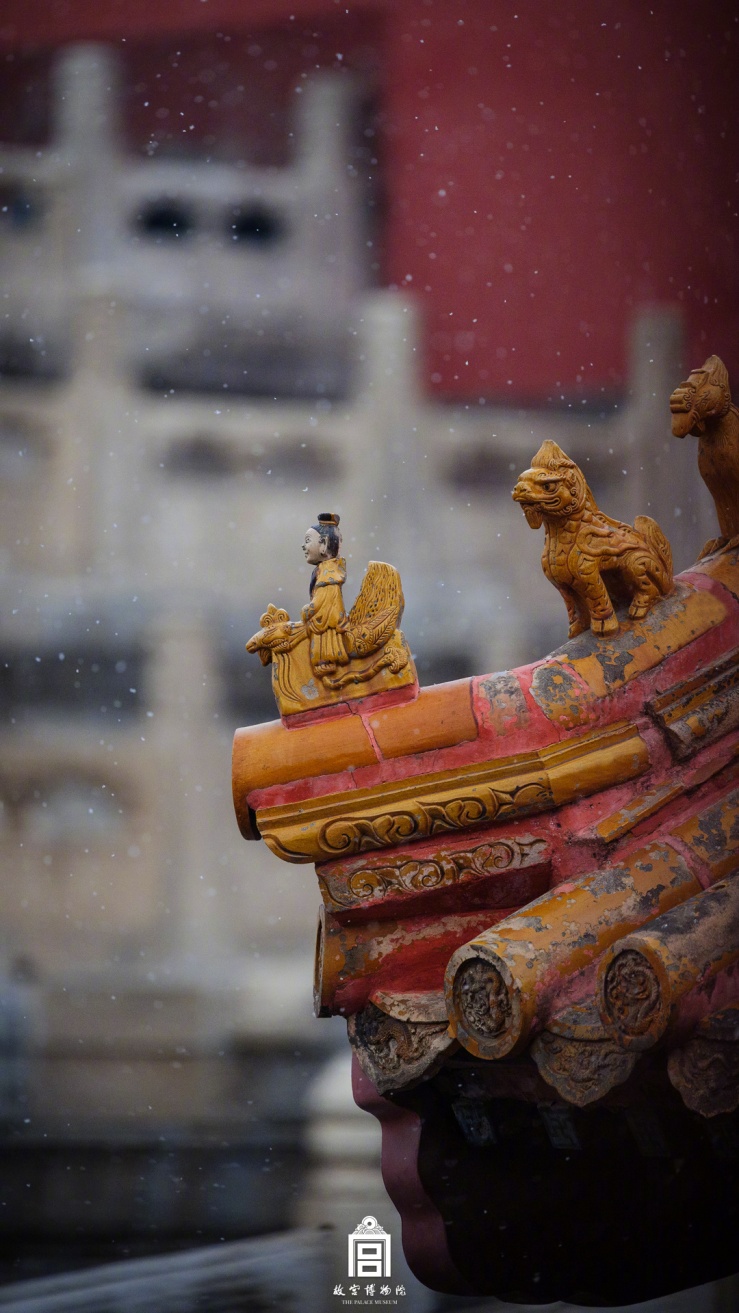
元宵喜乐 During the Lantern Festival on February 5th 2023 at the Forbidden City, Beijing, China, People’s Republic of China on the 10th February 2023 it is the first Beijing Snowfall of Spring also the Year of the Rabbit in which Beijing, China, People’s Republic of China ushered in snowy weather in forbidden city was exceptional quiet. . Among the red walls and green tiles, green pines and ancient cypresses, falling snowflakes are dancing in the air, which is as beautiful as poetry and painting… also ushering the Snowfall on summer palace.
The Forbidden City in Beijing is the royal Imperial palace of the Ming and Qing dynasties in China. It used to be called the Forbidden City and is located in the center of the central axis of Beijing. The Forbidden City in Beijing is centered on three main halls, covering an area of about 720,000 square meters, with a construction area of about 150,000 square meters. There are more than 70 palaces of different sizes and more than 9,000 houses.
The Forbidden City in Beijing began construction in the fourth year of Yongle (1406), Emperor Chengzu of the Ming Dynasty. It was built on the basis of the Nanjing Forbidden City. It was completed in the eighteenth year of Yongle (1420) and became the palace of 24 emperors in the Ming and Qing dynasties. On the National Day of the 14th year of the Republic of China (October 10, 1925), the Palace Museum was officially established and opened. The Forbidden City in Beijing is 961 meters long from north to south and 753 meters wide from east to west. It is surrounded by 10-meter-high walls and a 52-meter-wide moat outside the city. There are four gates in the Forbidden City, the Meridian Gate in the south , the Shenwu Gate in the north , the Donghua Gate in the east and the Xihua Gate in the west . Each of the four corners of the city wall has a graceful turret . There is a folk saying that there are nine beams, eighteen pillars and seventy-two ridges, which describe the complexity of its structure.
The buildings in the Forbidden City in Beijing are divided into two parts: the outer court and the inner court . The center of the Outer Dynasty is the Hall of Supreme Harmony , the Hall of Central Harmony , and the Hall of Preserving Harmony , collectively referred to as the Three Great Halls , where the state holds grand ceremonies. The left and right wings of the three halls are supplemented by two groups of buildings, the Wenhua Hall and the Wuying Hall . The center of the inner court is Qianqing Palace , Jiaotai Palace , and Kunning Palace , collectively referred to as the Housan Palace, which is the main palace where the emperor and empress live. Then there is the Royal Garden . On both sides of the Housan Palace are the East and West Sixth Palaces, which are the places where the concubines live and rest. On the east side of the East Sixth Palace is the Tianqiong Palace and other Buddhist temple buildings, and on the west side of the West Sixth Palace is the Zhongzheng Hall and other Buddhist temple buildings. In addition to the Outer Dynasty and the Inner Court, there are two parts of the Outer East Road and the Outer West Road.
Today this morning at six in the early hours of wintery morning Hong Kong SAR-Beijing time it’s is the first morning of 2022 January 1st sunrise sunlight warmth radiantly glittering the Imperial Palaces of the primary Beijing Central Axis complex of which is the now Ming – Qing Dynasty 602 Forbidden City years old Beijing – China – People’s Republic of China ..
During the sunrise it was the First China’s – China- People’s Republic of China Flag Raising ceremony of 2022 in Tian’anmen Square.. The Chinese national flag will be raised at Beijing’s Tian’anmen Square on the first day of 2022. The ceremony takes about two minutes but people often arrive the night before to get a good spot.
……the second decade from the turn of the century in Beijing the Capital of China also the People’s Republic of China, marking its six hundred and two years anniversary of the Forbidden city that marks the transitional point of in between the middle of the Ming Dynasty (1368- 1644) transitionally from Nanjing to Beijing towards the Qing Dynasty (1636-1644-1911) …. The Imperial Palace seen so many countless seasonally transitional equinoxes but further its six hundred years is iconic, but it’s five hundred ninety nine years it marks it Autumn Equinox…. In which it only took twelve years to build the same of the Daming Palace of The Tang Dynasty Xian Imperial Capital only it was least twenty times larger……
On the early month of September 2021, it was the International Service Trade Fair 2021… The 2021 Service Trade Fair has come to an end. During the exhibition from September 3rd to 7th, the digital palace exhibition area provided a large number of visitors with browsing, explanation and experience services. From the immersive VR digital theatre and AR glasses, to the many digital products that can “travel” the Forbidden City, browse exhibitions, and appreciate cultural relics without leaving the house, to intelligent guides that serve offline audiences, all the audiences I personally felt the vitality of the time radiated by the historic Forbidden City. In the future, the Palace Museum will continue to use modern technology and media to provide convenience for the audience to understand and visit the Forbidden City, promote the digital protection, management and utilization of cultural relics, and promote the creative transformation and innovative development of Chinese excellent traditional culture.
From the immersive VR digital theatre and AR glasses, to the many digital products that can “travel” the Forbidden City, browse exhibitions, and appreciate cultural relics without leaving the house, to intelligent guides that serve offline audiences, all the audiences I personally felt the vitality of the time radiated by the historic Forbidden City……
Currently running an exhibition is the Co-hosted by the Palace Museum and China Post Group Co., Ltd., and undertaken by China Philatelic Co., Ltd. and Beijing Youlaiyou Network Technology Co., Ltd., the “National Business Card Forbidden Treasure-Forbidden City Stamp Exhibition” will be held in the Forbidden City from May 18th. The Zhai Palace exhibition hall of the museum is open to the public. This exhibition is an important measure to implement General Secretary Xi Jinping’s “strengthening cultural self-confidence and building a cultural power”
The Newly , New Exhibition of the Forbidden City! The “National Business Card Forbidden Treasure-Special Exhibition of Forbidden City Stamps”, co-sponsored by the Palace Museum and China Post Group Co., Ltd., will open today in Zhai Palace. This special exhibition exhibited a total of 56 sets of 1732 stamps and 54 precious exhibits such as stamp manuscripts. It also exhibited jade, enamel, bronze, porcelain, furniture and other cultural relics of the Palace Museum, realizing the first time for the Palace Museum theme stamps and cultural relics. “Same frame”. Through the small stamps, you can explore the Forbidden City and feel the cultural beauty of Fangcun art. This exhibition implements appointment by appointment, and an appointment is made to receive 3,000 spectators every day, until the quota is full. You can go to the “Forbidden City Museum Online Ticketing Website”) or WeChat public account “Forbidden City Museum Audience Service” real-name appointment.
Co-hosted by the Palace Museum and China Post Group Co., Ltd., and undertaken by China Philatelic Co., Ltd. and Beijing Youlaiyou Network Technology Co., Ltd., the “National Business Card Forbidden Treasure-Forbidden City Stamp Exhibition” will be held in the Forbidden City from May 18th. The Zhai Palace exhibition hall of the museum is open to the public. This exhibition is an important measure to implement General Secretary Xi Jinping’s “strengthening cultural self-confidence and building a cultural power”. Through the combination of the Forbidden City-themed stamps issued by the People’s Republic of China and the corresponding Forbidden City cultural relics, it reflects the party leadership’s achievements in cultural heritage protection and cultural propaganda. , A gift for the centuries of founding the party. This is the first time that the Palace Museum has jointly organized a cultural theme exhibition with China Post.
On May 17, the opening ceremony of the exhibition was held in Zhai Palace. Huang Mengfu, Vice Chairman of the Tenth and Eleventh CPPCC National Committee, Lou Wei, Executive Vice President of the Palace Museum, Kang Ning, Deputy General Manager of China Post Group Co., Ltd., relevant leaders of China Post and the Palace Museum, as well as many artists, cultural scholars, and stamp designers of the Palace Museum Guests from all walks of life including philatelists and philatelists attended the opening ceremony.
The Forbidden City theme loved by stamp designers
Although the stamp is only a square inch in size, it can reflect the characteristics of a country’s history, technology, economy, culture, customs, and natural features. It is a “national business card” that represents the image of the country. The Palace Museum, which has gone through nearly a hundred springs and autumns, is based on the Forbidden City, the imperial palace of the Ming and Qing dynasties. It not only has the largest wooden palace complex in the world, but also has a collection of more than 1.86 million pieces representing the diligence and wisdom of the Chinese nation. Of exquisite artifacts. Therefore, the ancient buildings and cultural relics of the Forbidden City, which reflect the glorious achievements of Chinese civilization, appear on stamps time and time again, playing a role in spreading the excellent traditional Chinese culture.
The stamp has a deep connection with the Forbidden City. In 1953, the turret of the Forbidden City, which embodies the superb skills and outstanding talents of ancient Chinese craftsmen, appeared on a stamp for the first time. In 1982, the fan paintings of the Ming and Qing Dynasties became the cultural relics of the Forbidden City to appear on stamps for the first time. Since then, more and more ancient buildings and collections of the Forbidden City have become the favorite design themes of stamp designers. In 1998, the Hall of Supreme Harmony in the Palace Museum and the Louvre Museum in France boarded the special stamps jointly issued by China and France, opening a new chapter in the exhibition and spread of Chinese culture in the Palace Museum on the international stage. In 2003, the Forbidden City Post Office officially opened in the Forbidden City. The Palace Museum and China Post have maintained a long-term friendly and cooperative relationship, and jointly contribute to the promotion of the country’s image.
The Forbidden City-themed stamps are framed with cultural relics for the first time
The biggest highlight of this exhibition is “Stamps and cultural relics are in the same frame, history and times reflect each other.” For the first time, the Forbidden City-themed stamps issued by the People’s Republic of China and the corresponding Forbidden City cultural relics are presented together. It can strengthen the interaction, see the micro-knowledge and let the visitors experience the feeling of “cultural relics come alive, stamps come alive” to promote Chinese culture and strengthen cultural confidence.
At the exhibition site, a total of 56 sets of 1732 stamps (including 52 sets of 1590 pieces of the Forbidden City theme stamps), 54 pieces of precious exhibits such as stamp manuscripts, and 13 first day covers are jointly issued; 25 pieces of Forbidden City cultural relics on display in conjunction with the stamps, including paintings, calligraphy and jade , Enamelware, bronze ware, porcelain, furniture and other categories are displayed in comparison with stamps of the same theme, and complement each other. The content of the exhibition is divided into four units: “The Country is Beautiful”, “Beautiful”, “Great Existence”, and “Ten Thousand Miles of Mail”. The first unit “Jiangshan Du Jiao” selects the symbolic and magnificent mountains and rivers themed stamps “Yangtze River”, “Great Wall”, “Huangshan” and “Yellow River” to show the great rivers and mountains of the motherland, corresponding to the cultural relics of the Palace Museum “Four Scenic Landscapes” and “Five Mountains” The images of “A Thousand Miles of Rivers and Mountains” show the vitality and continuity of the motherland; the second unit “Beautiful” shows the main buildings of the Forbidden City, supplemented by stamp design manuscripts, sculptures, and images of ancient buildings to reproduce the architectural charm of the Forbidden City; The third unit “Great Existing Collection”, through the comparison of cultural relics and stamps, especially the newly issued “Five Bulls” stamps, embodies the entire process from cultural relics to stamp design, engraving, and printing, and shows the technological level of stamp printing. . The fourth unit “Postal Transmission” takes the theme of the Forbidden City in the stamps jointly issued by China and foreign countries as the main line, showing the cultural dissemination role of the Forbidden City cultural relics and Chinese stamps in party-state diplomacy, cultural exchanges and other activities, reflecting the integration of Chinese civilization The store will last forever.
The exhibition also developed related philatelic products and cultural and creative products. There will be no sales at the exhibition site. Interested members of the public can purchase your favourite products by paying attention to the China Philatelic Subscription Number, China Philatelic Corporation Jingdong Flagship Store and the “Forbidden City Theme Post Office” online mall to learn more about the exhibition and special cultural and creative products .
Exhibition reservation visit reminder
1. “The Palace Museum Online Ticketing Website” and the Wechat public account “The Palace Museum Audience Service” are the only official ways to reserve tickets for the Palace Museum. Real-name reservations are implemented. My valid ID is the only admission certificate, and you must enter the hospital with a valid certificate.
2. “National Business Card Forbidden Treasure-Special Exhibition of Forbidden City Theme Stamps”, the exhibition period is from May 18, 2021 to July 18, 2021. Tickets will not be sold separately. According to the requirements of epidemic prevention and control, and in accordance with the principles of appointment, current limitation, and peak shifting, the exhibition will be admitted by appointment, and an appointment will be made to receive 3,000 spectators every day until full. 3. Visitors can use the second-generation ID card or passport information to make an appointment to visit the exhibition in the “Forbidden City Museum Online Ticketing Website” or the WeChat service account “Forbidden City Museum Audience Service”. You can also scan the QR code at the entrance of the exhibition hall to make an on-site appointment. When checking at the entrance of the exhibition hall, you must hold an ID certificate that matches the ID number reserved at the time of booking.