In this year’s 2022, the second decade from the turn of the century in Beijing the Capital of China also the People’s Republic of China, in which is also the year of the Tiger, marking its six hundred and two years anniversary of the Forbidden city that marks the transitional point of in between the middle of the Ming Dynasty (1368- 1644) transitionally from Nanjing to Beijing towards the Qing Dynasty (1636-1644-1911) …. The Imperial Palaceseen so many countless seasonally transitional equinoxes but further its six hundred years is iconic, but it’s five hundred ninety nine years it marks it Autumn Equinox…. In which it only took twelve years to build the same of the Daming Palace of The Tang Dynasty Xian Imperial Capital only it was least twenty times larger…
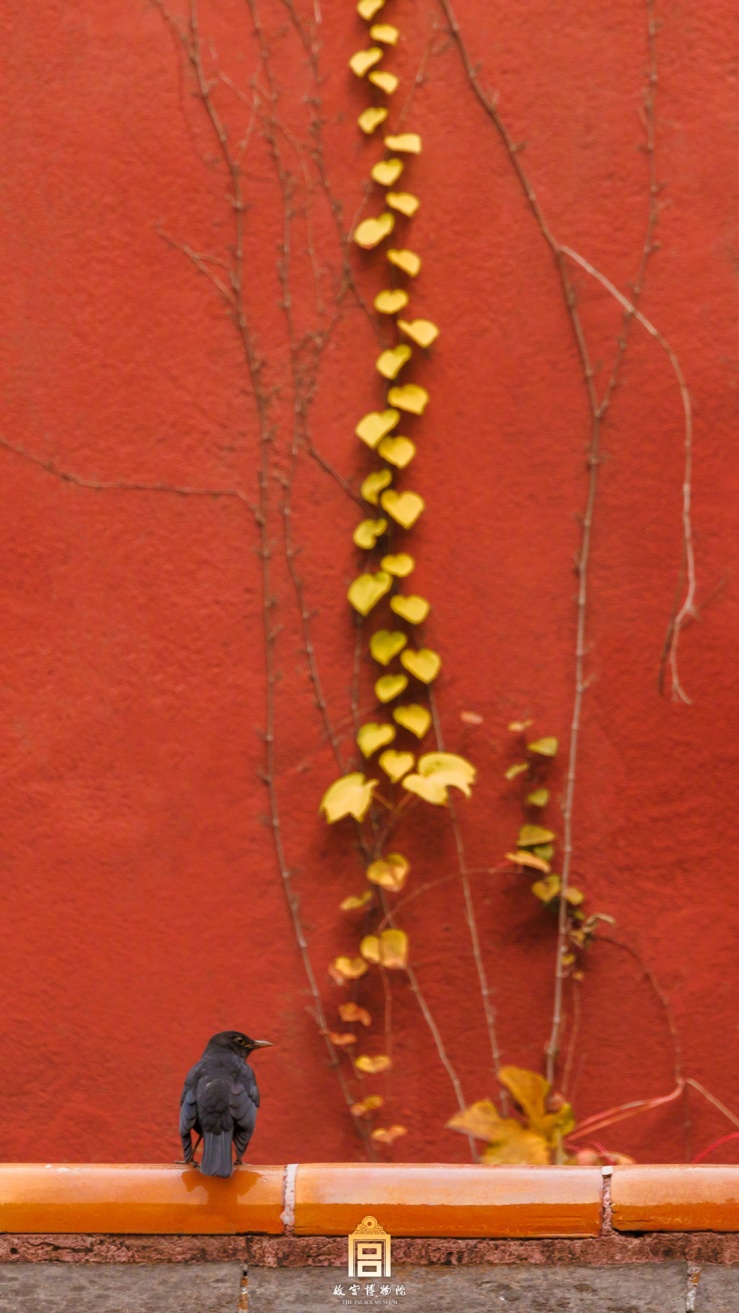
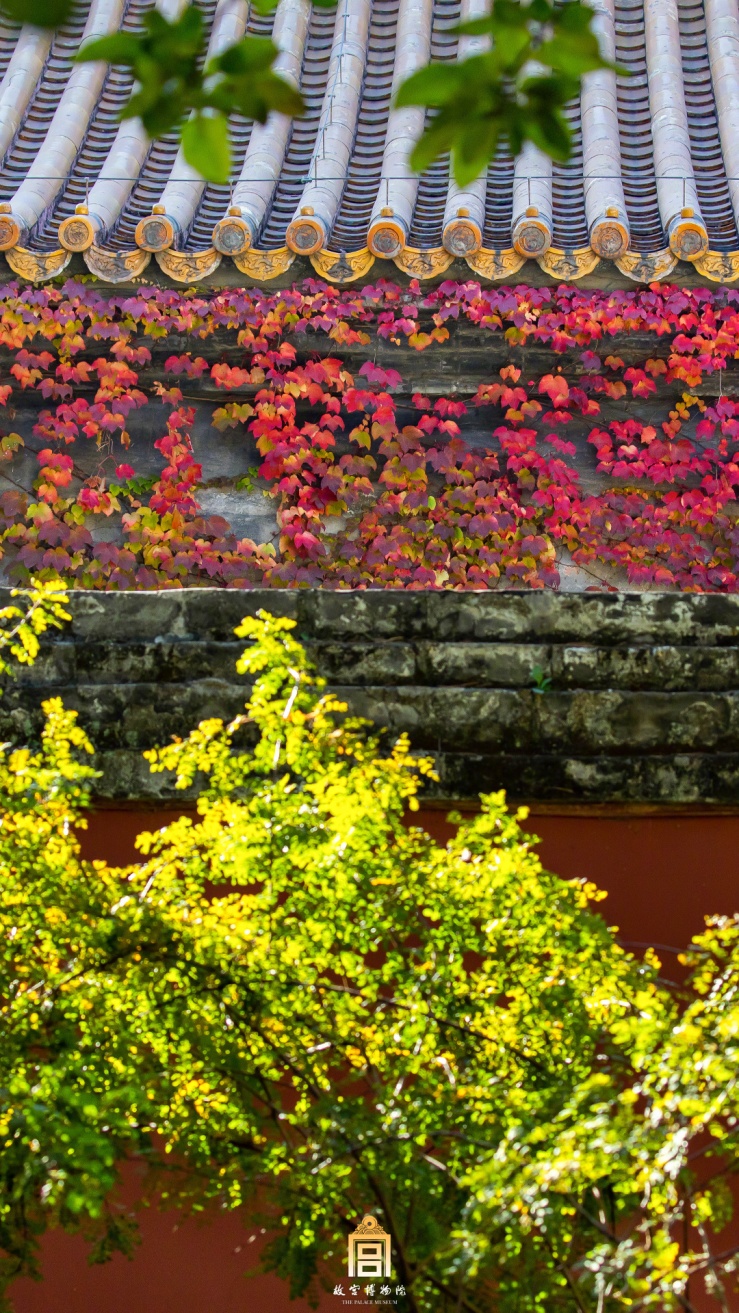
On this week on the first week of November 2022 on month of October Autumn The golden light and shadow of late autumn dyes the undulating vines on the eaves, lights up the fruit on the branches of begonia, retains the last yellow leaf in the bleak wind, and warms the autumn at the end of the year in this city. Fall in love with the Forbidden City …..
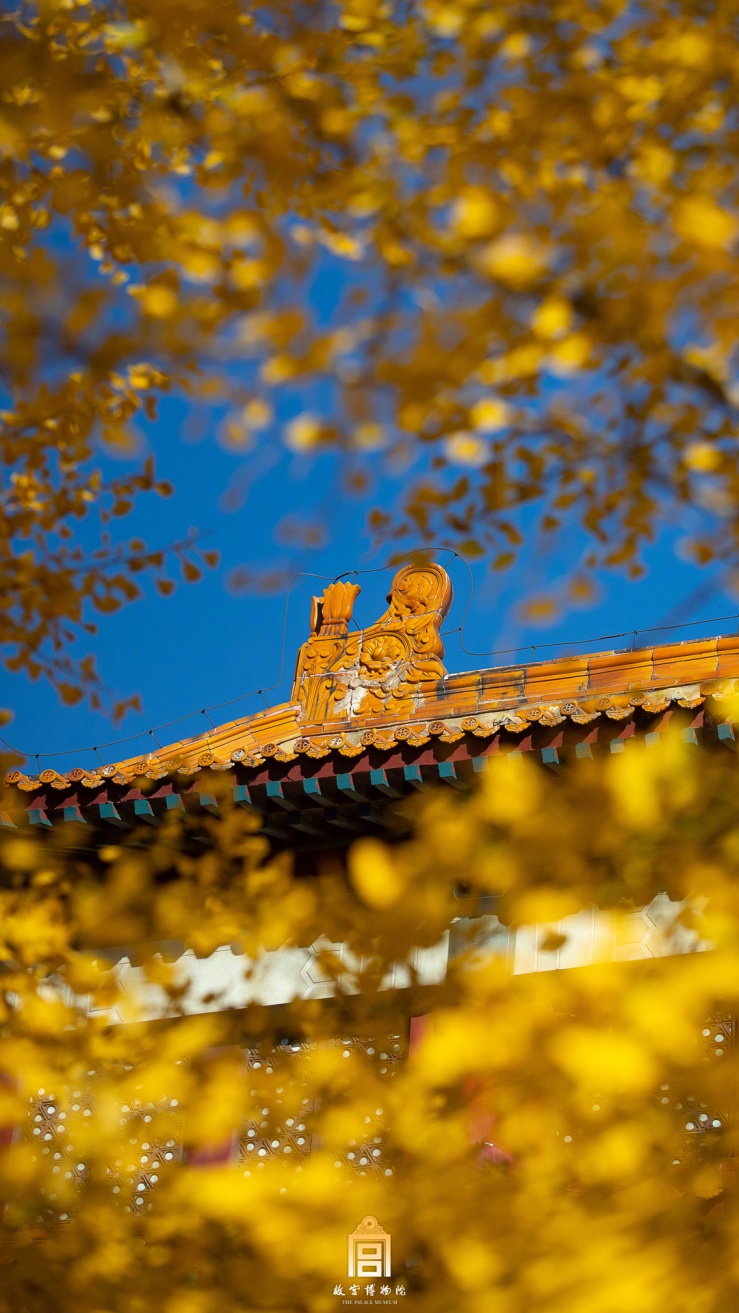
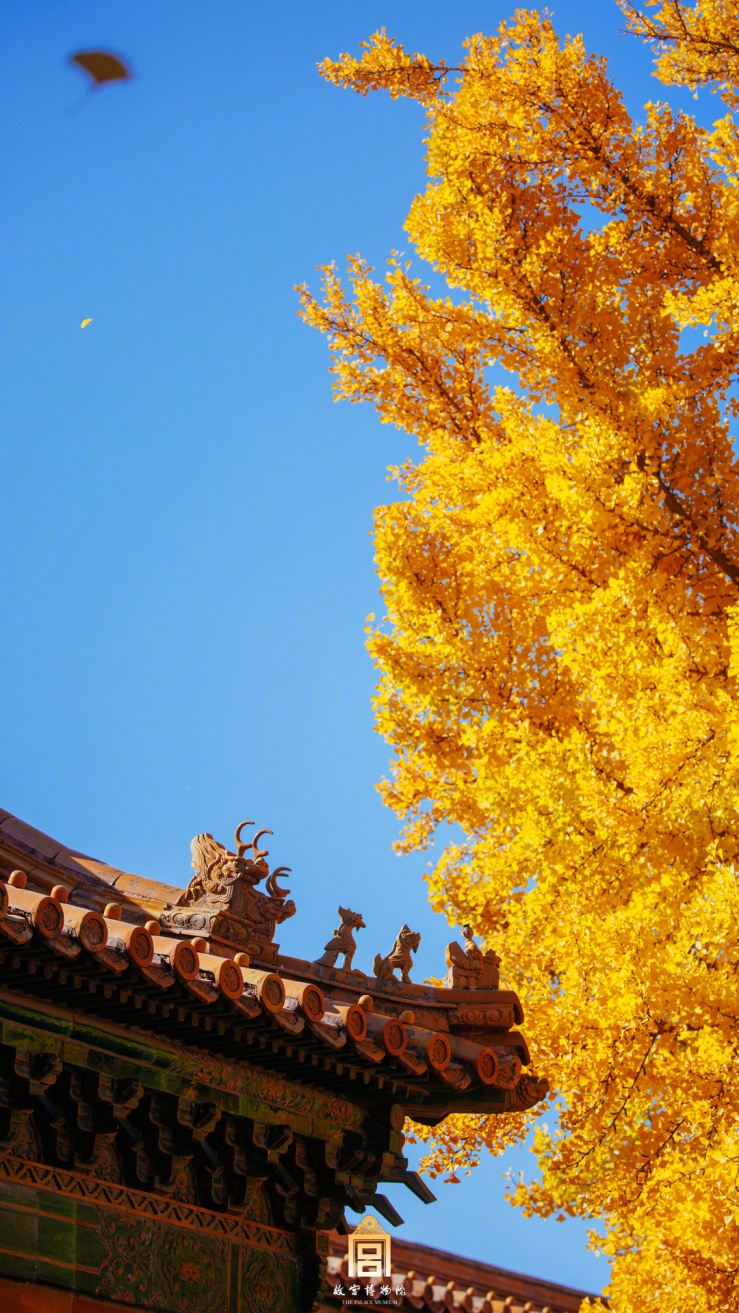
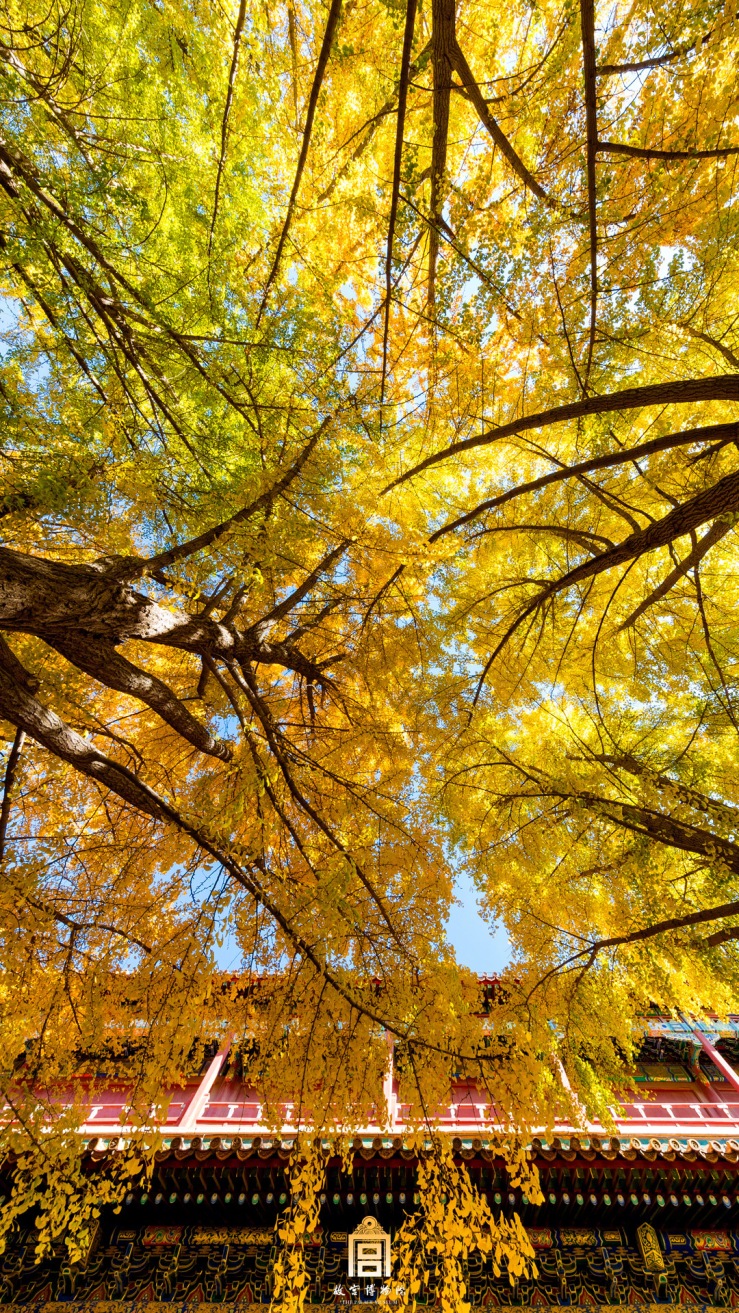
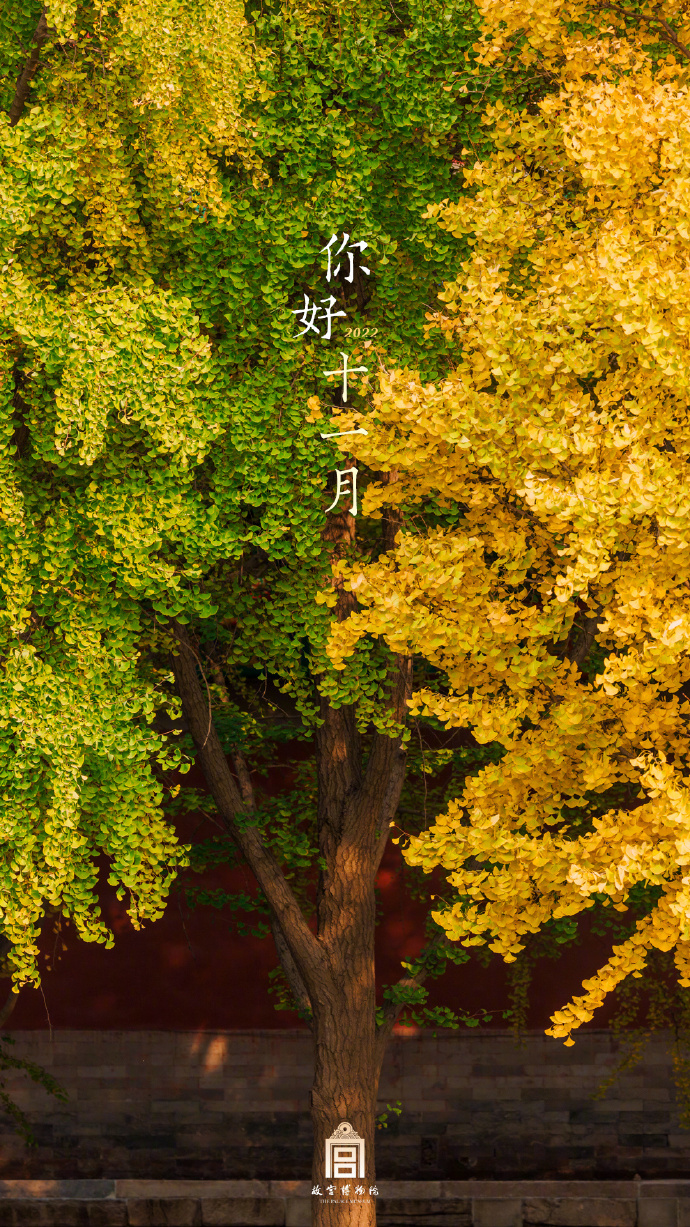
The ginkgo biloba in the Forbidden City has turned yellow! A golden “little fan” swaggers on the branches. At the time of the most beautiful leaves, I will share this golden color with you. fall in love with the Forbidden City The ginkgo in the Forbidden City has turned yellow like warm starry sunlight stars clustering around it branches.
whom come to watch the clouds together How beautiful is autumn The ginkgo in the Forbidden City has turned yellow like The golden tile and red wall colours , the vegetation is numerous, and the gorgeous colours tell the city’s autumn how beautiful . Fall in love with the Forbidden City …
In this year’s 2022, the second decade from the turn of the century in Beijing the Capital of China also the People’s Republic of China, in which is also the year of the Tiger, marking its six hundred and two years anniversary of the Forbidden city that marks the transitional point of in between the middle of the Ming Dynasty (1368- 1644) transitionally from Nanjing to Beijing towards the Qing Dynasty (1636-1644-1911) …. The Imperial Palaceseen so many countless seasonally transitional equinoxes but further its six hundred years is iconic, but it’s five hundred ninety nine years it marks it Autumn Equinox…. In which it only took twelve years to build the same of the Daming Palace of The Tang Dynasty Xian Imperial Capital only it was least twenty times larger…
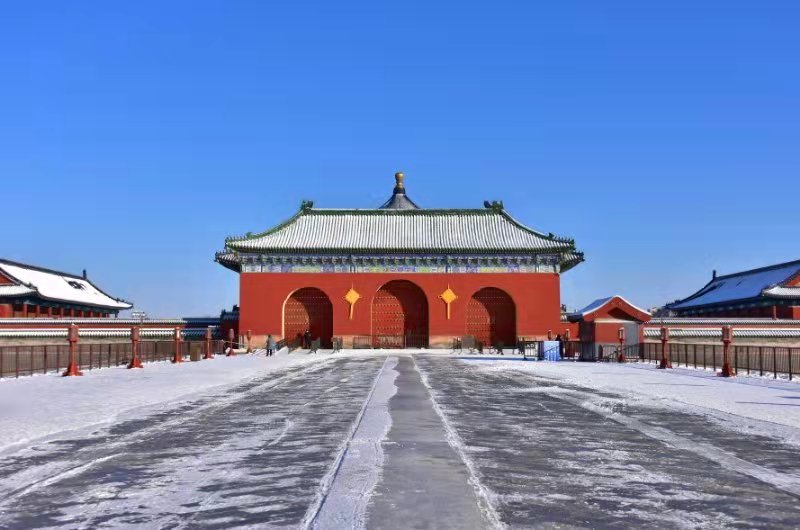
On the 25th February 2022 week for the year of the Tiger it which was on 1st February 2022 it was the first snow in Beijing in 2022 for, the Temple of Heaven Park was wrapped in silver and dressed in a thin white coat to welcome the arrival of the New Year. The red walls and blue tiles have been covered with snow, as if entering a fairy tale world, as if to tell us that the Temple of Heaven Park is already dressed in good costumes to welcome the arrival of the New Year….
天壇 The Temple of Heaven In winter- Temple of Heaven: an Imperial Sacrificial Altar in Beijing…….the Temple of Heaven Park is full of a peaceful atmosphere. The sun is rising, and the sky is full of purple clouds. Between the clouds and clouds, the morning glow spreads over the earth. The glazed tiles of the Hall of Prayer for Good Harvest shone with stars and stars under the rays of the sun, as if the beauty of the Heavenly Palace had fallen into the world. Beijing turns out to be so beautiful
The Temple of Heaven Park is located in the south of Beijing, on the east side of Yongdingmen Inner Street in Dongcheng District. It covers an area of about 2.73 million square meters. The Temple of Heaven was built in the eighteenth year of Yongle in the Ming Dynasty (1420), and was rebuilt during the reign of Emperor Qianlong and Guangxu of the Qing Dynasty. It is now a world cultural heritage , a national key cultural relics protection unit , a national AAAAA-level tourist attraction , and a demonstration site of a national civilized scenic tourist area .
In the Ming and Qing dynasties, the Temple of Heaven Park was the place where emperors offered sacrifices to the emperor and prayed for the harvest of the five grains. The Temple of Heaven is a general term for the two altars of Yuanqiu and Qigu. There are two altar walls, forming an inner and outer altar. The main building is the inner altar, the round mound altar is in the south, the Qigu altar is in the north, and the two altars are on the same north-south axis, separated by a wall. The main buildings in the Circular Mound Altar are the Circular Mound Altar, the Emperor Vault, etc. The main buildings in the Praying Valley Altar are the Hall of Prayer for Good Harvest, the Hall of Emperor Qiang, and the Gate of Prayer for Chinese New Year’s .
During the Ming and Qing Dynasties According to historical records, there are formal sacrifices to heaven and earth, which can be traced back to the Xia Dynasty in the second millennium BC, which was still a slave society. Ancient Chinese emperors called themselves “Son of Heaven”, and they revered heaven and earth very much.
The Temple of Heaven was built in the shape of Nanjing in the eighteenth year of Yongle in Ming Dynasty (1420). In the ninth year of Jiajing (1530), Emperor Jiajing listened to the minister’s words: “In ancient times, people worshipped the sky on Yuanqiu and the earth on Fangqiu. Those on Yuanqiu were the hills on the ground in the southern suburbs. The hills were round and high, so they resembled the sky. The hill in Zezhong in the northern suburbs, the hill goes down from the side, is like the earth.” So it was decided to divide the sacrifices between heaven and earth, building a round hill in the south of the Great Sacrificial Hall to worship the sky, and building a Fangze altar outside the Anding Gate of the northern city to worship the earth . In the thirteenth year of Jiajing (1534), Yuanqiu was renamed the Temple of Heaven, and Fang Ze was renamed the Temple of Earth. After the Great Sacrificial Hall was abandoned, it was changed to the Altar of Prayers. In the seventeenth year of Jiajing (1538), the altar of prayer for grain was abolished. In the nineteenth year, another Daxiang Hall was built on the altar, and it was completed in twenty-four years.
In the 16th year of Emperor Qianlong’s reign (1751), it was renamed the Hall of Prayer for Harvest. It has been repaired and expanded many times since then.
In this year’s 2020, the second decade from the turn of the century in Beijing the Capital of China also the People’s Republic of China, in which is also the year of the rat, marking its six hundred years anniversary of the Forbidden city that marks the transitional point of in between the middle of the Ming Dynasty (1368- 1644) transitionally from Nanjing to Beijing towards the Qing Dynasty (1636-1644-1911) …. The Imperial Palace seen so many countless seasonally transitional equinoxes but further its six hundred years is iconic, but it’s five hundred ninety nine years it marks it Autumn Equinox…. In which it only took twelve years to build the same of the Daming Palace of The Tang Dynasty Xian Imperial Capital only it was least twenty times larger…
During the Month of 1st May 2020, The Forbidden City – The Palace Museumhas responded to the Beijing Municipal Government’s call to actively carry out the classification of household waste. How to sort the common garbage during the visit? Check with the staff of the Open Management Office of the Palace Museum. Has your hometown started to sort waste? Do you have any tips for reducing garbage? In which the Forbidden city Management Office is interested how to recycle in which will be implement into how the Palace Museum waste management operate in which there’s a four bins in which are dedicated for plastic, glass, organic waste also paper- cardboard waste..
During this year 2020 Beijing the Capital of China also the People’s Republic of China, in which next year 2020 the year of the rat …. Marking its six hundred years of the Forbidden city that marks the transitional point of in between the middle of the Ming Dynasty (1368- 1644) transitionally from Nanjing to Beijing towards the Qing Dynasty (1636-1644-1911) …. The Imperial Palace seen so many countless seasonally transitional equinoxes but further its six hundred years is iconic, but it’s five hundred ninety nine years it marks it Autumn Equinox…. In which it only took twelve years to build the same of the Daming Palace of The Tang Dynasty Xian Imperial Capital only it was least twenty times larger..
The former imperial office in the Forbidden City, the Hall of Mental Cultivation, will begin renovation in August 2018. The Hall of Mental Cultivation is located in Beijing, the capital city of China, and was built in 1537 during the Ming Dynasty, later serving as the office and residence of the last eight emperors of the Qing Dynasty. It contains many culturally significant items made during that time period.
Being built during the reign of Emperor Jiajing (1522 – 1566) of the Ming Dynasty (1368 – 1644), the Hall of Mental Cultivation is on the west side of the Palace of Heavenly Purity. It is particularly significant in the history of the Forbidden City. Actually the palace was not important until Emperor Yongzheng (the third emperor) in the Qing Dynasty (1644 – 1911) lived in it. From that time to the end of the Qing Dynasty, eight emperors lived there.
It was in the Palace of Heavenly Purity that the emperors lived. The Hall of Mental Cultivation was originally designed to be a temporary resting hall for emperors. However, from the time of Emperor Yongzheng, this palace became the emperors’ bedchamber. Why did this change happen? There exist two thoughts in Chinese history. As the Hall of Mental Cultivation is near the Palace of Heavenly Purity which was the resting place for emperors before Yongzheng, one interpretation is that Emperor Yongzheng lived in the Hall of Mental Cultivation in order to take care of his father who was seriously ill at the time and to show respect to him after his death. From then on, he never moved into the Palace of Heavenly Purity. The other interpretation is that as the Hall of Mental Cultivation was simply decorated, Yongzheng moved into it to set an example of how thrifty he was for the common people. Later the decoration style of the hall was changed from simplicity to luxury and it is reputed that about 780 pieces of precious artifacts were placed inside till the end of Qing Dynasty.
The front door of the hall, facing south, was named the Gate of Mental Cultivation. It was only opened to the emperor in the ancient time, but now tourists can enter through this gate. Outside the gate, there is a narrow yard with several rooms for the on duty eunuchs in the past. Now they are shops where you can buy souvenirs. Besides the rooms, there is a rare jade screen wall, with eight delicate dragons carved on it, facing the gate. It is the symbol of imperial power and high status of the emperor.
Entering the Gate of Mental Cultivation, the Hall of Mental Cultivation, including the main hall and the side halls, is located behind the wooden screen wall. The I-shape main hall is divided into front and rear parts, connected by a hallway. The front hall was the office for the emperor, while the rear one served as his bedroom. The side halls on east and west were decorated as Buddhist Prayer Rooms for the emperors.
In the central part of the front hall, there is the throne and emperors’ desk. Books containing instructions for a new emperor on how to rule over his empire would be placed in a bookcase behind the throne. On the bookcase, about 160 sets of handwritten copies of old books were kept. There are two doors hidden behind the throne which lead to the rear halls.
On the east side of the central hall is the East Warmth Chamber, in which the notorious Empress Dowager Cixi attended to state affairs sitting behind a curtain. It is in this hall she corruptly ruled China for forty-eight years from behind this yellow curtain. Now, this chamber is displayed as it was in her time. The West Warmth Chamber was separated into several rooms for the different usage for the emperor. Tourists can see the conference room for discussing secret issues or consulting with his ministers, a study room named Hall of Three Rare Treasures (San Xi Tang) and a small Buddhist prayer room exclusive to the emperor in the West Warmth Chamber. The Hall of Three Rare Treasures is famous for housing three precious calligraphy masterpieces by three outstanding masters Wang Xizhi, Wang Xianzhi and Wang Xun. A plaque with the three characters San Xi Tang written by Emperor Qianlong is still kept in the room.
Passing the hallway, one can see the rear hall. Five rooms in the middle are for the emperors. There are two rooms on each side of the rear hall, which served as the resting places for the empress and the high-ranking imperial concubines when they attended to the emperor. In the reign of Emperor Tongzhi of the Qing Dynasty, those rooms were for the two empress dowagers – Cixi and Ci’an. They lived close to the East Warmth Chamber, so that they can easily get there to handle state affairs. These two rooms are not open to the public. Off the courtyards to the east and west of the rear hall, are temporary lodgings which were provided for other concubines when they were summoned to attend the emperor.
In this year’s 2020, the second decade from the turn of the century in Beijing the Capital of China also the People’s Republic of China, in which is also the year of the rat, marking its six hundred years anniversary of the Forbidden city that marks the transitional point of in between the middle of the Ming Dynasty (1368- 1644) transitionally from Nanjing to Beijing towards the Qing Dynasty (1636-1644-1911) …. The Imperial Palace seen so many countless seasonally transitional equinoxes but further its six hundred years is iconic, but it’s five hundred ninety nine years it marks it Autumn Equinox…. In which it only took twelve years to build the same of the Daming Palace of The Tang Dynasty Xian Imperial Capital only it was least twenty times larger…
Currently the Forbidden City is closed for the duration- dependently of the Pandemic, However the during the splendid Spring with clear blue skies that now occupy Beijing’s landscape scenes in which spring cherry blossoms, blossoms blooms in within the Forbidden city palace hall grounds illuminating the red walls with golden imperial yellow bamboo textured roof tiles..
Those Royal Cats of the Forbidden city roam around to keep the staff of the Forbidden city company also they also have their own store product range within the Forbidden city Store that comes helping their up keep of looking after them food, health. Veterinary services also they also look after the Forbidden city by chasing finding mouse, rats other rodents Keeping the Forbidden City clean.. .. also they’re an National Celebrity constant featured on National television one recently on Beijing Television -Iqyi thirty episode series with Chinese A list celebrities from all walks of life to celebrate explored the 600 year old anniversary of the Forbidden city ..