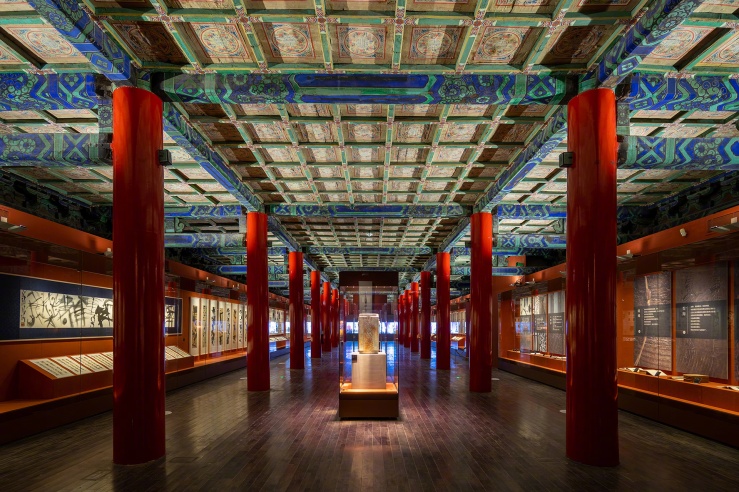
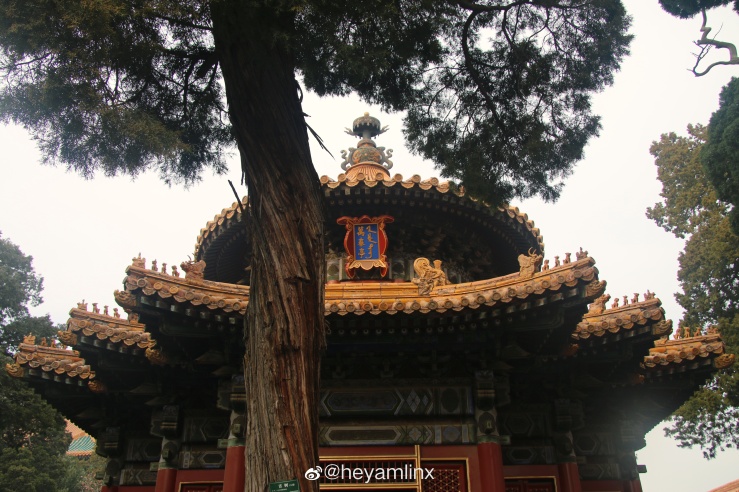
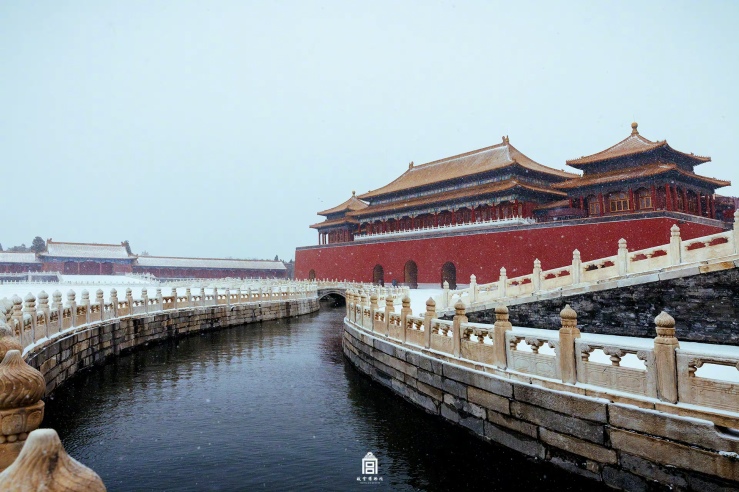
#北京。 #中國 #China #Beijing | #紫禁城 #ForbiddenCity #December2021 | #WinterSolstice marking the upgrading #VirtualReality #AugmentedReality the #DigitalForbiddenCity #MiniProgram #DigtalMuseum #App ….

On the 21st December 2021 it was the Winter Solstice 2021 in which during the Beijing – China – People’s Republic of China  it was the winter solstice in which during that day there was a special moment where it happens on during that day where the Every year around Winter Solstice, the 22nd solar term of the Chinese lunar year, meaning the “summit of the winter,” the Palace Museum welcomes an annual spectacle-the signboard inscription with “Upright and Pure in Mind” (“Zhengda guangming” in Chinese) and the five golden dragons below it in the Palace of Heavenly Purity (Qianqing Gong in Chinese) are illuminated from west to east…. Featuring on CGTN live streaming that day…

数码御宫小程序冬至暖心保护# It’s the winter solstice, and the sun will resume: The Digital Forbidden City Mini Program 2.0 is officially released! In addition to the overall visual renewal, the new version of the Mini Program also optimizes and adds practical functions such as online ticket purchase, exhibition reservation, and shopping in the courtyard to further improve the “one-stop” visit experience! Smarter, friendlier, simpler, and more open, just to serve you better….

Imagines credits are of the Forbidden City –Imperial Palace –Beijing – China- People’s Republic of China also from the Series Weibo北京卫视上新了故宫 Treasures in the Forbidden City…

#北京。 #中國 #China #Beijing | #紫禁城 #ForbiddenCity #October2020 |#南昌 #V古宫#Nanchang #Jiangxi #WorldVRIndustryConference 2020 – virtually reality exhibition the #ForbiddenCityMuseum….. The Road to the Museum of the Future- Digital Forbidden City #AGallery

During the International events Calendar Nanchang Month from October 18th to October 20th 2020, the 2020 World VR Industry Conference will be held in Nanchang, Jiangxi Province –China- People’s Republic of China. The Palace Museum will bring its digital exhibition items to “Wonderful Debut”. Come to the exhibition site to enjoy the magnificent Forbidden City palace architecture and the exquisite Jingdezhen porcelain from the Palace Museum! Visit reservation entrance link On October 19th, Vice President Wang Yuegong will tell you “The Road to the Museum of the Future-The Construction and Development of the “Digital Forbidden City”” at the Cloud Summit. Let us use the power of science and technology to inherit and carry forward. Forbidden City Culture!

In which marks In this year’s 2020, the second decade from the turn of the century in Beijing the Capital of China also the People’s Republic of China, in which is also the year of the rat, marking its six hundred years anniversary of the Forbidden city that marks the transitional point of in between the middle of the Ming Dynasty (1368- 1644) transitionally from Nanjing to Beijing towards the Qing Dynasty (1636-1644-1911) …. The Imperial Palace seen so many countless seasonally transitional equinoxes but further its six hundred years is iconic, but it’s five hundred ninety nine years it marks it Autumn Equinox…. In which it only took twelve years to build the same of the Daming Palace of The Tang Dynasty Xian Imperial Capital only it was least twenty times larger…

V故宫……..你好,南昌!10月18日至10月20日,2020世界VR产业大会将于江西南昌举办。故宫博物院携数字展项“精彩亮相”,一起来展会现场欣赏壮美的紫禁城宫殿建筑与精美的故宫院藏景德镇瓷器吧!参观预约入口10月19日,王跃工副院长将于云峰会上向大家讲述《迈向未来博物馆之路——“数字故宫”的建设与发展》,让我们一起用科技的力量,传承、弘扬好故宫文化!戳这里观看峰会直播……

Imagines credits are of the Forbidden city –Imperial Palace –Beijing – China- People’s Republic of China …..

#東京。 #中國 #China #Beijing | #紫禁城 #ForbiddenCity |#养心殿an immersive #VirtualTour exploration of the Palace Halls of the Forbidden City exploring #yangxindian #TheHallofMentalCultivation


During this year 2020   Beijing the Capital of China also the People’s Republic of China, in which next year 2020 the year of the rat …. Marking its six hundred years of the Forbidden city that marks the transitional point of in between the middle of the Ming Dynasty (1368- 1644) transitionally from Nanjing to Beijing  towards the Qing Dynasty (1636-1644-1911) …. The Imperial Palace seen so many countless seasonally transitional equinoxes but further its six hundred years is iconic, but it’s five hundred ninety nine years it marks it Autumn Equinox…. In which it only took twelve years to build the same of the Daming Palace of The Tang Dynasty Xian Imperial Capital only it was least twenty times larger..
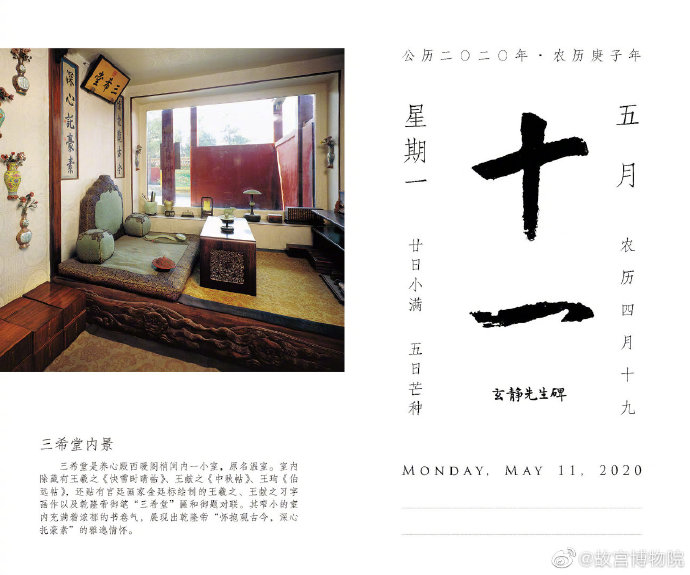
The former imperial office in the Forbidden City, the Hall of Mental Cultivation, will begin renovation in August 2018. The Hall of Mental Cultivation is located in Beijing, the capital city of China, and was built in 1537 during the Ming Dynasty, later serving as the office and residence of the last eight emperors of the Qing Dynasty. It contains many culturally significant items made during that time period.


Being built during the reign of Emperor Jiajing (1522 – 1566) of the Ming Dynasty (1368 – 1644), the Hall of Mental Cultivation is on the west side of the Palace of Heavenly Purity. It is particularly significant in the history of the Forbidden City. Actually the palace was not important until Emperor Yongzheng (the third emperor) in the Qing Dynasty (1644 – 1911) lived in it. From that time to the end of the Qing Dynasty, eight emperors lived there.

It was in the Palace of Heavenly Purity that the emperors lived. The Hall of Mental Cultivation was originally designed to be a temporary resting hall for emperors. However, from the time of Emperor Yongzheng, this palace became the emperors’ bedchamber. Why did this change happen? There exist two thoughts in Chinese history. As the Hall of Mental Cultivation is near the Palace of Heavenly Purity which was the resting place for emperors before Yongzheng, one interpretation is that Emperor Yongzheng lived in the Hall of Mental Cultivation in order to take care of his father who was seriously ill at the time and to show respect to him after his death. From then on, he never moved into the Palace of Heavenly Purity. The other interpretation is that as the Hall of Mental Cultivation was simply decorated, Yongzheng moved into it to set an example of how thrifty he was for the common people. Later the decoration style of the hall was changed from simplicity to luxury and it is reputed that about 780 pieces of precious artifacts were placed inside till the end of Qing Dynasty.
The front door of the hall, facing south, was named the Gate of Mental Cultivation. It was only opened to the emperor in the ancient time, but now tourists can enter through this gate. Outside the gate, there is a narrow yard with several rooms for the on duty eunuchs in the past. Now they are shops where you can buy souvenirs. Besides the rooms, there is a rare jade screen wall, with eight delicate dragons carved on it, facing the gate. It is the symbol of imperial power and high status of the emperor.

Entering the Gate of Mental Cultivation, the Hall of Mental Cultivation, including the main hall and the side halls, is located behind the wooden screen wall. The I-shape main hall is divided into front and rear parts, connected by a hallway. The front hall was the office for the emperor, while the rear one served as his bedroom. The side halls on east and west were decorated as Buddhist Prayer Rooms for the emperors.

In the central part of the front hall, there is the throne and emperors’ desk. Books containing instructions for a new emperor on how to rule over his empire would be placed in a bookcase behind the throne. On the bookcase, about 160 sets of handwritten copies of old books were kept. There are two doors hidden behind the throne which lead to the rear halls.

On the east side of the central hall is the East Warmth Chamber, in which the notorious Empress Dowager Cixi attended to state affairs sitting behind a curtain. It is in this hall she corruptly ruled China for forty-eight years from behind this yellow curtain. Now, this chamber is displayed as it was in her time. The West Warmth Chamber was separated into several rooms for the different usage for the emperor. Tourists can see the conference room for discussing secret issues or consulting with his ministers, a study room named Hall of Three Rare Treasures (San Xi Tang) and a small Buddhist prayer room exclusive to the emperor in the West Warmth Chamber. The Hall of Three Rare Treasures is famous for housing three precious calligraphy masterpieces by three outstanding masters Wang Xizhi, Wang Xianzhi and Wang Xun. A plaque with the three characters San Xi Tang written by Emperor Qianlong is still kept in the room.

Passing the hallway, one can see the rear hall. Five rooms in the middle are for the emperors. There are two rooms on each side of the rear hall, which served as the resting places for the empress and the high-ranking imperial concubines when they attended to the emperor. In the reign of Emperor Tongzhi of the Qing Dynasty, those rooms were for the two empress dowagers – Cixi and Ci’an. They lived close to the East Warmth Chamber, so that they can easily get there to handle state affairs. These two rooms are not open to the public. Off the courtyards to the east and west of the rear hall, are temporary lodgings which were provided for other concubines when they were summoned to attend the emperor.

Imagines credit are from the Forbidden city –Imperial Palace –Beijing – China- People’s Republic of China..

#東京。 #中國 #China #Beijing | #紫禁城 #ForbiddenCity |#StreetviewTour #ForbiddenCityPano.. Celebrating the six hundred years of the #MingDynasty #QingDynasty Forbidden City #Introductory ….

In this year’s 2020, the second decade from the turn of the century in Beijing the Capital of China also the People’s Republic of China, in which is also the year of the rat, marking its six hundred years anniversary of the Forbidden city that marks the transitional point of in between the middle of the Ming Dynasty (1368- 1644) transitionally from Nanjing to Beijing towards the Qing Dynasty (1636-1644-1911) …. The Imperial Palace seen so many countless seasonally transitional equinoxes but further its six hundred years is iconic, but it’s five hundred ninety nine years it marks it Autumn Equinox…. In which it only took twelve years to build the same of the Daming Palace of The Tang Dynasty Xian Imperial Capital only it was least twenty times larger..


During this month May 2020 the Forbidden City, has been slowly allowing a small modest size social distancing crowds of least five thousand per day into the palace city after it was closed for least two months more straight due to the Covid -19 Paramedic … in which you have to purchase the tickets online from the Forbidden city online ticketing store. In once arrival you be presented on a either a QR code ticketing, also a thermal body scan of your temperature with sanitizers..

During the time the Forbidden City staff among its partners has been previously Street Tour virtually digitally – photographically, geographically  image scanning of the Palace City in complying it into a street tour over the last few months before the year of the Rat in preparations for the Six hundred years anniversary of the Ming-Qing Dynasty Forbidden city celebrations that was to be veiled during this early year, but that did not due to the China- People’s Republic of China Central Government ordinance of shutting down public places to cull the Covid-19 from spreading.. In which the Forbidden City Street view interactive was put online operationally in which people from all over the globe-planet could view the Forbidden city online.. Among with online it provides with intense rich interactive information of the location, its history … orthough the map UI- User interface is very easily to navigate full with high resolution photographic resolution… In which it’s best view on a more than 40 inch flat panel LCD screen to digestive the immersion … The User Interface orthough in Chinese, but Somehow it makes it very authentic….

Among with the User Interface it has a section of photographic locations of halls or gardens nearby, in your location in which you select …. Among with the UI is the full Forbidden City Map in which palace halls to visit.. But nothing compares to the real thing of being there reliving history…..


Imagines credit are from the Forbidden city –Imperial Palace –Beijing – China- People’s Republic of China..