During this year 2020 Beijing the Capital of China also the People’s Republic of China, in which next year 2020 the year of the rat …. Marking its six hundred years of the Forbidden city that marks the transitional point of in between the middle of the Ming Dynasty (1368- 1644) transitionally from Nanjing to Beijing towards the Qing Dynasty (1636-1644-1911) …. The Imperial Palace seen so many countless seasonally transitional equinoxes but further its six hundred years is iconic, but it’s five hundred ninety nine years it marks it Autumn Equinox…. In which it only took twelve years to build the same of the Daming Palace of The Tang Dynasty Xian Imperial Capital only it was least twenty times larger..
The former imperial office in the Forbidden City, the Hall of Mental Cultivation, will begin renovation in August 2018. The Hall of Mental Cultivation is located in Beijing, the capital city of China, and was built in 1537 during the Ming Dynasty, later serving as the office and residence of the last eight emperors of the Qing Dynasty. It contains many culturally significant items made during that time period.
Being built during the reign of Emperor Jiajing (1522 – 1566) of the Ming Dynasty (1368 – 1644), the Hall of Mental Cultivation is on the west side of the Palace of Heavenly Purity. It is particularly significant in the history of the Forbidden City. Actually the palace was not important until Emperor Yongzheng (the third emperor) in the Qing Dynasty (1644 – 1911) lived in it. From that time to the end of the Qing Dynasty, eight emperors lived there.
It was in the Palace of Heavenly Purity that the emperors lived. The Hall of Mental Cultivation was originally designed to be a temporary resting hall for emperors. However, from the time of Emperor Yongzheng, this palace became the emperors’ bedchamber. Why did this change happen? There exist two thoughts in Chinese history. As the Hall of Mental Cultivation is near the Palace of Heavenly Purity which was the resting place for emperors before Yongzheng, one interpretation is that Emperor Yongzheng lived in the Hall of Mental Cultivation in order to take care of his father who was seriously ill at the time and to show respect to him after his death. From then on, he never moved into the Palace of Heavenly Purity. The other interpretation is that as the Hall of Mental Cultivation was simply decorated, Yongzheng moved into it to set an example of how thrifty he was for the common people. Later the decoration style of the hall was changed from simplicity to luxury and it is reputed that about 780 pieces of precious artifacts were placed inside till the end of Qing Dynasty.
The front door of the hall, facing south, was named the Gate of Mental Cultivation. It was only opened to the emperor in the ancient time, but now tourists can enter through this gate. Outside the gate, there is a narrow yard with several rooms for the on duty eunuchs in the past. Now they are shops where you can buy souvenirs. Besides the rooms, there is a rare jade screen wall, with eight delicate dragons carved on it, facing the gate. It is the symbol of imperial power and high status of the emperor.
Entering the Gate of Mental Cultivation, the Hall of Mental Cultivation, including the main hall and the side halls, is located behind the wooden screen wall. The I-shape main hall is divided into front and rear parts, connected by a hallway. The front hall was the office for the emperor, while the rear one served as his bedroom. The side halls on east and west were decorated as Buddhist Prayer Rooms for the emperors.
In the central part of the front hall, there is the throne and emperors’ desk. Books containing instructions for a new emperor on how to rule over his empire would be placed in a bookcase behind the throne. On the bookcase, about 160 sets of handwritten copies of old books were kept. There are two doors hidden behind the throne which lead to the rear halls.

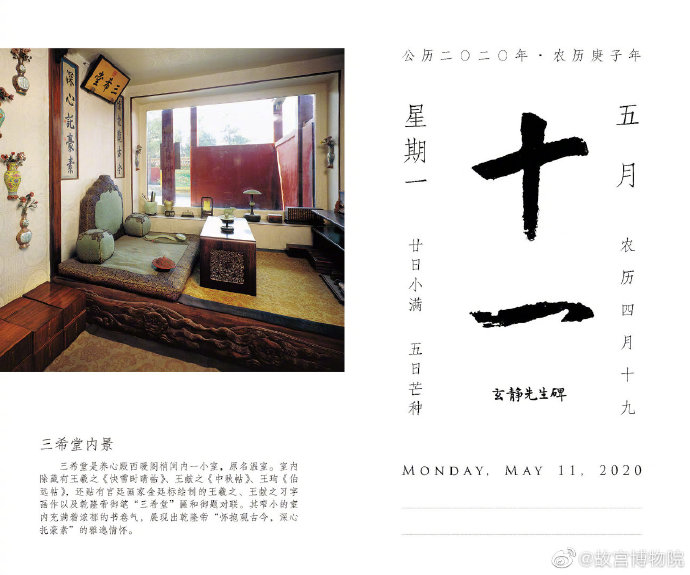
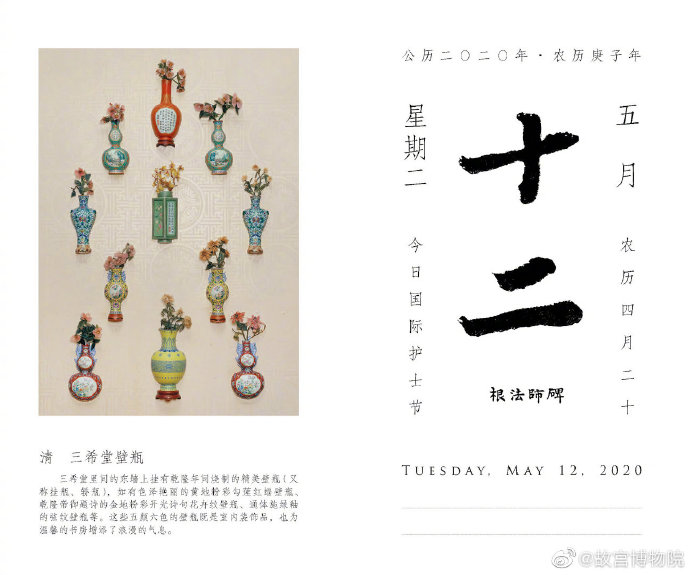
On the east side of the central hall is the East Warmth Chamber, in which the notorious Empress Dowager Cixi attended to state affairs sitting behind a curtain. It is in this hall she corruptly ruled China for forty-eight years from behind this yellow curtain. Now, this chamber is displayed as it was in her time. The West Warmth Chamber was separated into several rooms for the different usage for the emperor. Tourists can see the conference room for discussing secret issues or consulting with his ministers, a study room named Hall of Three Rare Treasures (San Xi Tang) and a small Buddhist prayer room exclusive to the emperor in the West Warmth Chamber. The Hall of Three Rare Treasures is famous for housing three precious calligraphy masterpieces by three outstanding masters Wang Xizhi, Wang Xianzhi and Wang Xun. A plaque with the three characters San Xi Tang written by Emperor Qianlong is still kept in the room.

Passing the hallway, one can see the rear hall. Five rooms in the middle are for the emperors. There are two rooms on each side of the rear hall, which served as the resting places for the empress and the high-ranking imperial concubines when they attended to the emperor. In the reign of Emperor Tongzhi of the Qing Dynasty, those rooms were for the two empress dowagers – Cixi and Ci’an. They lived close to the East Warmth Chamber, so that they can easily get there to handle state affairs. These two rooms are not open to the public. Off the courtyards to the east and west of the rear hall, are temporary lodgings which were provided for other concubines when they were summoned to attend the emperor.
Imagines credit are from the Forbidden city –Imperial Palace –Beijing – China- People’s Republic of China..