
#中國 #中華人民共和國 #China #PeoplesRepublicOfChina #4KHDR #CitywalkingTour | #RecShanghai #August2022 #September 2022 |上海 [4K HDR] Walking in the heart of Shanghai Beautiful historic streets 漫步在上海的心脏地带 #AnfuRoad x #WukangRoad # 安福路 x #武康路#Jing’anTempleStation #静安寺站周边地区

It’s late August 2022 at 1645 in the Afternoon Beijing time during this month week of the Shanghai Walking through Shanghai in during the…. Walk through three main areas of central Shanghai…. From the shopping area of Anfu Road, popular among young tourists, to the area around South Shaanxi Road Station, and finally to the area around Jing’an Temple Station…. Anfu Road x Wukang Road 安福路 x 武康路, Wuyuan Road 五原路, Middle Huaihai Road 淮海中路, IAPM Mall 上海环贸iapm商场, South Shaanxi Road 陕西南路, Nanyang Road 南阳路, Area around Jing’an Temple Station 静安寺站周边地区……
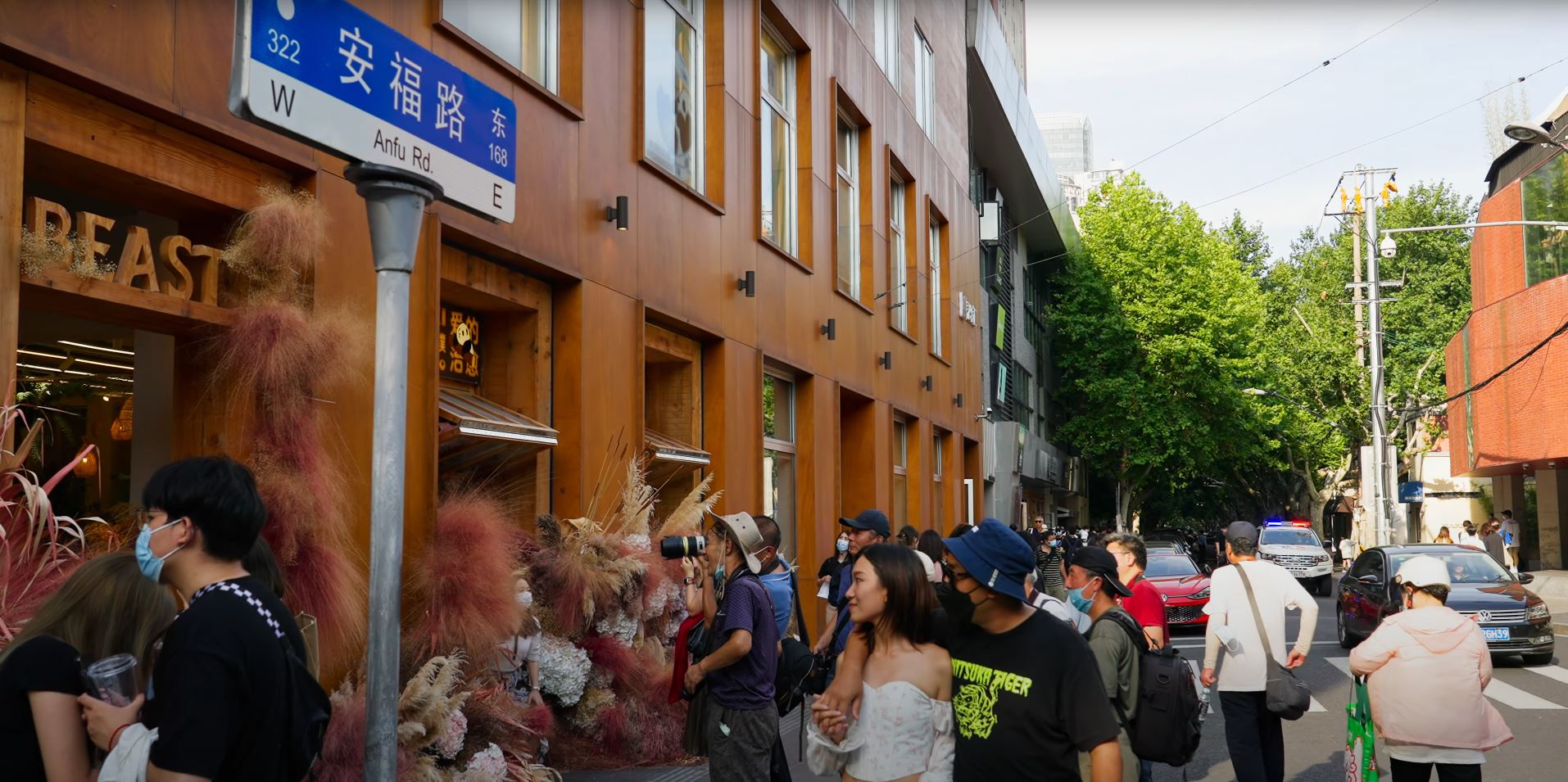
Anfu Road安福路Anfu Lu is located in the northeast of Xuhui District, Shanghai. It starts from Changshu Road in the east and ends at Wukang Road in the west. It was built in 4-5 years of the Republic of China (1915-1916) and named Route Dupleix after the French admiral. In the 32nd year of the Republic of China, it changed its name to Jiangxi Anfu. Anfu Lu is located in the northeast of Xuhui District, Shanghai. It starts from Changshu Road in the east and ends at Wukang Road in the west. It is 862 meters long, 12.0 to 13.0 meters wide, and the roadway is 7.0 to 8.0 meters wide. Along the road are residences, art theatres and schools. On  January 10, 2022, the Wukang Road-Anfu Road block in Xuhui District, Shanghai was selected as the first batch of national-level tourist resort……..
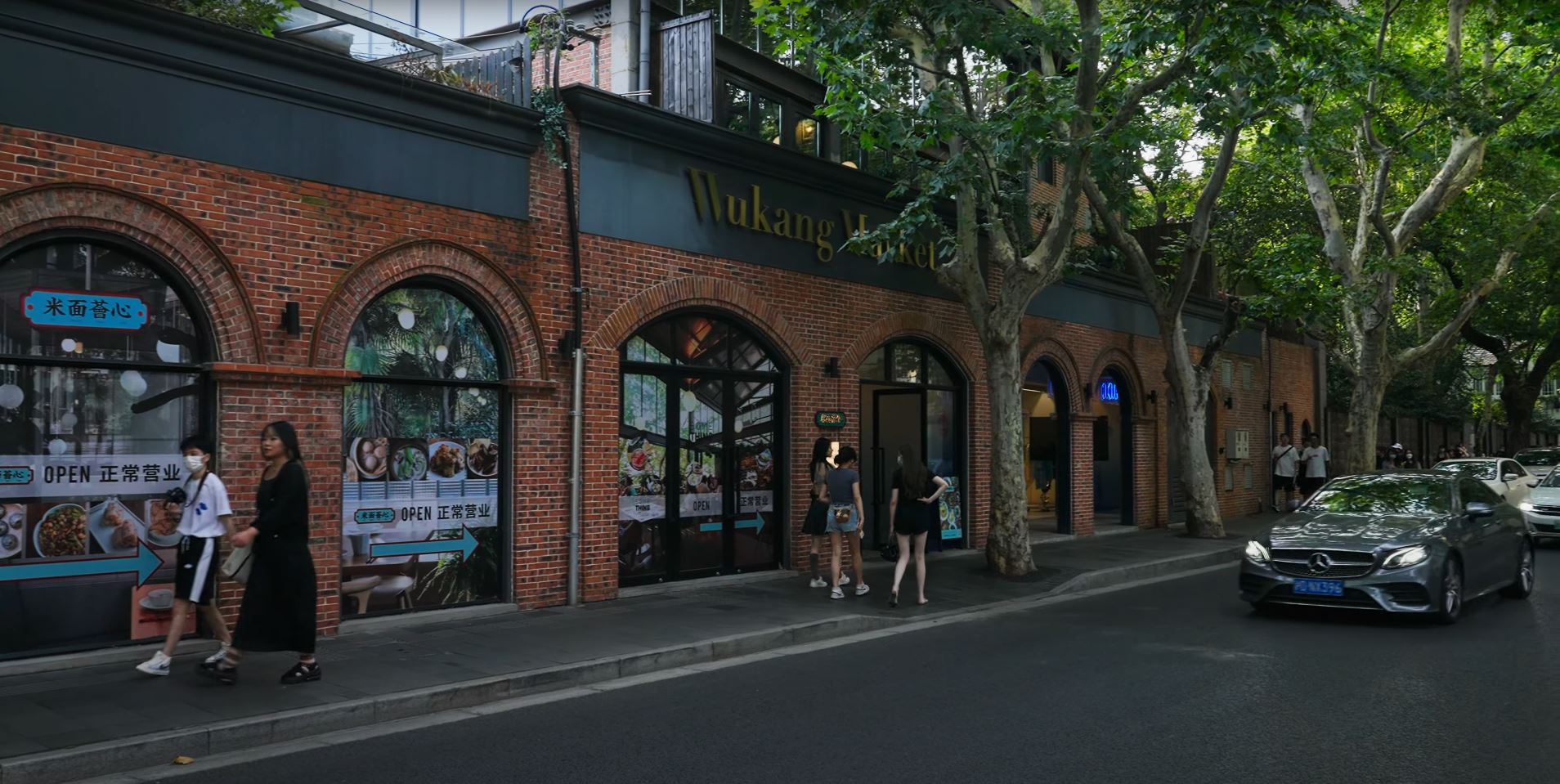
Wukang Road武康路Wukang Road is a road in Xuhui District , Shanghai . It is known as the “Celebrity Road” that “condenses Shanghai’s modern century history”. There are 14 outstanding historical buildings along the route, and 37 historical buildings are preserved. On June 11, 2011, Wukang Road, Xuhui District, Shanghai was selected as the third ” Famous Street of Chinese History and Culture ” approved by the Ministry of Culture and the State Administration of Cultural Heritage

Wukang Road was built in 1907. According to the Records of Geographical Names in Xuhui District , Shanghai : “The road was originally named Fu Kaisen Road, named after the American Fu Kaisen surname. In 1943, it was renamed Wukang Road and was named after the old county in Zhejiang Province.” [1-2]  

In the late Qing Dynasty, Sheng Xuanhuai , a minister of the Westernization faction , was entrusted by Li Hongzhang to supervise the operation of Nanyang Public School (the predecessor of today’s Shanghai Jiaotong University). Equivalent to a 21st-century provost). After Fu Kaisen took office, in order to facilitate the travel of teachers and students, he built the road with his own salary. At first, there was no exact name. Later, because the French Concession was expanding its territory, it conflicted with the “Siming Office” of the Shanghai Ningbo Association. There were also conflicts with the United Kingdom, the United States, Russia and other countries. Fukaisen adjusted from it, and finally resolved to the satisfaction of all parties. In order to thank Fukaisen, the local people named the road Fukaisen Road. Since the professors hired by Fukaisen live in the urban area, it is much more convenient for teachers to go to work and school since the construction of this road. Therefore, it is highly praised by teachers and students. Wukang Road was originally a dirt road, with rice and vegetable gardens and farmhouses on sides, dense rivers and ponds, scattered with many graves. In 1914, Fukaisen Road was officially included in the French Concession, and Mintini, the first French consul in Shanghai, implemented the overall planning along Wukang Road in accordance with the most modern urban construction concept in the West at that time. This plan is gradually advancing to the surrounding area.

Wukang Road is 1,183 meters long and 12 to 16 meters wide. The whole road is curved and roughly runs north-south. From Huashan Road in the north, you can see Li Hongzhang ’s Lilac Garden, an important official in the late Qing Dynasty , and in the south, Huaihai Middle Road connects Tianping Road, Yuqing Road, and Soong Ching Ling’s former residence faces each other. On Wukang Road, where the phoenix trees are swirling, there are about 30 former residences of famous celebrities with a high “density”. The Spanish-style and French-Renaissance-style buildings along the route are very distinctive, making it one of the most European-style neighbourhoods in the central city of Shanghai.
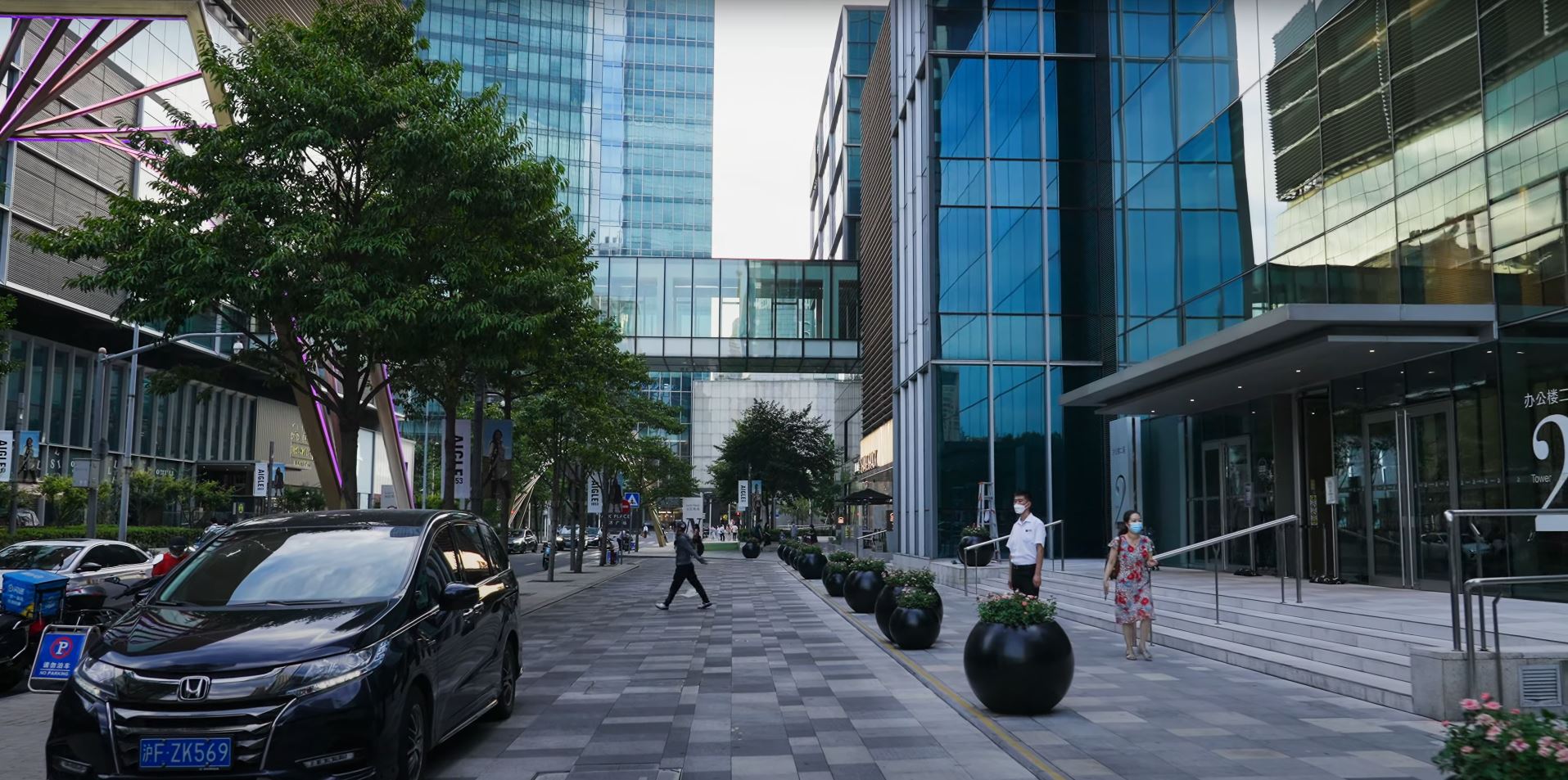
Jing’an Temple Station 静安寺站周边地区…… Jing’an Temple, also known as Jing’an Ancient Temple, is located in Jing’an District , Shanghai. According to legend, its history can be traced back to the 10th year (247) of Sun Wu Chiwu of the Three Kingdoms. It was originally named Hudu Chongxuan Temple. In the first year of Xiangfu in the Song Dynasty (1008), it was renamed Jing’an Temple. In the ninth year of Jiading in the Southern Song Dynasty (1216), the temple moved from the Wusong River to the side of Lupu Feijingbang (now Nanjing West Road ), which was earlier than Shanghai. Jing’an Temple has a total construction area of ​​22,000 square meters. The entire temple forms a pattern of front temple and rear tower. It consists of three main buildings: Daxiong Hall , Tianwang Hall and Sansheng Hall . It is the oldest Buddhist temple in Shanghai. The temple houses the famous paintings of Bada Shanren and the cursive scroll of Wen Zhengming’s original work “Pipa Xing” . Jing’an District is also famous for its Jing’an Temple. The architectural style of Jing’an Temple is imitating the architectural style before the Ming Dynasty, and the typical representative is the shape of the bucket arch.

Jing’an Temple is the name of an interchange station between Lines 2, 7 and 14 of the Shanghai Metro. This station is located in Jing’an District, below the historic Jing’an Temple and the Jiu Guang shopping mall. It is part of the initial section of Line 2 that opened from Zhongshan Park to Longyang Road that opened on 20 September 1999; the interchange with line 7 opened on 5 December 2009 as part of that line’s initial section between Shanghai University and Huamu Road and the interchange with line 14 opened on 30 December 2021.

There are shuttle buses between Jing’an Temple and Hongqiao or Pudong airports. The shuttle bus from Pudong leaves the airport as ‘Airport Bus Line 2’ towards the ‘Airport City Terminal’ which is the official name of the Jingan Temple shuttle bus station and costs 22 ¥ as of January 2015. The ride takes about half an hour from Hongqiao Airport and 45–60 minutes depending on traffic from Pudong Airport. From Pudong the bus is usually faster and more convenient than the subway connection.

Rec Shanghai is about his walking, driving, riding running around views of China – People’s Republic of China sharing his immersive experiences in his video hope you could have a pure view about China today, sharing some 4K UHD videos to show pure China daily scenes for you I shoot in Shanghai and other locations in China. Let’s walk around China together… BEST VIEWED ON 2160px60 with the Volume turned on way up for immersiveness immersion…

#北京。 #中國 #China #Beijing | #紫禁城 #ForbiddenCity #August2022 | #ForbiddenCityDairies The first episode of our Qingming Riverside Scene is ingenious to “painting”…..

The first episode of our Qingming Riverside Scene is ingenious to “painting”

National Treasure Detective is the Premise theme of the all new restoration process techniques of the wonderful team of Forbidden City Restorers of  Copy, restore, record, and research, in the courtyard of the Forbidden City with red walls, yellow tiles, and blue bricks flying eaves, time suddenly stands still in the hands of generations of cultural relic restorers, cultural relic photographers, and cultural relic researchers, who are touching the millennium Every corner of the former Northern Song Dynasty faces history affectionately. They bury themselves deep in each work, just to keep the limited life of the cultural relics going. The documentary Our Qingming Shanghe Tu tells the legendary story of people and ancient paintings in the Forbidden City..

Paper has a thousand-year lifespan, and silk is preserved for 800 years. The limitation of material is the problem of the preservation of calligraphy and painting from ancient times to the present. As a silk version of “Along the River during the Qingming Festival”, it has been around for nearly a thousand years. How do people in the Forbidden City protect the ancient paintings and cultural relics from generation to generation and leave a precious legacy for future generations? Documentary Our Qingming Shanghe Tu The first episode “Ingenuity to “Painting”, tells about “copying”, this ancient but handed down ancient painting protection method, tomorrow morning at 11:30, so stay tuned!

In this year’s 2022, the second decade from the turn of the century in Beijing the Capital of China also the People’s Republic of China, marking its six hundred and Two years anniversary of the Forbidden city that marks the transitional point of in between the middle of the Ming Dynasty (1368- 1644) transitionally from Nanjing to Beijing towards the Qing Dynasty (1636-1644-1911) …. The Imperial Palace seen so many countless seasonally transitional equinoxes but further its six hundred years is iconic, but it’s five hundred ninety nine years it marks it Autumn Equinox…. In which it only took twelve years to build the same of the Daming Palace of The Tang Dynasty Xian Imperial Capital only it was least twenty times larger..

Images and visuals are from – Forbidden City –Palace Museum Beijing- China –People’s Republic of China…..

#中國 #中華人民共和國 #China #PeoplesRepublicOfChina #4KHDR #CitywalkingTour | #RecShanghai #August2022 |上海 [4K HDR] Walking around Shanghai’s residential area Gubei New Area and Shuicheng Road 漫步在上海的住宅区…. Residential Area on a Summer Evening #2022August8th #Monday

Its Monday 8th August 2022 its 1740 late afternoon- evening Beijing time during the Walking in a residential area of Shanghai. Start walking from Gubei New Area and head north on Shuicheng Rd. Head towards the Suzhou River. Gubei New Area 古北新区, Golden Street 黄金城道步行街, Shuicheng Road 水城路, Along the Suzhou River 沿着苏州河, GuBei Road Bridge 古北路桥….

GuBei Road Bridge 古北路桥Residential district in Shanghai, China, People’s Republic of China Dominated by apartment skyscrapers, villa complexes and business towers, upscale Gubei is a densely populated neighbourhood favoured by Japanese, Taiwanese and Korean expats. Pedestrian Laowai Street, otherwise known as Foreigner Street, is lined with restaurants and bars, while Shucheng Road is the main shopping hub. The area is also home to several foreign embassies and international schools

Gubei New District 古北路桥 , the Ronghua Residential Area of ​​Hongqiao Street , is located near Gubei Road , Changning District , Puxi , Shanghai. It is the first large- scale international residential new district in Shanghai. It is also one of the settlements of Taiwanese businessmen , both domestic and foreign investors and business representatives in Shanghai . It is dubbed the “Little United Nations” of Shanghai . The scope of Gubei New Area starts from Hongqiao Road and Yan’an Road Elevated Road in the north, Guyang Road in the south , Hongxu Road in the west and Songyuan Road in the east , covering an area of ​​1.366 square kilometers . The Gubei area in a broad sense is defined as the three areas of Gubei New Area, Hongqiao Area and Xianxia Area.. 

GuBei Road Bridge 古北路桥– Shanghai, China- People’s Republic of China, Gubei Road Bridge is located at the junction of Changning District and Putuo District , Shanghai’s Wusong River (Suzhou River). The Gubei Road Bridge spans Changning Road in Changning District in the south and leads directly to the Tianshan Branch of Gubei Road in the north, and passes through Changfeng Ecological Park in Putuo District in the north. Between Block 2 and Guangfu West Road Yitong Daduhe Road Mianning intersection. It is the bridge with the largest span over the Suzhou River.

0:00 Intro 简介 2:38 Gubei New Area 古北新区 7:26 Golden Street 黄金城道步行街 19:15 Shuicheng Road 水城路 49:28 Along the Suzhou River 沿着苏州河 56:10 GuBei Road Bridge 古北路桥

Rec Shanghai is about his walking, driving, riding running around views of China – People’s Republic of China sharing his immersive experiences in his video hope you could have a pure view about China today, sharing some 4K UHD videos to show pure China daily scenes for you I shoot in Shanghai and other locations in China. Let’s walk around China together… BEST VIEWED ON 2160px60 with the Volume turned on way up for immersiveness immersion…

#中國 #中華人民共和國 #China #PeoplesRepublicOfChina #4KHDR #CitywalkingTour | #RecShanghai #July2022 #August2022 |上海 [4K HDR] Shanghai’s Best Walking Course on a Summer Evening Shanghai Walk from #今潮8弄 The Inlet towards the Lujiazui Center Area #陆家嘴中心区- 夏日傍晚的上海最佳步行路线 #2022July28th

It’s Thursday28th July 2022 its 1800 evening Beijing time during the evening rush hour Shanghai in summer. Walking along my favorite walking route, Walking from The INLET 今潮8弄, North Sichuan Road 四川北路, Kunshan Huayuan Road 昆山花园路, North Sichuan Road 四川北路, Yuyuan Garden Area 豫园地区, Old residential area 居民区, Business Area 商业区, West bank of the Huangpu River 黄浦江西岸, Shanghai Ferry 上海轮渡, East bank of the Huangpu River 黄浦江东岸, Lujiazui Center Area 陆家嘴中心区 . Shanghai – China – People’s Republic of China.

The INLET 今潮8弄Jinchao Lane 8 is a commercial center near the intersection of Wujin Road, Sichuan North Road and Sichuan North Road Station, Hongkou District, Shanghai , People’s Republic of China . The commercial center is located in the 18th neighbourhood of Hongkou District. There are 60 Shikumen houses and 8 independent buildings in the 8 alleys, including the private residence Yingchuan Jilu , which used to be the developer of the public welfare square , the public welfare square of the Shikumen alley where Cantonese people once gathered , and the Honghong Garden . Architecture. In addition, there are the 1925 Bookstore, the former site of Shanghai Academy of Fine Arts (the site of the start-up school before 1916) and the former site of Hongkou Activity Movie Park in the vicinity of Jinchao Lane …..

Lujiazui Center Area 陆家嘴中心区Lujiazui Financial and Trade Zone, also known as Lujiazui Financial City and China (Shanghai) Pilot Free Trade Zone Lujiazui Financial Area, is one of the main financial centers in Shanghai, China. , known as “China’s version of Wall Street”. It is bounded by Luoshan Road in the east, Longyang Road in the south, and the Huangpu River in the west and north. The total area of ​​the entire financial and trade zone is 31.78 square kilometers, of which the central area of ​​Lujiazui (to Pudong South Road in the east, Dongchang Road in the south, and the Huangpu River in the west and north), also known as Little Lujiazui , covers an area of ​​1.7 square kilometers It is the only state-level development zone in the country with finance, insurance, securities and commerce as its main industries

▶Timestamps 0:00 Intro 简介 2:10 The INLET 今潮8弄 6:41 North Sichuan Road 四川北路 12:55 Kunshan Huayuan Road 昆山花园路 15:15 North Sichuan Road 四川北路 32:56 Yuyuan Garden Area 豫园地区 37:33 Old residential area 居民区 39:41 Business Area 商业区 45:01 West bank of the Huangpu River 黄浦江西岸 51:04 Shanghai Ferry 上海轮渡 1:01:00 East bank of the Huangpu River 黄浦江东岸 1:21:47 Lujiazui Center Area 陆家嘴中心区

Rec Shanghai is about his walking, driving, riding running around views of China – People’s Republic of China sharing his immersive experiences in his video hope you could have a pure view about China today, sharing some 4K UHD videos to show pure China daily scenes for you I shoot in Shanghai and other locations in China. Let’s walk around China together!…. BEST VIEWED ON 2160px60 with the volume up..

#北京。 #中國 #China #Beijing | #紫禁城 #ForbiddenCity #August2020 | #故宫书店 #ForbiddenCityBookStore #CITICPressGroup #中信出版集团The first historical Chinese #Comic, Echo of the Forbidden City: The Legend of National Treasures Moving South towards #重慶 #Chongqing…

The night of February 6, 1933, Beiping- Peking- Beijing, the Forbidden City Gate of Supreme Harmony in the Place Museum, 13,427 boxes of cultural relics were in full order, ready for the southward salvage campaign. In 2017, a secret stop on the southbound migration of cultural relics of the Forbidden City — Chongqing Andersen Firm, was found by a man who decided to preserve it. Designer Zhang Yonghe and his team took on the job of the restoration and renovation of the buildings, which finally opened to the public in June 2021. YIT came to the mountain city of Chongqing on the opening day of the Memorial Museum, to listen to Zhang Yonghe’s story about the transformation of the buildings, and to explore the secret “national treasures long march”

During the War of Resistance, there were 3,694 boxes of cultural relics from the Forbidden City stored by the former site of Anderson Firm, which made important contributions to the protection of national treasures and the inheritance of Chinese culture. Under the joint promotion of the Palace Museum, Chongqing Municipal Commission of Culture and Tourism Development, and the Nan’an District Government, Chongqing has renovated the cultural relics, created the surrounding environment, and presented a variety of business formats there. Eight buildings in the former site of Anderson Firm were constructed as cultural relics of the Memorial Hall for the Cultural Relics from the Forbidden City in Nanbin Road. The entire hall covers an area of about 2,500 square meters, including cultural venues such as Memorial Exhibition Halls, Cultural Lecture Halls, Education Classrooms, Forbidden Academy, bookstores, and more.

[Adapted from real history, the Forbidden City’s first new book of historical Chinese comics is on the market! ] More than 13,000 boxes of precious cultural relics, which lasted 25 years, spanned more than half of China in the midst of war, creating the longest and largest history of cultural relics in modern history. The new Forbidden City comic book “Echo of the Forbidden City: The Legend of National Treasures Moving South” artistically reproduces the story of the people of the Forbidden City guarding the antiquities in the prosperous years. The book also includes a large number of precious historical photos and archives, which is like a documentary on paper; there is also a “picture-in-picture” format, which interestingly explains 11 precious cultural relics from the south, including stone drums and Yonggu cups in Jin Mau.

Forbidden City The first historical Chinese comic, adapted from a true story, was reviewed by experts from the Palace Museum, and recommended by Tencent Animation App with a high score of 9.8. Comic art reappears the prodigious years. 13,491 boxes of precious cultural relics, which lasted 25 years, spanned more than half of China in the midst of war, creating the longest and largest history of cultural relics in modern history. It’s not just a comic book, it’s also filled with precious historical photos and archives, like a documentary on paper. Supplement the knowledge of national treasures and present precious cultural relics in the upper courtyard on paper. ….Follow the comic “Echo of the Forbidden City: The Legend of National Treasures Moving South” to look back on those turbulent years. Not forgetting history is the best tribute to our ancestors…..

In this year’s 2022, the second decade from the turn of the century in Beijing the Capital of China also the People’s Republic of China, marking its six hundred and two years anniversary of the Forbidden city that marks the transitional point of in between the middle of the Ming Dynasty (1368- 1644) transitionally from Nanjing to Beijing towards the Qing Dynasty (1636-1644-1911) …. The Imperial Palace seen so many countless seasonally transitional equinoxes but further its six hundred years is iconic, but it’s five hundred ninety nine years it marks it Autumn Equinox…. In which it only took twelve years to build the same of the Daming Palace of The Tang Dynasty Xian Imperial Capital only it was least twenty times larger..

CITIC Press Group 中信出版集团, formerly CITIC Publishing Group, is a publishing company founded in 1988 based in Beijing, China People’s Republic of China. The publisher is a subsidiary of CITIC Group. They engage in digital and physical book retail and provide professional education.

Images and visuals are from – Forbidden City –Palace Museum Beijing- China –People’s Republic of China…..