#北京。 #中國 #China #Beijing | #紫禁城 #ForbiddenCity #July2023 | #ForbiddenCityDairies -The Palace Museum #ForbiddenCity Collections of Chinese intangible cultural heritage.  Collection 20th   to 20th July 2023…

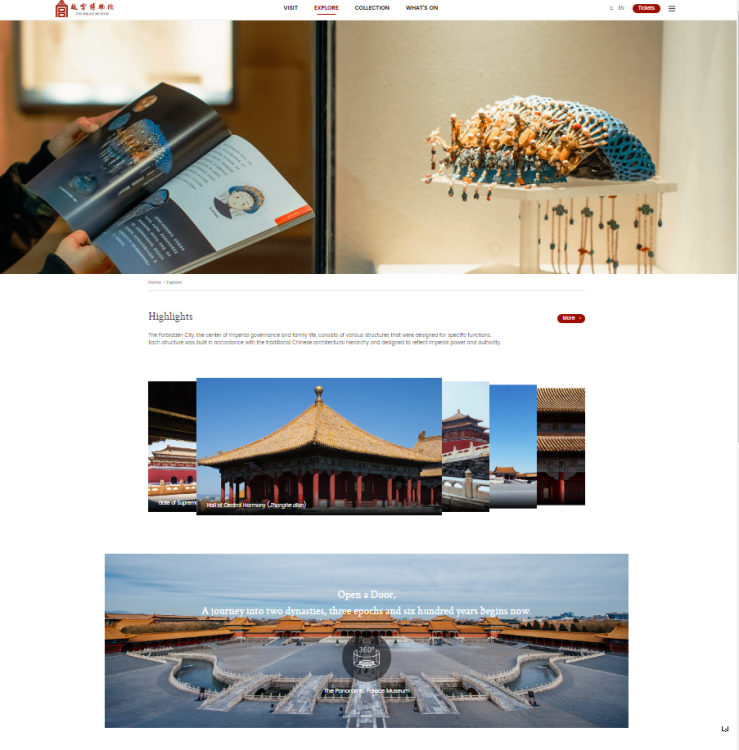
On July 19th 2023 , the multilingual website of the Forbidden City Palace Museum- Beijing, China, People’s Republic of Chinawas officially released at the Digital Cultural Tourism Development Forum of the 2023 China Internet Civilization Conference! The website covers five languages: English, French, Russian, Japanese, and Spanish, and will meet the needs of audiences with different languages.

 The multilingual website of the Palace Museum is committed to establishing an international website that is concise, clear, easy to use for overseas audiences, and fits the construction of the modern civilization of the Chinese nation, including tour guides, information, panoramic tours, online exhibitions, collection appreciation, cultural topics, etc. Rich immersive content describing of the most detail collection that housed within the Forbidden city collection… . 
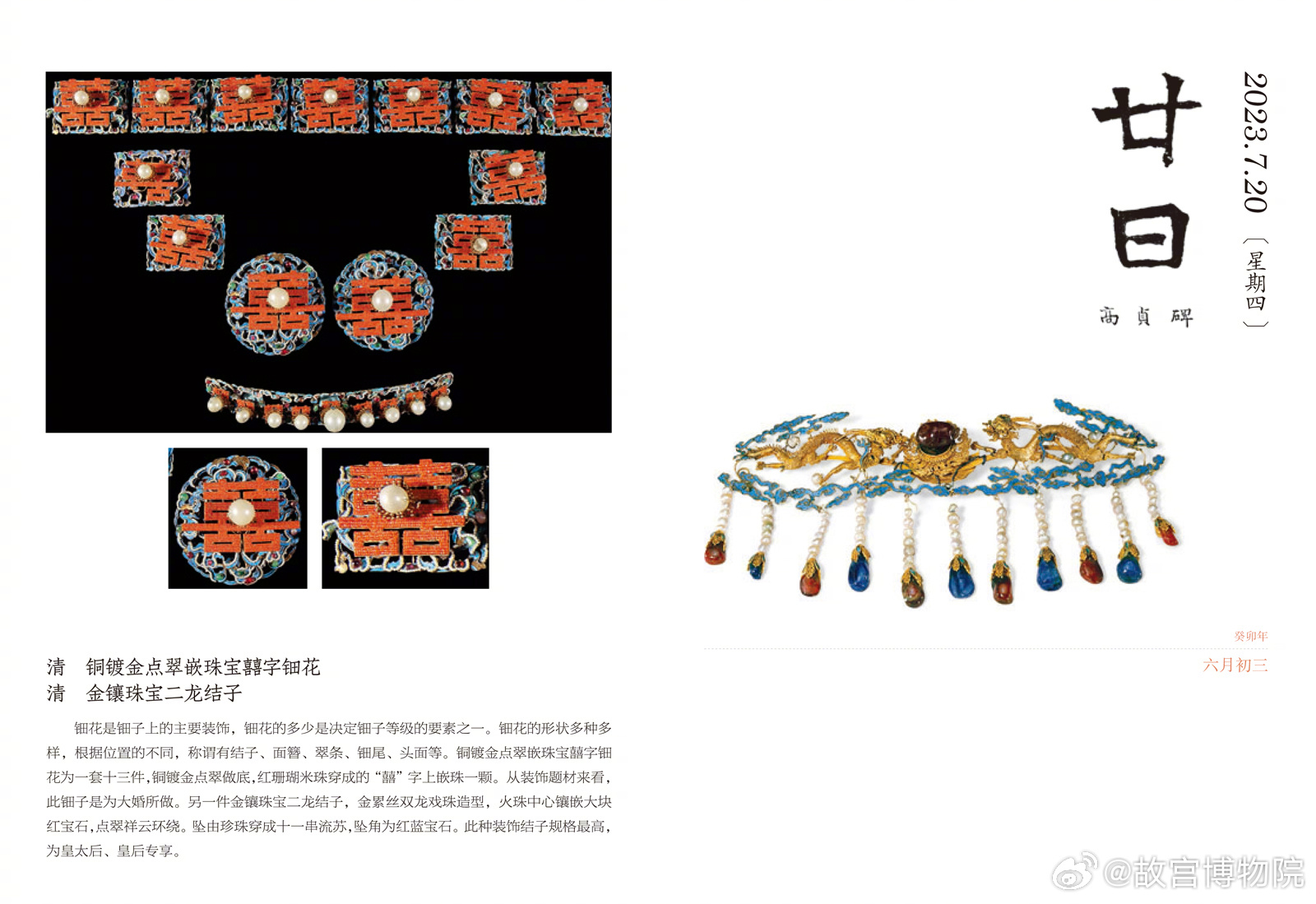
In the Qing Dynasty, gold-plated copper dots emerald inlaid with jewelry and the word Tianhua; in Qing Dynasty, gold-plated jewelry with two dragon knots. Tin flowers are the main decoration on the tin, and the number of tin flowers is one of the factors that determine the grade of the tin. Tin flowers come in a variety of shapes, and depending on their location, they are called knots, face hairpins, green strips, tin tails, head faces, etc. Gold-plated copper dot emerald jewels inlaid with the word “囍” is a set of thirteen pieces, with gold-plated copper dot emerald as the base, and a bead embedded in the character “囍” made of red coral rice beads. Judging from the decorative theme, this tin is made for a big wedding. Another piece of gold inlaid jewelry is a two-dragon knot, in the shape of two dragons playing with gold silk. The center of the fire bead is inlaid with a large ruby, surrounded by green and auspicious clouds. The pendant is made of pearls threaded into eleven strings of tassels, and the corners of the pendant are red sapphires. This kind of decorative knot has the highest standard and is exclusively used by empress dowagers and empresses.

Qing Daoguang, silver-plated hairpin with gold-plated emerald dots inlaid with gemstones, and Tongzhi in Qing Dynasty, silver-plated hairpin with gold-plated gemstones and fake beads and phoenix pattern. In the jewelry of concubines, there are a large number of hairpins of various types, and although they have different themes, they all have auspicious meanings. The number of pearls and the types of gemstones on these jewelry reflect the rank and status of the jewelry owner. Three pieces of silver – plated emerald “囍” character hairpins, with pearls inlaid on the center “囍” character, “囍” character above and below…

In the Qing Dynasty, the golden chiseled word butterfly pattern is flat and square. Bianfang is a unique headdress for Manchu noblewomen in the Qing Dynasty, and it is also a bracket used for dressing up the “two heads”. It has a similar function to the long hairpin used by Han women. This flat square is made of gold, chiseled with sesame seeds as the ground, with a circle of flowers and grass patterns chiseled on the frame, six dancing butterflies and five “囍” characters chiseled inside the frame, and a bat chiseled on the head, implying the double arrival of happiness and happiness. It is a special decoration for the queen’s wedding…
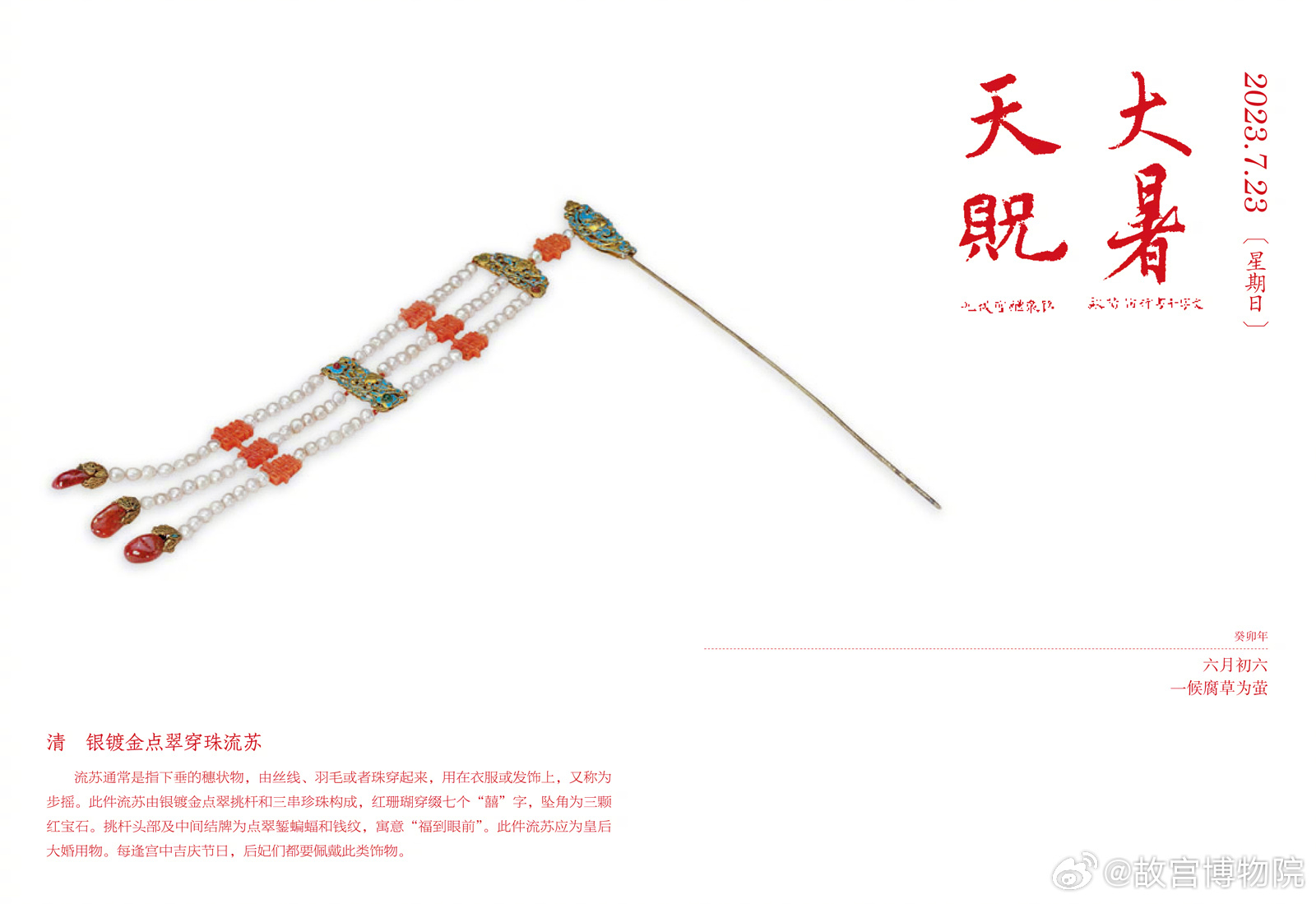
Clear, silver-plated dots emerald beads tassels. Tassels usually refer to drooping tassels, threaded by silk threads, feathers or beads, used on clothes or hair ornaments, also known as step shakes. This tassel is composed of silver-plated dot emerald poles and three strings of pearls. The red coral is embellished with seven “囍” characters, and the pendant corners are three rubies. The head of the pole and the knot in the middle are dotted emerald chiseled bats and money patterns, which means “blessings come to you”. This tassel should be used for the queen’s wedding. Every auspicious festival in the palace, concubines have to wear such ornaments.
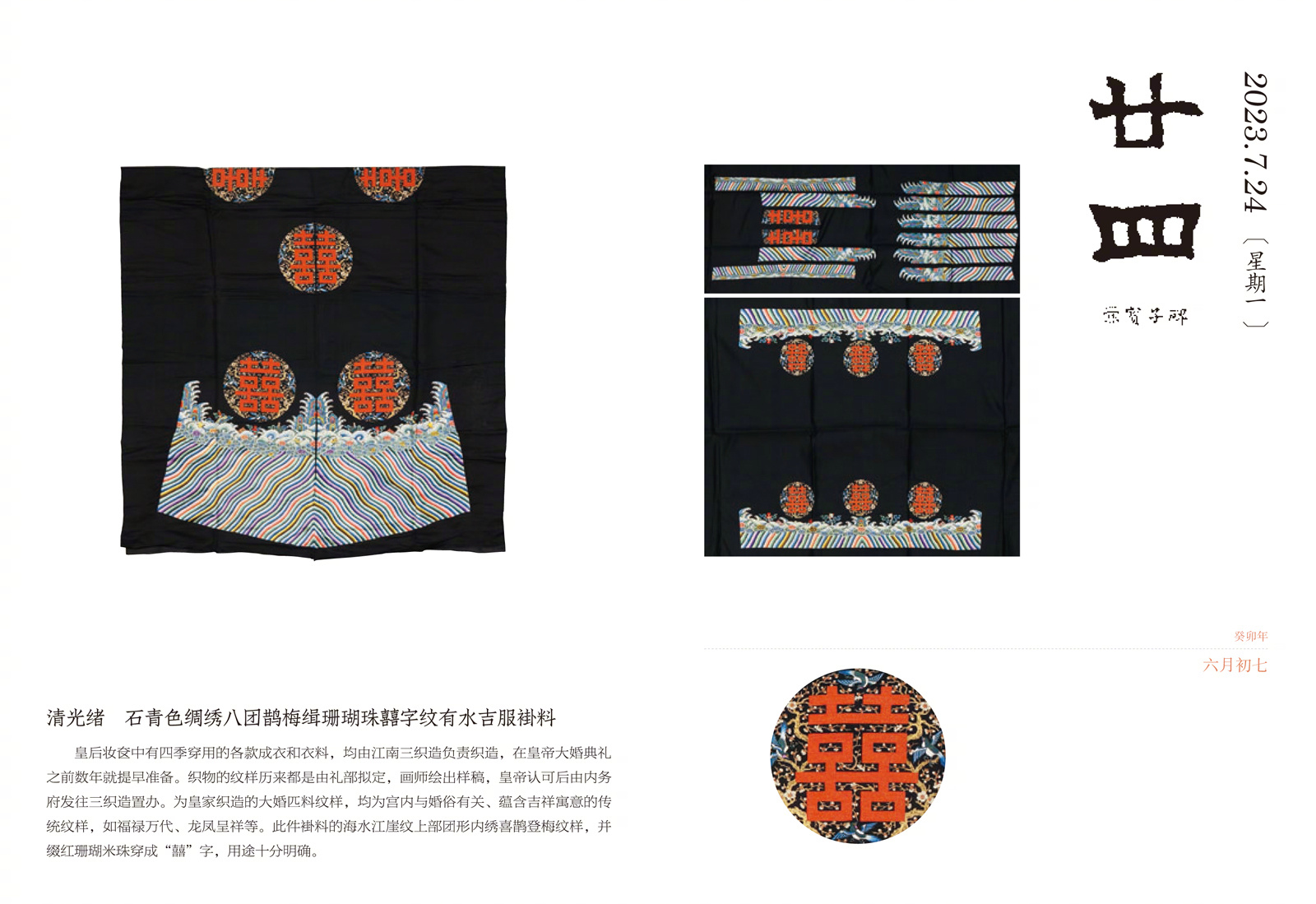
Qing Guangxu, stone blue silk embroidered with eight groups of magpies, plums, coral beads and Chinese characters, with water and auspicious clothing materials. The queen’s dowry includes all kinds of ready-made clothes and materials for the four seasons, all of which are woven by Jiangnan Sanzhi, which is prepared in advance several years before the emperor’s wedding ceremony. The pattern of the fabric has always been drawn up by the Ministry of Rites, and the artist draws a sample draft. After the emperor approves, the Ministry of Internal Affairs sends it to Sanzhizao for purchase. The wedding patterns woven for the royal family are all traditional patterns that are related to marriage customs in the palace and contain auspicious meanings, such as Fulu Bandai, Dragon and Phoenix Bringing Good Fortune, etc. The seawater river cliff pattern of this gown is embroidered with a magpie and a plum pattern on the upper part, and decorated with red coral and rice beads to form the character “囍”. The purpose is very clear.

Qing Guangxu, bright yellow silk embroidered with eight groups of magpies, plums, coral beads and 囍 characters, with Shui Jifu gowns. This gown is embroidered with bright yellow silk, with eight embroidered plum blossoms in full bloom, four magpies jumping on the branches, and red coral rice beads in the middle to form the character “囍”, with distinct layers and echoing up and down. Bright yellow is the imperial color exclusively used by the royal family. The magpie and plum blossoms imply happy brows, and the word “囍” pressed on the top implies happiness on top of happiness, highlighting the joy and peace of the emperor’s wedding. Plum blossoms have strong cold resistance, and they can brave the severe cold and bloom alone in the middle of winter when all the flowers are withered. Emperor Guangxu’s wedding coincided with the midwinter when plum blossoms were in full bloom, and such patterns added a festive atmosphere to the wedding..

Images and visuals are from – Forbidden City –Palace Museum Beijing- China –People’s Republic of China…..

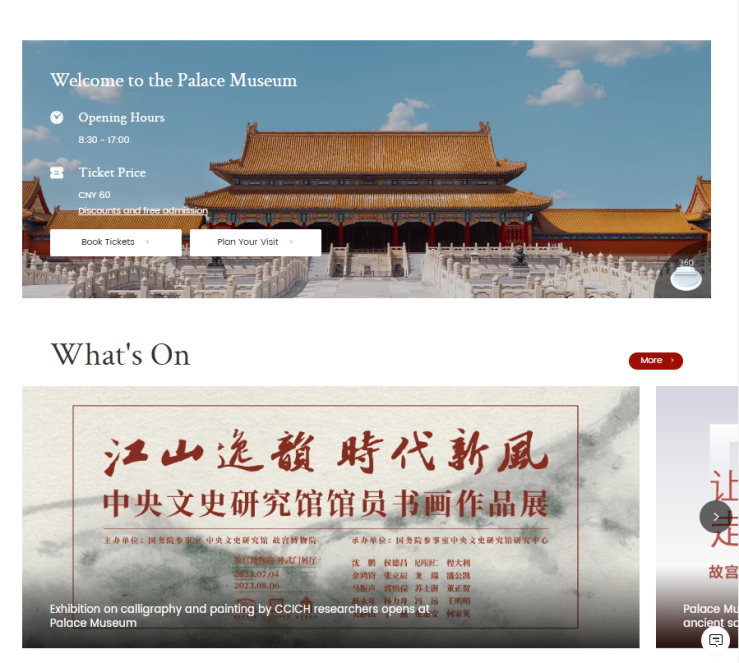
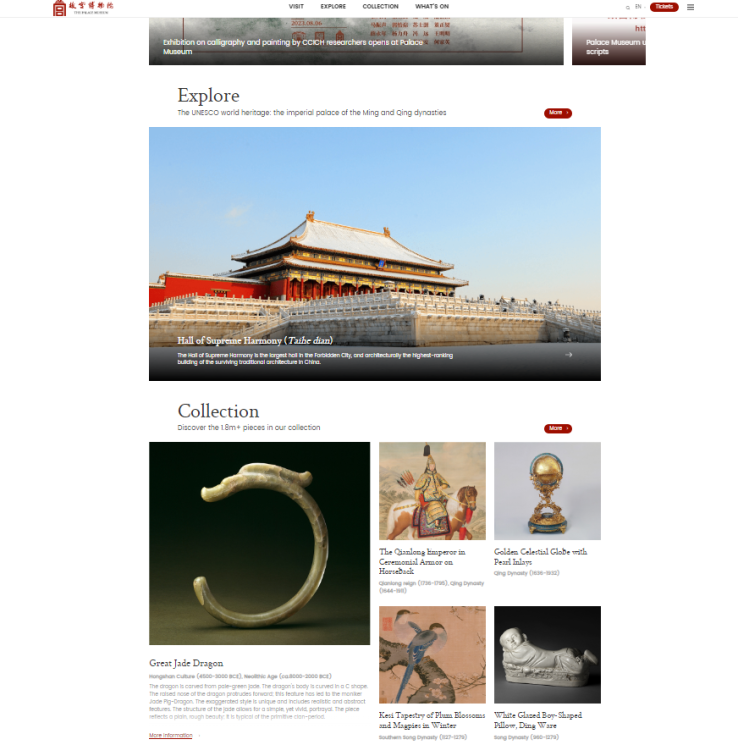
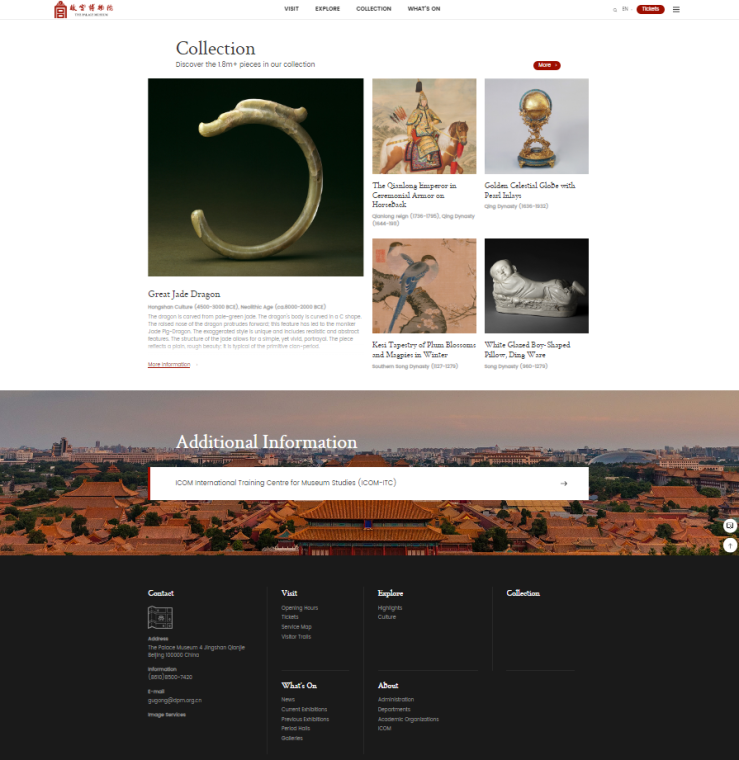
#北京。 #中國 #China #Beijing | #紫禁城 #ForbiddenCity #July2023 | #ForbiddenCityDairies -The multilingual International website of the Palace Museum is officially launched Reinvented with immersive educational interactive enrichments..

On July 19th 2023 , the multilingual website of the Forbidden City Palace Museum- Beijing, China, People’s Republic of China was officially released at the Digital Cultural Tourism Development Forum of the 2023 China Internet Civilization Conference! The website covers five languages: English, French, Russian, Japanese, and Spanish, and will meet the needs of audiences with different languages. The multilingual website of the Palace Museum is committed to establishing an international website that is concise, clear, easy to use for overseas audiences, and fits the construction of the modern civilization of the Chinese nation, including tour guides, information, panoramic tours, online exhibitions, collection appreciation, cultural topics, etc. Rich immersive content. 

Images and visuals are from – Forbidden City –Palace Museum Beijing- China –People’s Republic of China…..
#北京。 #中國 #China #Beijing | #紫禁城 #ForbiddenCity #May2023 | #ForbiddenCityDairies -“Xiangkai Vientiane–The Forbidden City and Tibetan Cultural Relics Joint Exhibition” reflecting the history of ethnic relations in the Yuan, Ming and Qing dynasties….

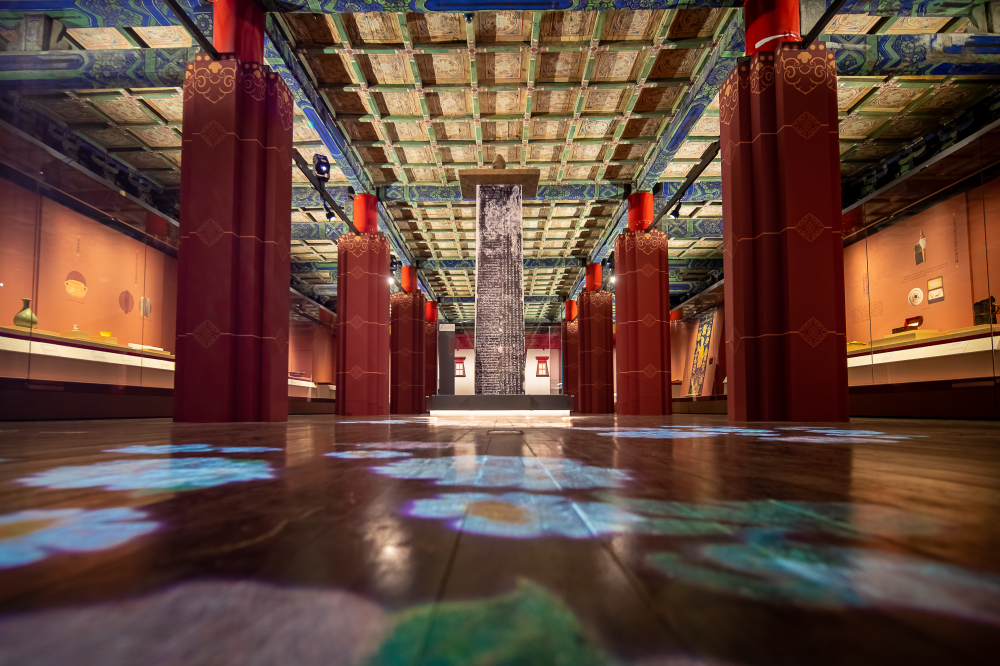
The Forbidden City Palace Museum Beijing, China, People’s Republic of China holds a large-scale exhibition reflecting the history of ethnic relations in the Yuan, Ming and Qing dynasties, “Xiangkai Vientiane–The Forbidden City and Tibetan Cultural Relics Joint Exhibition” will be on display at the Meridian Gate on April 29th 2023 towards 30th of September 2023.

On April 28, 2023, the opening ceremony of “Auspicious Opening of Vientiane—Joint Exhibition of the Forbidden City and Tibetan Cultural Relics” was held at the Palace Museum. Wang Xudong, member of the Party Leadership Group of the Ministry of Culture and Tourism and director of the Palace Museum, Zhong Tingxiong, deputy director of the Propaganda Department of the State Ethnic Affairs Commission, Zhang Xuxia, deputy director of the General Office of the Ministry of Culture and Tourism, Lian Xiangmin, deputy director-general of the China Tibetology Research Center, protection of historical sites in China Song Xinchao, chairman of the association and former deputy director of the State Administration of Cultural Heritage, Qu Zhen, deputy secretary of the party group and director of the Tibet Autonomous Region Cultural Relics Bureau, Yang Fan, secretary of the Party Committee of the National Museum of China, Fayan, deputy director of the National Cultural Palace, Zha Xia, director of the Tibetan Culture Museum, Chinese Buddhist Master Yanjue, the president of the association, relevant departments and bureaus of the Central Propaganda Department and the Central United Front Work Department, relevant comrades in charge of cultural museums in Beijing, relevant associations, team members of the Palace Museum, and leaders of retirement homes attended the opening ceremony. Du Haijiang, Secretary of the Party Committee and Vice President of the Palace Museum, Deji Zhuoga, Deputy Secretary of the Party Group and Director of the Department of Culture of the Tibet Autonomous Region, and Yang Xun, the representative of the Xuri Charity Foundation and the vice chairman and general manager of Xuri Group Co., Ltd. Speech at the ceremony. Ren Wanping, vice president of the Palace Museum, presided over the opening ceremony of the exhibition.

“Xiangkai Vientiane-The Forbidden City and Tibetan Cultural Relics Joint Exhibition” is jointly organized by the Palace Museum and the Cultural Relics Bureau of the Tibet Autonomous Region, with special support from the Rising Sun Charity Foundation. The exhibition hall of Yanchi Building is open to the audience. Guided by General Secretary Xi Jinping’s thought that “cultural identity is the deepest level of identity, the root of national unity and the soul of national harmony”, combined with the construction of the “Four Forbidden City” system of the Palace Museum, it is a cultural and The display of the results of the Ministry of Tourism’s Tibet-aid project “Research on the Chinese Nation Community Based on the Forbidden City and Tibetan Cultural Relics” is also a large-scale comprehensive exhibition reflecting the history of ethnic relations in the Yuan, Ming, and Qing dynasties. The exhibition reflects the latest relevant scientific research achievements of the Palace Museum in the past five years, explores the cultural connotations behind the cultural relics, shows the exchanges, exchanges and integration between Tibet and the mainland and the court embodied in the cultural relics, and composes a splendid chapter of national unity and progress.

  Du Haijiang, Secretary of the Party Committee and Vice President of the Palace Museum, said in his speech that the exhibition takes forging the consciousness of the Chinese nation’s community as its starting point and foothold. The emotional bond and spiritual belonging of the nation prove the necessity and forward-lookingness of forging a sense of community of the Chinese nation. For thousands of years, people of various ethnic groups in Tibet and inland have been in frequent contact with each other, helping each other, and being brothers and sisters. The Forbidden City, where the Palace Museum is located, is a witness to the exchanges, exchanges, and integration between Tibet and the mainland of the motherland, and a historical witness to the continuous formation of the consciousness of the Chinese nation community. Based on the close historical relationship between cultural relics and the interaction between cultural relics and the design of the exhibition hall, the exhibition reproduces the historical facts of exchanges, exchanges and integration between Tibet and the mainland, and restores the great process of the Chinese nation’s community consciousness from formation to consolidation in history.

Deji Zhuoga, director of the Cultural Department of the Tibet Autonomous Region, said in his speech that this exhibition is an in-depth implementation of the spirit of the 20th National Congress of the Communist Party of China and the spirit of General Secretary Xi Jinping’s important exposition on cultural relics work by the Tibet Autonomous Region and the Palace Museum. It is an important exhibition held to firmly grasp the consciousness of the community of the Chinese nation and build a common spiritual home for the Chinese nation. The exhibition showcases the long history and splendid culture of the Forbidden City and Tibet, demonstrates the extensive exchanges and in-depth integration between Tibet and other parts of the motherland, and witnesses the diverse and colorful Chinese culture. As a large area of ​​cultural relics resources, Tibet has made all-round progress and historic achievements in promoting the protection and utilization of cultural relics in recent years. Cultural relics have played an important role in forging the consciousness of the Chinese nation community and promoting Tibet’s long-term stability and high-quality development.

Yang Xun, the representative of the Xuri Charity Foundation and the vice chairman and general manager of Xuri Group Co., Ltd., who specially supported the exhibition, said that Chinese culture is a synthesis of the cultures of all ethnic groups and a common spiritual home for people of all ethnic groups. “Prosperity in Vientiane—Joint Exhibition of Cultural Relics from the Forbidden City and Tibet” tells the moving story of exchanges, exchanges, and integration between Tibet and various ethnic groups in the mainland through cultural relics research. Glorious Sun Group has strengthened its cultural self-confidence for many years and helped the inheritance and protection of Chinese culture. This support for the exhibition is what Glorious Sun Group should and must do for the inheritance and protection of Chinese culture.

“Auspicious Blossoms – The Forbidden City and Tibetan Cultural Relics Joint Exhibition” is divided into three parts: “Flowers Blooming All Over the Road – Communication between Tibet and the Mainland”, “Flowers and Leafs – Identity and Destination” and “Spring Blossoms and Autumn Fruits – Fruitful Cultural Achievements”. The theme unit uses “flowers” to symbolize the process of integration between Tibet and various ethnic groups in the interior. The exhibition exhibited 108 pieces (sets) of cultural relics, including 13 pieces (sets) of cultural relics from various units under the Tibet Autonomous Region Cultural Relics Bureau and the Sakya Monastery Management Committee, and 95 pieces (sets) of cultural relics from the Palace Museum. In addition to the well-known calligraphy and painting exhibits such as Yan Liben of the Tang Dynasty “Bucharian Picture” and Zhao Mengfu’s “Emperor’s Danba Stele Scroll” of the Yuan Dynasty, there are also a large number of cultural relics that meet the audience for the first time, such as the “Manchu Collection” collected by the Palace Museum. The Sutra, the statue of Emperor Yongle in the Potala Palace, and the thangkas of Kublai Khan first seen in the Sakya Temple, etc., fully demonstrate the diversity of styles and artistic charm of Tibetan-themed cultural relics.

According to the protection requirements of cultural relics and reference practices, the calligraphy and painting works of the Song and Yuan Dynasties and before in the exhibition will be replaced with replicas after one month of exhibition.

Images and visuals are from – Forbidden City –Palace Museum Beijing- China –People’s Republic of China…..
#東京。 #中國 #China #Beijing | #紫禁城 #ForbiddenCity |#Knowledge Library #ForbiddenCitySeason # SongYingjie – The Forbidden City Knows the seasons and taste the beauty of the four seasons in the Forbidden City ……

In this year’s 2020, the second decade from the turn of the century in Beijing the Capital of China also the People’s Republic of China, in which is also the year of the rat, marking its six hundred years anniversary of the Forbidden city that marks the transitional point of in between the middle of the Ming Dynasty (1368- 1644) transitionally from Nanjing to Beijing towards the Qing Dynasty (1636-1644-1911) …. The Imperial Palace seen so many countless seasonally transitional equinoxes but further its six hundred years is iconic, but it’s five hundred ninety nine years it marks it Autumn Equinox…. In which it only took twelve years to build the same of the Daming Palace of The Tang Dynasty Xian Imperial Capital only it was least twenty times larger..

“The Forbidden City Knows the Season” and taste the beauty of the four seasons in the Forbidden City……..”The Forbidden City Knows the Season “ is a book published by the Forbidden City Press in December 2019. The author is Song Yingjie. The book is based on the Ming Dynasty picture album “Moon Order Picture” in the Palace Museum. By interpreting this month order picture, the seventy-four solar terms… in which he is known as for also too chief meteorological service expert of China Meteorological Administration and host of CCTV’s “Weather Forecast” program.

On May 5, 2020, the online publication of the new book “Forbidden City Season” and the live broadcast of the book sharing session will be held at the Forbidden College in the Palace Museum. The book “The Forbidden City Knows the Season” is based on the book “Moon Order Picture” of the Ming Dynasty in the Palace Museum. By interpreting this month order picture, the seventy-two days of the 24 solar terms are illustrated and annotated one by one. The book interprets the seventy-two of the twenty-four solar terms one by one from the perspective of culture and science, including the climatic logic in the solar term “Tale”, the controversy in the identification of the story, and scientific fallacies.


“Forbidden City Season” is also equipped with 24 solar terms of the Palace Museum. The photographer combines the “Forbidden City Elements” with natural phenology, transforming the Forbidden City architecture from the main body into an element, and presenting it in the form of background, foreground, etc. Images to show the changes of flora and fauna in the Forbidden City environment, and the unique beauty of each corner of the Forbidden City complex in the form of images……..

Imagines credit are from the Forbidden city –Imperial Palace –Beijing – China- People’s Republic of China..