Located in West Kowloon Cultural district in Hong Kong SAR- China – People’s Republic of China is One of Many Hong Kong SAR’s newest International Iconic Standing with Ancient international icon standing Museums… Is the Forbidden City Palace Museum in Hong Kong SAR… Located in West Kowloon Cultural District… in which set to be Construction began in 2017, with the museum scheduled for completion by 1 July 2022…. The 328,000 square feet (30,500 m2) building is being designed by Hong Kong architecture firm Rocco Design Architects, who were directly appointed It will comprise two exhibition halls, activity rooms, a 400-seat theatre, a gift shop and a restaurant. It will be built on a landfill site formerly occupied by the West Kowloon Nursery Park.
The museum will display artefacts borrowed from China’s Capital Beijing’s own Forbidden City Palace Museum, some of which have never been put on public display before…..
Hong Kong SAR is backed by China- People’s Republic of China, facing the world, and its unique advantages have created Hong Kong’s unique cultural charm. For a long time, the Palace Museum has maintained a friendly and cooperative relationship with cultural and cultural institutions in Hong Kong, and this year, it has co-hosted a series of online lectures on 进香港 Museum# with many museums in Hong Kong this year. In the next few weeks, we will work with you to listen to the wonderful stories of Hong Kong museums through 4 lectures in this series, and get a deep understanding of Hong Kong’s history, art and culture. The theme of the first lecture is “Forbidden City Hong Kong, Hong Kong Forbidden City-The Preparatory Construction and Development Strategy of Hong Kong Forbidden City Cultural Museum”. Click on the video to uncover the mystery of the Hong Kong Palace Museum.
Dr Louis Ng, Director of Hong Kong Palace Museum, will elaborate on the setting up and development strategy of the Museum. Key topics to be discussed include: the connection between the Palace Museum and Hong Kong; highlighted features of the museum exhibits; diversified and interdisciplinary approach in curatorial planning and public engagement as well as details of major development strategies.
On the weeks of the prior August 2021 on the week of 30th July 2021 in which unprecedentedly super Thunderstorms incoming typhoon that been hitting flooding parts of China – People’s Republic of China.. In which setting flooding in Henan province of Zhengzhou in which the whole country from various provinces provides assistance making from all walks of life into heroes…
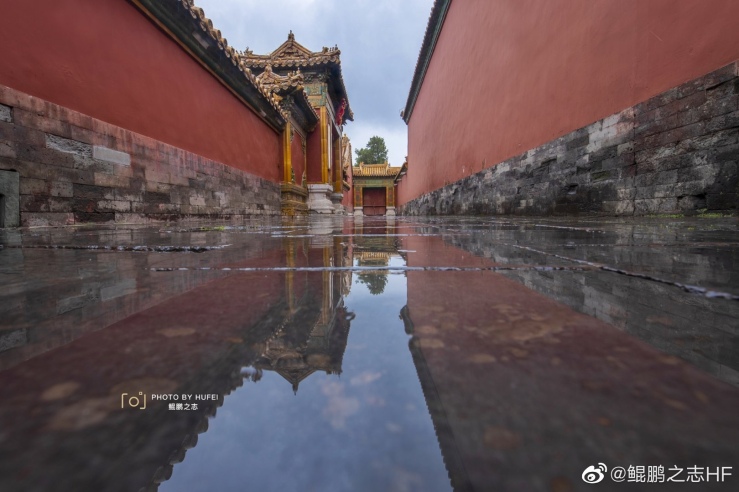
As the amountings of thunderstorms rain, raining overcast over Beijing in which provides a photographic mirroring timeless grounds of the 601年 Forbidden city after it rain is like a bright mirror and the reflections reflected in the shadow of the clouds above are particularly charming’s as if travelling through past and present beautifully …
As Beijing rain subsides the long rainy season finally washed out the blue sky and white clouds. Began to wash the eyes away of dusty skies creating painting a Chinese Paintings of those six hundred years ago …
…… it’s the second decade from the turn of the century in Beijing the Capital of China also the People’s Republic of China, in which is also the year 2020 of the year rat, marking its six hundred years anniversary of the Forbidden city that marks the transitional point of in between the middle of the Ming Dynasty (1368- 1644) transitionally from Nanjing to Beijing towards the Qing Dynasty (1636-1644-1911) …. The Imperial Palace seen so many countless seasonally transitional equinoxes but further its six hundred years is iconic, but it’s five hundred ninety nine years it marks it Autumn Equinox…. In which it only took twelve years to build the same of the Daming Palace of The Tang Dynasty Xian Imperial Capital only it was least twenty times larger……
Liu Rendao Born on 1984 Born in Hunan province of China… in which On 12 July 2021-to August 12, 2021, “Beautiful China: The Art of Liu Rendao” opened at the Hall of Literary Brilliance (Wenhua dian) in the Palace Museum. The exhibition is jointly organized by the Palace Museum, China Artists Association, Tsinghua University Academy of Arts & Design, Cultural Relics Society of China, and China International Culture Communication Center with academic direction by Professor Lu Xiaobo, dean of Tsinghua University Academy of Arts & Design and vice-chair of China Artists Association. Also present at the opening ceremony was Wang Xudong, member of the leading Party group of the Ministry of Culture and Tourism and the director of the Palace Museum; Du Haijiang, the Palace Museum Party secretary and deputy-director; Wang Yuegong, deputy-director of the Palace Museum; Shan Jixiang, director of the Cultural Relics Society of China and former director of the Palace Museum; Tao Qin, deputy-secretary of the sub-Party group of the China Artists Association; Lu Xiaobo, dean of Tsinghua University Academy of Arts & Design; and Zhang Qiujian, deputy-secretary of the Subcommittee of Education, Science, Culture, Health, and Sports of the National Committee of the Chinese People’s Political Consultative Conference.
On 12 July 2021, “Beautiful China: The Art of Liu Rendao” opened at the Hall of Literary Brilliance (Wenhua dian) in the Palace Museum. The exhibition is jointly organized by the Palace Museum, China Artists Association, Tsinghua University Academy of Arts & Design, Cultural Relics Society of China, and China International Culture Communication Center with academic direction by Professor Lu Xiaobo, dean of Tsinghua University Academy of Arts & Design and vice-chair of China Artists Association. Also present at the opening ceremony was Wang Xudong, member of the leading Party group of the Ministry of Culture and Tourism and the director of the Palace Museum; Du Haijiang, the Palace Museum Party secretary and deputy-director; Wang Yuegong, deputy-director of the Palace Museum; Shan Jixiang, director of the Cultural Relics Society of China and former director of the Palace Museum; Tao Qin, deputy-secretary of the sub-Party group of the China Artists Association; Lu Xiaobo, dean of Tsinghua University Academy of Arts & Design; and Zhang Qiujian, deputy-secretary of the Subcommittee of Education, Science, Culture, Health, and Sports of the National Committee of the Chinese People’s Political Consultative Conference.
The exhibition also presents Liu Rendao’s quintessential painting Limitless Vista of Floating Clouds above Misty Mountains (Fuyun shan’ai mangcangcang). The work was taken on a five-day journey to space aboard the spacecraft Shenzhou 6 in 2005, making it the first ever traditional Chinese painting taken into space. The display of this work promotes the spirit of the extraordinary heroism of China’s aeronautics and astronautics program, spreads astronautic culture and art, and encourages more youth to love and yearn for careers in air and space industries and related cultural and artistic ventures.
Having been nurtured by China’s outstanding traditional culture, Liu Rendao edited Comprehensive Views of Famous Paintings (Minghua guanzhi), Famous Paintings in the Imperial Collections of Successive Dynasties (Lidai huangdi yucang dianping minghua), and other works in the 1990s. Works such as Myriad Things of Island Life (Daosheng wanwu), Why Search for Immortals at Penglai Island? (Xunxian hebi Penglai dao), Immortal Realm in the Mortal World (Renjian xianjing), and The Passion of Countless Layers of Mountains (Wanchong dashan qing) demonstrate his understanding of traditional Chinese painting and combine traditional Chinese and Western artistic elements in organic creativity to form an art style with a contemporary feel and strong aura of life.
The Palace Museum preserves an immense collection of the finest historical and cultural artifacts and has, from the beginning, observed the vigorous development of contemporary art and proactively provided an exhibition platform for contemporary artists. These outstanding works of contemporary art that reflect social trends and emit the aura of a New Era infuse the ancient Forbidden City with youthfulness. The New Era also gives the Palace Museum a new mission. In the future, the Palace Museum will continually expand cooperation and interaction with the contemporary art scene and advance the construction of the “Vibrant Palace Museum” system with a tolerant demeanor in the practical application of the Chinese value “everything being nourished without mutual harm, concurrent paths without offense”. Bolstering the influence of China’s excellent traditional culture as represented by the Palace Museum on the contemporary world, these efforts will inspire limitless creativity in this New Era. As the public is provided avenues to appreciate the glorious achievements of China’s ancient art, they will also have an opportunity to enjoy fine works of the current age
“Beautiful China: The Art of Liu Rendao” is on view in the Hall of Literary Brilliance (Wenhua dian) in the Forbidden City from 13 July – 12 August 2021. Apart from the general admission ticket to the Forbidden City, no additional ticket is sold for the exhibition. In light of current epidemic prevention and control requirements, and in accordance with regulations requiring reservations, limiting the number of daily visitors, and setting visiting-time intervals, the exhibition requires advance reservations. The daily quota is 3,000 visitors; reservations close once the quota is reached.
The Exhibition is located in The Hall of Literary Brilliance (Wenhua dian) is the main building in an architectural compound that lies to the far east of the Hall of Supreme Harmony (Taihe dian).
It was the residence of the heir apparent during the early period of the Ming dynasty (1368-1644), with green glazed tiles covering the roof. Since 1536, it was reserved for the emperor as his secondary hall. Accordingly, the tiles were changed into yellow, the color of the emperor. During the Ming and Qing dynasties, the imperial lecture was regularly held in this hall and papers of the “Palace Examination” were reviewed here, too. Those prominent mandarins would feel so honored to be given the title of the “Grant Secretary of the Hall of Literary Brilliance”.
Visitors may make reservations via the Palace Museum’s online ticketing service or the Palace Museum’s official WeChat account by real-name registration with a second-generation ID card (for Chinese residents) or passport (for foreigners). At the entrance, visitors may also scan a QR code for on-site reservations. When entering, each visitor must present the ID card or passport used at the time of reservation.
Today it’s the 1st of July 2021 also it’s the One Hundredth year of the CPC Communist Party of China in which today there’s massive celebrations in the Capital in which during this late Morning celebrating during this week also the last week of June 2021 in China – People’s Republic of China… during the week the Forbidden city has been Summery Radiant in the Early hours of the Morning of the first of July.. of the Founding of the CPC in which saving rebuilding China stronger socialistically ..
Also in which a new great journey! Under the leadership of the party, socialism with Chinese characteristics has entered a new era, and my country’s cultural heritage protection has also entered a new stage. To celebrate the centenary of the Communist Party of China, the Palace Museum specially planned and produced “ 新时代新皇宫 -The Palace Museum Cultural Heritage Protection and Inheritance Theme Cloud Exhibition”. The exhibition uses a large number of old photos, archives, high-definition images, documentaries and other rich digital cultural content, divided into five units to tell about the renewal of the ancient city, the protection of ancient buildings, the collection of cultural relics, non-hereditary inheritance and the construction of the new era. Go to the cloud exhibition hall …..
During the Battle of Ping-Jin, Mao Zedong specifically issued instructions on the protection of the cultural monuments of Peking, “striving to avoid destroying the Forbidden City, universities and other famous and valuable cultural monuments… as a discipline to enforce.” Through the efforts of all parties, on January 31, 1949, Peiping finally declared its peaceful liberation, and the Forbidden City and Peking City were preserved intact. General Secretary Xi Jinping emphasized: “Let the cultural relics collected in the museum, the heritage displayed on the vast land, and the words written in the ancient books all come to life.” As socialism with Chinese characteristics enters a new era and the 100th anniversary of the founding of the Communist Party of China, The people of the Forbidden City will also carry forward the past, forge ahead, continue to improve the construction system of the “Four Forbidden City”, and continue to strive for the construction of a new Forbidden City in the new era… Forbidden City falls in love Forbidden City ….
……the second decade from the turn of the century in Beijing the Capital of China also the People’s Republic of China, in which is also the year of the rat, marking its six hundred years anniversary of the Forbidden city that marks the transitional point of in between the middle of the Ming Dynasty (1368- 1644) transitionally from Nanjing to Beijing towards the Qing Dynasty (1636-1644-1911) …. The Imperial Palace seen so many countless seasonally transitional equinoxes but further its six hundred years is iconic, but it’s five hundred ninety nine years it marks it Autumn Equinox…. In which it only took twelve years to build the same of the Daming Palace of The Tang Dynasty Xian Imperial Capital only it was least twenty times larger……
One of the priceless exhibits of the 601年 year old Forbidden City that’s located in the heart of Beijing also its Central Axis of three thousands year old Ancient Modern Ultra megapolis city….让我们与来读校园 The imperial pages of the imperial farming and weaving picture poem printed agricultural book during the Qianlong period of the Qing Dynasty…..让我们一起来读生日Qianlong of the Qing Dynasty, Wuyingdian juzhen edition of “Nongshu”. “Nongshu” is equipped with more than three hundred illustrations, and there are typical scenes depicting the peasants of the palace, such as the emperor’s field, the concubine and the silkworm. Yutian, also known as “Yu Li”, is a kind of ancient auspicious ceremony, that is, before the spring ploughing, the emperor led the princes to cultivate the land personally to show the importance of agriculture. This picture is the “Yutian Map” in “Nongshu”, and it depicts the scene of the emperor getting off the car and preparing to participate in the “Yu Li” ceremony.