#漢服 #HanFu #HanTraditionalClothing | #May2023 |#FashionLookBook#全明星片花#HiProducer featuring the look of #吳謹言 #WuJinyan recreating her look of #QingDynasty #旗袍 #Qipao  #延禧攻略 #StoryOfTheYanxiPalace Yinyan’s  Empress Wei YingLuo -Weigiya Xiaoyichun …

“全明星片花Hi Producer” is an intangible cultural heritage urban drama directed by Gao Han, starring Guo Xiaodong , Zhang Nan , Li Xiaoran , Zhang Bo , Zheng Kai , Sun Yihan , Niu Zifan , Sheng Langxi , and Wu Qianyu  .   

The play tells the story of a variety show team with literary director Yu Zazao and young cultural relic’s expert Tao Tang as the core, in order to show the beauty of Chinese civilization and work together to launch a cultural TV program.The play will be broadcast on iQiyi and Tencent Video on May 20, 2023 in which is on 520 When spoken in Mandarin, the phrase “I love you” (wǒ ài nǐ) sounds very similar to 520 (wǔ èr yī). Soon, the equivalent date of May 20 transformed into a celebration of love, heavily focused around gift giving. Couples have even started getting married on 520….

Synopsis …..Director Yu Zazao (played by Zhang Nan) joined Gu Shiyong (played by Zheng Kai ) to create a large-scale cultural program “Inheritance”, and competed with Yuan Jiaying ( played by Sun Yihan ) for the position of chief editor. In order to form a high-quality program production team, Gu Shiyong also strongly invited senior host Wang Xining ( played by Li Xiaoran ) , well-known director Mu Zongyun ( played by Guo Xiaodong ) , and young cultural relics expert Tao Tang ( played by Zhang Bo ) to join. Through everyone’s hard work, “Inheritance” has finally become a phenomenon-level cultural program. Yu Zazao, who lacked empathy since childhood, gradually opened up his heart during the filming process, and finally reaped a complete friendship and career.

During the series吳謹言 #WuJinyan who played Empress Wei YingLuo -Weigiya Xiaoyichun延禧攻略 #StoryOfTheYanxiPalace… In the sixth year of Qing Dynasty Emperor Qianlong’s reign, a young girl Wei Yingluo ( played by Wu Jinyan ) entered the Forbidden City as a court lady in order to seek the truth about her elder sister’s death. After investigation, Yingluo confirmed that her sister’s death was related to the absurd prince Hong Zhou, and she was determined to seek justice. Empress Fucha (played by Qin Lan) is adept at etiquette, worried that Yingluo would go astray, and tried her best to give her warmth and help. Under the queen’s careful teaching, Wei Yingluo grew up step by step into an upright and strong court lady, she put down her hatred and lived a serious life. Unfortunately, the queen passed away, causing Yingluo to misunderstand Qianlong (Nie Yuan ) a lot. The two went from being hostile to each other to finally understanding and supporting each other.

Images and visuals are from their respectives

#東京。 #中國 #China #Beijing | #紫禁城 #ForbiddenCity |#养心殿an immersive #VirtualTour exploration of the Palace Halls of the Forbidden City exploring #yangxindian #TheHallofMentalCultivation


During this year 2020   Beijing the Capital of China also the People’s Republic of China, in which next year 2020 the year of the rat …. Marking its six hundred years of the Forbidden city that marks the transitional point of in between the middle of the Ming Dynasty (1368- 1644) transitionally from Nanjing to Beijing  towards the Qing Dynasty (1636-1644-1911) …. The Imperial Palace seen so many countless seasonally transitional equinoxes but further its six hundred years is iconic, but it’s five hundred ninety nine years it marks it Autumn Equinox…. In which it only took twelve years to build the same of the Daming Palace of The Tang Dynasty Xian Imperial Capital only it was least twenty times larger..
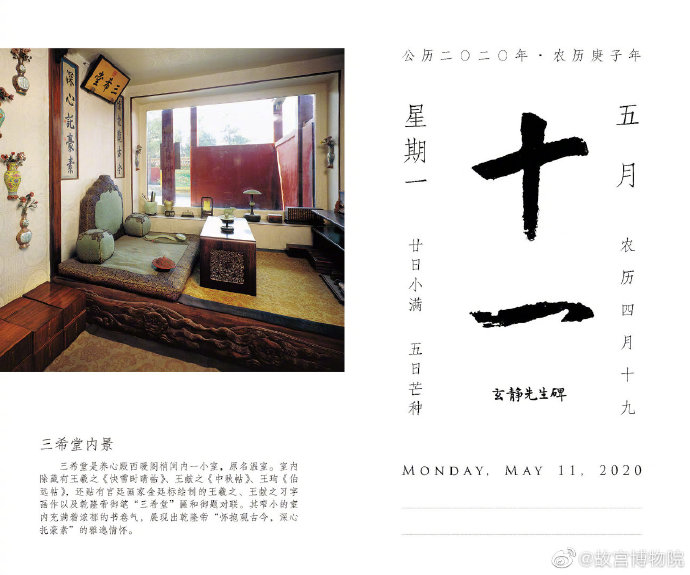
The former imperial office in the Forbidden City, the Hall of Mental Cultivation, will begin renovation in August 2018. The Hall of Mental Cultivation is located in Beijing, the capital city of China, and was built in 1537 during the Ming Dynasty, later serving as the office and residence of the last eight emperors of the Qing Dynasty. It contains many culturally significant items made during that time period.


Being built during the reign of Emperor Jiajing (1522 – 1566) of the Ming Dynasty (1368 – 1644), the Hall of Mental Cultivation is on the west side of the Palace of Heavenly Purity. It is particularly significant in the history of the Forbidden City. Actually the palace was not important until Emperor Yongzheng (the third emperor) in the Qing Dynasty (1644 – 1911) lived in it. From that time to the end of the Qing Dynasty, eight emperors lived there.

It was in the Palace of Heavenly Purity that the emperors lived. The Hall of Mental Cultivation was originally designed to be a temporary resting hall for emperors. However, from the time of Emperor Yongzheng, this palace became the emperors’ bedchamber. Why did this change happen? There exist two thoughts in Chinese history. As the Hall of Mental Cultivation is near the Palace of Heavenly Purity which was the resting place for emperors before Yongzheng, one interpretation is that Emperor Yongzheng lived in the Hall of Mental Cultivation in order to take care of his father who was seriously ill at the time and to show respect to him after his death. From then on, he never moved into the Palace of Heavenly Purity. The other interpretation is that as the Hall of Mental Cultivation was simply decorated, Yongzheng moved into it to set an example of how thrifty he was for the common people. Later the decoration style of the hall was changed from simplicity to luxury and it is reputed that about 780 pieces of precious artifacts were placed inside till the end of Qing Dynasty.
The front door of the hall, facing south, was named the Gate of Mental Cultivation. It was only opened to the emperor in the ancient time, but now tourists can enter through this gate. Outside the gate, there is a narrow yard with several rooms for the on duty eunuchs in the past. Now they are shops where you can buy souvenirs. Besides the rooms, there is a rare jade screen wall, with eight delicate dragons carved on it, facing the gate. It is the symbol of imperial power and high status of the emperor.

Entering the Gate of Mental Cultivation, the Hall of Mental Cultivation, including the main hall and the side halls, is located behind the wooden screen wall. The I-shape main hall is divided into front and rear parts, connected by a hallway. The front hall was the office for the emperor, while the rear one served as his bedroom. The side halls on east and west were decorated as Buddhist Prayer Rooms for the emperors.

In the central part of the front hall, there is the throne and emperors’ desk. Books containing instructions for a new emperor on how to rule over his empire would be placed in a bookcase behind the throne. On the bookcase, about 160 sets of handwritten copies of old books were kept. There are two doors hidden behind the throne which lead to the rear halls.

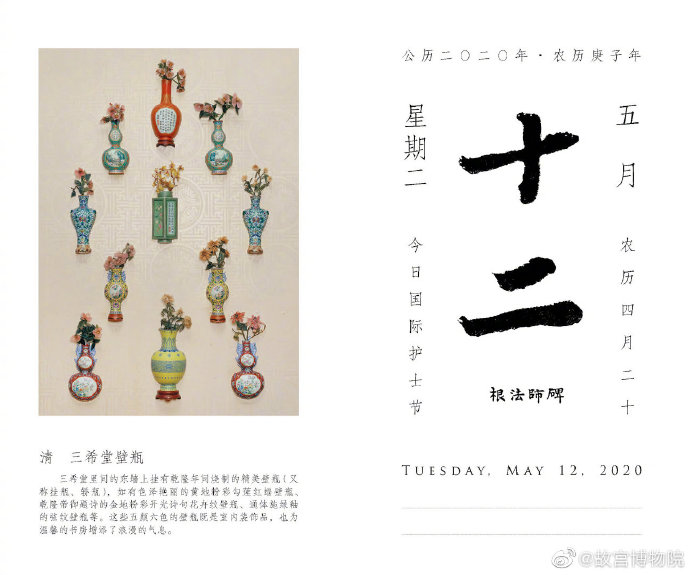
On the east side of the central hall is the East Warmth Chamber, in which the notorious Empress Dowager Cixi attended to state affairs sitting behind a curtain. It is in this hall she corruptly ruled China for forty-eight years from behind this yellow curtain. Now, this chamber is displayed as it was in her time. The West Warmth Chamber was separated into several rooms for the different usage for the emperor. Tourists can see the conference room for discussing secret issues or consulting with his ministers, a study room named Hall of Three Rare Treasures (San Xi Tang) and a small Buddhist prayer room exclusive to the emperor in the West Warmth Chamber. The Hall of Three Rare Treasures is famous for housing three precious calligraphy masterpieces by three outstanding masters Wang Xizhi, Wang Xianzhi and Wang Xun. A plaque with the three characters San Xi Tang written by Emperor Qianlong is still kept in the room.

Passing the hallway, one can see the rear hall. Five rooms in the middle are for the emperors. There are two rooms on each side of the rear hall, which served as the resting places for the empress and the high-ranking imperial concubines when they attended to the emperor. In the reign of Emperor Tongzhi of the Qing Dynasty, those rooms were for the two empress dowagers – Cixi and Ci’an. They lived close to the East Warmth Chamber, so that they can easily get there to handle state affairs. These two rooms are not open to the public. Off the courtyards to the east and west of the rear hall, are temporary lodgings which were provided for other concubines when they were summoned to attend the emperor.

Imagines credit are from the Forbidden city –Imperial Palace –Beijing – China- People’s Republic of China..
#QIPAO #Cheongsam #旗袍 #QingDynasty | #延禧攻略 – #StoryOfYanxiPalace – #TelevisionMovieWardrobe – Wu Yinyan’s Empress Wei YingLuo -Weigiya Xiaoyichun head wear how to get this look..

延禧攻略 – Story Of Yanxi Palace – Silk Velvet flowers- Wu Yinyan’s Empress Wei YingLuo -Weigiya Xiaoyichun head wear


As part of the handcrafted sewn Wardrobe the production costing at one hundred million USD in production cost towards the wardrobe also props..  in bring out  Qing Dynasty Qipao- Cheongsam also have that sense of individual style but it’s more rigid, bold practicality uniformed for the occasion, in which each piece of clothing is hand crafted like, studied in this current Chinese made television production of “延禧攻略 -Story of Yanxi Palace” to the incredible sense of handcrafted detail of that era of Sixth Year of Qianlong… where the material hand crafted sewn with the necessary details and sewn methods of the that era with modern methods of creating television and movie wardrobe.. Each wardrobe clothing brings that extra layers of the character’s storyline – or multiple stories into that scene that the wardrobe create represented that persons individuality..

One Fashion accessories that’s been iconically worn during the production of the “延禧攻略 -Story of Yanxi Palace” is the Silk Velvet flowers head wear, in which is worn during the middle of the second Zhou- Tang Dynasty in which fashionably trending setting worn by the Emperor-Empress Wu Zetian period as worn by imperial tributes… in which translated transiting through time towards the present..  As one Artist continues to recreates from an ancient art form that been passed down on his family to hand craft the “Silk Velvet Flowers head wear” Among other craftsmen –women….

As each Silk Velvet flower is created, also during the Imperial court system, also it’s a ranking position for maids aswell in which determines there position within the Forbidden City on pond their headwear beside the uniform Qing Dynasty Qipao…  The process of creating the head wear of the Silk Velvet flowers.. “Nanjing Ronghua” intangible cultural heritage of Jiangsu Province – the craft artist Zhao Shuxian, and asked him to customize the velvet hair accessories for the characters in the play. Don’t underestimate the “Nanjing velvet flower”, it is the standard Tang manufacturing – starting in the Tang Dynasty, using silk as raw material, both as a decorative piece and as a decoration. It can be compared with real flowers, but never wither and never wither.

In the late Ming and early Qing dynasties, the velvet flowers fell from the “Emperor’s Family” into the “extraordinary lanes”. In addition to being favored by the royal family, the people began to wear the velvet flowers. In the 1930s and 1940s, Nanjing Shanna Street to Changle Road was once a lively “Flower City Street”.

The process is, a joining together a bundle strains of Silk threads together then, locking them, by combing like combing a long hair… Then threading a thin wires inbetween the threads, in different partitions intervals then cutting to the right width in between the wires with then patted evening, twirling into a fluttering then it’s up to the artist to create from imagination…

#QIPAO #Cheongsam #旗袍 #QingDynasty | #延禧攻略 – #StoryOfYanxiPalace – #TelevisionMovieWardrobe – Wu Yinyan’s Empress Wei YingLuo -Weigiya Xiaoyichun white crystal bracelet- how to get this look..

As part of the handcrafted sewn Wardrobe the production costing at one hundred million USD in production cost towards the wardrobe also props..  in bringing out the history of  Qing Dynasty Qipao- Cheongsam also have that sense of individual style but it’s more rigid, bold practicality uniformed for the occasion, in which each piece of clothing is hand crafted like, studied in this current Chinese made television production of 延禧攻略 -Story of Yanxi Palace to the incredible sense of handcrafted detail of that era of Sixth Year of Qianlong… where the material hand crafted sewn with the necessary details and sewn methods of the that era with modern methods of creating television and movie wardrobe.. each wardrobe clothing brings that extra layers of the  character’s storyline – or multiple stories into that scene that the wardrobe create represented that persons individuality ..

Fine Traditional Filigree Jewellers- Wu Yinyan’s Empress Wei YingLuo -Weigiya Xiaoyichun white crystal bracelet


As part of the wardrobe accessories that was fabricated, is story transitioned is Wu Yinyan’s Empress Wei YingLuo -Weigiya Xiaoyichun white crystal bracelet, that she wears neatly hung on her breast shoulder button of her Qipao –Cheongsam dress as that bracelet is a form of a Buddha’s sutra’s necklace in which most case the Buddhism was the main religion during the Qing Dynasty in which Buddha’s Bead Necklaces in where court officials…

Fine Traditional Filigree Jewellers-  Wu Yinyan’s Empress Wei YingLuo -Weigiya Xiaoyichun white crystal bracelet, is featured has she is given by Qin Lan’s Empress Fuca Rongyin – Empress Xiaoxianchun featuring white crystal with rounded ruby coloured partitions… in which the bracelet has a diameter of 12 centimeters with a 22 carat gold plated handcrafted  replica  with the license indentation  written engraved “ Story of Yanxi Palace” at the back of the plate with ruby crystal centered setting  with a pair of cobalt blue settings with ruby drops threaded by a green silk drop..

Fine Traditional Filigree Jewellers- Wu Yinyan’s Empress Wei YingLuo -Weigiya Xiaoyichun white crystal bracelet,

Fine Traditional Filigree Jewellers- Wu Yinyan’s Empress Wei YingLuo -Weigiya Xiaoyichun white crystal bracelet.. Comes with Certification of authenticity with other documentation from the Jewellery workshop from the Collection.. The Wu Yinyan’s Empress Wei YingLuo -Weigiya Xiaoyichun white crystal bracelet comes with gorgeous elegant round bracelet box embroidery in with imperial red silk wrapping in Empress Dress robe Embroidered patchwork textures…  That resembles the Story of Yanxi Palace thematic character of the Qing Dynasty in which the handcrafted box that like you had the Forbidden City creative seamstress crafted for you…

#QIPAO #Cheongsam #旗袍 #QingDynasty | 《延禧攻略》延禧匠心紀錄片- Story of Yanxi Palace – Television Movie wardrobe documentary

“Story of Yanxi Palace” – Qing Dynasty – Qipoa -Chenogsam – Seamstress Lady Wei Wei


Before the innovation of the Modern Qipao- Cheongsam in 1930’s Shanghai which revolutionised how women and men fashion in a very modern China, in which also revolution style in in the west, how the western women fashion inspired by the Oriental in which was very tight figure form fitting towards the figure in which elegant shows the women’s figure silhouette which made it iconically worn presently today.. as a major fashionable come back like HanFu..

Before that Shanghai 1930’s Qipao-Cheongsam revolution, the Manchurian Cheongsam was the fashion of choice of the Qing Dynasty (1636-1912)   throughout as it standardized that style during the dynasty.. Replacing the previous clothing standard Han Fu – Han Dynasty clothing style, in which also is form fitting towards the women’s silhouette but with a higher degree of freedom of flare of personal, individual style…

The Qing Dynasty Qipao- Cheongsam also have that sense of individual style but it’s more rigid, bold practicality uniformed for the occasion, in which each piece of clothing is hand crafted like, studied in this current Chinese made television production of “Story of Yanxi Palace” to the incredible sense of handcrafted detail of that era of Sixth Year of Qianlong… where the material hand crafted sewn with the necessary details and sewn methods of the that era with modern methods of creating television and movie wardrobe.. each wardrobe clothing brings that extra layers of the  character’s storyline – or multiple stories into that scene that the wardrobe create represented that persons individuality ..

“Story of Yanxi Palace” Qing Dynasty Qipao-Cheongsam- The Seamtress- Lady Wei Wei..

Premise introduction of延禧攻略 – The Story of Yanxi Palace-  In the sixth year of Qianlong, the young girl Wei Wei sought the death of the long sister and entered the Forbidden City as a palace lady. After investigation, he confirmed that his sister’s death was related to the ridiculous Wang Yehong, and he was determined to seek justice. Queen Fucha succumbed to the ritual, worried that she would go astray and try to give her warmth and help. Under the careful guidance of the Queen, Wei Wei gradually grew into a strong and courteous court lady, and put down resentment and serious life. The unfortunate death of the Queen caused the misunderstanding of Qianlong. The two men were mutually hostile and eventually understood and supported each other. With the courage, the astute and flexible mind, and the broad-minded mind, the ambitions of the courts have been resolved, and they have finally become the shackles of the prosperity of the Qianlong. It was not until before her death that she told the Emperor Fuchao that she had accompanied her to Honglong. She hoped that she would accompany her to Hongyi and help him to be a Mingjun, and that Qianlong knew that Fucha had a good heart. In the 60 years of Emperor Qianlong, Emperor Qianlong declared that the son of Wei Wei, the prince of Yongzheng, was the crown prince. At the same time, he was the queen of the prince, and he finally fulfilled his promise to the Queen of Fucha with his own life.