#東京。 #中國 #China #Beijing | #紫禁城 #ForbiddenCity #September2020|#ForbiddenCityarchitecture built 600 years of rich architectural language briefly explained- #ForbiddenCityHalls #ForbiddenCityImperialPalaceHalls – #ForbiddenCityDairy #ThePalaceMuseumDiary Secrets the #HallOfNourishment..


In this year’s 2020, the second decade from the turn of the century in Beijing the Capital of China also the People’s Republic of China, in which is also the year of the rat, marking its six hundred years anniversary of the Forbidden city that marks the transitional point of in between the middle of the Ming Dynasty (1368- 1644) transitionally from Nanjing to Beijing towards the Qing Dynasty (1636-1644-1911) …. The Imperial Palace seen so many countless seasonally transitional equinoxes but further its six hundred years is iconic, but it’s five hundred ninety nine years it marks it Autumn Equinox…. In which it only took twelve years to build the same of the Daming Palace of The Tang Dynasty Xian Imperial Capital only it was least twenty times larger……


紫禁城成Forbidden City in  its 600年 there’s been everso constant  passionate restorations in unfolding its mysterious  curiosities  storytelling The Palace Museum Diary   The past, present and future of the Hall of Yangxin have been integrated into the city’s hundreds of years of history. After another year of waiting, what kind of story would you like to hear about Yangxing Temple this time? Today’s “Nian Geng” documentary” 古宫新事 ” is back in the fourth episode, and I will go to the annual appointment with you in the Hall of Nourishment, telling you the story of the restoration of ancient buildings. Follow the camera, climb the beam frame of the main hall of Yangxin Hall again, watch the fine restoration of cultural relics again, and accompany the cultural relics of Yangxin Hall to travel north and south; this time, it has a different meaning. What’s the difference? You know when you watch it → Secrets in the Hall of Nourishment


养心殿的过去、现在与未来,早已融入这座城数百年的历史中。经过又一年的等待,这次你想听听养心殿怎样的故事?今天“年更”纪录片《#故宫新事#》第四集重磅回归,与你共赴一年一次的养心殿之约,为你讲述古建修缮的故事。跟随镜头,再爬一次养心殿正殿的梁架,再看一遍精细的文物修复,再陪养心殿的文物游历一回大江南北;但这一次,有了不一样的意味。究竟有什么不一样?看了你就知道→L第4集:养心殿里的秘密

Imagines credit are of the Forbidden city –Imperial Palace –Beijing – China- People’s Republic of China

#東京。 #中國 #China #Beijing | #紫禁城 #ForbiddenCity #September2020 | #ForbiddenCityarchitecture built 600 years of rich architectural language briefly explained- #ForbiddenCityGates #ForbiddenCityImperialGates – There is a kind of #周 #ZhouDynasty Inspired “house-style” gates of the Forbidden City……


In this year’s 2020, the second decade from the turn of the century in Beijing the Capital of China also the People’s Republic of China, in which is also the year of the rat, marking its six hundred years anniversary of the Forbidden city that marks the transitional point of in between the middle of the Ming Dynasty (1368- 1644) transitionally from Nanjing to Beijing towards the Qing Dynasty (1636-1644-1911) …. The Imperial Palace seen so many countless seasonally transitional equinoxes but further its six hundred years is iconic, but it’s five hundred ninety nine years it marks it Autumn Equinox…. In which it only took twelve years to build the same of the Daming Palace of The Tang Dynasty Xian Imperial Capital only it was least twenty times larger……

There is a kind of “house-style” gates in the Forbidden City, such as Taihe Gate, Qianqing Gate, Ningshou Gate, Yangxing Gate, etc. They are all independent buildings. It is called the “door”. People often mistakenly believe that it is the Hall of Supreme Harmony because it is built like a hall.

The Forbidden city has five gates also is based on  three dynasties system inspired designing  in the Forbidden City 紫禁城成 in which its construction 600年 years ago the construction design format is  the palace system of the Zhou Dynasty, representing orthodoxy, and is the highest palace architectural level in ancient China, almost inherited by the past dynasties. Emperor Yongle of the Ming Dynasty renovated the city of Beijing and built the Forbidden City.

 A new central axis was determined, but the ancestral system was still followed. The Forbidden City of Beijing was planned according to the Forbidden City of Nanjing. The five gates in Wanli were Daming Gate, Chengtian Gate, Duan Gate, Meridian Gate, and Huangji Gate, namely Fengtian Gate. The three dynasties were Huangji Hall (Fengtian Hall), Zhongji Hall (Huagai Hall), and Jianji Hall (Jingshen Hall). . When the Ming Dynasty brought the Yuan Dynasty out of chaos, it simply razed the Yuan Dynasty to the ground and set up five sects and three dynasties in accordance with the orthodox thought of “Zhou Li”, indicating that the Ming Dynasty inherited the Datong….. In which the other four gates are Tiananmen, Duanmen, Meridian, Taihemen, Taihe Hall, Zhonghe Hall, and Baohe Hall.

【紫禁城的五门三朝制】 紫禁城建成  600年 悦读故宫 是周代的宫室制度,代表正统,是中国古代最高的宫殿建筑等级,几乎被历代所继承。明永乐帝改造北京城,营建紫禁城,确定了新的轴线,但仍遵循祖制,按南京紫禁城来规划北京紫禁城,于轴线上依据《周礼》所定设置五门三朝。万历时五门是大明门、承天门、端门、午门、皇极门即奉天门,三朝是皇极殿(奉天殿)、中极殿(华盖殿)、建极殿(谨身殿)。明代在对元代拨乱反正时,干脆把元大内夷为平地,按照《周礼》的正统思想设置五门三朝,表示大明王朝承袭了大统

Imagines credit are of the Forbidden city –Imperial Palace –Beijing – China- People’s Republic of China

#東京。 #中國 #China #Beijing | #紫禁城 #ForbiddenCity #September2020|#ForbiddenCityarchitecture built 600 years of rich architectural language briefly explained- #ForbiddenCity #ChineseAnceintAstronomy #Astronomy linking the Palace buildings to the #貝迪烏 #BeiDou #Polaris #NorthernCelestialPole …..


In this year’s 2020, the second decade from the turn of the century in Beijing the Capital of China also the People’s Republic of China, in which is also the year of the rat, marking its six hundred years anniversary of the Forbidden city that marks the transitional point of in between the middle of the Ming Dynasty (1368- 1644) transitionally from Nanjing to Beijing towards the Qing Dynasty (1636-1644-1911) …. The Imperial Palace seen so many countless seasonally transitional equinoxes but further its six hundred years is iconic, but it’s five hundred ninety nine years it marks it Autumn Equinox…. In which it only took twelve years to build the same of the Daming Palace of The Tang Dynasty Xian Imperial Capital only it was least twenty times larger……


貝迪烏 Beidouqixing, which occupies an important position in ancient astronomy, is the most prominent symbol in the sky. The movement of the stars in the sky is due to its commands. . On the corresponding ground, on the central axis (from the Meridian Gate to the Shenwu Gate) line in the glorious Forbidden City, there are also 7 palaces symbolizing the Big Dipper.

They are the Hall of Supreme Harmony, the Hall of Zhonghe, the Hall of Baohe, the Palace of Qianqing, the Hall of Jiaotai, the Palace of Kunning and the Hall of Qin’an. In the book “The Road of Forbidden City Architecture” written by Wang Zilin, an expert from the Palace Museum, it is stated that in order to more prominently identify the Big Dipper, the seven stars are represented by architectural spheres on the seven roofs of the Forbidden City.

The plane of the Meridian Gate is in the shape of a concave. There are two double-edged Cuanding Pavilions on the north and south ends of the East and West Yanwing Towers. The four spheres on the roof are connected together to form a Big Dipper. The spheres and aquariums on the roofs of the Thai Hall and Qin’an Hall combine to form a bucket. 悦读旧宫…..

 北斗七星,在古代天文中占有重要位置,它是天空中最为显著的标志,天空星宿的运转,都是因为它的号令而运行。在与之对应的地上,辉煌的紫禁城内的中轴(指从午门至神武门)线上,也建筑了7座宫殿象征北斗七星。它们是太和殿、中和殿、保和殿、乾清宫、交泰殿、坤宁宫和钦安殿。在故宫博物院专家王子林所著的《紫禁城建筑之道》一书中写道:为了更显著地点明北斗七星,以紫禁城内七座屋顶上的建筑圆球来象征七颗星。午门平面呈一凹字形,东西燕翅楼南北两端各建有重檐攒顶阙亭一座,屋顶攒尖的四个圆球连在一起,呈一北斗星的斗魁,中和殿、交泰殿和钦安殿屋顶的圆球和宝瓶组合在一起,形成斗杓。悦读故宫…..


Imagines credit are of the Forbidden city –Imperial Palace –Beijing – China- People’s Republic of China

#東京。 #中國 #China #Beijing | #紫禁城 #ForbiddenCity #September2020|#ForbiddenCityarchitecture built 600 years of rich architectural language briefly explained- #TheForbiddenCityCentralAxis ..

In this year’s 2020, the second decade from the turn of the century in Beijing the Capital of China also the People’s Republic of China, in which is also the year of the rat, marking its six hundred years anniversary of the Forbidden city that marks the transitional point of in between the middle of the Ming Dynasty (1368- 1644) transitionally from Nanjing to Beijing towards the Qing Dynasty (1636-1644-1911) …. The Imperial Palace seen so many countless seasonally transitional equinoxes but further its six hundred years is iconic, but it’s five hundred ninety nine years it marks it Autumn Equinox…. In which it only took twelve years to build the same of the Daming Palace of The Tang Dynasty Xian Imperial Capital only it was least twenty times larger……

The Forbidden City Central Axis The central axis is the core Yuanshu supporting the capital as the center of the world, and it is taken from the sky axis. First, build a royal road, and build a hall at the northern end of the royal road. The hall becomes a symbol of the North Star, and the royal road becomes a symbol of the axis of the sky. This is the center of the world. This kind of planning method is simple and easy to implement. It gets rid of the geographical center restriction and can find any place to build the capital. It has greater flexibility and has been inherited by the past.

The central axis of Beijing city passes from Fengtian Hall (Qing Taihe Hall) to the north through Huagai Hall (Qingzhonghe Hall), Jinshen Hall (Qingbaohe Hall), Qianqing Palace, Jiaotai Hall, Kunning Palace, Qin’an Hall, Long Live Mountain (Qingjingshan), Houmen Bridge, and finally Drum Tower; south through Taihemen, Meridian Gate, Duanmen, Tiananmen, Damingmen (Daqingmen), and finally Zhengyangmen, and finally Yongdingmen in Jiajing. The total length of the central axis is about 8 kilometers. The three most important halls, the Hou Sangong, and Longevity Mountain are all located on the central axis. The other minor buildings strictly follow the principle of symmetrical arrangement and are arranged on the left and right sides of the central axis to enhance The central axis and the buildings on the central axis are supreme.

The central axis of Beijing City contains the central axis of the Forbidden City. The central axis of the Forbidden City is from the Meridian Gate to the Shenwu Gate. There are seven palaces on the central axis to symbolize the Big Dipper. They are Fengtian Hall (Qing Taihe Hall) and Huagai Hall (Qing Dynasty). Zhonghe Hall), Jinshen Hall (Qingbaohe Hall), Qianqing Palace, Zhongyuan Hall (Jiaotai Hall), Kunning Palace and Qin’an Hall.

中轴是支撑都城为天下中心的核心元枢,取象于天轴。首先建一条御道,于御道的北端建一座大殿,大殿成为北极星的象征,御道成为天轴的象征,这里就成了天下的中心。这种规划之道简单且容易做到,摆脱了地域上的中心限制,可以找任何地方建都,灵活性更大了,因此被历代所继承。

北京城中轴从奉天殿(清太和殿)向北穿过华盖殿(清中和殿)、谨身殿(清保和殿)、乾清宫、交泰殿、坤宁宫、钦安殿、万岁山(清景山)、后门桥,终于鼓楼 ;向南穿过太和门、午门、端门、天安门、大明门(大清门),终于正阳门,嘉靖时终于永定门。中轴全长约 8 千米,最重要的三大殿和后三宫、万岁山均位于中轴上,其他次要建筑则都严格遵守对称排列的原则,配置在中轴的左右两边,以增强中轴及中轴上的建筑至高无上的地位。

北京城的中轴包含着紫禁城中轴,紫禁城中轴是指从午门至神武门,中轴上布置了七座宫殿以象征北斗七星,它们是奉天殿(清太和殿)、华盖殿(清中和殿)、谨身殿(清保和殿)、乾清宫、中圆殿(交泰殿)、坤宁宫和钦安殿……

Imagines credit are of the Forbidden city –Imperial Palace –Beijing – China- People’s Republic of China

#東京。 #中國 #China #Beijing | #紫禁城 #ForbiddenCity #September2020 |#ForbiddenCityPaintings celebrating #ChinesePaintings #ChineseCalligraphy of #蘇軾 #SuShi on prominent #SongDynasty #Calligrapher #painter ….


In this year’s 2020, the second decade from the turn of the century in Beijing the Capital of China also the People’s Republic of China, in which is also the year of the rat, marking its six hundred years anniversary of the Forbidden city that marks the transitional point of in between the middle of the Ming Dynasty (1368- 1644) transitionally from Nanjing to Beijing towards the Qing Dynasty (1636-1644-1911) …. The Imperial Palace seen so many countless seasonally transitional equinoxes but further its six hundred years is iconic, but it’s five hundred ninety nine years it marks it Autumn Equinox…. In which it only took twelve years to build the same of the Daming Palace of The Tang Dynasty Xian Imperial Capital only it was least twenty times larger……

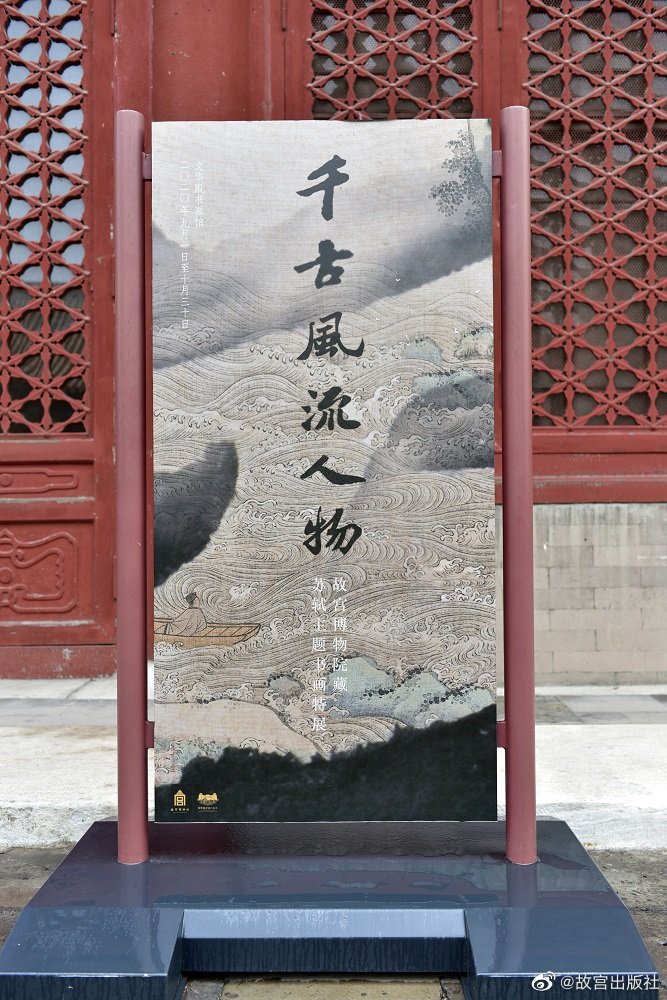
From September 1st to October 30th 2020 , 千古风流人物 ……A special exhibition of paintings and calligraphy on the theme of Su Shi from the Palace Museum is on display in Wenhua Hall. ……This time the Palace Museum held an exhibition with cultural relics as a carrier to show Su Shi’s artistic attainments and personality style. This is the first time that Su Shi is a well-known writer and artist in ancient my country. Because of its elegant life taste and open-minded attitude towards life, it exudes a unique personality charm. His art, thoughts and even the taste of life have had a profound impact on later generations, and he himself has become a highly admired model of literati.

When Su Dongpo was alive, he used countless poems, writings and paintings. However, it has been passed down for thousands of years, and it can be said to be as rare as a star and phoenix. It is treasured by the past. In later generations, the past generations have continued to perform deductive creations with Dongpo poems, calligraphy, and deeds, leaving behind many paintings and calligraphy works. The Palace Museum has a collection of Su Shi’s masterpieces of calligraphy, as well as some important works of Su Shi’s mentors and friends, as well as a large number of related art treasures that are influenced by Su Shi and reflect his artistic ideas. The collections span from the Northern Song Dynasty to modern times, and the categories cover calligraphy and painting, rubbings, artifacts, and rare books of ancient books. It is one of the museums with the most concentrated collection of paintings and calligraphy related to Su Shi. The exhibits in this exhibition are mainly from the collections of the Palace Museum, with a total of 78 sets of cultural relics on display, so that we can also see the eternal romance of Dongpo in future generations…

Su Shi 蘇軾 / 苏轼;8 January 1037 – 24 August 1101), courtesy name Zizhan (子瞻), art name Dongpo 東坡was a Chinese calligrapher, gastronome, painter, pharmacologist, poet, politician, and writer of the Song dynasty. A major personality of the Song era, Su was an important figure in Song Dynasty politics, aligning himself with Sima Guang and others, against the New Policy party led by Wang Anshi.

Su Shi is widely regarded as one of the most accomplished figures in classical Chinese literature, having produced some of the most well-known poems, lyrics, prose, and essays. Su Shi was famed as an essayist, and his prose writings lucidly contribute to the understanding of topics such as 11th-century Chinese travel literature or detailed information on the contemporary Chinese iron industry. His poetry has a long history of popularity and influence in China, Japan, and other areas in the near vicinity……

The special exhibition of Su Shi’s painting and calligraphy in the Palace Museum is divided into four units. The first unit “Legend of Victory, Kuaiyoupeng”, through the works of Su Shi and his teachers and friends, shows Su Shi’s circle of friends and the era he lives in. The second unit “Su Zi’s Poems Are like Paintings” shows Su Shi’s literary accomplishments through Su Shi’s poems and essays written by Su Shi and later calligraphers, and paintings created by later painters based on Su Shi’s poetry and essays. The third unit “I can’t make the calligraphy” shows Su Shi’s calligraphy art and its influence through Su Shi’s predecessor’s works, Su Shi’s own calligraphy creation, and later works imitating Su Shu’s calligraphy. The fourth unit, “The Taste of the World is Qinghuan”, shows Su Shi’s life interest and attitude through paintings and calligraphy works showing Su Shi’s life and anecdotes, as well as Su Shi’s essays expressing spirit. The four parts show Su Shi’s spiritual world from different angles, and outline a vivid and three-dimensional image of Su Shi for everyone.

This special exhibition of Su Shi’s theme hopes that through the guidance of space and colour, the audience can be immersed in it and have a conversation that spans a thousand years with the ancients.

【9月1日至10月30日, 千古风流人物#——故宫博物院藏苏轼主题书画特展在文华殿展出。】此次故宫博物院举办以文物为载体,以展现苏轼艺术造诣与其人格风范的展览,尚属首次苏轼是我国古代著名的文学家、艺术家,不但在诗文、书画等方面具有深厚的造诣,还因其高雅的生活品味与豁达的人生态度,散发独特的人格魅力。其艺术与思想乃至生活情趣都对后世产生了十分深远的影响,他本人也成为备受景仰的文人典范。

苏东坡在世时诗文书画挥洒无数。然而倏忽千年,流传至今可谓稀如星凤,为历代珍赏;至后世,历代又以东坡诗文、书画、事迹不断进行演绎创作,留下了众多的书画作品。故宫博物院收藏有苏轼的传世书法佳作,还藏有部分重要的苏轼师友作品,以及大量受到苏轼影响和能够反映其艺术思想的相关艺术珍品。藏品的时代跨度从北宋至近现代,类别涵盖书画、碑帖、器物、古籍善本等,是收藏与苏轼相关书画文物最为集中的博物馆之一。本次展览的展品以故宫博物院藏品为主,共展出78件套文物精品,让我们亦能于后世一睹东坡的千古风流……

——故宫博物院藏苏轼主题书画特展共分四个单元。第一单元“胜事传说夸友朋”通过苏轼及其师友的作品,展现苏轼的交游圈与他所身处的时代。第二单元“苏子作诗如见画”通过苏轼和后世书法家所书写的苏轼诗文作品,以及后世画家根据苏轼诗文作品所创作的绘画作品,展现苏轼的文学造诣。第三单元“我书意造本无法”通过苏轼师法的前人作品、苏轼本人的书法创作以及后世临仿苏书的作品,展现苏轼的书法艺术及其影响。第四单元“人间有味是清欢”通过表现苏轼生平逸事的书画作品,以及苏轼抒发性灵的小品文,展现苏轼的生活情趣与人生态度。四个部分从不同角度展现苏轼的精神世界,为大家勾勒出一个生动而立体的苏轼形象。

本次苏轼主题特展希望通过空间和色彩的引导,使观众能够沉浸其中,与古人展开一场跨越千年的对话。

Imagines credit are of the  Forbidden city –Imperial Palace –Beijing – China- People’s Republic of China