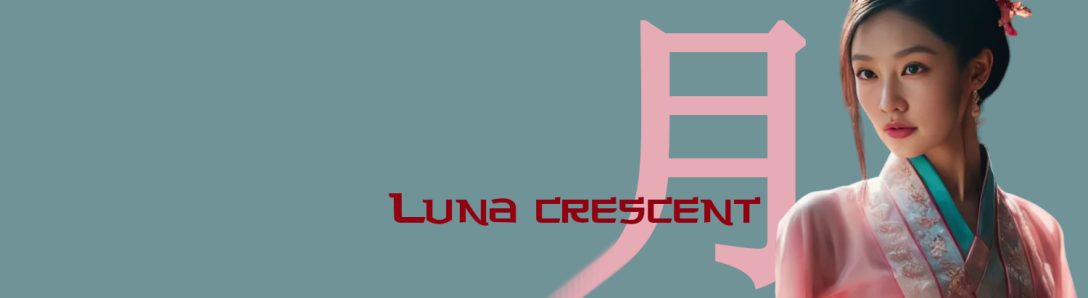
一笑随歌 Fated Hearts is a costume love drama produced by iQiyi and Broadway Pictures, produced by Broadway Pictures, directed by Zhu Ruibin , Lan Zhiwei , and Gu Zhiwei , starring Li Qin , Chen Zheyuan , Xia Meng , Chen Heyi , Zuo Ye , Xin Kaili and others.
一笑随歌 Fated Hearts tells the story of the defeat of the Jinxiu Kingdom in the Battle of Pingling. The red-dressed female archer Fu Yixiao ( played by Li Qin ) shot an arrow that hit the eldest prince of Susha, Feng Suige ( played by Chen Zheyuan ) . The two went from using each other to falling in love with each other and running towards each other, performing an inspirational growth story that is a mixture of sweetness and cruelty.
It is a 36 episode Director: Chu Yui Bun, Francis Nam, Gu Zhi Wei Screenwriter: Qing Mei
When the Jinxiu Kingdom was defeated in the Battle of Pingling, the red-dressed female archer Fu Yixiao shot the eldest prince of Susha, Feng Suige, with an arrow, turning the tide of the battle. However, not long after the Battle of Pingling, Fu Yixiao accidentally fell off a cliff and lost all his memories. Feng Suige was also being hunted down and exhausted. By chance, the two met again at Zhengnian Villa. Looking at Fu Yixiao who had lost her memory, Feng Suige felt that there was something fishy about this matter. So she decided to take Yixiao with her to lure out the mastermind behind everything. The two thus embarked on a journey to uncover the conspiracy between the two countries. Along the way, they worked together to get rid of the scumbag, fight the powerful minister, and find the truth. From using each other to falling in love, they went both ways, with sweetness and abuse intertwined, and growth inspirational…
李沁Li Qin, born on September 27, 1990 in Bacheng Town, Kunshan City, Suzhou City, Jiangsu Province, is a Chinese film and television actress.
In 2008, Li Qin became well-known to the audience for her role as the young Xue Baochai in the costume drama Dream of Red Mansions . In 2010, she was nominated for the Best Newcomer Award at the 31st Popular Film Hundred Flowers Awards for her role as Yang Kaihui in the 90th anniversary tribute to the founding of the Communist Party of China, The Founding of a Party . In 2013, the modern drama ” Watching the Sky ” starring her won the Golden Angel Award for Outstanding Chinese TV Dramas at the China-US Film Festival ; the urban drama ” Brilliant Life ” starring her won the national TV drama ratings championship in the same period. In 2014, she won the Most Promising Actress Award at the National Drama Festival for her roles in the TV dramas ” Half Summer ” and ” The Return of the Daughter “.
In 2017, she received much attention for his role in the costume drama Princess Agents. In 2018, she was nominated for the Best Supporting Actress Award at the 24th Shanghai TV Festival Magnolia Awards for her role in the period drama White Deer Plain . In the same year, she was nominated for the Best Actress at the 34th Popular Film Hundred Flowers Awards for her role in The Founding of an Army, a tribute to the 90th anniversary of the founding of the People’s Liberation Army .In 2019, the costume drama ” Celebrating Yu Nian ” starring him was broadcast In 2020, the comedy film ” Warm Hug ” starring him grossed over 800 million RMB at the box office . In 2021, the TV series The Song of Glory , in which he starred, became the first Chinese TV series to win the International Emmy Award for Best Television Series. In 2024, she continued to star in the costume drama ” Celebrating Yu Nian Season 2
Images and visuals are from Weibo also from their respectives.
On July 19th 2023 , the multilingual website of the Forbidden City Palace Museum- Beijing, China, People’s Republic of Chinawas officially released at the Digital Cultural Tourism Development Forum of the 2023 China Internet Civilization Conference! The website covers five languages: English, French, Russian, Japanese, and Spanish, and will meet the needs of audiences with different languages.
The Journey of the Great Way: Special Exhibition on Confucian Culture Exhibition location: Meridian Gate and East and West Wings Exhibition Hall…. In which the Exhibition runs from time: 2024/ November 1st- 2025 January 5th..
The Journey of the Great Road… The first unit of the exhibition is “Tracing the Past and Searching for Confucianism”. It uses archaeological evidence to show China’s ritual and music civilization before the birth of Confucius and Confucianism, and to explore the historical formation of Confucian culture. Representative exhibits include the earliest image of Confucius found in archaeological unearthed cultural relics – Confucius’s Clothing Mirror (replica) from the Tomb of Marquis Haihun of the Western Han Dynasty; pottery fragments from the Wannian Xianren Cave in Jiangxi, which are 20,000 years old, and the Jiahu bone flute that pioneered the ritual and music civilization; there are also bronze bans with animal faces from Shigushan, Baoji, which reflect the Zhou people’s prohibition system, and the renamed Fang, which reflects the “same writing system” after the Qin Dynasty unified the world. With Emperor Wu of the Han Dynasty choosing Confucianism as the official orthodox thought, it laid the tone for traditional culture for more than two thousand years..
The Journey of the Great Way The second unit of the exhibition, “Transformation into the World”, extracts the development trajectory of Confucian culture from the perspectives of Confucian inheritance, the continuation of classics, and ideological tolerance, and displays the core civilization concepts of Confucian culture from the personal, social, and national levels.
The core of Confucian culture concerns the world and is sought in the heart. Confucianism advocates the family and country feelings of self-cultivation, family harmony, governance of the country, and peace in the world, with the ideal of establishing a “Great Harmony” society where the world is for the public, the virtuous and the capable are selected, and trust and harmony are emphasized. The Confucian pursuit of a better social order and moral customs is constantly endowed with the connotation of the times, reflecting the Chinese nation’s unique understanding and mission of building a community with a shared future for mankind.
午門 #MeridianGate- Wumen is the southern and largest gate of the Forbidden City in Beijing, China, People’s Republic of China….. Unlike the other gates of the Forbidden City, the Meridian Gate has two protruding arms on either side, derived from ancient que towers traditionally used to decorate the main entrances of palaces, temples and tombs. The gate has five arches. The three central arches are close together in the main, central section; the two flanking arches are farther apart from the three central arches, and are located between the central section and the protruding arms. The centre arch was formerly reserved for the Emperor alone; the exceptions were the Empress, who could enter it once on the day of her wedding, and the top three scholars of the triennial civil service examinations, who left the exams through the central arch. All other officials and servants had to use the four side arches.
A series of buildings form the superstructure of the gate. The central one is a pavilion of nine bays wide, with double eaves. On each of the protruding side, a 13 bays-long building with a single eave, connects the two pyramidal-roofed pavilions that represented the que towers.
中秋節The Mid-Autumn Lantern Festival at Yuyuan has begun and will run from 17th September 2024 until October 7th. The Mid-Autumn Festival, which falls on the 15th day of the 8th lunar month, is a traditional Chinese festival that celebrates family reunions and expresses gratitude. During this time, people eat mooncakes, which symbolize the full moon, and make wishes while admiring the moon. Lighting lanterns to illuminate the night sky is also an important part of Mid-Autumn culture, with the glowing lanterns symbolizing family unity and happiness.
0:00 Intro – 简介 1:41 Shooting Star Lanterns – 流星灯笼 5:02 Central Plaza – 中心广场 6:57 Central Plaza Dance Show – 中心广场舞蹈表演 12:12 Plaza in Front of Nine Bend Bridge – 九曲桥前广场 13:22 Dance Show at Nine Bend Bridge Plaza – 九曲桥前广场舞蹈表演 15:55 Nine Bend Bridge – 九曲桥 26:08 Golden Plaza – 黄金广场 28:23 Shooting Star Lanterns – 流星灯笼 30:44 Old School Field Road – 旧校场路 35:19 Central Plaza – 中心广场
▶Yuyuan Garden Yuyuan Garden is a historic garden located in Huangpu District, Shanghai, originally built in 1559 by Pan Yunduan, a wealthy merchant from the Ming Dynasty. The garden is renowned for its classical Chinese garden design, featuring ponds, bridges, rockeries, and traditional architecture that create a harmonious landscape. Due to its beautiful scenery and rich history, Yuyuan is a popular attraction for visitors. During the Lantern Festival, the garden is adorned with vibrant decorations, offering a magical experience to all who visit in which is located 269 Fangbang Middle Rd, 四牌楼 Huangpu, China, 200010 China, People’s Republic of China.
Shanghai Yu Garden, the cultural area of Greater Yu Garden, uses light and shadow as a medium and the autumn moon as a guide to decorate the two major festivals of Mid-Autumn Festival and National Day. From September 6th to September 26th, we will start the 2024 Yu Garden Mid-Autumn Moon Tour with the theme of “A heart with brilliance, a life without flaws”, and appreciate the oriental life aesthetics together. 🌕
📷Be the first to check in, hurry up🐎
🌟[The moon is reflected in all rivers, and everything is round]-The central square uses “mirror” and “moon” as design elements, and cleverly uses mirror refraction to present the state of “one moon appears in all water, and all water and moon are captured by one moon”. 🌟[The four seasons are in order, and everything has its time]-The Nine-Curve Bridge relies on the myth of Chang Xi bathing in the moon in “Classic of Mountains and Seas”, and puts twelve rounds of bright moons on the bridge, allowing tourists to feel the luster of the full moon and the crescent moon, and experience the philosophical thought of “life has its own shining time”.
🌟【Meteors at Dawn】- Countless bright stars hang in the sky on Ninghui Road , blooming brilliantly. 🌟【Zespri Creative Lighting Set】- Golden Plaza, come and “dig the golden moon” together . In addition to the on-site fantasy lighting set display, there are also light and shadow floodlighting and Luna performances, multiple hidden ways of playing, waiting for you to explore!
Walk East | Max Channel is about his walking, driving, riding running around views of China – People’s Republic of China sharing his immersive experiences in his video hope you could have a pure view about China today, sharing some 4K UHD videos to show pure China daily scenes for you…. BEST VIEWED ON 2160px60 with the volume up for immersive immersion..
On July 19th 2023 , the multilingual website of the Forbidden City Palace Museum- Beijing, China, People’s Republic of Chinawas officially released at the Digital Cultural Tourism Development Forum of the 2023 China Internet Civilization Conference! The website covers five languages: English, French, Russian, Japanese, and Spanish, and will meet the needs of audiences with different languages.
The multilingual website of the Palace Museum is committed to establishing an international website that is concise, clear, easy to use for overseas audiences, and fits the construction of the modern civilization of the Chinese nation, including tour guides, information, panoramic tours, online exhibitions, collection appreciation, cultural topics, etc. Rich immersive content describing of the most detail collection that housed within the Forbidden City collection….
On the 26th October 2023 is World Food Day, let’s get to know the word “rice” in Oracle! The word “rice” in oracle bone inscriptions is made up of rice grains. The small dots above and below represent rice grains. Some people think that the horizontal drawing in the middle is the shape of a sieve.
“Mi” initially referred to millet that had taken off its shell, and later it gradually referred to rice specifically, which is the rice we are familiar with. my country’s early rice domestication played an important role in the origin of world agriculture. As early as more than 10,000 years ago in the middle and lower reaches of the Yangtze River (Shangshan Site), our ancestors had begun the domestication of rice, which was basically synchronized with the domestication of major crops in the world such as wheat and corn.
Today, more than half of the world’s population depends on rice, but there are still 200-300 million people facing severe food crises. Let us join together to respond to the ” palacezerowaste ” initiative, take action on discs, cherish every particle and never throw it away!
Qing Dynasty, clay paint and yellow wine jar. Wedding ceremonies are grand and lively, often with wine added to the fun. This wine jar is made of clay and painted with colorful paint. The body of the jar is painted with auspicious patterns of dragons and phoenixes. There is the word “囍” on the jar body and sealing mud. The jar is filled with rice wine produced in Zhejiang. In ancient China, the best rice wine was brewed in Shaoxing, Zhejiang. This wine may have been specially produced by local officials as a tribute to the emperor’s wedding.
Tongzhi, Qing Dynasty, yellow ground pastel color magpie plum bowl. In preparation for the wedding in the 11th year of Tongzhi (1872), the palace issued a firing list and official instructions to the Jingdezhen Royal Kiln Factory: “The queen needs to use porcelain for fourteen points and nine colors.” Among them, “Fourteen Points” refers to fourteen sets of porcelain with different patterns, each of which is a sea bowl, a large bowl, a medium bowl, a soup bowl, a rice bowl, a pocket bowl, a nine-inch plate, a seven-inch plate, a five-inch plate, and a four-inch plate. One-inch plates, three-inch plates, two-inch five-plates, wine cups, soup spoons, tea cups, large tea cups, tureens, tea jars, urns, powder boxes, rice bowls, rouge boxes, flower pots, narcissus boxes, etc. The inner wall of this bowl is plain, and the outer wall is painted with magpies and plum blossoms on the yellow ground. The main trunk of the plum tree is curved, the branches are strong, and plum blossoms are dotted on the branches. Black magpies are flying or perching, with vivid postures and delicate depictions. The magpie climbing on the plum blossom is a traditional Chinese auspicious pattern. It is pronounced by the words “xi” and “plum”, which means “happy on the eyebrows”. This patterned bowl is one of the “Fourteen Points” porcelain fired at Tongzhi’s wedding ceremony.
From October 12th to 18th, the week-long third “Forbidden City Zero Waste Catering Culture Week” came to an end! During this Catering Culture Week, the Forbidden City has newly upgraded and launched an “immersive zero-waste restaurant” experience. It provides publicity, decoration tips, action guidelines, etc. based on scientific dining procedures to encourage audiences and employees to proactively reduce food waste and develop a “CD-ROM” Actions”, “reduce disposable plastic tableware”, “garbage sorting” and other good green dining habits.
“Grains are the life of all people and the most important treasure of the country.” Palace museum and Vanke philanthropy foundation invite you to participate in palacezerowaste and let the good habit of “zero waste dining” accompany you every day to ensure “food security”
Tongzhi of the Qing Dynasty, a gold-engraved tea bowl with patterns of flowers, longevity and longevity. The tea bowl is made of 80% gold. The round mouth is slightly open, and the upper part of the outer wall and the circle foot are engraved with a pattern around it. The middle of the outer wall is engraved with two pairs of characters “囍” and the character “Shou”, and the lower part is decorated with lotus petals. Inscribed on the sole of the foot is “Two liang equal to seven liang, four qian and two cents in the eleventh year of Tongzhi (1872)”. The eleventh year of Tongzhi (1872) was the year of Emperor Tongzhi’s wedding. The word “囍” was engraved on the bowl, which should be used for the wedding.
Dharma stickers are made by imitating the ink marks of famous people from different eras on stones, making rubbings and spreading them widely. Among them, the ancients said that those with fine imitation, engraving, and rubbing are “first class than authentic works.” Dharma stickers can more realistically reproduce the calligraphy of famous artists, making it easier for people to practice calligraphy. The publication of “Chunhua Pavilion Tie” in the Northern Song Dynasty created the trend of engraving and passing on rubbings, and it is known as the “ancestor of Fati”.
The original stone of “Chunhua Pavilion Tie” was destroyed long ago. Song Tuo Charming The second section of the exhibition “Chunhua Pavilion Calligraphy and Song Dynasty Dharma Calligraphy” displays the Maoqin Palace copy collected by the Palace Museum and the Quanzhou copy collected by the Art Museum of the Chinese University of Hong Kong. They are both rare re-engraved copies of the “Chunhua Pavilion Calligraphy” handed down from ancient times.
Qing Dynasty, golden dragon and phoenix double 囍 pattern plate. This gold plate is 4.8 centimeters high and 30.6 centimeters in diameter. It is made of 80% gold and weighs forty taels. It is the largest gold plate existing in the Qing palace. There are four characters on the plate: “dragon”, “phoenix”, “double” and “囍”. This plate may have been used for the weddings of emperors and empresses.
Painted banquet table with golden dragon and phoenix patterns. In the Qing Dynasty, when the emperors and empresses held wedding ceremonies, they had to share a table and eat together. The table was entered by the female official of the Ministry of Internal Affairs. The emperor sat on the right and the queen sat on the left, eating and drinking opposite each other. This table is the combined banquet table. The table is made of wood, with a yellow lacquered table top and a painted golden dragon and phoenix “囍” pattern. The legs are slightly curved, making it beautiful and practical. Emperor Guangxu’s “Red Banquet of the Wedding Ceremony” records that the emperor and empress’s banquet table was one foot high, three feet five inches long, and two feet five inches wide. It was decorated with the Chinese character “囍” with dragons and phoenixes on a yellow ground. The size and pattern matched this table.
The scroll of “Guiju Mountain Birds” (Fig. 1) was painted by Lu Ji, a court painter of the Ming Dynasty, and is now collected in the Palace Museum. The subjects depicted on the axis of the picture are red-billed blue magpies, starlings, sweet-scented osmanthus, and autumn chrysanthemums, all of which are auspicious and precious things. The objects in the picture not only truly show the natural nature of the creatures, but also vividly express the beautiful meaning. The starlings on the branches are chirping at each other, highlighting their good singing nature; the four red-billed blue magpies are graceful and their dark blue feathers are particularly eye-catching. Among them, the three in the lower left corner are fighting for an insect, which is lifelike. The red-billed blue magpie is a beautiful bird. The male and female have similar feather colors. Its extraordinary temperament can be called the “face value” among birds. However, their calls are in great contrast to their beautiful appearance and graceful flying posture. They make many different noisy calls and whistles, which are rough and noisy….
Guangxu of the Qing Dynasty, the recipe for the Henu Banquet. According to Emperor Guangxu’s “Red Banquet of the Wedding Ceremony”, on the twenty-seventh day of the first lunar month in the fifteenth year of Guangxu’s reign (1889), the emperor and his empress had a banquet. The meal list was as follows: red gold plate with two items: pig black fork and sheep black fork; red gold bowl The fourth product: bird’s nest with the character “Eight Immortals” duck, the bird’s nest with the character “囍”, shredded duck, thin pork shreds soup; the second product of the red gold plate: the bird’s nest with the character “dragon” mixed with shredded smoked chicken, the bird’s nest with the character “phoenix”, golden and silver elbow flower, the bird’s nest with the character “Cheng”, spiced chicken , bird’s nest with auspicious characters, gold and silver duck silk; red gold snail plate with side dishes, second item; red gold plate with side dishes, second item; red ground with golden flower characters, porcelain bowl, second item: bird’s nest and eight immortals soup, second item; colorful Bai Zi porcelain bowl, second item: old rice meal; second item; The second product of the colorful Baizi porcelain bowl: the second product of Zisun Pastry. The dumplings are dumplings brought by the queen from her natal family and cannot be cooked. When the emperor and empress were eating them, a boy outside the window asked if they were alive, and the emperor and empress had to answer “live”. Eating cakes for descendants should be done before the Henu Banquet, which shows that the royal family attaches great importance to the inheritance of descendants. The tableware for the Hexin Banquet is luxurious, and the dishes contain the beautiful meaning of dragons and phoenixes, and the succession of descendants…
Qing Dynasty, red sandalwood inlaid glass with the word “囍” hanging on the corners. Emperors of the Qing Dynasty mostly married their queens in the afternoon or evening. Emperor Tongzhi married during the Shen hour, that is, between 3 pm and 5 pm, while Emperor Guangxu chose the Zi hour, which was between 11 pm and 1 am. When a wedding is held at night, lights and candles are naturally indispensable. There are poke lamps that can be inserted on the base, hand-held lamps, table lamps placed on the table, and hanging lamps hung on the room. Poke lamps and holding lamps are mostly used outdoors, while table lamps and hanging lamps are mostly used indoors. This hanging lamp consists of two parts: a lamp cap and a lamp body. The red character “囍” is pasted on the lamp body, which means prosperity and joy.
Qing, the horny character holds the lamp. The lamp consists of two parts: cover and base. The lampshade is round in shape, with the upper and lower parts slightly tightened, and the word “囍” is written in red on both sides. The handle is connected to the base, and a bracket is installed on the base to fix the lampshade. The cover is made of horn, heated and boiled with cow and sheep horns and solvent until soft, and then different types of lasts are used to gradually expand it. The cover wall is thin and seamless, has good light transmission and is windproof. However, the production of lampshades is difficult, the yield is low, and those with large diameters are particularly rare. This kind of horn lamp is controlled by eunuchs and is not only used to illuminate the queen’s carriage when walking in the palace, but can also be placed in the wedding room to create a festive atmosphere…..
On the 24th October 2023 .. Fall in Love with the Forbidden City…. Turtles and cranes watch the sun and moon from a distance, while divine lins spit out mist and turn into frost. Repost three auspicious beasts and reap Frostfall…… good luck!
The autumn air is crisp and the autumn clouds are light. After mid-autumn, galloping horses and sentrying deer in the forest were seasonal leisure activities for the Qing Dynasty court. The method of sentrying a deer is to “put on the deer’s head and lie down in the forest ravine, and use the whistle to call the deer.” It can be seen that the deer whistle is an important tool for hunting deer. Deer whistles are shaped like horns, about two to three feet long, and can simulate the sound of a deer. According to the habits of deer, deer hunters need to start from the camp before the fifth watch, go to the predetermined location to hide, and wait with bated breath after the deer whistle blows. After the deer appears, because the distance is close and the target is clear, the deer will hit more; if occasionally If you fail to hit, the pursuit will generally not continue. Figure 8 is one of the imperial deer whistles collected by the Palace Museum that is on display in the exhibition….
Qing Dynasty, filigree enamel candlestick with the word “囍”. Before the advent of electric lights, people used oil lamps or candles for lighting. There were many candles and candlesticks in the Qing palace. Candlesticks are mostly made of metal, which is stable and difficult to ignite. Menorah styles vary depending on where they are used. This cloisonné enamel candlestick has a sky blue glaze base and is decorated with lotus patterns. Yuanbao symbolizes wealth and can prevent wax oil from spilling. The word “囍” indicates that this candlestick is specially made for weddings.
Wang Xizhi’s “Lanting Preface” of the Eastern Jin Dynasty is known as “the best running script in the world”. The “Lanting Preface” that has been handed down from generation to generation is divided into two types: later generations’ copy, copy and stone rubbing. During the Song Dynasty and the Song Dynasty, engraving and calligraphy flourished. “Preface to Orchid Pavilion” was carved in stone and passed down, which became a fashion. Collecting rubbings of “Lanting Preface” has gradually become a hobby among literati, ranging from a few to more than ten, or even hundreds or even hundreds.
During the Southern Song Dynasty, Lizong, the Prime Minister of Yousi, collected hundreds of rubbings of Wang Xizhi’s “Lanting Preface”, which were later called “Youxiang Lanting”. According to the heavenly stems, there are ten types of each stem from A and B to Ren and Gui. In the third section of the #松图charm exhibition, “You Xiang Orchid Pavilion”, the Palace Museum and the Art Museum of the Chinese University of Hong Kong jointly displayed fourteen of them for the audience to compare and appreciate.
日国宫 , tonight’s good night comes from the book “Yuemanqingyoutu”·Chrysanthemum Appreciation on the Double Ninth Festival.
On July 19th 2023 , the multilingual website of the Forbidden City Palace Museum- Beijing, China, People’s Republic of Chinawas officially released at the Digital Cultural Tourism Development Forum of the 2023 China Internet Civilization Conference! The website covers five languages: English, French, Russian, Japanese, and Spanish, and will meet the needs of audiences with different languages.
The multilingual website of the Palace Museum is committed to establishing an international website that is concise, clear, easy to use for overseas audiences, and fits the construction of the modern civilization of the Chinese nation, including tour guides, information, panoramic tours, online exhibitions, collection appreciation, cultural topics, etc. Rich immersive content describing of the most detail collection that housed within the Forbidden city collection… .
Qing, Fei Yigeng, Zhang Xiong, Meiyue Chang’e picture fan page. This picture is a joint work of Shanghai-style famous artists. Fei Yigeng was the eldest son of Fei Danxu. He inherited his family’s painting skills and was good at painting ladies and flowers. Zhang Xiong, also known as Zixiang, also known as Yuanhu Waishi, specializes in poetry and rhythm. He likes to collect epigraphy, calligraphy and painting, and is good at flowers, birds, figures, and landscapes. His paintings are gorgeous but not vulgar. Together with Ren Xiong and Zhu Xiong, he is known as “Shanghai” “Shang Sanxiong”. It can be seen from the title “Yu Bo Fei used farming to paint Chang’e, Zixiang Zhang Xiong painted plum blossoms” that Fei and Zhang used their respective talents to express the popular folk theme of Chang’e flying to the moon. The moon has a mysterious veil due to its distance. Painters often create images related to the moon, such as the Jade Rabbit, Osmanthus Tree, Chang’e, and Wu Gang, to bring it into the homes of ordinary people.
During the Tongzhi period of the Qing Dynasty, men’s single court robes were made of sapphire blue silk embroidered with three blue clouds, bats and dragon patterns. The twelve chapters used on the emperor’s court uniform represent the twelve talents and virtues of the monarch. The “moon” and “sun” in the twelve chapters are arranged on both shoulders, which is a metaphor for the emperor’s power being like the light of the sun and the moon, shining in all directions. The moon is often painted with a toad or a white rabbit, which is based on the myth of Chang’e flying to the moon. This blue court robe is embroidered with twelve chapters, in which a jade rabbit is embroidered in the moon, holding a blue pestle stick and carefully pounding medicine. The appearance is very cute…
October wallpaper is now online. Admire the clouds and springs in the wild valleys, and enjoy the beauty of flowers. Feel the tranquillity and coolness of autumn in the beautiful scenery and beautiful utensils. Go to the official website to download high-definition wallpapers in various formats and sizes, suitable for various terminals…
Qing, Anonymous, Mid-Autumn Festival Jiarui Picture Scroll (Part). This scroll is themed to celebrate the Mid-Autumn Festival, and there are many rabbit images related to the Mid-Autumn Festival and the moon. This picture shows a statue of a Jade Rabbit pounding medicine. Making statues out of clay, oil soil or wax has a long history in our country. In the late Qing Dynasty, there were also clay figurine Zhangs who specialized in statues. The rabbits in the picture are lifelike. They are not only dolls in the hands of children, but also rare handicrafts.
中秋节- Mid Autumn Festival Appreciating the bright moon together brings the reunion of thousands of families.
Sponsored by the State Administration of Cultural Heritage and hosted by the Palace Museum, the China Cultural Relics Exchange Center, and the China Cultural Relics Protection Foundation, the ” 五肖四海 – ‘One Belt, One Road’ Cultural Relics and Archaeological Cooperation Exhibition” will be held at the Shenwumen Exhibition Hall of the Palace Museum on September 29. Open to the public. This exhibition brings together 84 exquisite cultural relics from 4 cultural and museum institutions in Uzbekistan, Kazakhstan, and the United Arab Emirates, as well as 13 museums in 10 provinces, autonomous regions, and municipalities in China. Many of these cultural relics are shown to the public for the first time. These exhibits materialize the invisible exchanges of civilizations along the Silk Road, reveal the historical trajectory of exchanges and mutual learning among civilizations along the Silk Road, and inject sustainable power into promoting exchanges and mutual learning among different civilizations and promoting mutual understanding and understanding between peoples. This exhibition will be on view until January 5, 2024. Please make a reservation in advance through the “Forbidden City Museum” applet to visit.
The osmanthus is bright, the flowers are full, and the moon is full. Happy Mid-Autumn Festival to everyone !
Qing Dynasty, Mu Guanghan Palace is at the end of the puzzle. This object is a mosaic (prop) used to simply set the scene and create an atmosphere during opera performances in the palace. The craftsmen strive for excellence in production and use layer-by-layer carving techniques to create a distant and near spatial relationship between the rabbit, the sweet-scented osmanthus tree, and the Guanghan Palace in a limited plane composition. Not only that, the magnificent Guanghan Palace was also carved with splendor and splendor, and even the white jade rabbit that made medicine in the Moon Palace was decorated with gold powder, showing its aura of wealth and nobility…
Crab, also known as “Huang Jia”, often appears on items with the meaning of “passing the imperial examination” because it plays the role of “A” in “Er Jia Chuanlu”. The crabs in autumn make their debut based on their strength. With the plump crabs accumulated for a year, they become the well-deserved protagonists on the Mid-Autumn Festival table. The ancients had the interest of “holding the pincers to hold the wine”, and also had the practice of spoiling crabs by saying “the pincers of the crab are gold liquid, and the mounds are Penglai”.
The clouds are steaming and the clouds are rising, and the magpie is rising and the rainbow is flying. Hello October! Hello, 74-year-old New China! National Day Happy China, People’s Republic of China.
Exterior view of Kunning Palace. Kunning Palace is located on the central axis to the north of Qianqing Palace. It was built in the 18th year of Yongle in the Ming Dynasty (1420) and was the residence of the empress of the Ming Dynasty. During the Shunzhi period of the Qing Dynasty, it was renovated. The renovated Kunning Palace was nine rooms wide and three rooms deep. The west side was a place for worship, and the east side was a wedding room. This followed the system of the queen being in the middle palace. Emperor Kangxi, Emperor Tongzhi and Emperor Guangxu all held weddings here. Although Dongnuan Pavilion is a place for holding ceremonies, it is not suitable for living. Therefore, after the wedding, the queen usually moves elsewhere. For example, the empress of Zhi Emperor lived in Chuxiu Palace and the empress of Guangxu Emperor lived in Zhongcui Palace
——The peonies
are “thousands of beauties that break the morning glow”. The new makeup shines in the water, and the beautiful shadows are full of joy. The scorching sun is shining brightly, and the beauty and fragrance of the country live up to the expectations!
Dongnuange bridal chamber has a happy wedding. This picture shows the wedding bridal chamber of the East Nuan Pavilion of Kunning Palace restored based on documentary records. The word “Shou” is written in cursive on the top of the door, and the word “Xi” is decorated on the gilded door below. When the double doors are closed, the word “囍” is formed. There are couplets inscribed by Emperor Qianlong on both sides of the door: “Heaven is pure and blessed, and the valley of Beirjian is like a lotus; the people are harmonious under the edict, and Sui Yi will be blessed and live forever.” On the screen wall leading to the east and west gates of the bridal chamber, It is also decorated with the golden word “囍”, which means happiness upon opening the door. The main color of the door is red, creating a festive atmosphere..
在久久看中华 – The chrysanthemum
“will make the golden stamens flood with clouds”. The chrysanthemum petals reflect the morning light, and there are broken shadows accompanying the floating fragrance. Even if the dew is heavy and the frost is heavy, the yellow leaves will not dance in the autumn wind.
Panoramic view of the bridal chamber of Kunning Palace. The bridal chamber originally referred to a deep and secret room, and later specifically referred to the wedding room, also known as the wedding room. The bridal chamber of Kunning Palace was originally used for the wedding of Emperor Kangxi. The subsequent emperors were already married before taking the throne, so it was not used again until Emperors Tongzhi and Guangxu. The bridal chamber of Dongnuang Pavilion has a kang bed to the south and two rooms to the north separated by bright pillars. Both rooms have a floor-to-ceiling kang bed with a dragon and phoenix character “囍” and vines and gourd patterns. The northeast kang (outer north kang) is the living room, with mattresses, backrests, handrails, etc. on the kang, and the northwest kang (inner north kang) is the bedroom. The floor is covered with a large red carpet, embroidered with dragon and phoenix patterns, and the golden character “囍” embroidered between the dragon and phoenix, echoing the golden character “囍” on the wooden shadow wall. The bridal chamber is full of festive
Kunning Palace bridal chamber waist knife. The Manchus are martial people, and this tradition can still be reflected in wedding items. This knife is hung on the pillar of the bridal chamber, which has the same meaning as the bow and arrow bag hung along the nose pillar of the bridal chamber. According to the records of the Qing Palace, such weapons were only hung during festivals, not only for the sake of martial arts but also to ward off evil spirits.
Interior view of the bridal chamber of Kunning Palace. In the bridal chamber, there is a floor-to-ceiling kang bed with a gourd and vine pattern of “囍” and dragon and phoenix, and a tent with a dragon and phoenix in auspicious “囍” pattern. A bedding is placed on the kang, and a plaque hangs “the sun rises and the moon stays forever.” There is a saying in the book of the emperor and empress of Tongzhi that “the two rituals of movement and coordination will make the husband smooth; the light will shine on the four sides, and the rising sun will praise the husband and the moon.” Therefore, the plaque contains the meaning of blessing. The vine gourd symbolizes the endless supply of melons, which corresponds to the couplet on the indoor wall: “The treasures last forever, the eight poles of mankind and heaven rejoice; the gold and yellow flowers bloom together, the sun and the moon shine brightly in the sky”