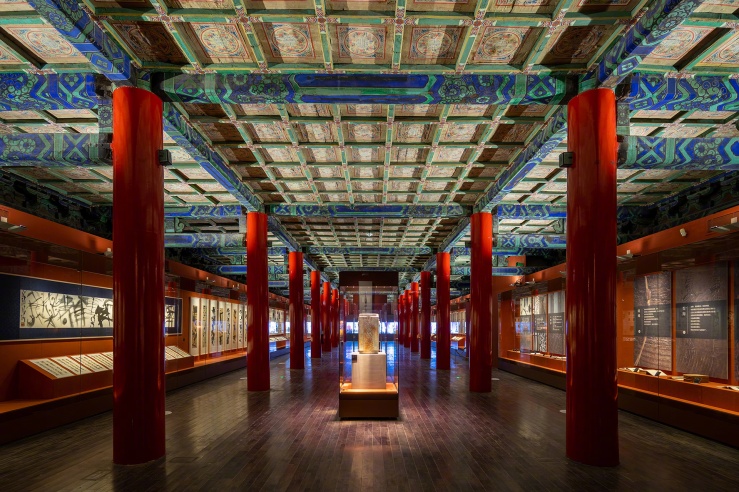
On the 21st December 2021 it was the Winter Solstice 2021 in which during the Beijing – China – People’s Republic of China it was the winter solstice in which during that day there was a special moment where it happens on during that day where the Every year around Winter Solstice, the 22nd solar term of the Chinese lunar year, meaning the “summit of the winter,” the Palace Museum welcomes an annual spectacle-the signboard inscription with “Upright and Pure in Mind” (“Zhengda guangming” in Chinese) and the five golden dragons below it in the Palace of Heavenly Purity (Qianqing Gong in Chinese) are illuminated from west to east…. Featuring on CGTN live streaming that day…
数码御宫小程序冬至暖心保护# It’s the winter solstice, and the sun will resume: The Digital Forbidden City Mini Program 2.0 is officially released! In addition to the overall visual renewal, the new version of the Mini Program also optimizes and adds practical functions such as online ticket purchase, exhibition reservation, and shopping in the courtyard to further improve the “one-stop” visit experience! Smarter, friendlier, simpler, and more open, just to serve you better….
Four years of light and shadow circulation, five years of prosperity…… 古宫新事 the fifth episode will be released soon. We will go to the annual appointment in the 601 year old Forbidden City – Beijing –China – People’s Republic of China , within the Forbidden City the Awaitingly opening renovated –restoration of 養心殿Hall of Yangxin to witness the new stories in the Hall of Yangxin during this year. Stay tuned on December 17th 2021 in which currently it has been undergoing a massive restoration in the year 3rd September 2018 in which before After two years of preparation, renovation of The Hall of Mental Cultivation was officially kicked off with a ceremony held on Monday in the Palace Museum, which is housed within the Forbidden City
The Hall of Mental Cultivation (Yangxin dian) was built in 1537 and rebuilt during the Qing emperor Yongzheng’s reign (1723-1735). The “I”-shaped buildings are divided into two parts – the front halls and the rear halls. The chamber was moved to the rear halls after the emperor Yongzheng Originally used a Residence of the emperor, governance, administration
The Hall of Yangxin is about 94.8 meters long from north to south and 81.3 meters wide from east to west, covering an area of about 7707 square meters. The Hall of Yangxin is an I-shaped hall. The front hall is three rooms wide, 36m wide, 3 rooms deep, and 12m deep. The yellow glazed tiles rest on the top of the mountain , the Ming and Xici indirect rolling sheds embrace the building.
The Hall of Mental Cultivation (Yangxin dian) was built in 1537 and rebuilt during the Qing emperor Yongzheng’s reign (1723-1735). The “I”-shaped buildings are divided into two parts – the front halls and the rear halls. The chamber was moved to the rear halls after the emperor Yongzheng. The central rooms and the west rooms of the front halls were changed into the place where emperor handled the state routine affairs, reviewed memoranda and received his officials.
The east room was the place where the empress dowagers Cixi and Cian took charge of the state affairs behind a screen when the emperors Tongzhi and Guangxu were in their childhood. The Qing last emperor Puyi (r. 1909-1911) convinced the “presence meeting” and made the decision to give up the throne after the revolution of 1911 broke out.
During the Month of December 2021, in which current Beijing – China – People’s Republic of China the Beijing the three thousand more ancient postmodern ultra-metropolis mega city in which the evening, with gorgeous sunset glows on the capital, and the lights of the corner tower of Dongbianmen gradually come on. The ancient buildings and the sunset glow together, attracting the public to stop and watch…. In which one of Beijing city fortifications in東便門Dongbianmen Eastern Convenient Gate’) was located at the north-eastern corner of the Outer city walls at the point where the outer wall stopped.. The defense system of Beijing during the Ming and Qing dynasties included city walls, moats, gate towers, barbicans, watchtowers, corner guard towers, enemy sight towers, and military encampments both outside and inside the city. The mountains immediately north of the city and the interior Great Wall sections on those mountain ranges also acted as a defensive perimeter…..
‘Eastern Upright Gate’) was located on the northern section of the Inner city eastern wall. It was built on the location of the Chongrenmen (崇仁門) gate of the Yuan era, the central gate of the eastern city wall of Dadu. In 1419 the name was changed, quoting “东方盛德属木、为春” and “直东方也,春也”. Dongzhimen’s gate tower was five rooms long (31.5 metres), three rooms wide (15.3 metres), and two floors high (34 metres). It was built in the multi-eaved Xieshanding style, with grey tiles with green glazed edges. The watchtower was similar to the one at Zhengyangmen, but on a slightly smaller scale. The barbican was built during the final years of the Yuan dynasty (ended 1368). It was nearly square, and was the smallest barbican of any of the nine Inner city gates. The northern and southern walls were 68 metres long, and the eastern and western walls were 62 metres long. Archways and sluice gates were present on the eastern and western sides. A Guandi Temple was located on the northeast corner, facing southward. The temple had no proper statue of Guandi; a minor deity made of wood was located there instead. This gave rise to the old Beijing saying: “Nine gates, ten temples, one without morality”. The sluice gate towers and the barbican were dismantled in 1915 when the circum-city railway was built. The watchtower was dismantled in 1930 and its platform in 1958. The gate tower was dismantled in 1965.
Outside Dongzhimen was a pagoda made completely from iron, with a stone statue of Yaowangye. Many carts carrying raw wood entered the city through Dongzhim
In During 2020, the second decade from the turn of the century in Beijing the Capital of China also the People’s Republic of China, in which is also the year of the rat, marking its six hundred years anniversary of the Forbidden city that marks the transitional point of in between the middle of the Ming Dynasty (1368- 1644) transitionally from Nanjing to Beijing towards the Qing Dynasty (1636-1644-1911) …. The Imperial Palace seen so many countless seasonally transitional equinoxes but further its six hundred years is iconic, but it’s five hundred ninety nine years it marks it Autumn Equinox…. In which it only took twelve years to build the same of the Daming Palace of The Tang Dynasty Xian Imperial Capital only it was least twenty times larger…
Previously season three is 北京卫视上新了故宫 Treasures in the Forbidden City … in which during September 2020 this month film for the Trendy Documentary show started film in Beijing with the same host of cast but company of new host celebrities from all walks of life…..
” 北京卫视上新了故宫 Treasures in the Forbidden City ” is the Chinese Beijing Palace Museum and Beijing TV station produced, co-produced Huazhuan Wen of Springfield’s cultural film and television production season broadcast programs. originally planned three quarters will be produced quarterly 10, it is the third season aired Forbidden City built 600 anniversary of the foundation of the 95 anniversary of the National Palace Museum. In the first quarter since November 9, 2018, every Friday at 21:05 Beijing TV and iQIYI broadcast simultaneously, and on January 11, 2019 ending…..
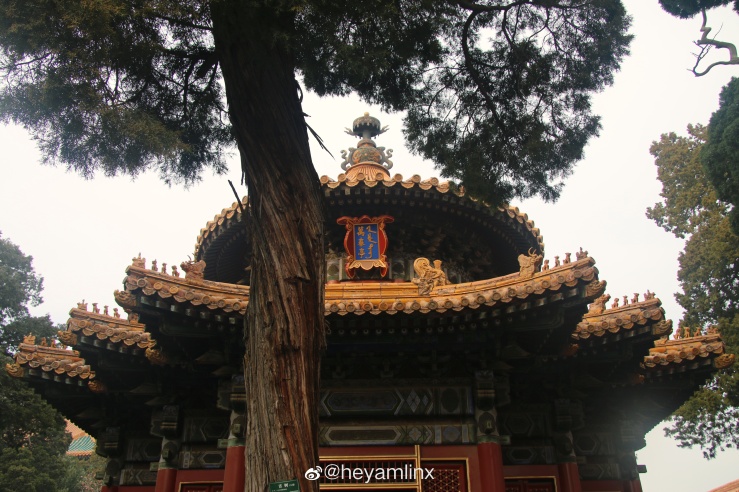
Roof beasts are sculptures placed on the ridges of houses and palaces in ancient Chinese traditional architecture. Distributed on the vertical ridges at both ends of the houses, the ancients decorated the buildings with these beasts, making the ancient buildings more majestic, magnificent, and full of artistic charm.. In which are Mysterious Animals on the Palace Roofs of the Forbidden City…. In which show the palace building importance’s in which for example of the Hall of Supreme Harmony is the most important and highest ranked palace in the Forbidden City. It is also called Golden Carriage Palace, which was used to hold significant activities like emperors’ birthdays and wedding ceremonies. Why the Hall of Supreme Harmony is the most special and highest ranked one? It is not only because of its size and architecture style, but also because it has 10 animal statues on each roof ridge, which cannot be seen anywhere else.
The 10th animal statue is Hangshi. It is like a standing monkey with wings on its back, and holding a vajra pestle. The image is like a Thunder God in Chinese legend. Its function is to prevent lighting strokes. Thus it is usually placed on the roof. There are only 8 Hang Shi statues in China’s ancient buildings, which are all located on the roof of the Hall of Supreme Harmony in the Forbidden City.
There are more or less rows of small animal statues on the roofs of each palace in the Forbidden City. They are mythical creatures in ancient Chinese legends, which represent all kinds of magic and wonderful things. Generally speaking, there are 3, 5, 7, or 9 animal statues on the roofs, and the order is also fixed, by Dragon, Phoenix, Lion, Sea Horse, Heavenly Steed, Suan Ni, Ya Yu, Xie Zhi, Dou Niu. The more animal statues, the higher palace rank. But there is an exception: Hall of Supreme Harmony, the highest-ranking ancient building in China. It has 10 mysterious animal statues on the roof. Also, they are arranged in a different order.
1. Dragon
It is one of mythical creatures living in the sea in ancient China myths and legends. Dragon is honored as the leader of marine benthos, having abilities of carrying rain with clouds. As the master of wind and rain, it is often used to symbolize auspiciousness. In ancient times, Dragon was also a symbol of the emperor and the imperial power.
2. Phoenix
In Chinese legend, it is the king of all birds with a crown on its head, which is similar to today’s peacock. Its appearance is a sign of peace in the world. People will obtain happy lives blessed by it. Like a Dragon, it is considered as a noble and magical animal too. Phoenix can also symbolize the empress.
3. Lion
The lion, a symbol of bravery and majesty, is the custodian in Buddhism. The lion is the king of the beasts. It has a sturdy and strong body, and great momentum. Lion is regarded as the beast that guarantees the peace of the palace. The governors think that the lion can not only avoid evil, but also bring auspicious things.
4. Sea Horse
The Sea Horse comes and the calamities can be turned into blessings. It is a heroic mythical creature in China’s ancient mythologies. At the same time, it symbolizes the royal’s stateliness.
5. Heavenly Steed
In Chinese mythology, Heavenly Steed is a galloping steed with no horns and no wings. In order to show the difference with other horses, clouds are often drawn under the horse, which reflects that it can run across the sky. It is said that Heavenly Steed can chase the wind and sun.
6. Suan Ni
Shaped like a lion, it likes smoke very much. Therefore, the image generally appears on the incense burner. The ancient book records that it looks fierce that can eat tigers and leopards. Suan Ni is a symbol of the mighty beasts.
7. Ya Yu
As a kind of combination of fish and beast, Ya Yu is the leader of all kinds of fishes. It is generally believed that Ya Yu is the ‘Qiu Long’, a kind of small dragon with horns in ancient legends. It has the magical power to change weather into rainy days in order to avoid fire disasters.
8. Xie Zhi
Xie Zhi is similar to a unicorn, who has thick hair all over its body with bright eyes. It usually has a horn on its forehead. In ancient Chinese culture, Xie Zhi has always been regarded as a symbol of fairness and justice. It is capable of discriminating evil and loyalty. Its positive image is intended to inherit the spirit of the law.
9. Dou Niu (Ox)
It is an auspicious animal which can bring good luck to people. Dou Niu has the functions of relieving evil and protecting the house.
Angela Zhang was born in Zhongli City, Taoyuan County, Taiwan Province of China –People’s Republic of China. In 2001, starred in his first TV series ” Never Give Up “, thus formally entering the entertainment industry. In 2003, she played the heroine Yi Tianbian in the love inspirational idol drama ” Dolphin Bay Lovers “. In 2004, he released his first personal music album ” Over The Rainbow ” . In 2005, with the album ” Aurora “, she was shortlisted for the 16th Taiwan Golden Melody Award Best Chinese Female Singer ; in the same year, she appeared in her first film ” SMS in January ” . In 2006, the third personal music album ” Pandora ” was released ; in the same year, with the TV series ” Love Killing 17 ” , she was nominated for the Best Actress in the 41st Taiwan TV Golden Bell Awards . In 2007, he successively released his personal music albums ” Dream of Flowers ” , ” Ang 5.0 ” and won the Singapore Golden Melody Award There are many awards such as the Best Performing Female Singer Award and the Annual All-round Artist Award . In 2008, with the TV series ” Princess Little Sister “, she was nominated for the heroine of the 43rd Taiwan TV Golden Bell Awards. In 2009, the 6th solo music album ” Season 5 ” was released
In 2012, the 7th solo music album ” Tangible Wings ” was released ; in the same year, he won the 20th China Song Ranking Award for the most popular female singer in Hong Kong and Taiwan . In 2013, the personal music brand “Tianhan Music” was established, and he personally served as the CEO . In 2014, with the album ” Angela Zhang “, he won many awards such as the Best Almighty Artist Award on the Global Chinese Songs Ranking and the Best Album Producer of the Year Award . In 2016, released the 9th solo music album ” Total Occupation ” . In 2018, as the starting lineup, he participated in Hunan Satellite TV’s original singer competition reality show ” Singer 2018 ” . In 2019, released the 10th solo music album
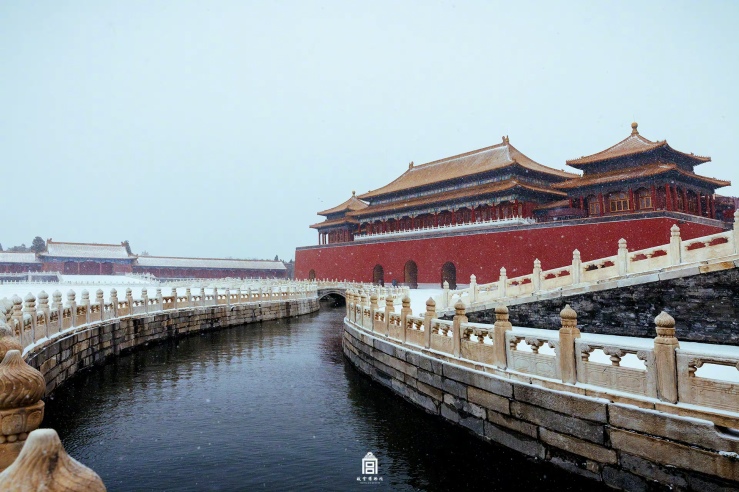
On the 7th November 2021 Monday week the Forbidden City palace – Beijing –China- People’s Republic of China, in which it is the first day of winter in which early this morning on pasting Thursday midnight in which it previously it was raining in which then is finally snowed showing the first sign for winter. As the Chinese 24 solar terms indicate, November 7 is the beginning of winter this year. What does Beijing look like when winter arrives of Beijing First Snow..
Previously week it was autumn in with beautifully blue skies painted the canvas of Amberically Ginkgo tree leaves of the Beijing Forbidden city landscape Chinese Painting white Clouds storytelling Beijing Ancient postmodern megatroplis city scape… along the 601 year old Forbidden city is looking from inside of the Forbidden city in which it’s trees glow in the Autumn Sunlight… in which Autumn sunlight amberically glowing the Ginkgo trees of the Grounds of the Forbidden city in which as Autumn folds towards transitionally changing like those scenes of storytelling of 延禧攻略 Story of the Yanxi Palace where then Wei Yinglu –Empress Imperial Noble Consort imperial Noble Consort Ling Empress Xiaoyichun (孝儀純皇后 played by Actress Wu Jinyan character in which show case many leading world Chinese inventions elements of how keep warmth from hand held warmers, to Central Heating beds and Under Floor heating. In the Same Era of Qing Dynasty Emperor Qianlong of storytelling如懿传Ruyi’s Royal Love in the Palace of Empress Ula Nara Ruyi 乌拉那拉·如懿 Empress Xian played by Zhou Xun on the grounds of the gate of the Yanxi Palace in which has a strong rich history…..
Its the second decade from the turn of the century in Beijing the Capital of China also the People’s Republic of China, in which is also the year of the rat, marking its six hundred years anniversary of the Forbidden city that marks the transitional point of in between the middle of the Ming Dynasty (1368- 1644) transitionally from Nanjing to Beijing towards the Qing Dynasty (1636-1644-1911) …. The Imperial Palace seen so many countless seasonally transitional equinoxes but further its six hundred years is iconic, but it’s five hundred ninety nine years it marks it Autumn Equinox…. In which it only took twelve years to build the same of the Daming Palace of The Tang Dynasty Xian Imperial Capital only it was least twenty times larger……