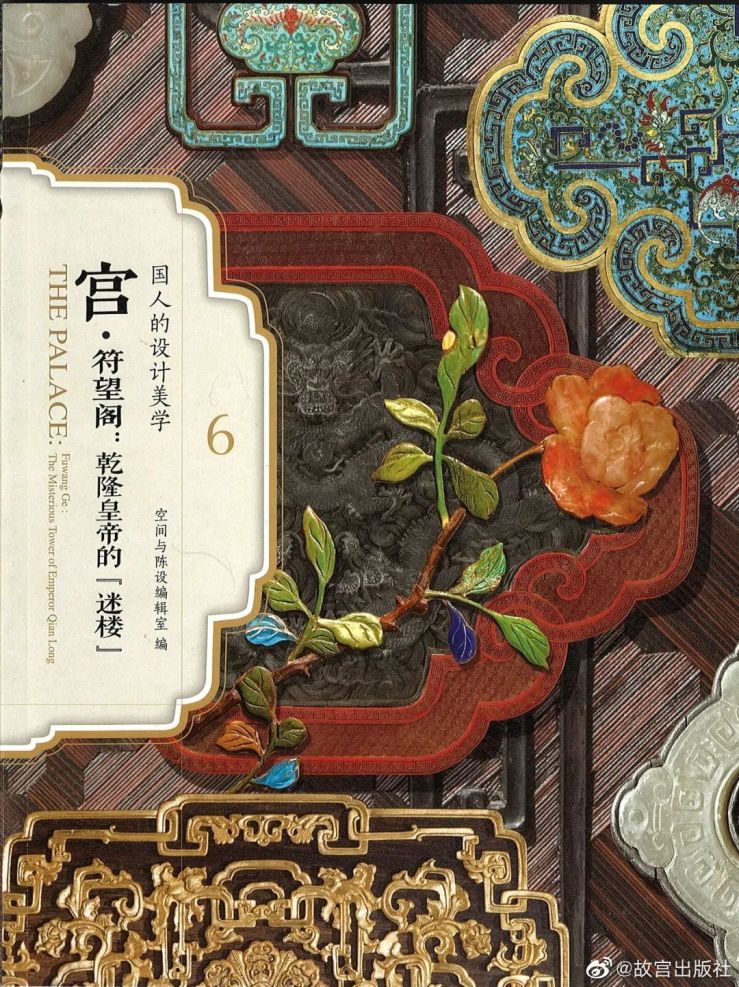
#北京。 #中國 #China #Beijing | #紫禁城 #ForbiddenCity #June2022 | #ForbiddenCityMoments #ForbiddenCityPress #ForbiddenCityBookStore #ForbiddenCityBooks #ForbiddenCityArchitecture ancient #寧壽宮 The Palace of Tranquil Longevity – Ningshou Palace Garden known as Qianlong Garden….

寧壽宮The Palace of Tranquil Longevity literally, “peaceful old age palace,” also called the Qianlong Garden, Qianlong Palace, Qianlong District or the Palace of Tranquillity and Longevity, is a palace in Beijing, China, located in the northeast corner of the Inner Court of the Forbidden City- Beijing – China – People’s Republic of China.

Construction of the palace began on the Qianlong Emperor’s orders in 1771, in preparation for his retirement, although the emperor himself never moved into the palace. Its beautiful apartments, pavilions, gates and gardens feature “some of the most elegant spaces at a time widely considered being the pinnacle of Chinese interior design.” Throughout the Qing dynasty, the palace was almost never used, largely because of the Qianlong Emperor’s imperial decree ordering his retirement retreat remain unaltered.

Forbidden City Hundred Excellent Books for Public reading activities …… The ancient buildings of the Forbidden City have gone through calamities and are treasures of the years, and they are still shining today. Wandering in the Forbidden City, we respect the splendour of the Hall of Supreme Harmony, the solemnity of the Hall of Fengxian, the serenity of the Hall of Mental Cultivation, the wealth of ancient times in the Wenyuan Pavilion…
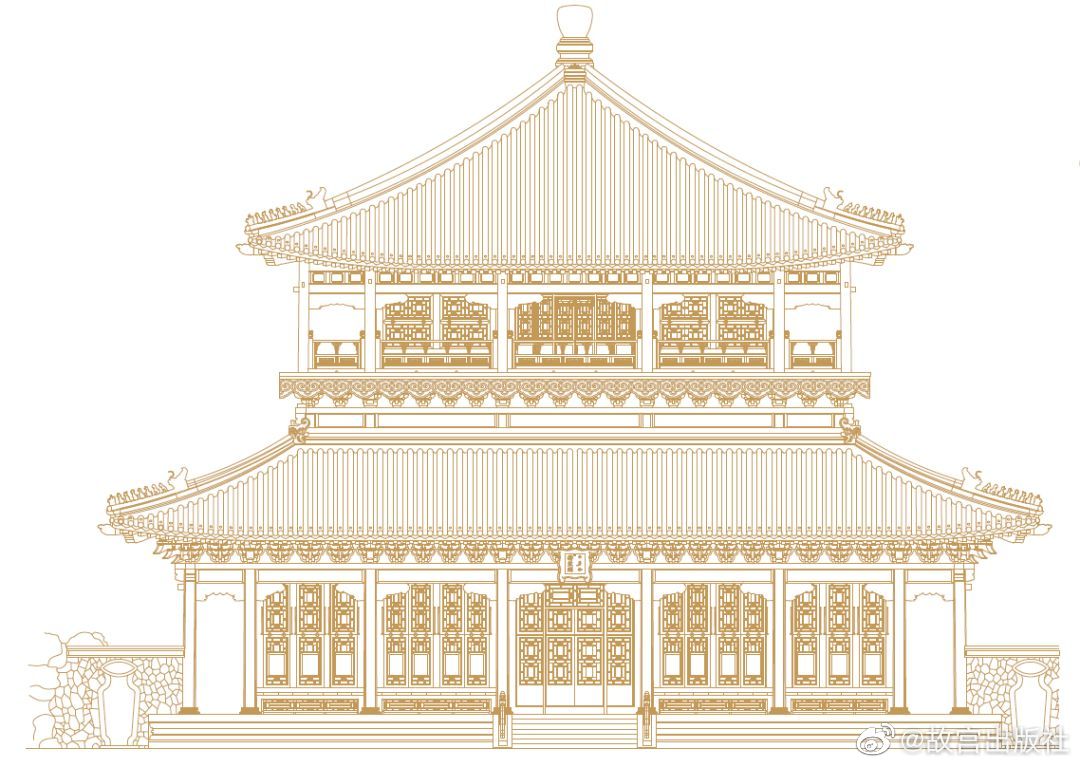


Not only that, we are also amazed at the A very special place in the Forbidden City’s Inner Tingwai East Road is the Ningshou Palace Garden, also known to the public by the name of “Qianlong Garden”.

This garden is the most well-preserved royal garden in the Forbidden City with the most architectural art style of the Qianlong period. The ingenious and rigorous form of the ancient buildings in the garden is enviable, the architectural space and garden layout are fascinating, and the delicate and complicated decoration of the eaves of the building is dazzling.

In such an environment, there is still a building that is unique. This is a magical attic called “Mission House” by later generations. It is also a great architectural artwork, and it is also an extremely rare existence in the ancient buildings of the Forbidden City. This mysterious building is Fuwang Pavilion. Its completion was praised by Emperor Qianlong as “its sincerity meets my expectations”, and now looking back on the past of Fuwang Pavilion, it has indeed lived up to Emperor Qianlong’s holy family.
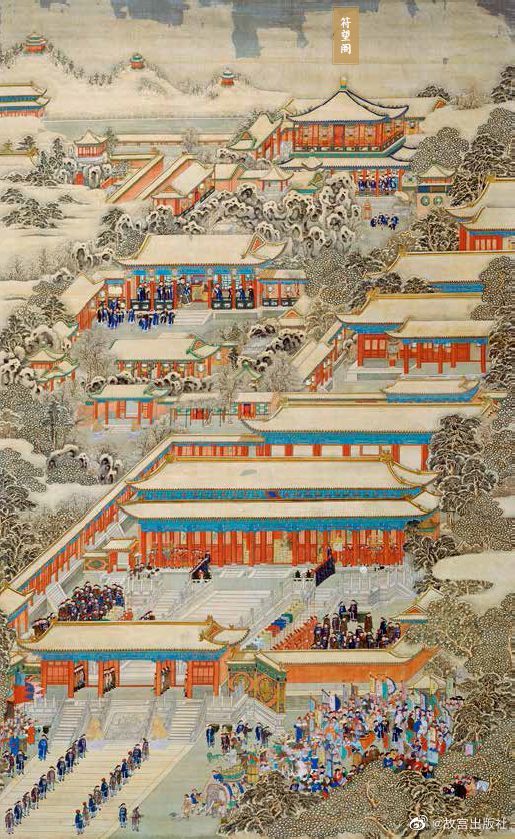
Fuwang Pavilion is one of the few remaining palace remains in the Forbidden City that has not been interfered by modern humans. It contains a lot of real historical information, such as why Fuwang Pavilion was built, when and why it was repaired, and how the interior eaves were furnished in different periods. …..  where to make the various craftsmanship of the interior eaves decoration, when to pay tribute, and so on. The records of Fuwang Pavilion (including the entire Ningshou Palace area) in the various archives of the inner court of the Qing Dynasty were detailed, which was a great blessing to later scholars. This not only accomplished the research and protection project of Qianlong Garden, but also enabled us to have a more detailed and in-depth understanding of Fuwang Pavilion’s space and interior eaves decoration techniques, but also discovered many modern relics of Fuwang Pavilion’s inner eaves decoration technology, protecting these traditional crafts. ‘s craftsman.


It goes without saying that Fuwang Pavilion enriches the study of ancient architecture. It is of great significance for contemporary interior design to carry forward Chinese traditions and broaden the artistic thinking of display. Cultural creativity can also understand the spirit and get inspiration from it.
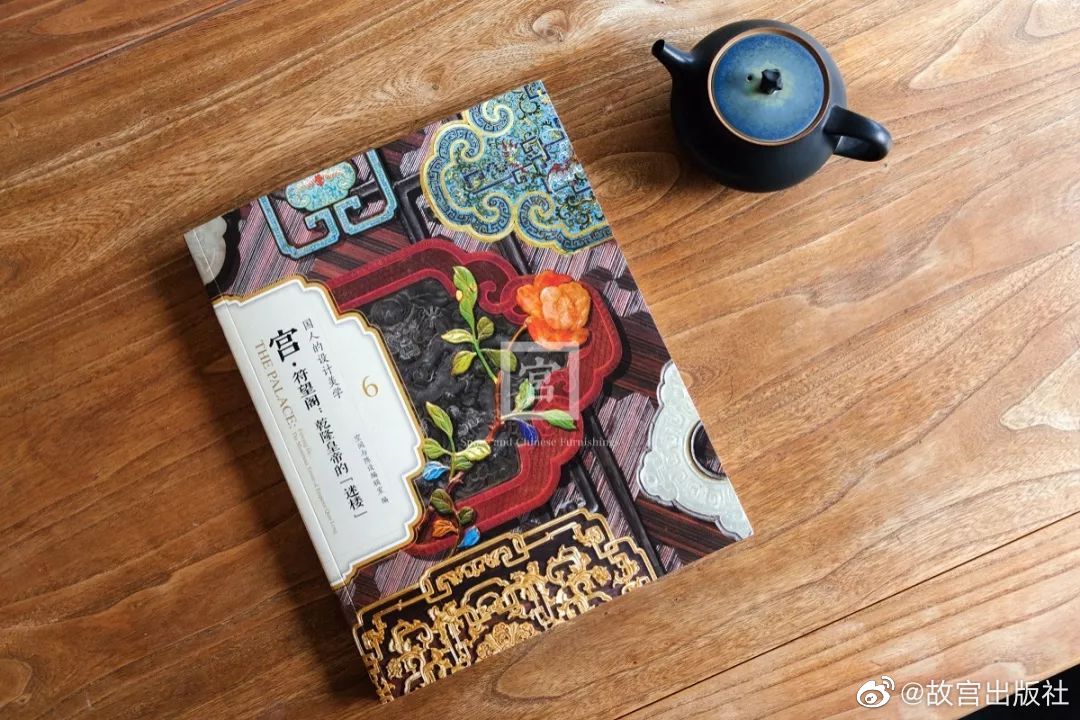

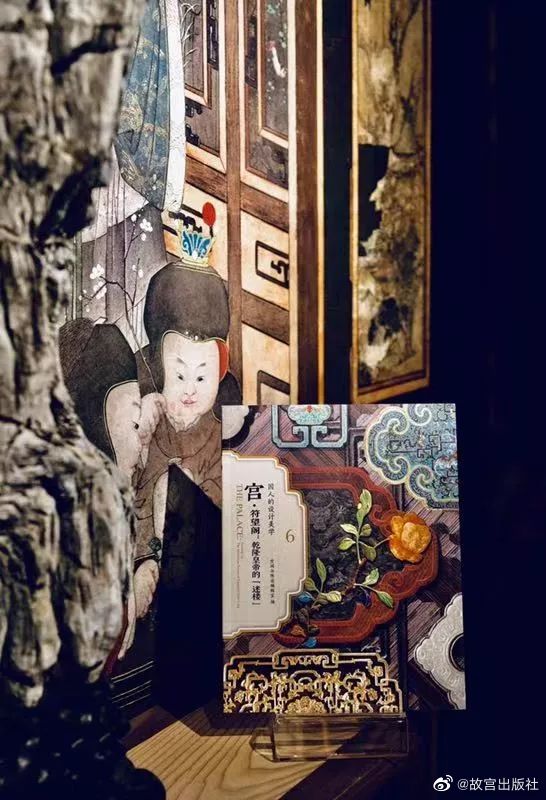
“Palace·Fuwang Pavilion: The “Lost Tower” of Emperor Qianlong” takesspace furnishings as the theme, tells about the art and technology of Chinese court environment design in the 18th century, and comprehensively displays the history of Fuwang Pavilion’s construction, original furnishings, architectural space, The decoration of the inner eaves reveals the story behind the construction of the Fuwang Pavilion in the Qianlong Garden of the Forbidden City, and explains why the Fuwang Pavilion can be called the highest representative of the inner eaves decoration skills of the ancient buildings in the Qianlong Garden and even the Forbidden City.

Imagines credits are of the Forbidden City –Imperial Palace –Beijing – China- People’s Republic of China also from the Series Weibo北京卫视上新了故宫 Treasures in the Forbidden City…

#北京 #中國 #China #Beijing | #紫禁城 #ForbiddenCity #March2022|#ForbiddenCityMoments first March snow fall of #Spring #ChinesePaintings of flowers florally of the Forbidden city #AGallery …..

In this year’s 2022, the second decade from the turn of the century in Beijing the Capital of China also the People’s Republic of China, in which is also the year of the Tiger, marking its six hundred and two years anniversary of the Forbidden city that marks the transitional point of in between the middle of the Ming Dynasty (1368- 1644) transitionally from Nanjing to Beijing towards the Qing Dynasty (1636-1644-1911) …. The Imperial Palace seen so many countless seasonally transitional equinoxes but further its six hundred years is iconic, but it’s five hundred ninety nine years it marks it Autumn Equinox…. In which it only took twelve years to build the same of the Daming Palace of The Tang Dynasty Xian Imperial Capital only it was least twenty times larger…

On the 17th March 2022 it was the love of the first snowfall of the spring in which the view of Beijing with snowflakes… painting a Chinese painting through seasonally time

Heavy snowfall has blanketed China’s capital in white. China’s meteorological authorities on Friday issued a blue alert for heavy snow in some regions of the country of China – People’s Republic of china. In which was Snowfall was least than Zero Degrees Celsius

Imagines credits are of the Forbidden city –Imperial Palace –Beijing – China- People’s Republic of China

#北京。 #中國 #China #Beijing | #紫禁城 #ForbiddenCity #March2021|#ForbiddenCityMoments #ForbiddenCityPaintings #ChineseArtworks ever so constant seasonally first #ChineseLunarNewYear first exhibits of the #RuyiSceptresExhibtion #RuyiExhibtion #AuspiciousRuyi March Reopening #AGallery


During the March 2021 the Forbidden City Palace Museum- China- People’s Republic of China, Beijing issued an Announcement on the reopening of the Ruyi Exhibition in the Collection.. in which According to the progress of the adjustment of the exhibition hall of the Palace Museum, the Shenwumen exhibition hall “Auspicious Ruyi——The Palace Museum Collection Ruyi Exhibition” will be reopened to the public from March 13, 2021 (Saturday), and the exhibition will last until May 9, 2021……..

The exhibition will be divided into morning and afternoon sessions (3,000 people in the morning and 2,000 people in the afternoon) in accordance with the principle of appointment, current limit, and peak shift. Visitors can make real-name reservations for ticket purchases through the online ticketing website of the Palace Museum (https://gugong.ktmtech.cn/). You need to check your health code, take your temperature, and swipe your ID card when you are admitted to the hospital. Please wear a mask and keep a safe distance when visiting the exhibition hall.

On 10th February 2021 Wednesday  2021 China- People’s Republic of China, Beijing-  ushered in the first exhibition  of 2021…… is that  which is  the first exhibition of the Palace Museum New Year ” #吉祥如意# -The Palace Museum Collection Ruyi Exhibition” officially opened today! 160 sets are carefully selected from more than 2,000 ruyi handles in the Palace Museum. They are divided into five units: jade Ruyi, bamboo and wood Ruyi, metal Ruyi, Jiujiu Ruyi and other materials Ruyi, which fully reflect the rich materials and beautiful shapes of Ruyi in the Ming and Qing Dynasties, Exquisite craftsmanship and many subjects. Wandering around in the exhibition hall, the room is full of wishful thinking; outside the exhibition hall, the Shenwu Gate overlooks the beautiful scenery and feels refreshed. This Spring Festival, come to the Forbidden City to see Ruyi and harvest a year of good luck! The exhibition will last until May 9. You must visit the online ticketing website of the Palace Museum….

 故宫新年首展“#吉祥如意#——故宫博物院典藏如意展”今天正式开展!从故宫博物院藏2000多柄如意中精心挑选160件套,分玉石如意、竹木如意、金属如意、九九如意和其他材质如意等五个单元,全面反映明清时期如意的丰富材质、优美造型、精湛工艺和众多题材。展厅里逛一逛,满室如意目不暇接;展厅外,神武门上远眺美景,身心舒畅。这个春节,来故宫看如意,收获一年吉祥如意!展期至5月9日,参观本展览需在故宫博物院网络售票网站…

There are many sets of nine handles in the Qing Palace Ruyi, regardless of material, most of which are gifts for palace festivals and birthdays of emperors and queens. Nine is the most singular number. The ancients often used “nine” to indicate a large number, and it also means the sun to prosper, thus becoming a lucky number. “Nine-Nine” is the ultimate number, and a complete set of nine handles has the meaning of wishing longevity and heaven…..

Ruyi jade is rich in materials, including white jade, sapphire, jasper, black jade, jade, etc., occupying the mainstream position in the Qing Dynasty Ruyi production. Zhicao-shaped is a common pattern of jade ruyi. The ancients believed that Ganoderma lucidum is endowed with the aura of mountains and rivers, the essence of the universe, and has the meaning of longevity; the appearance of Zhicao also indicates the peace of the country and the people, and is a symbol of benevolent governance. In addition, there are many creative themes such as birthday celebrations and auspicious celebrations in the jade ruyi, which pray for peace and harmony with various beautiful meanings. The Ruyi in the picture is being exhibited in ” #吉祥如意# -Ruyi Exhibition from the Palace Museum Collection…


Imagines credit are of the Forbidden city –Imperial Palace –Beijing – China- People’s Republic of China

#北京。 #中國 #China #Beijing | #紫禁城 #ForbiddenCity #September2020|#ForbiddenCityarchitecture built 600 years of rich architectural language briefly explained- #武英殿 #HallOfMartialValor #HallOfYWuyingdian….

In this year’s 2020, the second decade from the turn of the century in Beijing the Capital of China also the People’s Republic of China, in which is also the year of the rat, marking its six hundred years anniversary of the Forbidden city that marks the transitional point of in between the middle of the Ming Dynasty (1368- 1644) transitionally from Nanjing to Beijing towards the Qing Dynasty (1636-1644-1911) …. The Imperial Palace seen so many countless seasonally transitional equinoxes but further its six hundred years is iconic, but it’s five hundred ninety nine years it marks it Autumn Equinox…. In which it only took twelve years to build the same of the Daming Palace of The Tang Dynasty Xian Imperial Capital only it was least twenty times larger……

武英殿The Hall of Martial Valor (Wuying dian) is the main building in an architectural compound that lies to the far west of the Hall of Supreme Harmony (Taihe dian).

In the Ming dynasty (1368-1644), the Hall of Martial Valor was the place where emperors went on a fast and receive ministers. It is also one of the studios for the Ming dynasty court painters. In the late Ming dynasty, the peasant rebellion troop broke into the imperial palace and burnt down many of the buildings. Remaining intact, the Hall of Martial Valor was the place where Li Zicheng (1606-1645), the peasant unrest leader, ascended the throne as the emperor before he hurriedly fled from Beijing. After the Manchu Qing regime moved its capital to Beijing to rule across China, the hall became the office for Dorgon (1612-1650), one of the four regents, for handling state business. In the early Qing dynasty (1644-1911), emperors also attended small-sized ceremonies here. From Kangxi reign (1662-1722) on, the Hall of Martial Valor became an imperial cultural center – a workshop for amending, compiling, and printing books with carved wooden blocks. Books printed here were marked with the authoritative “Hall edition”.

武英殿Wuying Hall echoes the Wenhua Hall. At the end of the Ming Dynasty, Li Zicheng ascended to the throne and proclaimed emperor here; in the first year of Shunzhi in the Qing Dynasty, Dorgon, who was the first to enter the pass, was promoted here. During the reign of Kang Yong, Wu Yingdian set up a book-repairing office, which later became a specialized agency for publishing books.

In the late Qing Dynasty, Wuying Palace caught fire twice in the eighth year of Tongzhi (1869) and the twenty-seventh year of Guangxu (1991). For this reason, in the eighth year of Tongzhi and the twenty-eighth year of Guangxu (1902), Wuying Palace underwent two difficult reconstructions under the situation of internal and external troubles. The reconstruction project reflects the poverty and helplessness of the Qing court at that time, and also reminds us that fire prevention is the top priority of protecting the wooden structure of the Forbidden City….


【丹宸永固:紫禁城建成六百年图录——1902年:重建武英殿】紫禁城建成600年 悦读故宫# 武英殿作为外朝的重要建筑,与文华殿遥相呼应。明末,李自成在此登基称帝;清顺治元年,率先挥师 入关的多尔衮于此升座。康雍年间,武英殿设立修书处,后正式成为刊刻书籍的专门机构。

清末,武英殿于同治八年(1869年)、光绪二十七年(1 9 0 1年)两次失火。为此,同治八年、光绪二十八年(1902年),武英殿在内忧外患的局势之下进行了两次艰难的重建。重建工程反映出当时清廷的拮据与无奈,也提示我们:防火是保护紫禁城木结构建筑群的重中之重

Imagines credit are of the Forbidden city –Imperial Palace –Beijing – China- People’s Republic of China

#東京。 #中國 #China #Beijing | #紫禁城 #ForbiddenCity #September2020|#ForbiddenCityarchitecture built 600 years of rich architectural language briefly explained- #TheForbiddenCityCentralAxis ..

In this year’s 2020, the second decade from the turn of the century in Beijing the Capital of China also the People’s Republic of China, in which is also the year of the rat, marking its six hundred years anniversary of the Forbidden city that marks the transitional point of in between the middle of the Ming Dynasty (1368- 1644) transitionally from Nanjing to Beijing towards the Qing Dynasty (1636-1644-1911) …. The Imperial Palace seen so many countless seasonally transitional equinoxes but further its six hundred years is iconic, but it’s five hundred ninety nine years it marks it Autumn Equinox…. In which it only took twelve years to build the same of the Daming Palace of The Tang Dynasty Xian Imperial Capital only it was least twenty times larger……

The Forbidden City Central Axis The central axis is the core Yuanshu supporting the capital as the center of the world, and it is taken from the sky axis. First, build a royal road, and build a hall at the northern end of the royal road. The hall becomes a symbol of the North Star, and the royal road becomes a symbol of the axis of the sky. This is the center of the world. This kind of planning method is simple and easy to implement. It gets rid of the geographical center restriction and can find any place to build the capital. It has greater flexibility and has been inherited by the past.

The central axis of Beijing city passes from Fengtian Hall (Qing Taihe Hall) to the north through Huagai Hall (Qingzhonghe Hall), Jinshen Hall (Qingbaohe Hall), Qianqing Palace, Jiaotai Hall, Kunning Palace, Qin’an Hall, Long Live Mountain (Qingjingshan), Houmen Bridge, and finally Drum Tower; south through Taihemen, Meridian Gate, Duanmen, Tiananmen, Damingmen (Daqingmen), and finally Zhengyangmen, and finally Yongdingmen in Jiajing. The total length of the central axis is about 8 kilometers. The three most important halls, the Hou Sangong, and Longevity Mountain are all located on the central axis. The other minor buildings strictly follow the principle of symmetrical arrangement and are arranged on the left and right sides of the central axis to enhance The central axis and the buildings on the central axis are supreme.

The central axis of Beijing City contains the central axis of the Forbidden City. The central axis of the Forbidden City is from the Meridian Gate to the Shenwu Gate. There are seven palaces on the central axis to symbolize the Big Dipper. They are Fengtian Hall (Qing Taihe Hall) and Huagai Hall (Qing Dynasty). Zhonghe Hall), Jinshen Hall (Qingbaohe Hall), Qianqing Palace, Zhongyuan Hall (Jiaotai Hall), Kunning Palace and Qin’an Hall.

中轴是支撑都城为天下中心的核心元枢,取象于天轴。首先建一条御道,于御道的北端建一座大殿,大殿成为北极星的象征,御道成为天轴的象征,这里就成了天下的中心。这种规划之道简单且容易做到,摆脱了地域上的中心限制,可以找任何地方建都,灵活性更大了,因此被历代所继承。

北京城中轴从奉天殿(清太和殿)向北穿过华盖殿(清中和殿)、谨身殿(清保和殿)、乾清宫、交泰殿、坤宁宫、钦安殿、万岁山(清景山)、后门桥,终于鼓楼 ;向南穿过太和门、午门、端门、天安门、大明门(大清门),终于正阳门,嘉靖时终于永定门。中轴全长约 8 千米,最重要的三大殿和后三宫、万岁山均位于中轴上,其他次要建筑则都严格遵守对称排列的原则,配置在中轴的左右两边,以增强中轴及中轴上的建筑至高无上的地位。

北京城的中轴包含着紫禁城中轴,紫禁城中轴是指从午门至神武门,中轴上布置了七座宫殿以象征北斗七星,它们是奉天殿(清太和殿)、华盖殿(清中和殿)、谨身殿(清保和殿)、乾清宫、中圆殿(交泰殿)、坤宁宫和钦安殿……

Imagines credit are of the Forbidden city –Imperial Palace –Beijing – China- People’s Republic of China