#北京。 #中國 #China #Beijing | #紫禁城 #ForbiddenCity #July2023 | #ForbiddenCityDairies -The Palace Museum #ForbiddenCity Collections of Chinese intangible cultural heritage.  Collection 20th   to 20th July 2023…

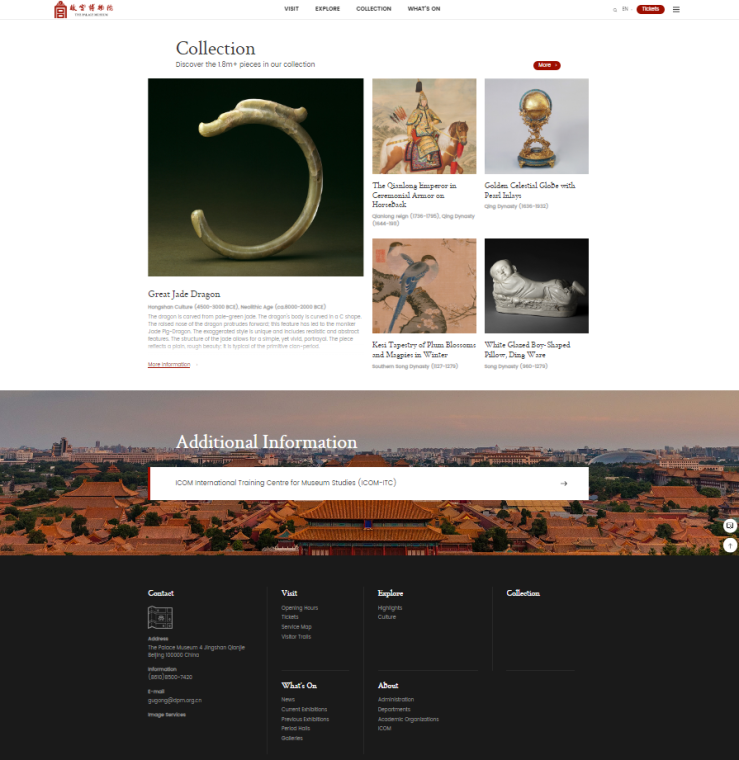
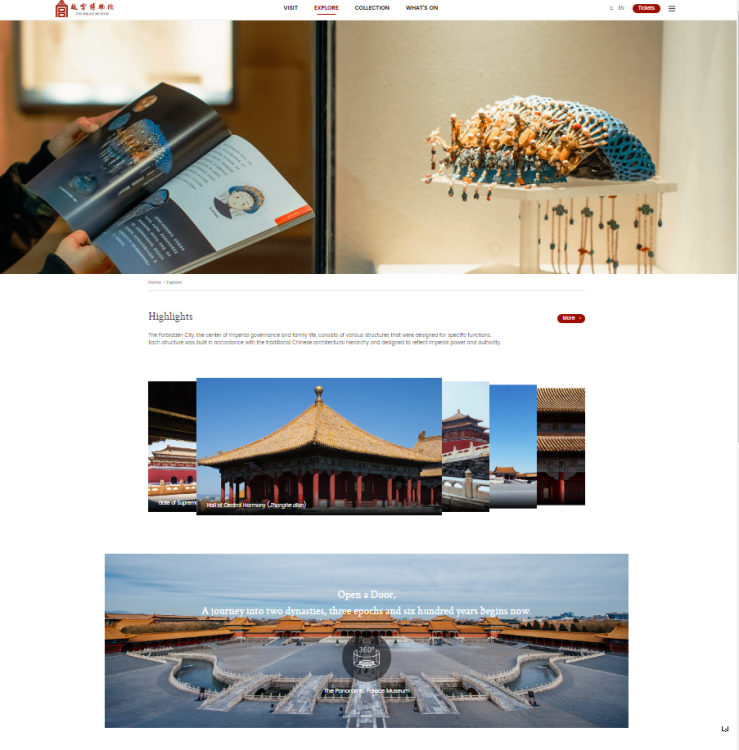
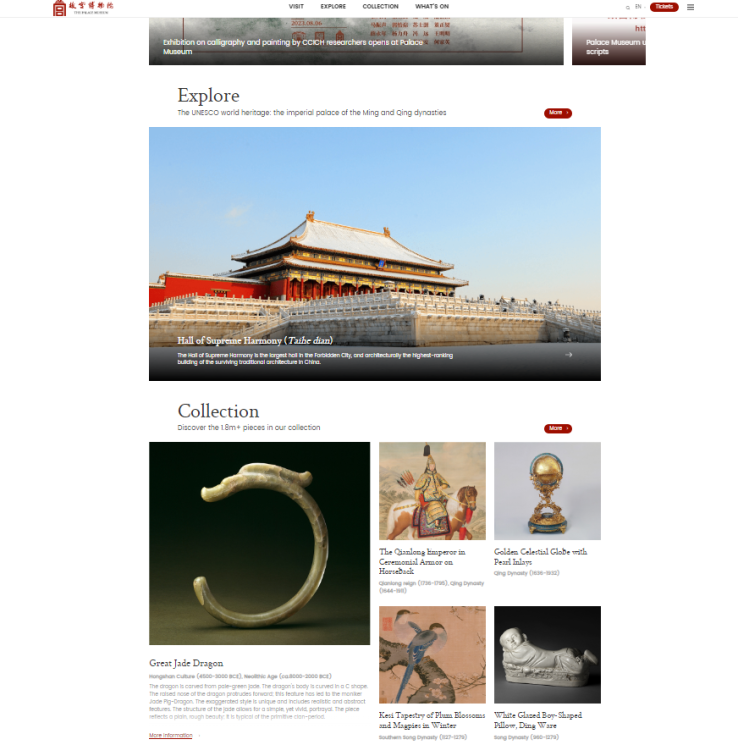
On July 19th 2023 , the multilingual website of the Forbidden City Palace Museum- Beijing, China, People’s Republic of Chinawas officially released at the Digital Cultural Tourism Development Forum of the 2023 China Internet Civilization Conference! The website covers five languages: English, French, Russian, Japanese, and Spanish, and will meet the needs of audiences with different languages.

 The multilingual website of the Palace Museum is committed to establishing an international website that is concise, clear, easy to use for overseas audiences, and fits the construction of the modern civilization of the Chinese nation, including tour guides, information, panoramic tours, online exhibitions, collection appreciation, cultural topics, etc. Rich immersive content describing of the most detail collection that housed within the Forbidden city collection… . 
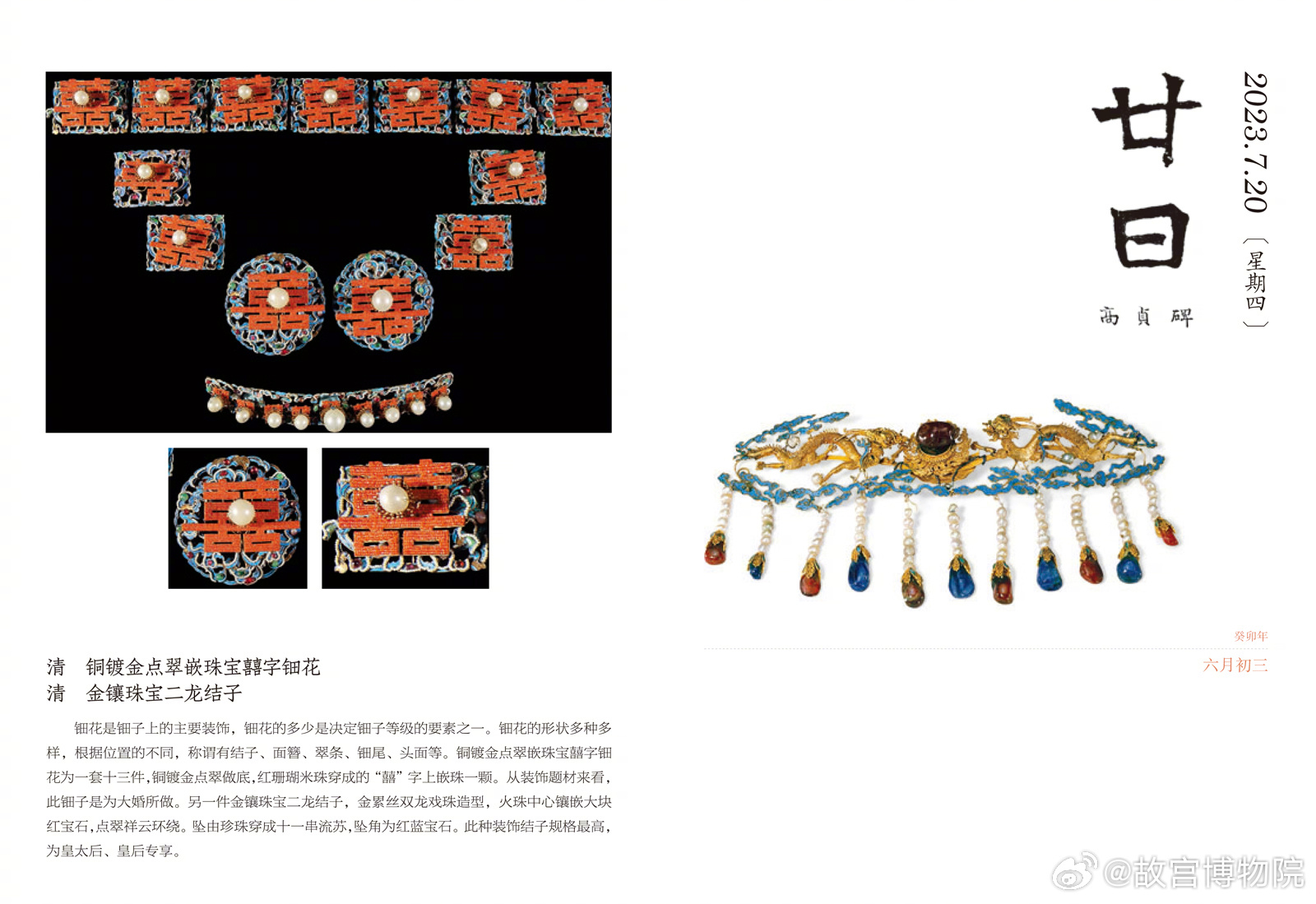
In the Qing Dynasty, gold-plated copper dots emerald inlaid with jewelry and the word Tianhua; in Qing Dynasty, gold-plated jewelry with two dragon knots. Tin flowers are the main decoration on the tin, and the number of tin flowers is one of the factors that determine the grade of the tin. Tin flowers come in a variety of shapes, and depending on their location, they are called knots, face hairpins, green strips, tin tails, head faces, etc. Gold-plated copper dot emerald jewels inlaid with the word “囍” is a set of thirteen pieces, with gold-plated copper dot emerald as the base, and a bead embedded in the character “囍” made of red coral rice beads. Judging from the decorative theme, this tin is made for a big wedding. Another piece of gold inlaid jewelry is a two-dragon knot, in the shape of two dragons playing with gold silk. The center of the fire bead is inlaid with a large ruby, surrounded by green and auspicious clouds. The pendant is made of pearls threaded into eleven strings of tassels, and the corners of the pendant are red sapphires. This kind of decorative knot has the highest standard and is exclusively used by empress dowagers and empresses.

Qing Daoguang, silver-plated hairpin with gold-plated emerald dots inlaid with gemstones, and Tongzhi in Qing Dynasty, silver-plated hairpin with gold-plated gemstones and fake beads and phoenix pattern. In the jewelry of concubines, there are a large number of hairpins of various types, and although they have different themes, they all have auspicious meanings. The number of pearls and the types of gemstones on these jewelry reflect the rank and status of the jewelry owner. Three pieces of silver – plated emerald “囍” character hairpins, with pearls inlaid on the center “囍” character, “囍” character above and below…

In the Qing Dynasty, the golden chiseled word butterfly pattern is flat and square. Bianfang is a unique headdress for Manchu noblewomen in the Qing Dynasty, and it is also a bracket used for dressing up the “two heads”. It has a similar function to the long hairpin used by Han women. This flat square is made of gold, chiseled with sesame seeds as the ground, with a circle of flowers and grass patterns chiseled on the frame, six dancing butterflies and five “囍” characters chiseled inside the frame, and a bat chiseled on the head, implying the double arrival of happiness and happiness. It is a special decoration for the queen’s wedding…
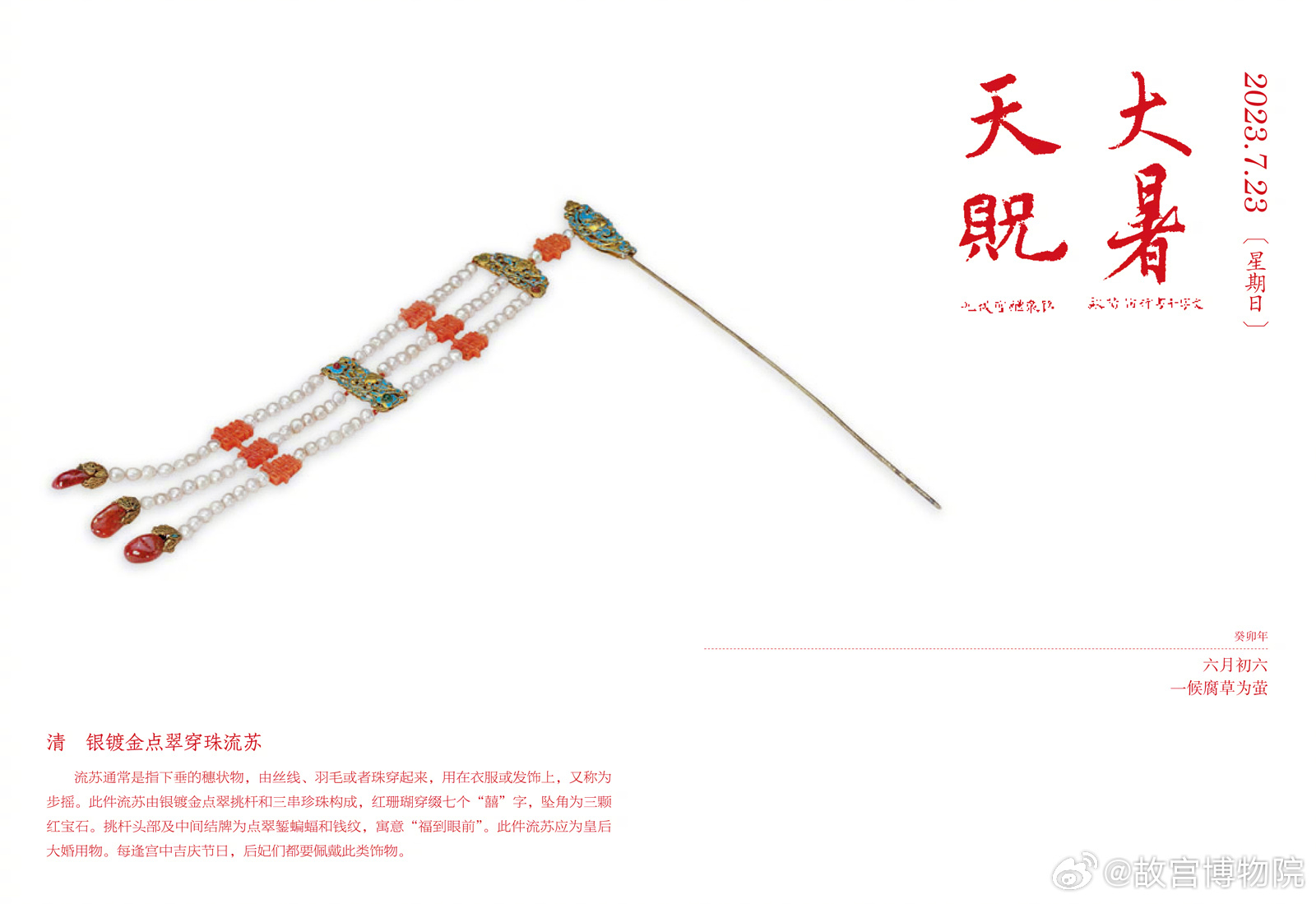
Clear, silver-plated dots emerald beads tassels. Tassels usually refer to drooping tassels, threaded by silk threads, feathers or beads, used on clothes or hair ornaments, also known as step shakes. This tassel is composed of silver-plated dot emerald poles and three strings of pearls. The red coral is embellished with seven “囍” characters, and the pendant corners are three rubies. The head of the pole and the knot in the middle are dotted emerald chiseled bats and money patterns, which means “blessings come to you”. This tassel should be used for the queen’s wedding. Every auspicious festival in the palace, concubines have to wear such ornaments.
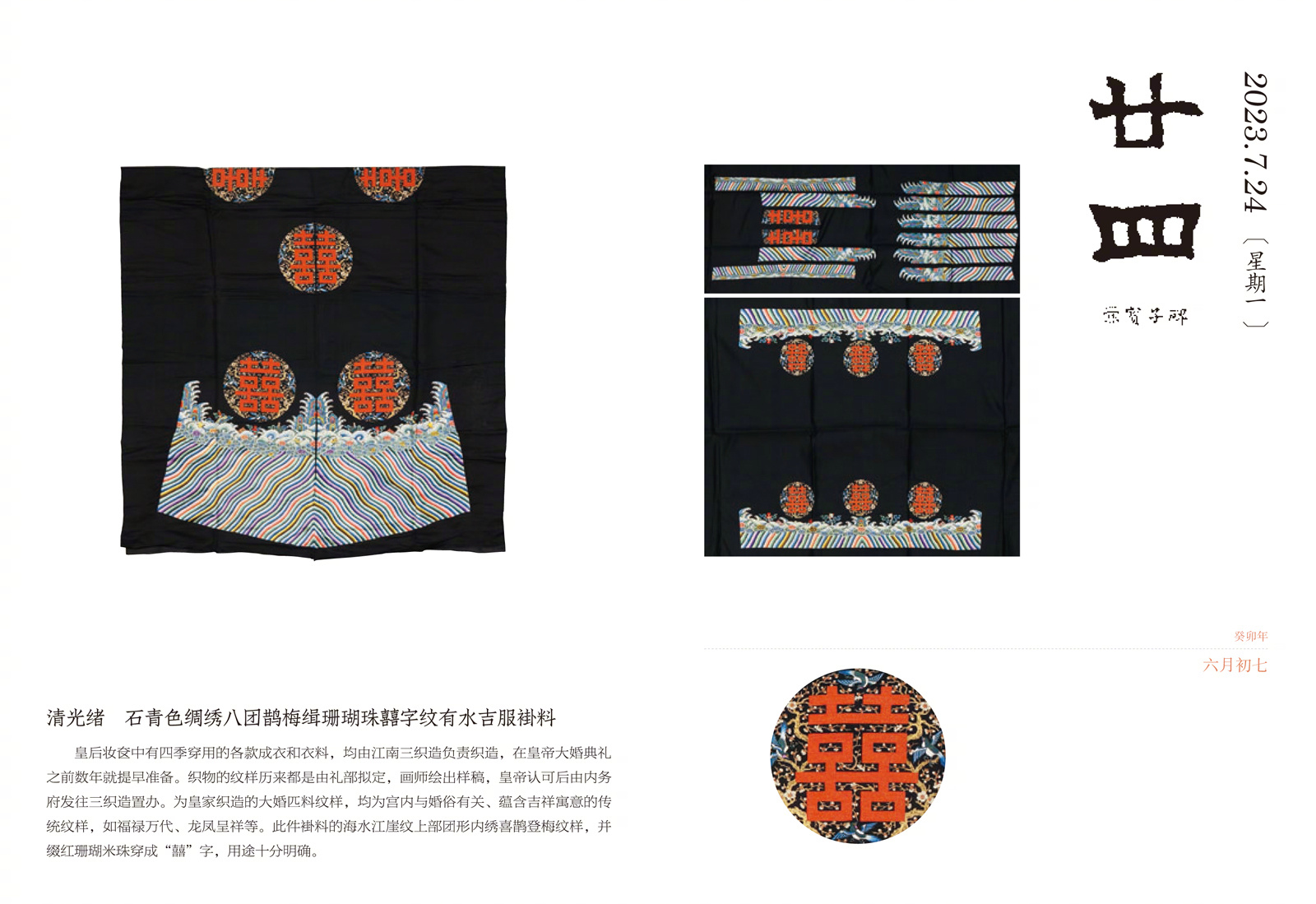
Qing Guangxu, stone blue silk embroidered with eight groups of magpies, plums, coral beads and Chinese characters, with water and auspicious clothing materials. The queen’s dowry includes all kinds of ready-made clothes and materials for the four seasons, all of which are woven by Jiangnan Sanzhi, which is prepared in advance several years before the emperor’s wedding ceremony. The pattern of the fabric has always been drawn up by the Ministry of Rites, and the artist draws a sample draft. After the emperor approves, the Ministry of Internal Affairs sends it to Sanzhizao for purchase. The wedding patterns woven for the royal family are all traditional patterns that are related to marriage customs in the palace and contain auspicious meanings, such as Fulu Bandai, Dragon and Phoenix Bringing Good Fortune, etc. The seawater river cliff pattern of this gown is embroidered with a magpie and a plum pattern on the upper part, and decorated with red coral and rice beads to form the character “囍”. The purpose is very clear.

Qing Guangxu, bright yellow silk embroidered with eight groups of magpies, plums, coral beads and 囍 characters, with Shui Jifu gowns. This gown is embroidered with bright yellow silk, with eight embroidered plum blossoms in full bloom, four magpies jumping on the branches, and red coral rice beads in the middle to form the character “囍”, with distinct layers and echoing up and down. Bright yellow is the imperial color exclusively used by the royal family. The magpie and plum blossoms imply happy brows, and the word “囍” pressed on the top implies happiness on top of happiness, highlighting the joy and peace of the emperor’s wedding. Plum blossoms have strong cold resistance, and they can brave the severe cold and bloom alone in the middle of winter when all the flowers are withered. Emperor Guangxu’s wedding coincided with the midwinter when plum blossoms were in full bloom, and such patterns added a festive atmosphere to the wedding..

Images and visuals are from – Forbidden City –Palace Museum Beijing- China –People’s Republic of China…..

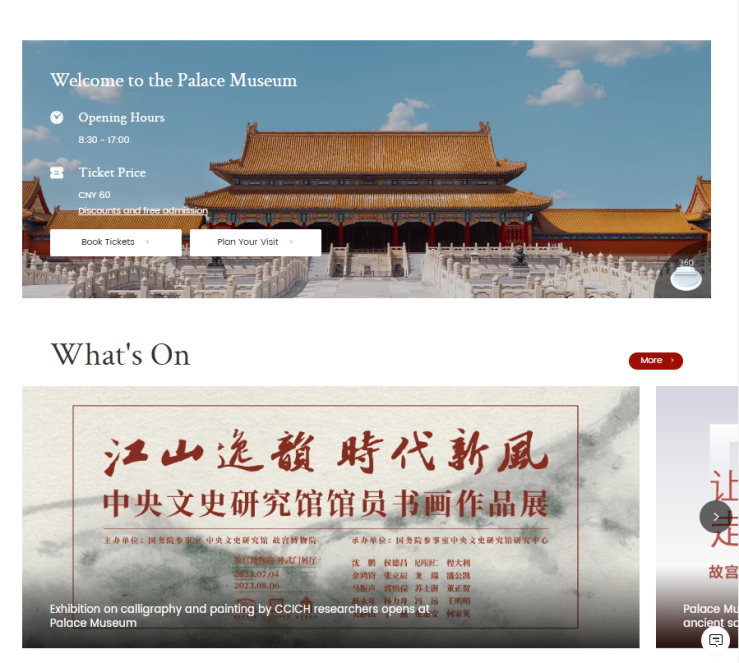
#北京。 #中國 #China #Beijing | #紫禁城 #ForbiddenCity #July2023 | #ForbiddenCityDairies -The multilingual International website of the Palace Museum is officially launched Reinvented with immersive educational interactive enrichments..

On July 19th 2023 , the multilingual website of the Forbidden City Palace Museum- Beijing, China, People’s Republic of China was officially released at the Digital Cultural Tourism Development Forum of the 2023 China Internet Civilization Conference! The website covers five languages: English, French, Russian, Japanese, and Spanish, and will meet the needs of audiences with different languages. The multilingual website of the Palace Museum is committed to establishing an international website that is concise, clear, easy to use for overseas audiences, and fits the construction of the modern civilization of the Chinese nation, including tour guides, information, panoramic tours, online exhibitions, collection appreciation, cultural topics, etc. Rich immersive content. 

Images and visuals are from – Forbidden City –Palace Museum Beijing- China –People’s Republic of China…..
#漢服 #HanFu #HanTraditionalClothing | #June2023 #正好遇见你 #HiProducer | Episode Two – Chinese cultural Inheritance of an intangible cultural-  daughter’s enthusiasm and dedication To Ancient Chinese filigree inlay craftwork ……

正好遇见你 #HiProducer  is an intangible cultural heritage urban drama directed by Gao Han , starring Guo Xiaodong , Zhang Nan , Li Xiaoran , Zhang Bo , Zheng Kai , Sun Yihan , Niu Zifan , Sheng Langxi , and Wu Qianyu  .

The series tells the story of a variety show team with literary director Yu Zazao and young cultural relics expert Tao Tang as the core, working together to launch a cultural TV program in order to show the beauty of Chinese civilization. The series covers 35 episodes in which is produce by Huanyu Film and Television in collaboration streaming with iQyi and Tencent Video ….. Majority of the Production is done in Suzhou for its modern setting among with the Chinese Cultural Traditional Heritages recreation is done at Hengdian, Subo studios…

Behind the Scenes of the production shooting process….  During the filming, the crew was allowed to enter the Suzhou Museum for on-site shooting, but in order to protect cultural relics, most of the cultural relics appearing in the play are imitation props. In the early stage of filming, the drama team found historians of relevant cultural relics, searched a large number of documents to repeatedly compare the status and details of real cultural relics, and invited professional relics masters to copy them, so as to achieve the effect of false ones. The biggest one is the filigree inlay technology, which represents the highest level of imperial crafts. When making the Jin Ou Yonggu Cup props in the filigree inlay unit, the drama crew carried out a one-to-one replica in strict accordance with historical data, which took a full two months…

Main Cast

Guo Xiao Dong as Liao Muyun

Zhang Nan as Yu Zaizao

Li Xiao Ran as Wang Xining

Jaco Zhang Bo as Tao Tang

Zheng Kai as Gu Shiyong

Annie Sun Yi Han as Yuan Jiaying

Niu Zi Fan as Xie Yao

Joy Sheng Lang Xi as Shu Rong

Karena Ng as Zhuang Yiyi

Li De Long as A Xun

Synopsis Gu Shiyong, CEO of Palace Culture Film and Television Production Company, is determined to create a new large-scale cultural variety show “Inheritance”. He strongly invites Tao Tang, a young cultural relic expert, Mu Zongyun, a well-known director, and Wang Xining, a senior host. However, just when the program was ready to start, the young female director Yu Zazao suddenly parachuted into the company and joined the program group, disrupting the overall plan of the program and being strongly rejected by everyone. Surprisingly, Yu Zazao is calm and witty, dares to break the rules, and has inexhaustible inspiration like a genius. With her help, the originally scattered production team became unprecedentedly cohesive. Everyone worked together, starting from the historical relics of the Forbidden City, devoted themselves to excavating the core memory of the nation, promoting historical and traditional culture, and solving the problem of non-genetic inheritance. In the end, “Inheritance” stood out from many homogeneous programs and became a great success. Yu Zazao also successfully healed his soul and gained a complete friendship and career..

Episode 2

Gu Shiyong was very satisfied with the material provided by Yu Zazao, but Tao Tang expressed strong opposition to the content about the conflict between Liu’s father and daughter, and immediately left the crew. Yu Zazao was unwilling to give up, so he chased Tao Tang to ask for an explanation. Tao Tang believed that Yu Zazao had obtained the permission to shoot, and he was not at fault from a legal point of view. Cracks are difficult to repair. Gu Shiyong was very dissatisfied with Yu Zazao’s behavior of leaving Tao Tang, and asked Yu Zazao to please return to Tao Tang, otherwise she would be let out of the show. Master Liu was furious at his daughter when he learned that his daughter Liu Jiamei asked the program group to broadcast a clip of their discord. The daughter tearfully confessed her father’s preference for her younger brother, and the two broke up unhappy. In the middle of the night, Yu Zazao and Tao Tang came to the studio and found that Master Liu was crying alone. Yu Zazao played the video of Liu Jiamei doing filigree inlay seriously to Master Liu. Master Liu saw his daughter’s enthusiasm and dedication to filigree inlay with his own eyes, and fell into deep thought. Liu Jiamei suddenly returned to the studio and bumped into her father who had not yet left. Master Liu decided to teach her daughter the technique of filigree inlay. The father and daughter finally reconciled, and Master Liu even made a bet that if his daughter can get a place in the provincial competition, he will inherit the studio to her. The program team also quietly set up recording equipment to record this warm and beautiful scene without disturbing the two.

Images and Visuals are from of their respectives …

#北京。 #中國 #China #Beijing | #紫禁城 #ForbiddenCity #June2023 | #ForbiddenCityDairies #星球研究所 # Planet Research Institute #MingDynastyTombs Travelling into #MingDynasty walking down living history mystery solving…

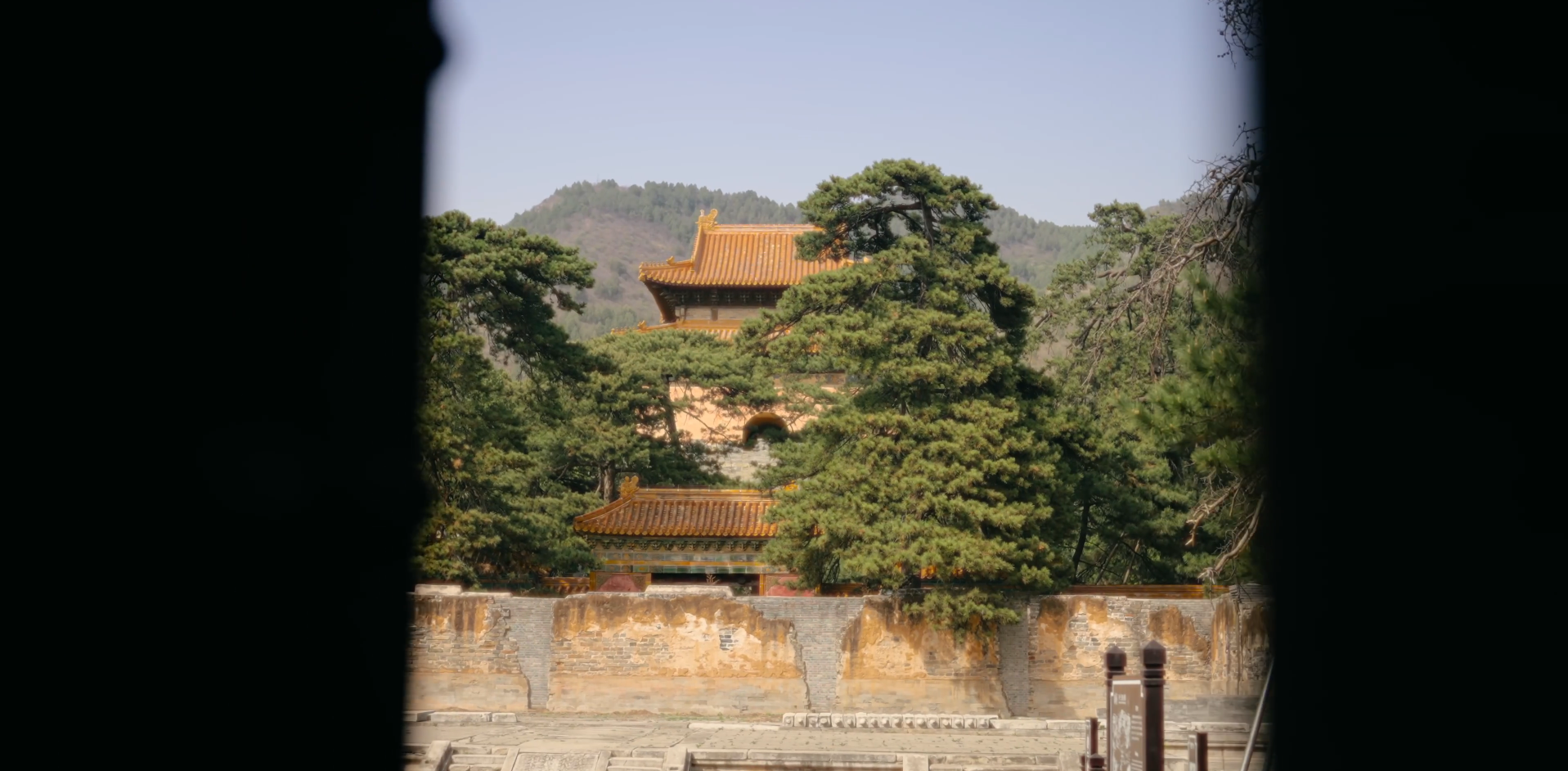
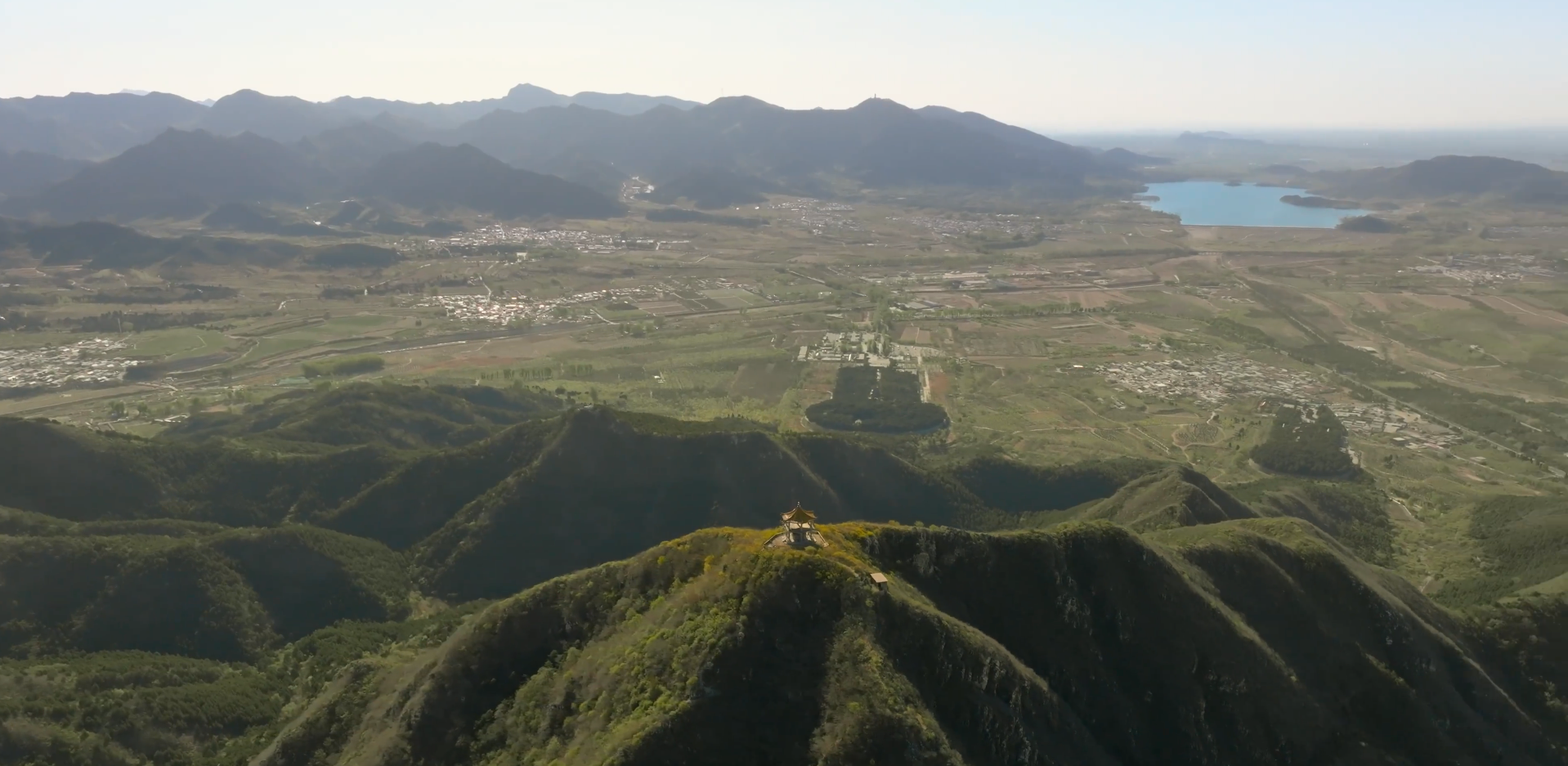
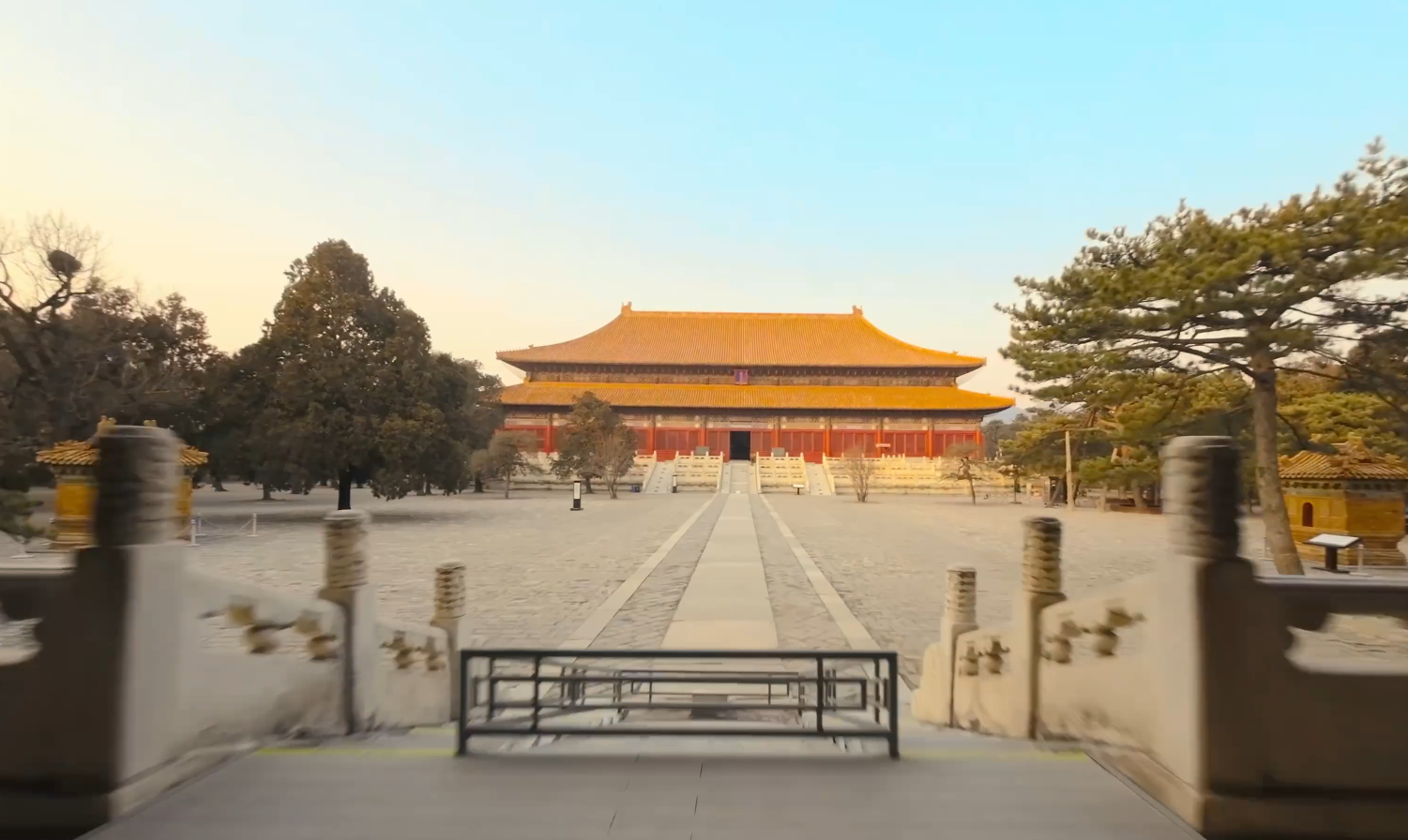
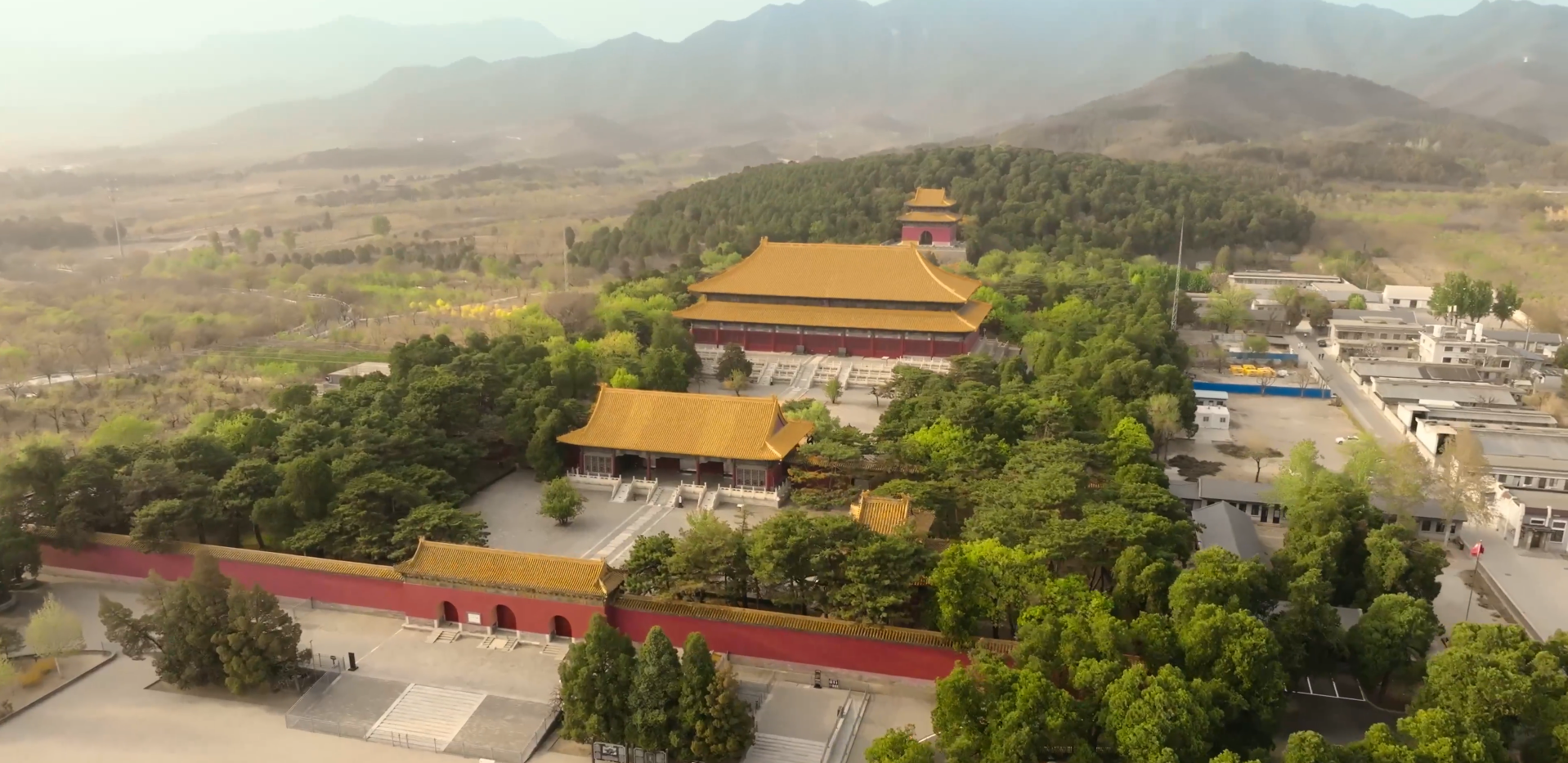
The Ming Tombs are located at the foot of Tianshou Mountain in Changping District , Beijing China, People’s Republic of China , about 50 kilometers away from Tiananmen. The Ming Tombs are located in a small basin surrounded by mountains on three sides in the east, west and north. The area around the tomb is surrounded by mountains, the central part is a plain, and there is a meandering river in front of the tomb. From the beginning of Changling in May of the seventh year of Yongle (1409) to the burial of Chongzhen, the last emperor of the Ming Dynasty, in Siling.

The Ming Tombs have a total of 13 imperial tombs, including the Changling Mausoleum of Chengzu Zhu Di, Xianling Mausoleum of Renzong Zhu Gaochi, Jingling Mausoleum of Xuanzong Zhu Zhanji, Yuling Mausoleum of Yingzong Zhu Qizhen, Xianzong Zhu Jianshenmao Mausoleum, Xiaozong Zhu Youtang’s Tai Mausoleum. The Kangling Mausoleum of Wuzong Zhu Houzhao, the Yongling Mausoleum of Sejong Zhu Houcong, the Zhao Mausoleum of Mu Zong Zhu Zaihou, and the Ding Mausoleum of Shenzong Zhu Yijun. The Qingling Mausoleum of Guangzong Zhu Changluo, and the Deling Mausoleum of Xizong Zhu Youxiao. The Siling Mausoleum of Chongzhen Emperor Zhu Youjian. In addition, there are 8 accompanying tombs, including 7 concubine (prince) tombs and 1 eunuch tomb. Its architectural form embodies the feudal rules and regulations of the Ming Dynasty. Both the emperor’s mausoleum and the rear mausoleum are covered with yellow glazed tiles. 

The Ming Tombs area covers an area of ​​40 square kilometers. It is famous for its magnificent scale, complete cemetery system, solemn and harmonious layout, beautiful and quiet scenery, and elegant and simple style.

In 1957, it was listed as the first batch of key ancient buildings and cultural relic’s protection units in Beijing. In 1961, it was listed as a national key cultural relic protection unit by the State Council of the People’s Republic of China. In 1982, the Ming Tombs and Badaling were listed as one of the national key scenic spots protection areas as a complete scenic spot. On July 3, 2003, the Ming Tombs, as an expansion project of the royal tombs of the Ming and Qing Dynasties, were approved by the 27th United Nations World Heritage Conference and included in the “World Heritage List

The Ming tombs are a collection of mausoleums built by the emperors of the Ming dynasty of China. The first Ming emperor’s tomb is located near his capital Nanjing. However, the majority of the Ming tombs are located in a cluster near Beijing and collectively known as the Thirteen Tombs of the Ming dynasty. 

The Ming dynasty, officially the Great Ming, was an imperial dynasty of China, ruling from 1368 to 1644 following the collapse of the Mongol-led Yuan dynasty. The Ming dynasty was the last imperial dynasty of China ruled by the Han people, the majority ethnic group in China…

Enjoy the cool air! I should be the first science popularization master who entered the Ming Tombs at night.

This is the largest and most complete royal cemetery in China, and the resting place of 13 emperors of the Ming Dynasty. When the hustle and bustle of the day fades away, this cemetery has more vicissitudes of history. The purpose of this trip is to find the answer to a question.


Regardless of whether it is the imperial tombs of the Han and Tang Dynasties, the imperial tombs of the Song Dynasty, or the imperial tombs of the Qing Dynasty, they were either severely damaged or completely looted. But why is it that only the Ming Tombs are relatively intact above and below ground? 明圣圣陵Why can survive to this day ?

Walk! Go down to the imperial mausoleum to solve the mystery that has been covered in dust for many years…

 The Ming Tombs are located in Changping District, 50km northwest of Beijing, and are the general name of the tombs of 13 emperors of the Ming Dynasty. The mausoleum area covers an area of ​​80km2, and it is the relatively complete mausoleum building and the tomb group with the most buried emperors in the world today.
  The construction of the Ming Tombs began in the seventh year of Ming Yongle (1409) and ended in the early Qing Dynasty, which lasted more than 200 years. According to the order of the construction time of the mausoleum, they are: Changling (Tomb of Emperor Yongle), Xianling (Tomb of Emperor Hongxi), Jingling (Tomb of Emperor Xuande), Yuling (Tomb of Emperor Zhengtong (that is, Emperor Tianshun)), Maoling (Tomb of Emperor Tianshun) Chenghua Emperor’s Tomb), Tailing (Hongzhi Emperor’s Tomb), Kangling (Zhengde Emperor’s Tomb), Yongling (Jiajing Emperor’s Tomb), Zhaoling (Longqing Emperor’s Tomb), Dingling (Wanli Emperor’s Tomb), Qingling (Taichang Emperor’s Tomb) Emperor’s Mausoleum), Deling (Tianqi Emperor’s Mausoleum), Siling (Chongzhen Emperor’s Mausoleum). In addition to the 13 emperors buried in the mausoleum area, there are also 23 empresses, 1 imperial concubine and dozens of palace officials who were buried. In addition, there are 7 concubine graves in the mausoleum area (East Well, West Well, Tomb of Concubine Wangui, Mourning Tomb, Tomb of Four Concubines and Two Princes, Tomb of Concubine Xian, Tomb of Concubine Zheng and Tombs of Concubines Erli, Liu, and Zhou) ) and a eunuch’s burial tomb (Wang Chengen’s tomb), as well as various buildings such as palaces and gardens serving the emperor’s mausoleum. City walls were built at 10 natural mountain passes (Dongshan Pass, Zhongshan Pass, Zhazikou, Xishan Pass, Desheng Pass, Yanzi Pass, Zhuishi Pass, Xianzhuang Pass, Huiling Pass, and Laojuntang Pass) around the mausoleum. , Barrier walls and other defensive facilities to protect the safety of the mausoleum area.


  The construction of the imperial mausoleum of the Ming Dynasty was divided into several steps: the selection of the mausoleum site, the formulation of regulations, and the preparation of materials for construction. The selection of the mausoleum site is the primary link in the construction of the mausoleum. Generally, firstly, the first and second-rank officials of the DPRK will lead the Fengshui surveyors to follow the theory of Fengshui, “the shape of the mountain from the outside, and the land veins from the inside”. The emperor, if necessary, draws a picture, pastes a description, and finally decides by the emperor.


  After Cheng Zu Zhu Di proclaimed himself emperor, he planned to move the capital from Nanjing to Beijing. In the sixth year of Yongle in the Ming Dynasty (1408), Zhu Di ordered Zhao Yan, Minister of Rites, to lead Jiangxi warlock Liao Junqing and others to visit the mausoleum near Beijing. After more than a year, the auspicious soil for thousands of years was finally found in the Huangtu Mountain in Changping. Zhu Di then sealed Huangtu Mountain as Tianshou Mountain, and decreed to encircle the area with a radius of 80 li as the forbidden area of ​​the mausoleum.


  The layout of the tombs of the Ming Tombs is not in accordance with the “Zhou Li” method of left and right, but with the respected ones in the main veins and the humble ones in the secondary veins (remaining veins). Changling is the first tomb of the Ming Tombs. It is located in the middle of the main peak of Tianshou Mountain, and other tombs are arranged around it. Among the Ming Tombs, Changling is the largest, followed by Yongling and Dingling, and Siling is the smallest. Mausoleum construction methods can be divided into three types: one is the mausoleum built by the emperor during his lifetime, which is large in scale and richly decorated (such as Changling Tomb, Yongling Mausoleum, and Ding Tomb); The posthumous edict of “building a mausoleum” may be affected by the burial period and national power, and the scale is small and relatively simple (such as Xianling and Jingling); the third is that the emperor will not have time to build the mausoleum during his lifetime, and the next dynasty will build it after the change of dynasty (such as Siling).
  The Ming Tombs are famous all over the world for their majestic scale, complete cemetery system, solemn and harmonious layout, beautiful and quiet scenery, and elegant and simple style. In 1957, it was listed as the first batch of key ancient buildings and cultural relics protection units in Beijing. In 1961, it was listed as a national key cultural relics protection unit. In 1982, the Ming Tombs and Badaling were listed as one of the national key scenic spots protection areas as a complete scenic spot. On July 3, 2003, the Ming Tombs, as an expansion project of the royal tombs of the Ming and Qing Dynasties, were approved by the 27th United Nations World Heritage Conference and included in the “World Heritage List”.

Images and visuals are from their respectives..

#北京。 #中國 #China #Beijing | #紫禁城 #ForbiddenCity #May2023 | #ForbiddenCityDairies -“Xiangkai Vientiane–The Forbidden City and Tibetan Cultural Relics Joint Exhibition” reflecting the history of ethnic relations in the Yuan, Ming and Qing dynasties….

The Forbidden City Palace Museum Beijing, China, People’s Republic of China holds a large-scale exhibition reflecting the history of ethnic relations in the Yuan, Ming and Qing dynasties, “Xiangkai Vientiane–The Forbidden City and Tibetan Cultural Relics Joint Exhibition” will be on display at the Meridian Gate on April 29th 2023 towards 30th of September 2023.

On April 28, 2023, the opening ceremony of “Auspicious Opening of Vientiane—Joint Exhibition of the Forbidden City and Tibetan Cultural Relics” was held at the Palace Museum. Wang Xudong, member of the Party Leadership Group of the Ministry of Culture and Tourism and director of the Palace Museum, Zhong Tingxiong, deputy director of the Propaganda Department of the State Ethnic Affairs Commission, Zhang Xuxia, deputy director of the General Office of the Ministry of Culture and Tourism, Lian Xiangmin, deputy director-general of the China Tibetology Research Center, protection of historical sites in China Song Xinchao, chairman of the association and former deputy director of the State Administration of Cultural Heritage, Qu Zhen, deputy secretary of the party group and director of the Tibet Autonomous Region Cultural Relics Bureau, Yang Fan, secretary of the Party Committee of the National Museum of China, Fayan, deputy director of the National Cultural Palace, Zha Xia, director of the Tibetan Culture Museum, Chinese Buddhist Master Yanjue, the president of the association, relevant departments and bureaus of the Central Propaganda Department and the Central United Front Work Department, relevant comrades in charge of cultural museums in Beijing, relevant associations, team members of the Palace Museum, and leaders of retirement homes attended the opening ceremony. Du Haijiang, Secretary of the Party Committee and Vice President of the Palace Museum, Deji Zhuoga, Deputy Secretary of the Party Group and Director of the Department of Culture of the Tibet Autonomous Region, and Yang Xun, the representative of the Xuri Charity Foundation and the vice chairman and general manager of Xuri Group Co., Ltd. Speech at the ceremony. Ren Wanping, vice president of the Palace Museum, presided over the opening ceremony of the exhibition.

“Xiangkai Vientiane-The Forbidden City and Tibetan Cultural Relics Joint Exhibition” is jointly organized by the Palace Museum and the Cultural Relics Bureau of the Tibet Autonomous Region, with special support from the Rising Sun Charity Foundation. The exhibition hall of Yanchi Building is open to the audience. Guided by General Secretary Xi Jinping’s thought that “cultural identity is the deepest level of identity, the root of national unity and the soul of national harmony”, combined with the construction of the “Four Forbidden City” system of the Palace Museum, it is a cultural and The display of the results of the Ministry of Tourism’s Tibet-aid project “Research on the Chinese Nation Community Based on the Forbidden City and Tibetan Cultural Relics” is also a large-scale comprehensive exhibition reflecting the history of ethnic relations in the Yuan, Ming, and Qing dynasties. The exhibition reflects the latest relevant scientific research achievements of the Palace Museum in the past five years, explores the cultural connotations behind the cultural relics, shows the exchanges, exchanges and integration between Tibet and the mainland and the court embodied in the cultural relics, and composes a splendid chapter of national unity and progress.

  Du Haijiang, Secretary of the Party Committee and Vice President of the Palace Museum, said in his speech that the exhibition takes forging the consciousness of the Chinese nation’s community as its starting point and foothold. The emotional bond and spiritual belonging of the nation prove the necessity and forward-lookingness of forging a sense of community of the Chinese nation. For thousands of years, people of various ethnic groups in Tibet and inland have been in frequent contact with each other, helping each other, and being brothers and sisters. The Forbidden City, where the Palace Museum is located, is a witness to the exchanges, exchanges, and integration between Tibet and the mainland of the motherland, and a historical witness to the continuous formation of the consciousness of the Chinese nation community. Based on the close historical relationship between cultural relics and the interaction between cultural relics and the design of the exhibition hall, the exhibition reproduces the historical facts of exchanges, exchanges and integration between Tibet and the mainland, and restores the great process of the Chinese nation’s community consciousness from formation to consolidation in history.

Deji Zhuoga, director of the Cultural Department of the Tibet Autonomous Region, said in his speech that this exhibition is an in-depth implementation of the spirit of the 20th National Congress of the Communist Party of China and the spirit of General Secretary Xi Jinping’s important exposition on cultural relics work by the Tibet Autonomous Region and the Palace Museum. It is an important exhibition held to firmly grasp the consciousness of the community of the Chinese nation and build a common spiritual home for the Chinese nation. The exhibition showcases the long history and splendid culture of the Forbidden City and Tibet, demonstrates the extensive exchanges and in-depth integration between Tibet and other parts of the motherland, and witnesses the diverse and colorful Chinese culture. As a large area of ​​cultural relics resources, Tibet has made all-round progress and historic achievements in promoting the protection and utilization of cultural relics in recent years. Cultural relics have played an important role in forging the consciousness of the Chinese nation community and promoting Tibet’s long-term stability and high-quality development.

Yang Xun, the representative of the Xuri Charity Foundation and the vice chairman and general manager of Xuri Group Co., Ltd., who specially supported the exhibition, said that Chinese culture is a synthesis of the cultures of all ethnic groups and a common spiritual home for people of all ethnic groups. “Prosperity in Vientiane—Joint Exhibition of Cultural Relics from the Forbidden City and Tibet” tells the moving story of exchanges, exchanges, and integration between Tibet and various ethnic groups in the mainland through cultural relics research. Glorious Sun Group has strengthened its cultural self-confidence for many years and helped the inheritance and protection of Chinese culture. This support for the exhibition is what Glorious Sun Group should and must do for the inheritance and protection of Chinese culture.

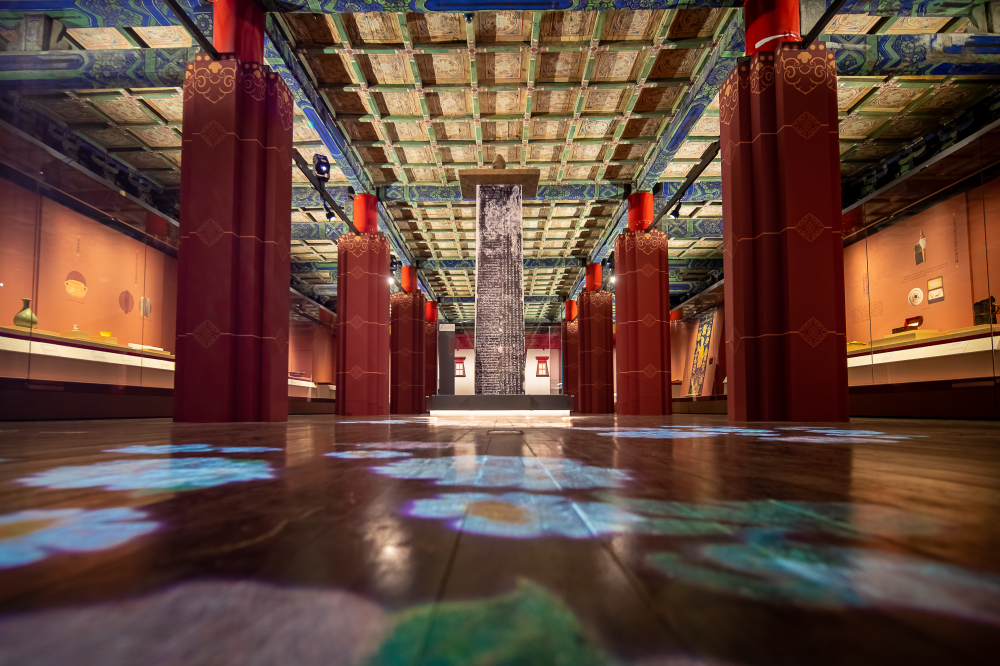
“Auspicious Blossoms – The Forbidden City and Tibetan Cultural Relics Joint Exhibition” is divided into three parts: “Flowers Blooming All Over the Road – Communication between Tibet and the Mainland”, “Flowers and Leafs – Identity and Destination” and “Spring Blossoms and Autumn Fruits – Fruitful Cultural Achievements”. The theme unit uses “flowers” to symbolize the process of integration between Tibet and various ethnic groups in the interior. The exhibition exhibited 108 pieces (sets) of cultural relics, including 13 pieces (sets) of cultural relics from various units under the Tibet Autonomous Region Cultural Relics Bureau and the Sakya Monastery Management Committee, and 95 pieces (sets) of cultural relics from the Palace Museum. In addition to the well-known calligraphy and painting exhibits such as Yan Liben of the Tang Dynasty “Bucharian Picture” and Zhao Mengfu’s “Emperor’s Danba Stele Scroll” of the Yuan Dynasty, there are also a large number of cultural relics that meet the audience for the first time, such as the “Manchu Collection” collected by the Palace Museum. The Sutra, the statue of Emperor Yongle in the Potala Palace, and the thangkas of Kublai Khan first seen in the Sakya Temple, etc., fully demonstrate the diversity of styles and artistic charm of Tibetan-themed cultural relics.

According to the protection requirements of cultural relics and reference practices, the calligraphy and painting works of the Song and Yuan Dynasties and before in the exhibition will be replaced with replicas after one month of exhibition.

Images and visuals are from – Forbidden City –Palace Museum Beijing- China –People’s Republic of China…..